Start With the Process, Not the Chiller
The right support starts with what the equipment must do on site. A chiller for a laser cutter in Johannesburg may need a different duty profile to a moulding line in Pretoria or a wash line running near the coast in Durban, where humidity and warmer ambient conditions can change the cooling load. We look at the application first, then match the unit to the duty, not the other way around.
When you send in an enquiry through the contact page, give as much process detail as possible. That makes sizing advice far more accurate and helps avoid overspending on a unit that is too large or underperforming because it was fitted for the wrong job.
- Type of machine or process line
- Required water temperature and allowable range
- Heat load in kW if known
- Flow rate and pressure requirements
- Site location and ambient conditions
Sizing for Temperature, Flow and Duty Cycle
Correct sizing is about more than litre capacity. We check the temperature setpoint, return temperature, duty cycle and the flow needed to keep the process stable. A mould running short cycles may need fast recovery, while a laser may need steady temperature control with very little fluctuation. If the flow is too low, the system struggles to pull heat away. If it is too high, you can get noise, pressure loss, or poor control at the point of use.
For many industrial sites, the practical questions are simple: can the unit hold temperature during peak production, can it cope with summer heat, and will it still perform during load-shedding when the plant comes back online. We help you work through those points before a unit is selected.
- Setpoint stability for sensitive equipment
- Peak load versus average load
- Pipe run length and friction loss
- Open loop or closed loop arrangement
- Backup cooling needs for critical lines
Checking Site Layout and Water Quality
A good chiller can still underperform if the layout is poor. Long pipe runs, undersized pumps, dirty strainers and bad bypass arrangements can all cause trouble. On industrial sites in Alrode, Germiston and Boksburg we often find that the chiller itself is fine, but the water route is not suited to the actual plant layout. That is why our technical help includes checking where the unit will sit, how far it is from the process, and whether the installation allows for sensible maintenance access.
Water quality also matters. Scale, rust and sludge can shorten equipment life and block heat exchange surfaces. If your site has recurring water issues, we can advise on treatment checks and practical steps to keep the system cleaner for longer.
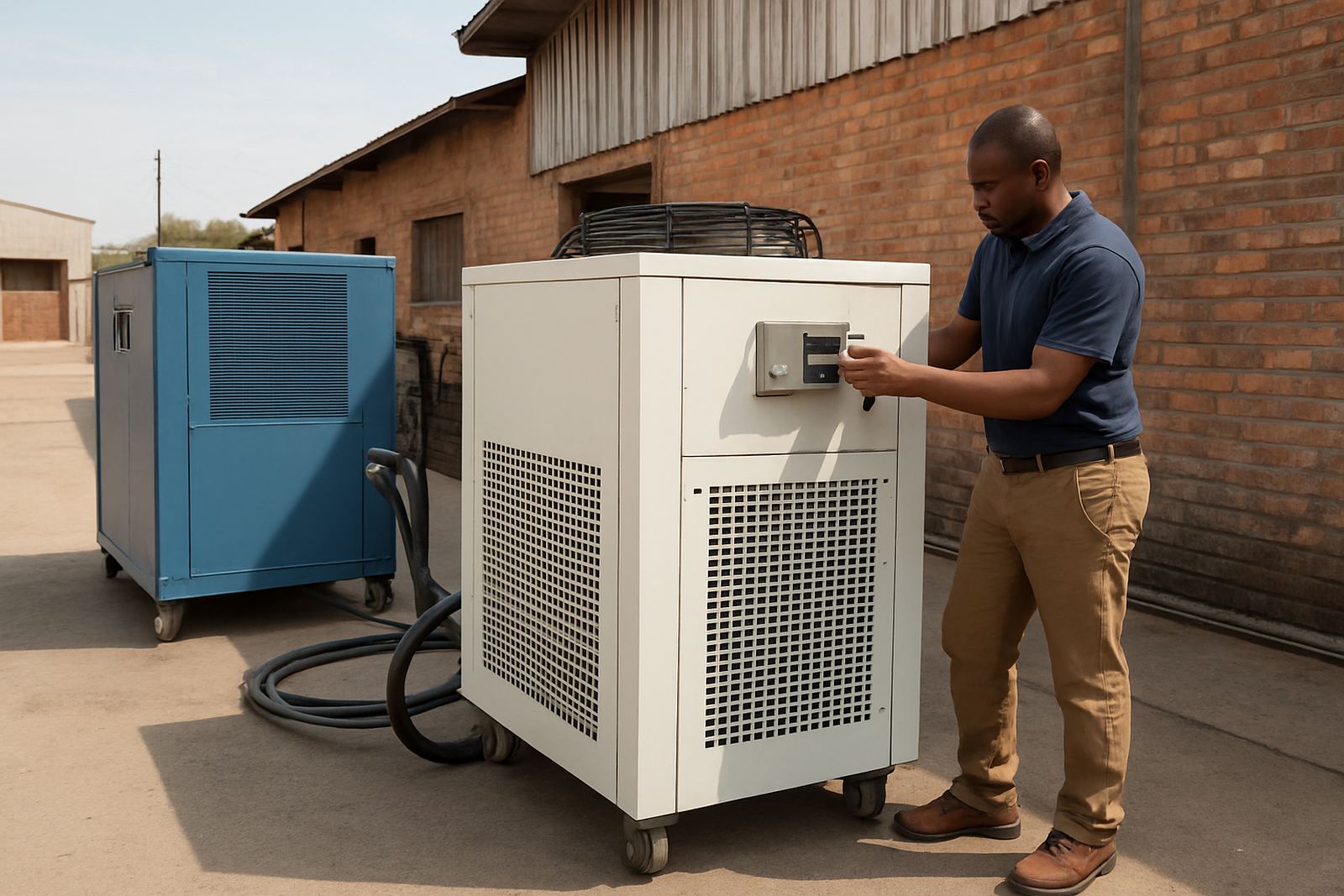
- Positioning for ventilation and service access
- Pipe diameter and insulation
- Strainers, valves and isolation points
- Water cleanliness and corrosion risk
- Drainage and spill control around the plant room
What to Send Us for a Proper Technical Check
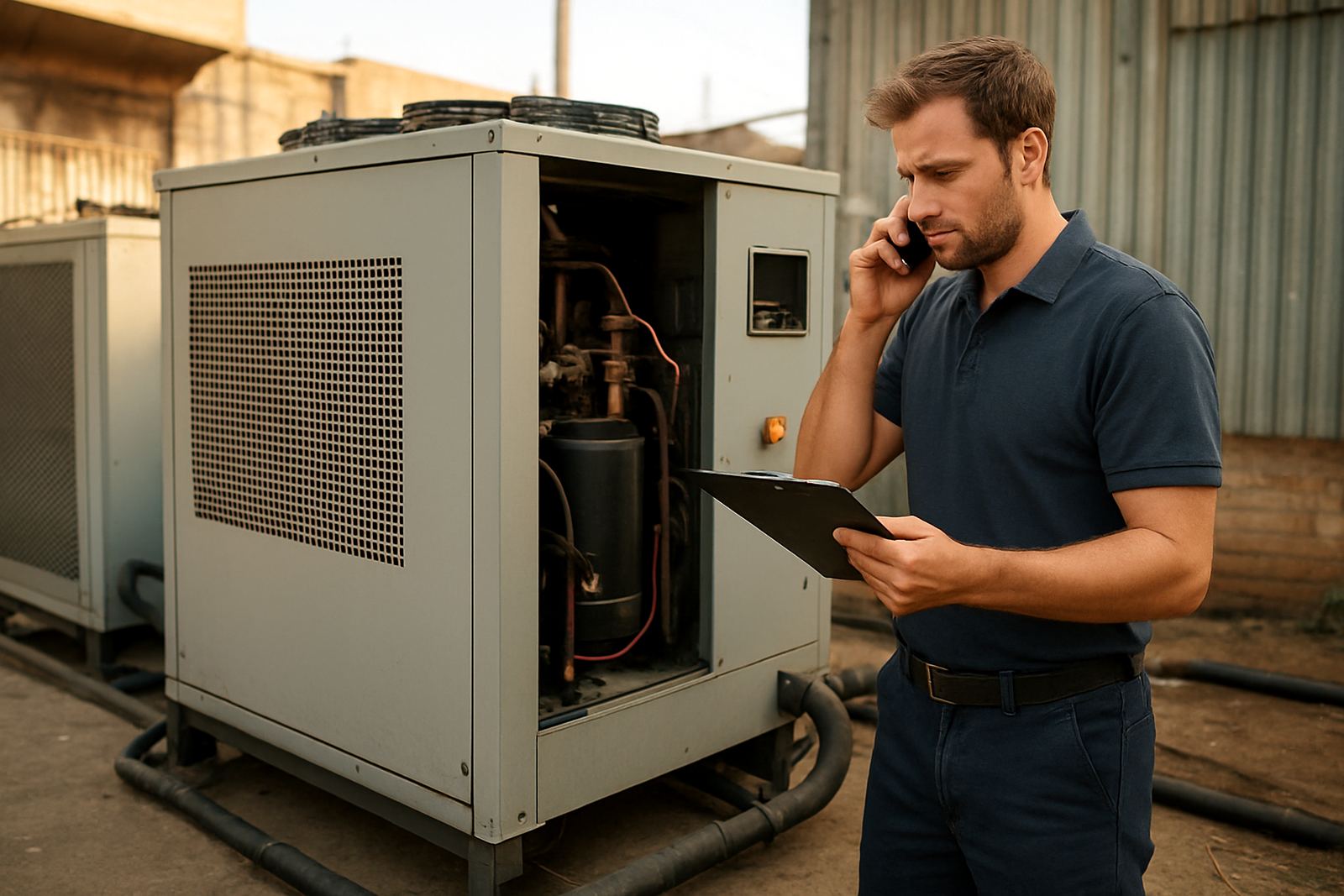
The more detail you provide, the faster we can guide you to the right solution. A photo of the current setup, a sketch of the pipe route, and any nameplate data from the machine are often enough to get started. If the site has already had problems like overheating, freezing, pump trips or unstable temperature, include that too. It helps us identify whether the issue is sizing, controls, refrigeration, or a mechanical fault.
If you are working on a new project, include your production target, the number of hours per day the line will run, and any limits set by the machine maker or process engineer. We can then advise on whether a standard unit will do the job or whether a tailored setup is better.
- Machine make, model and heat load
- Target water temperature and tolerance
- Ambient temperature on site
- Process hours per day and shift pattern
- Any existing faults, alarms or breakdown history
Support for Breakdowns, Upgrades and Temporary Cooling
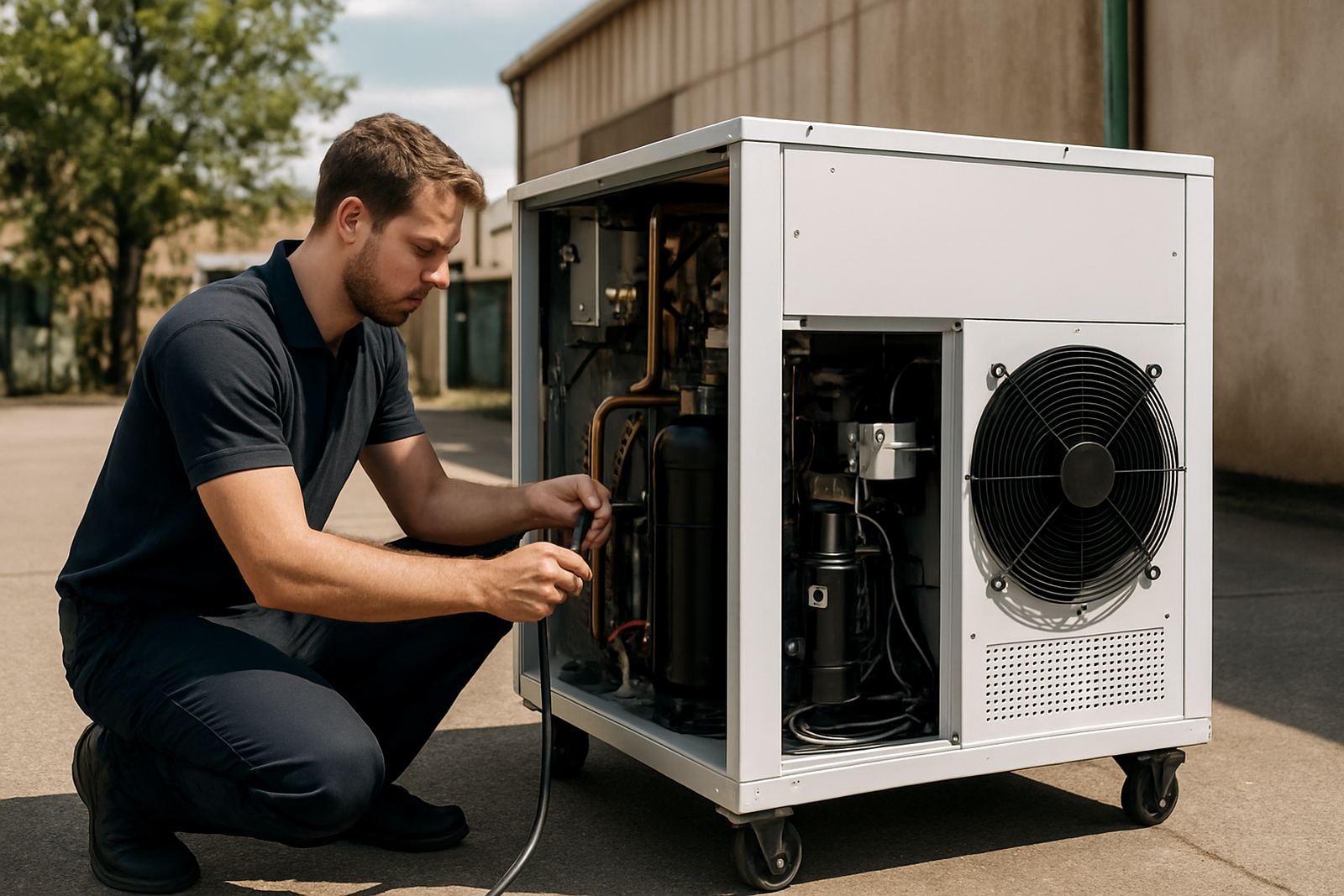
Technical help is not only for new installations. If a chiller fails during production, we can help assess whether a repair, pump replacement, control panel upgrade or temporary cooling plan is the best route. For sites in Durban, Cape Town or Rustenburg, where downtime can be expensive and logistics are not always simple, a quick and practical recommendation matters. We work through the likely cause and the next step so your team is not guessing.
In some cases the best answer is a temporary cooling arrangement while a permanent repair is planned. In others, the plant needs a small retrofit such as pipework changes, better filtration or water treatment checks to stop repeated faults. Our aim is to get the process stable and keep it there.
- Emergency temperature support for critical lines
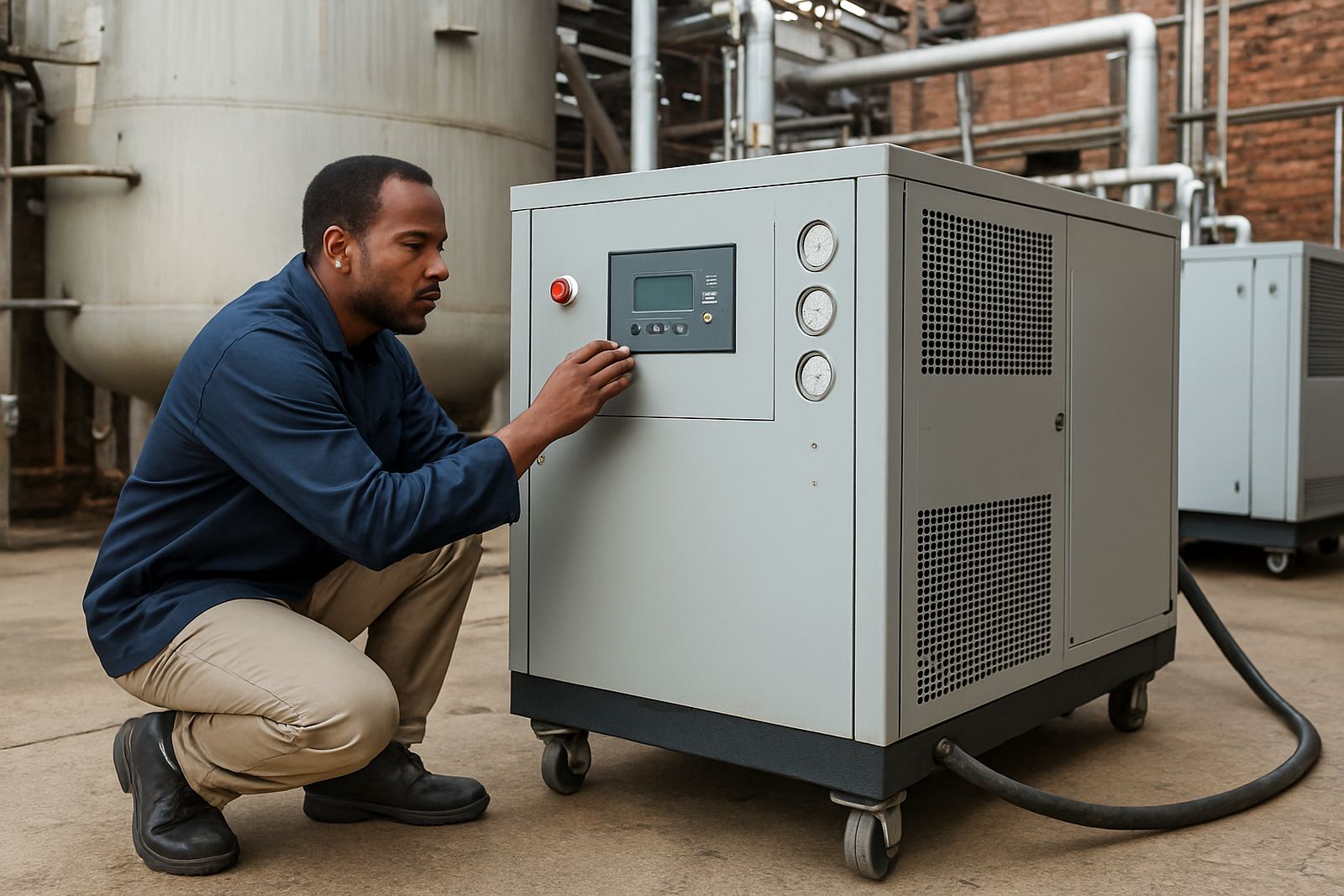
- Fault finding for alarms and poor performance
- Upgrade advice for older controls and pumps
- Temporary cooling during maintenance shutdowns
- Practical options for phased repairs
How We Handle Technical Queries Across South Africa
Raynen supports industrial customers from our base in Alrode, Alberton, with service coverage into Johannesburg, Pretoria, Durban, Cape Town and Rustenburg. Whether the job is a laser, moulding system or process line, the technical response stays the same: check the load, check the conditions, then give clear advice that suits the site and the budget. Our team includes the people who plan the work, the people who carry it out and the people who keep the job moving.
If your plant is under pressure or you are planning a new line, send the details through the enquiry form and we will help you work out the next step. That might be a sizing check, an installation review, a maintenance visit or a repair plan. Either way, you get straight answers and practical support, no nonsense.
- Alberton Depot
- Johannesburg Service
- Pretoria Service
- Durban Service
- Cape Town Service
- Rustenburg Service