Start With The Fault, Not The Guesswork
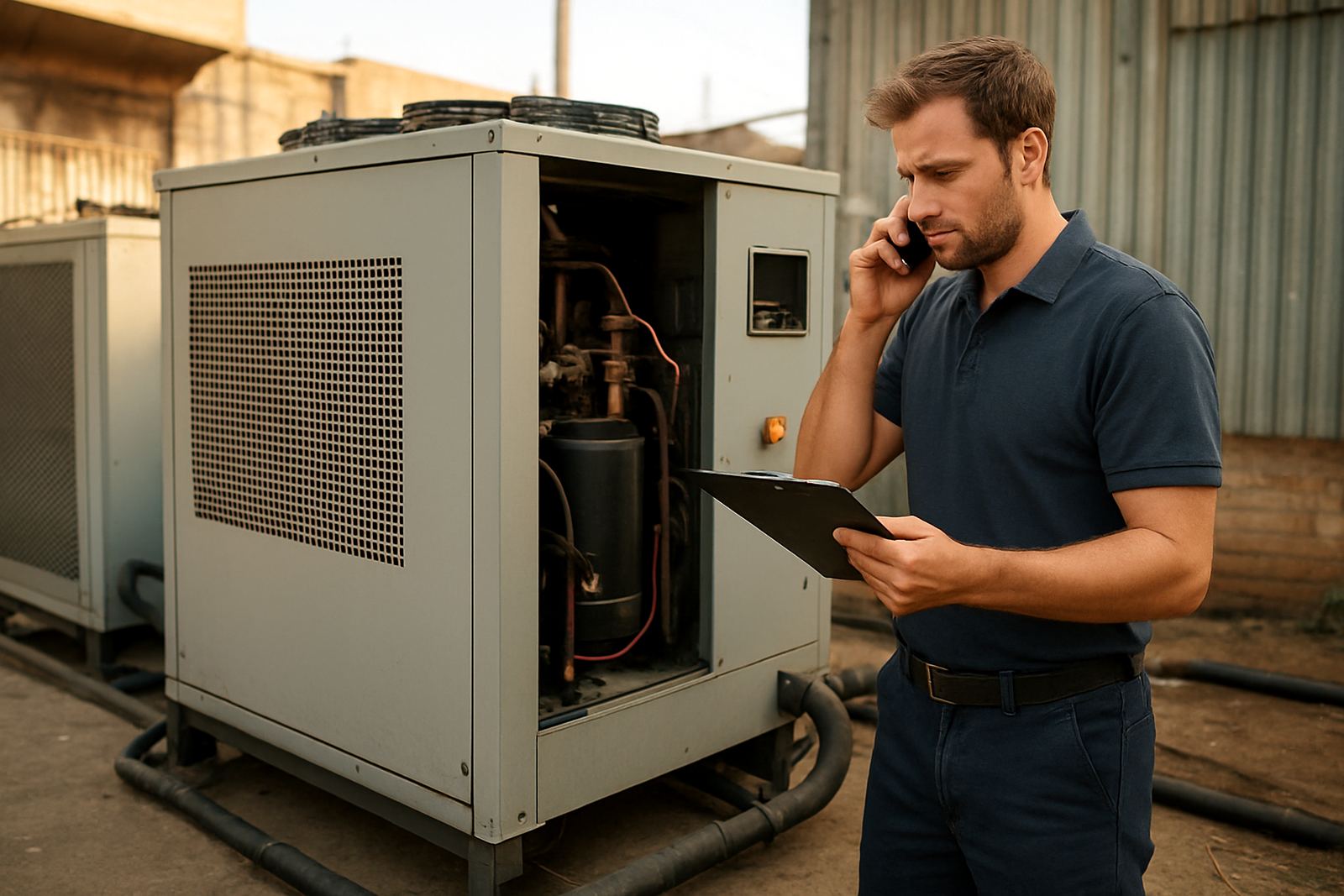
When a cooling unit fails, the fastest way to get help is to describe exactly what the machine is doing right now. Tell us whether the alarm is active, whether the pump is running, whether flow has dropped, and if the temperature is climbing above the setpoint. If the unit is feeding a laser, mould or process line, note which line has been affected and how long the plant has been under pressure. A short, factual report helps us judge the urgency before we travel.
Include the chiller model if it is visible on the unit, plus the approximate size of the system, such as 5 kW, 10 kW or larger industrial capacity. If there has been a recent power interruption, water top up, pipe change or maintenance visit, say so. These details matter in South African conditions where load-shedding, voltage dips and heat can turn a minor issue into a full stoppage.
What To Check Before You Submit The Breakdown
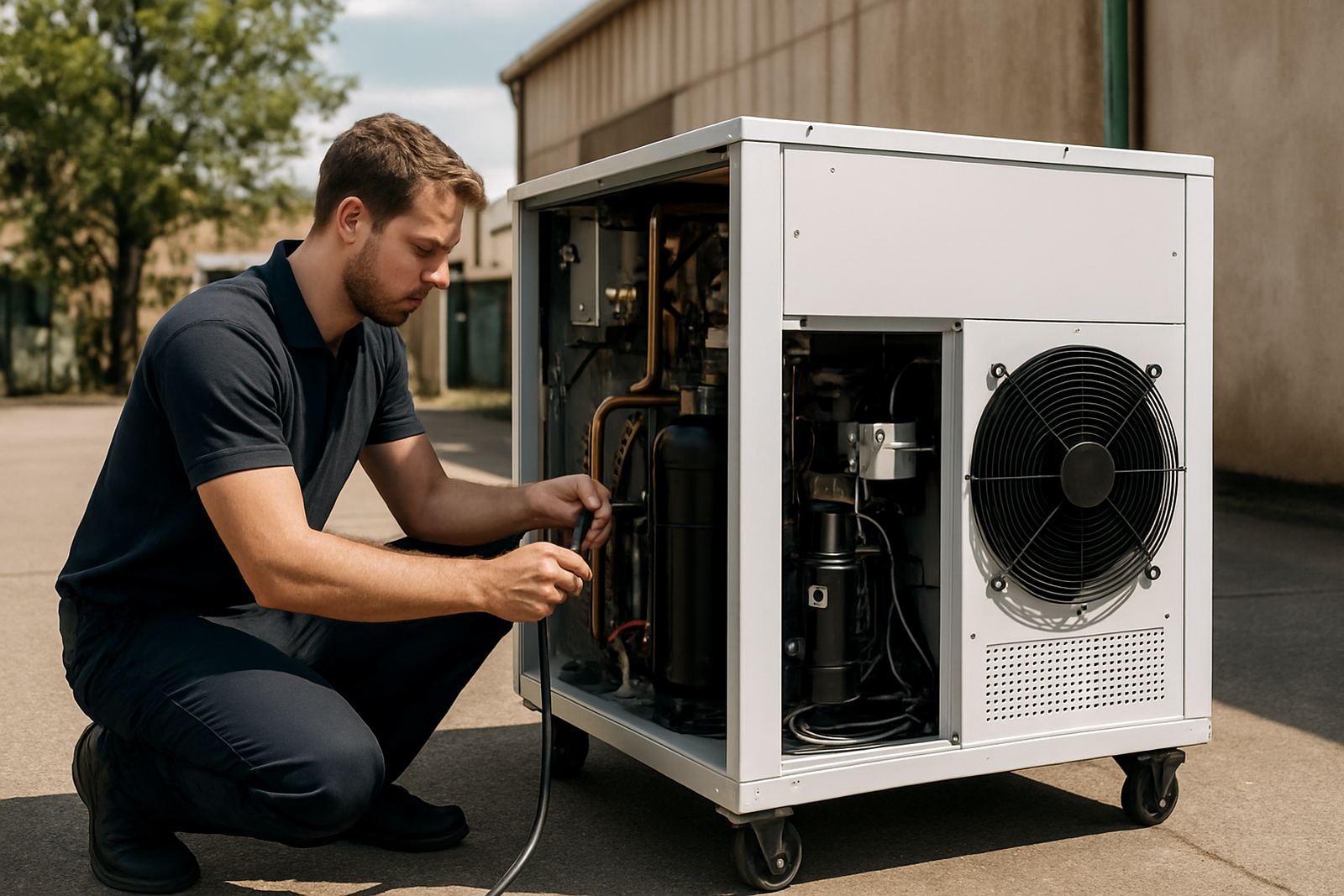
Do not open panels or reset protection repeatedly if you are not trained to do so. Keep the area safe and gather the basic facts first. A few simple checks can save time and prevent further damage, especially where chilled water is needed to protect equipment or product quality.
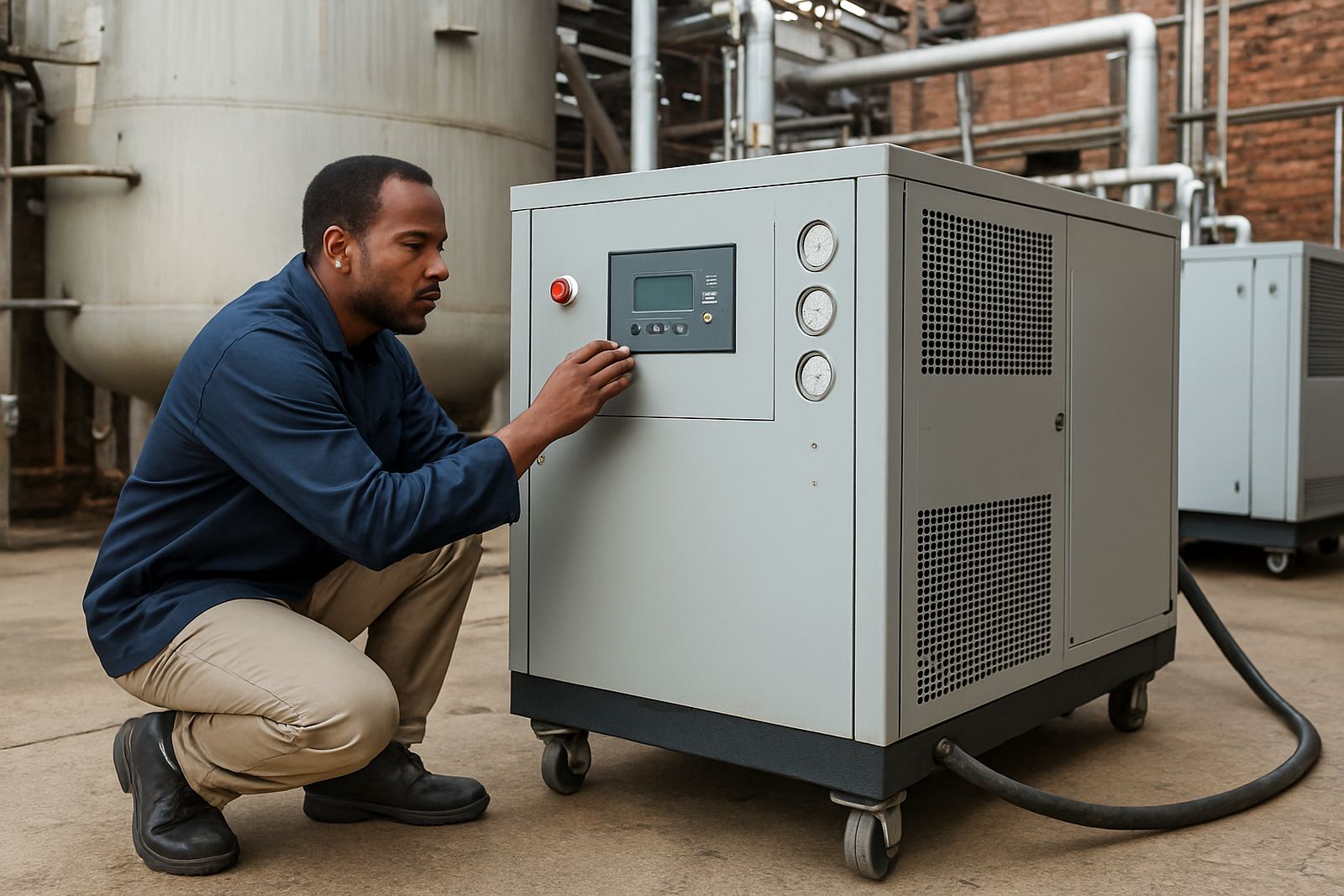
- Confirm whether the unit is on and what alarms are showing.
- Check the chilled water temperature and setpoint.
- Look at flow indicators, pump status and any unusual noise.
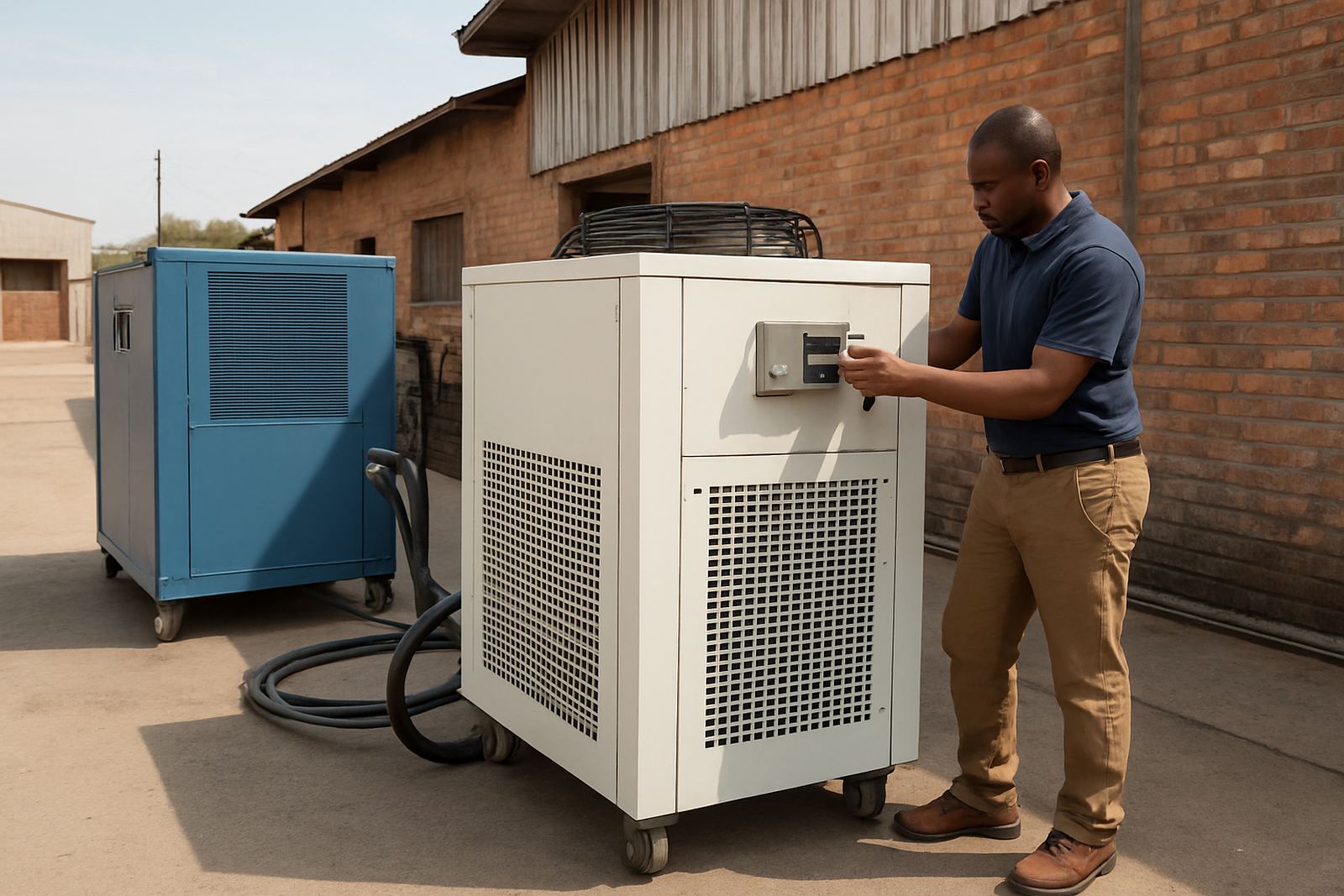
- Check whether the condenser has airflow, clean filters and clear space around it.
- Note if the fault started after load-shedding, a storm or a process change.
If the chiller is outdoors or in a hot plant room, mention that too. Coastal humidity in Durban or salty air near the coast can affect electrical parts and heat transfer, while dusty areas around Johannesburg and Rustenburg can block coils and strain fans.
Information That Helps Us Respond Faster
Use the enquiry form on our contact page and give as much practical detail as you can. The more complete the report, the easier it is for our support team to plan the right next step, whether that is remote fault assessment, a technician visit, or temporary cooling while repairs are arranged.
- Your company name and site location
- Which branch area or town is affected
- Chiller type and application, for example laser, mould or process line
- The fault symptoms, error messages and temperature readings
- Any recent work done on the system
- Whether production is stopped, reduced or still running
If the fault is affecting multiple machines, say which systems are still live and which ones have gone down. This helps us prioritise the right spares and the right technician for the job.
What Happens After You Report The Breakdown
Once your report is received, we review the symptoms and contact details, then decide on the quickest practical response. For some faults, a technician can talk you through a few checks first. For others, a site visit is needed straight away. We support sites in Alberton, Germiston, Boksburg, Johannesburg, Pretoria, Durban, Cape Town and Rustenburg, so response planning is done with the local area in mind.
If the issue points to refrigeration gas loss, pump failure, control faults or blocked water circuits, we will plan the repair path and advise on the next steps. Where production must keep going, we can also discuss temporary cooling options so your operation does not sit idle for longer than it has to.
Make The Site Ready For A Technician Visit
A prepared site helps the repair move faster. Clear access to the chiller, isolate the work area where possible, and make sure someone responsible is available to meet the technician. If the unit is on a roof, in a yard or behind security gates, tell us in advance so access is not delayed at the entrance.
It also helps to keep the following ready:
- Any previous service notes or fault history
- Spare access keys or panel keys if applicable
- Power availability details, including generator or backup supply
- Water treatment records if the system has had scaling or corrosion issues
- A contact person on site who knows the process line
Good access and basic records can cut down on wasted time and help us get to the root cause more quickly.
Why Fast Breakdown Reporting Protects Your Equipment
Industrial water chillers do more than keep a process cool. They protect lasers from thermal drift, help moulds hold dimension, and keep process lines running within tolerance. If a fault is left too long, temperatures can creep up, oil and seals can suffer, and the rest of the equipment may work harder than it should.
Reporting the breakdown early can prevent a small fault from turning into a larger repair bill. It also gives our team a better chance of preserving product quality, avoiding scrap and reducing downtime. In many cases, a quick callout and the right diagnosis are cheaper than waiting for a complete shutdown.