Where cooling matters most on a textile finishing line
In textile finishing, temperature control is not only about comfort for the plant. It affects surface quality, coating consistency, drying performance and the stability of the line itself. When a process stage runs too warm, you can see shade variation, uneven hand feel, sticking, stretch changes or a finish that does not hold through packing and dispatch.
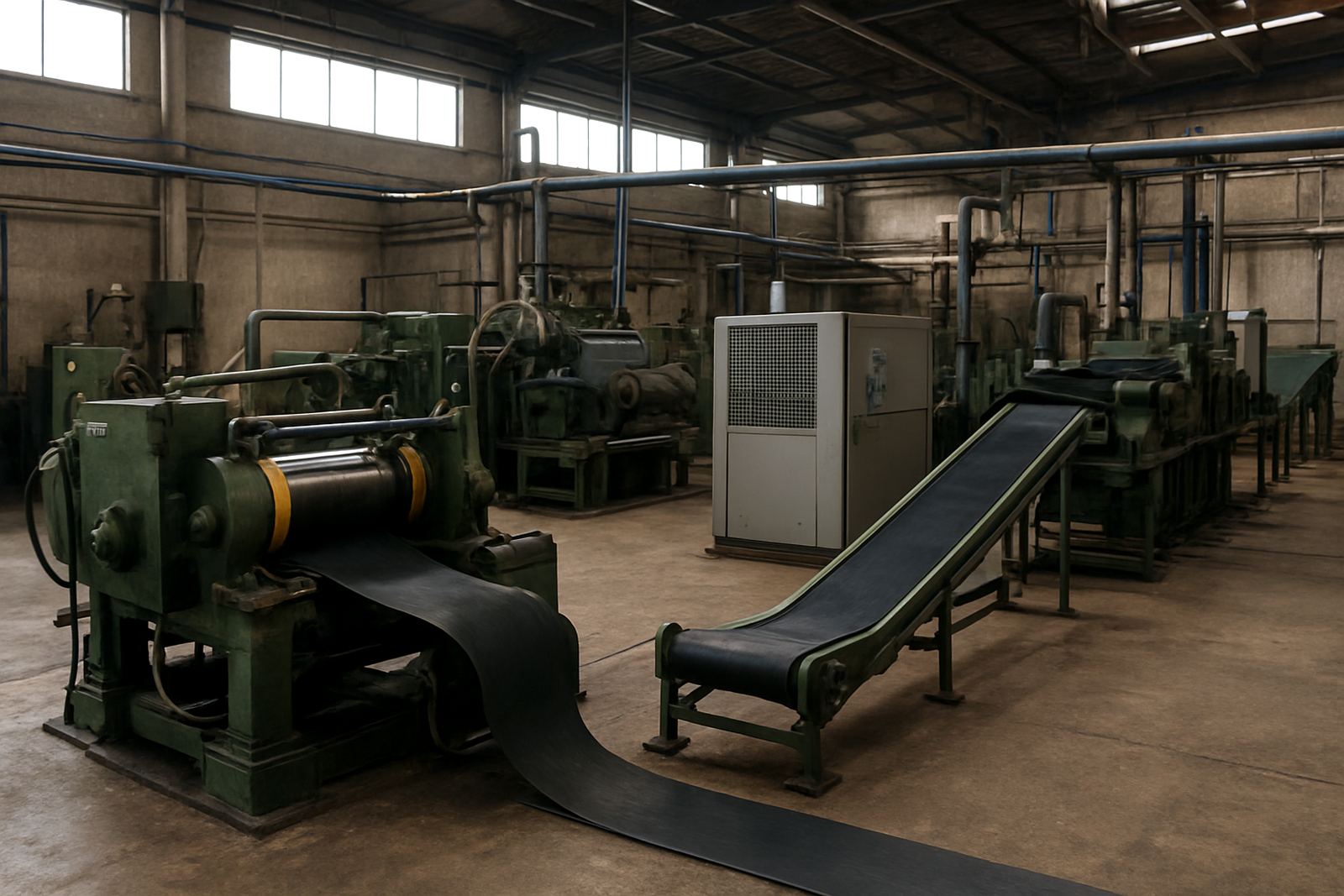
We typically see this on lines handling heat-sensitive stages such as coating heads, calendar rolls, heat exchangers, hydraulic oil cooling, transfer rollers and certain chemical dosing systems. If the water temperature keeps climbing during a long shift, the operator ends up chasing settings instead of keeping production steady. In wet season conditions on the coast, or during high summer in Gauteng, that problem shows up even faster.
For textile plants in Alberton, Johannesburg, Pretoria, Durban, Cape Town and Rustenburg, the aim is simple: keep the process water stable so the finish stays repeatable from one batch to the next.
Typical equipment set on a textile finishing installation
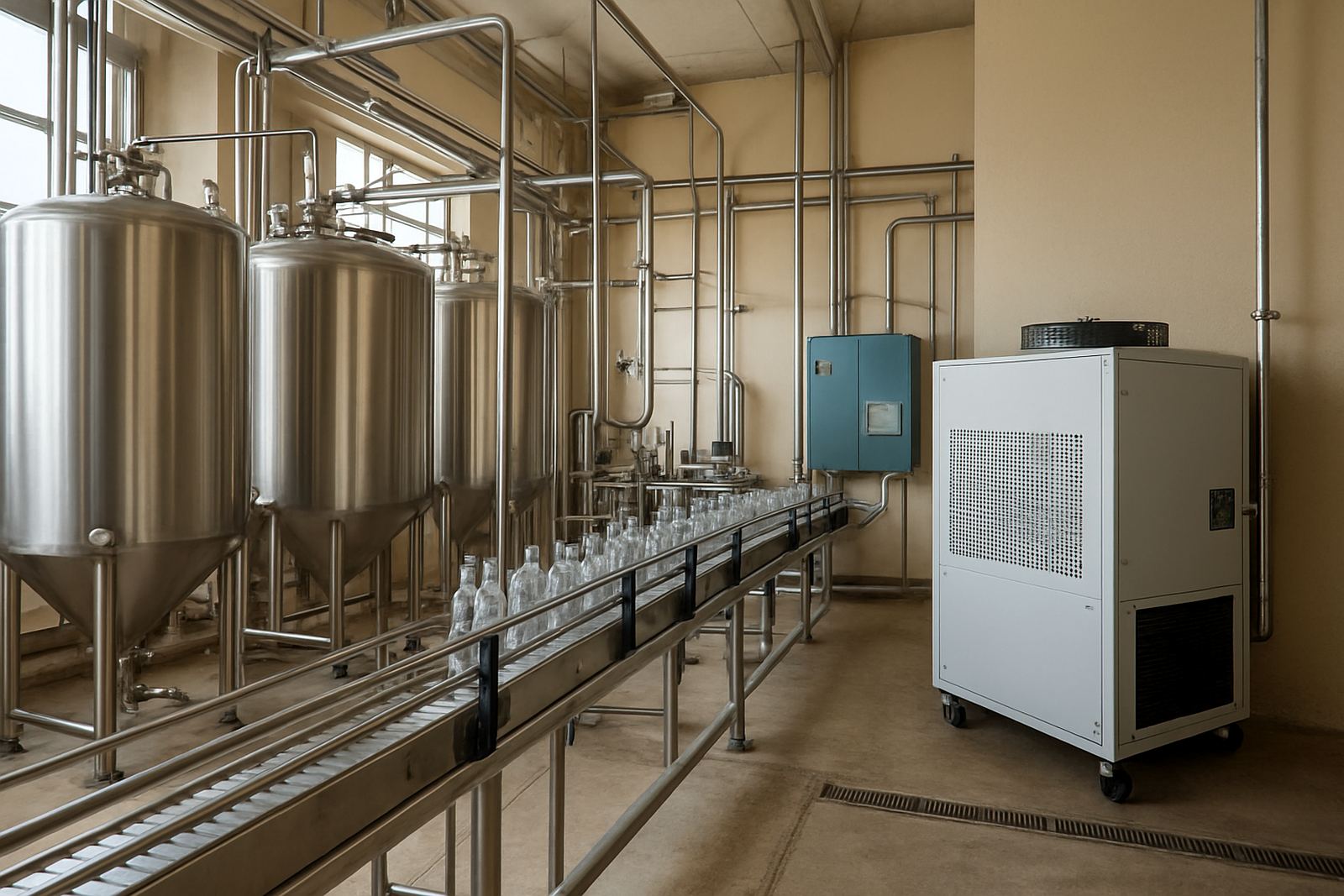
Most textile finishing sites do not need one oversized unit thrown at the problem. They need the right chilled water capacity, sensible piping, and control that matches the line speed and operating pattern. A proper setup is often built around more than just the chiller itself.
- Industrial water chiller sized to the actual heat load
- Buffer tank where temperature swings need to be reduced
- Circulation pump sized for the pipe run and pressure drop
- Strainer or filtration where fibres and scale are a risk
- Temperature sensors and basic alarms for high water temp or low flow
- Control panel integration for start stop and fault feedback
- Pipework insulated where ambient heat or humidity is an issue
On older installations we often find undersized pipework, blocked strainers or a pump that has been working too hard for years. That usually means the chiller is blamed first, when the real issue is poor flow or poor water quality. A proper assessment helps separate those problems early.
Layout and planning advice for textile finishing plants
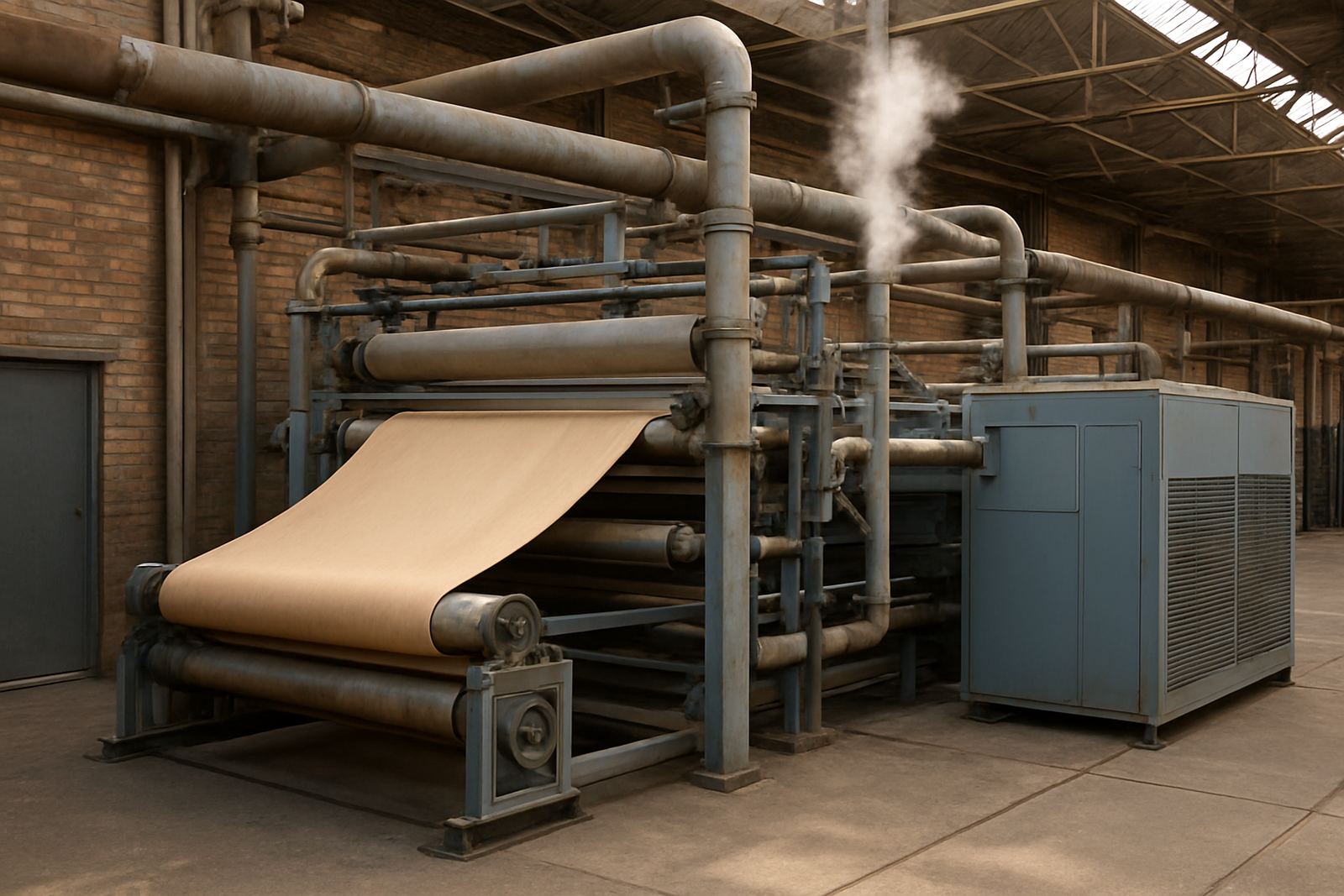
Good planning starts with the actual layout of the line. Where the load is constant, the chiller can be placed close to the process. Where the line is spread across a larger building, the pipe route, elevation changes and return temperature all matter. In a hot factory, long uninsulated runs can lose capacity before the water even reaches the machine.
We always look at the full picture: inlet temperature, required supply temperature, flow rate, line duty cycle and what happens during load-shedding or after a restart. In some plants, a smaller standby unit or temporary cooling plan is better than trying to force one system to carry every stage. That can save downtime when a main pump fails or a compressor trips during peak production.
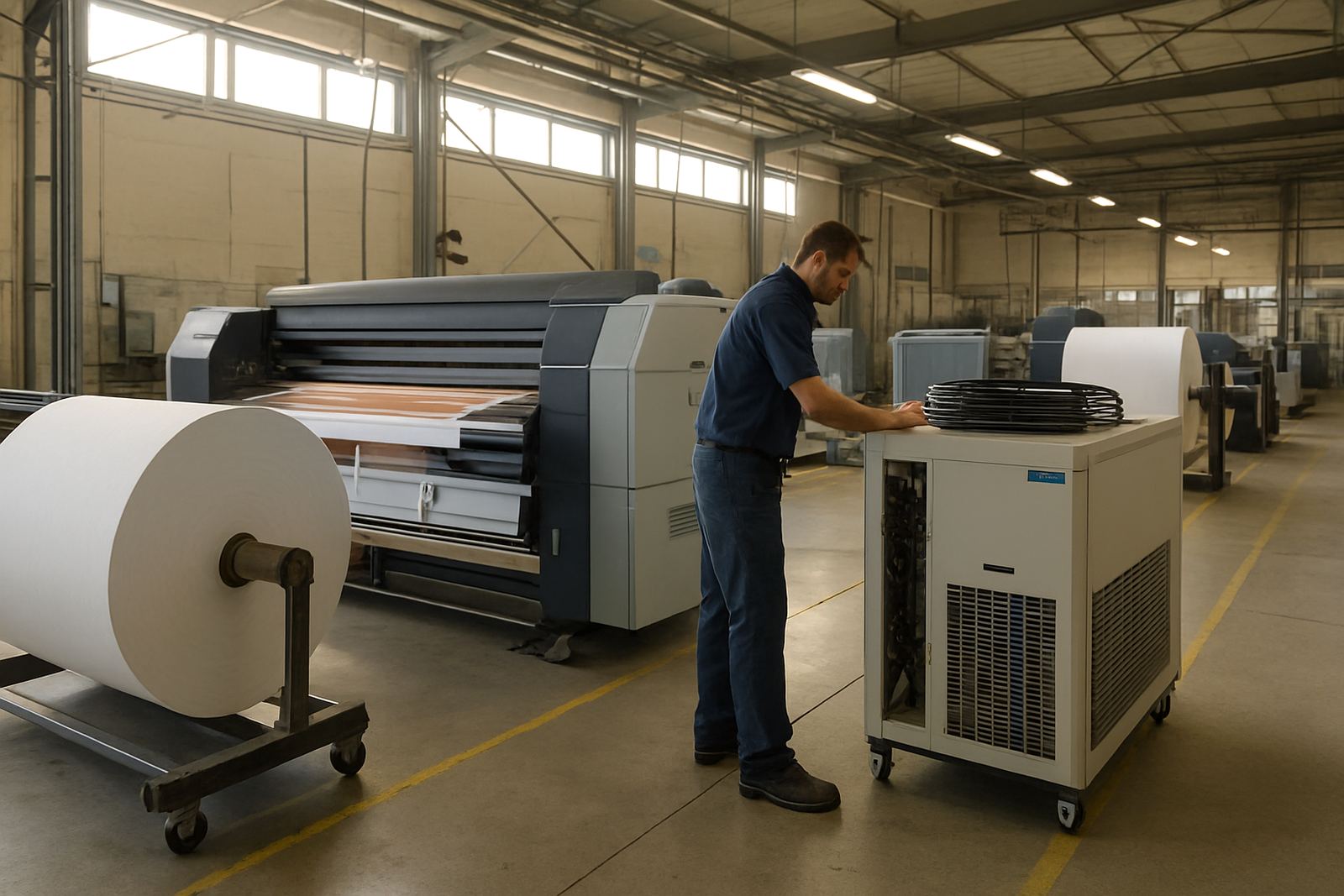
For textile finishing, planning also needs to account for maintenance access. Units should be positioned where technicians can get to filters, panels and service points without disrupting the production floor. If the plant is in a coastal area like Durban or Cape Town, corrosion protection and routine water treatment become even more important.
Common mistakes we see on finishing lines
Many cooling problems in textile finishing are preventable. The mistake is often not the machine, but the way the system was selected or installed. A line may run well for a few months, then temperatures drift and quality complaints start to build.
- Choosing capacity from guesswork instead of measuring the real heat load
- Using untreated water that causes scaling, algae or blocked passages
- Putting the chiller too far from the process without proper insulation
- Ignoring pump sizing and expecting the chiller to fix poor flow
- Skipping preventative maintenance until a fault stops the line
- Running the same settings through winter and summer without adjustment
Another common issue is assuming that all textile finishing equipment needs the same water temperature. That is rarely true. Some stages want tighter control than others, and the best result usually comes from matching the cooling to the specific stage rather than forcing one temperature across the whole site.
Budget ranges for textile finishing cooling projects
Budget depends on capacity, duty cycle, control complexity and whether the site needs only the chiller or a full package with pumps, tanks and pipework changes. For textile finishing work in South Africa, smaller process cooling packages can start at around R180 000 to R350 000 for lighter-duty applications. Mid-range installations for a more demanding line often sit between R350 000 and R850 000.
Larger or multi-point systems, especially where the plant needs backup capacity, upgraded controls or pipework retrofits, can move into the R850 000 to R1,8 million range and sometimes more. Temporary cooling for a repair period is usually priced differently and can be a useful short-term option when production cannot stop.
The cleanest way to budget is to start with the process requirements, then work backwards to the equipment. That keeps the spend focused on what the line actually needs rather than on oversized kit that costs more to run and maintain.
Service support across Ekurhuleni and beyond
Raynen is based in Alrode, Alberton and supports textile finishing operations through Alberton Depot, Johannesburg Service, Pretoria Service, Durban Service, Cape Town Service, Rustenburg Service, Germiston Service and Boksburg Service. That local reach matters when a chiller trips in the middle of a shift, because the cost of lost output can exceed the repair itself very quickly.
Our team handles chiller installation, system commissioning, preventative maintenance, breakdown repairs, refrigeration repairs, pump replacements, water treatment checks, pipework retrofits, control panel upgrades, cooling audits, temporary cooling and operator training. The right support keeps the line steadier and gives your operators fewer surprises on shift.
If you are upgrading a textile finishing plant or solving a recurring temperature problem, use the enquiry form on our contact page and we will work from the process details you provide. That is often the fastest way to size the system properly and avoid another round of trial and error.