Why packaging lines need stable cooling
In pharma packaging, small temperature swings can cause bigger problems than many plant teams expect. Seal integrity, film handling, label adhesion and the performance of ancillary equipment all depend on cooling that stays steady through long shifts, stoppages and changeovers. In Alberton and across Ekurhuleni, many factories also deal with hot roof spaces, dust, and load-shedding related restarts, so the cooling system must recover quickly without flooding the line with warm water.
Raynen works with packaging environments where the water chiller supports more than one machine at once, or where a process loop has to keep a narrow setpoint for 24-hour running. The right unit helps reduce unplanned stoppages, lowers wear on tooling and protects product quality. It also helps the maintenance team spend less time fighting temperature drift and more time keeping production moving.
Typical cooling loads in pharma packaging plants
A packaging room does not usually need the same cooling profile as a reactor hall, but it still needs disciplined design. The load often comes from heat sealing heads, compressed air aftercooling, servo cabinets, vacuum systems, conveyors and hot ambient conditions around the plant. In older buildings around Johannesburg, Pretoria and Germiston, a chiller can be asked to handle poor ventilation, long pipe runs and uneven electrical supply as well.
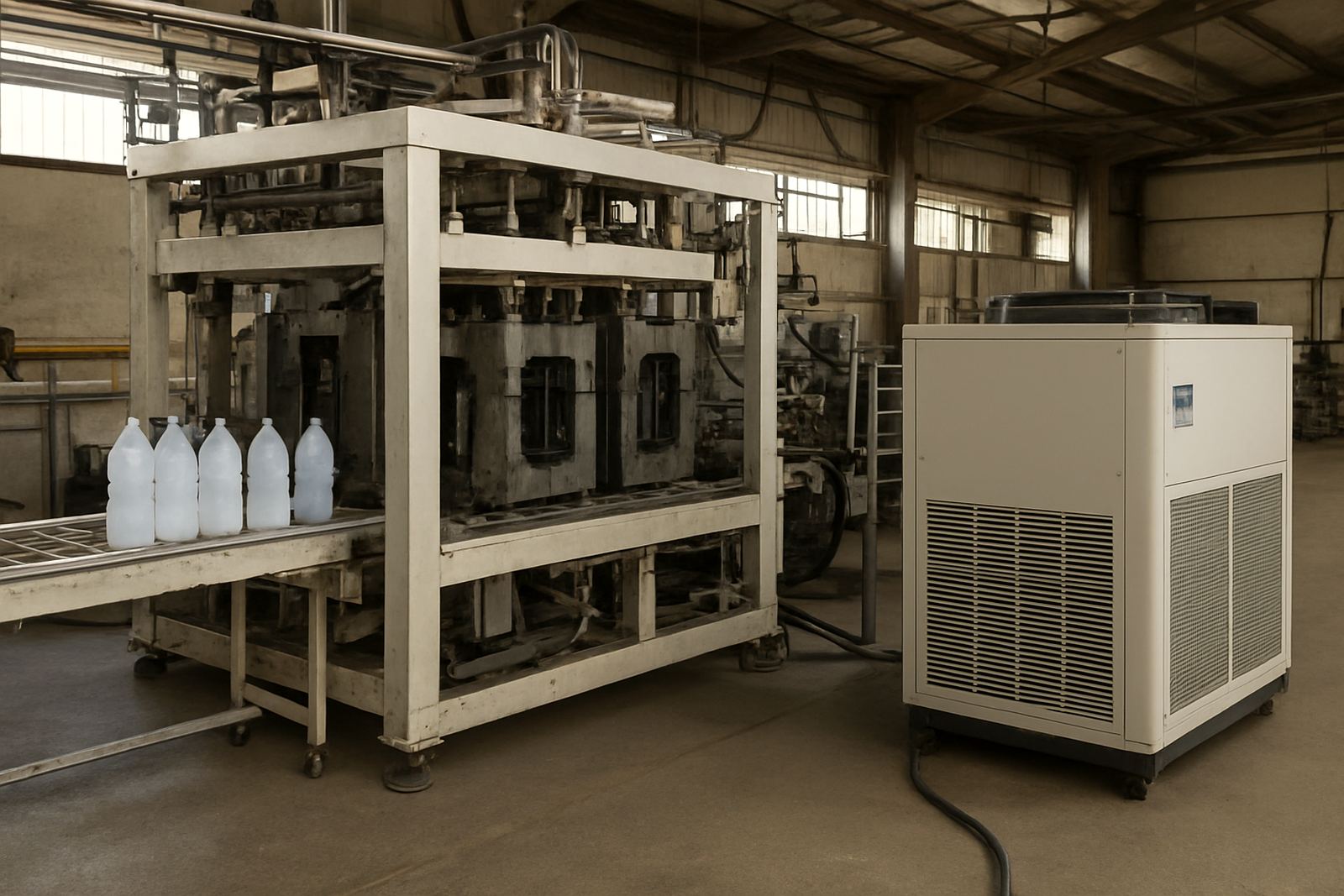
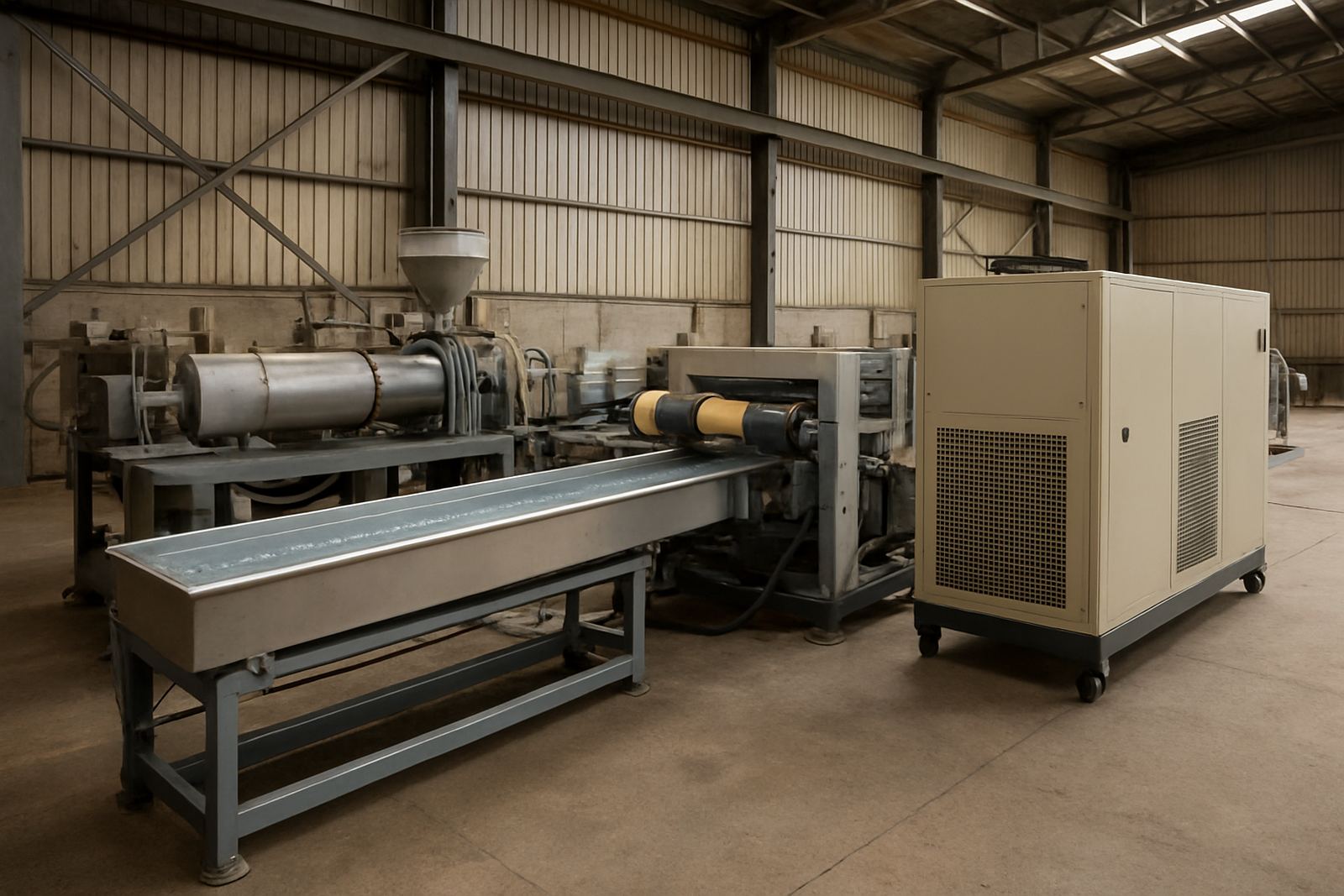
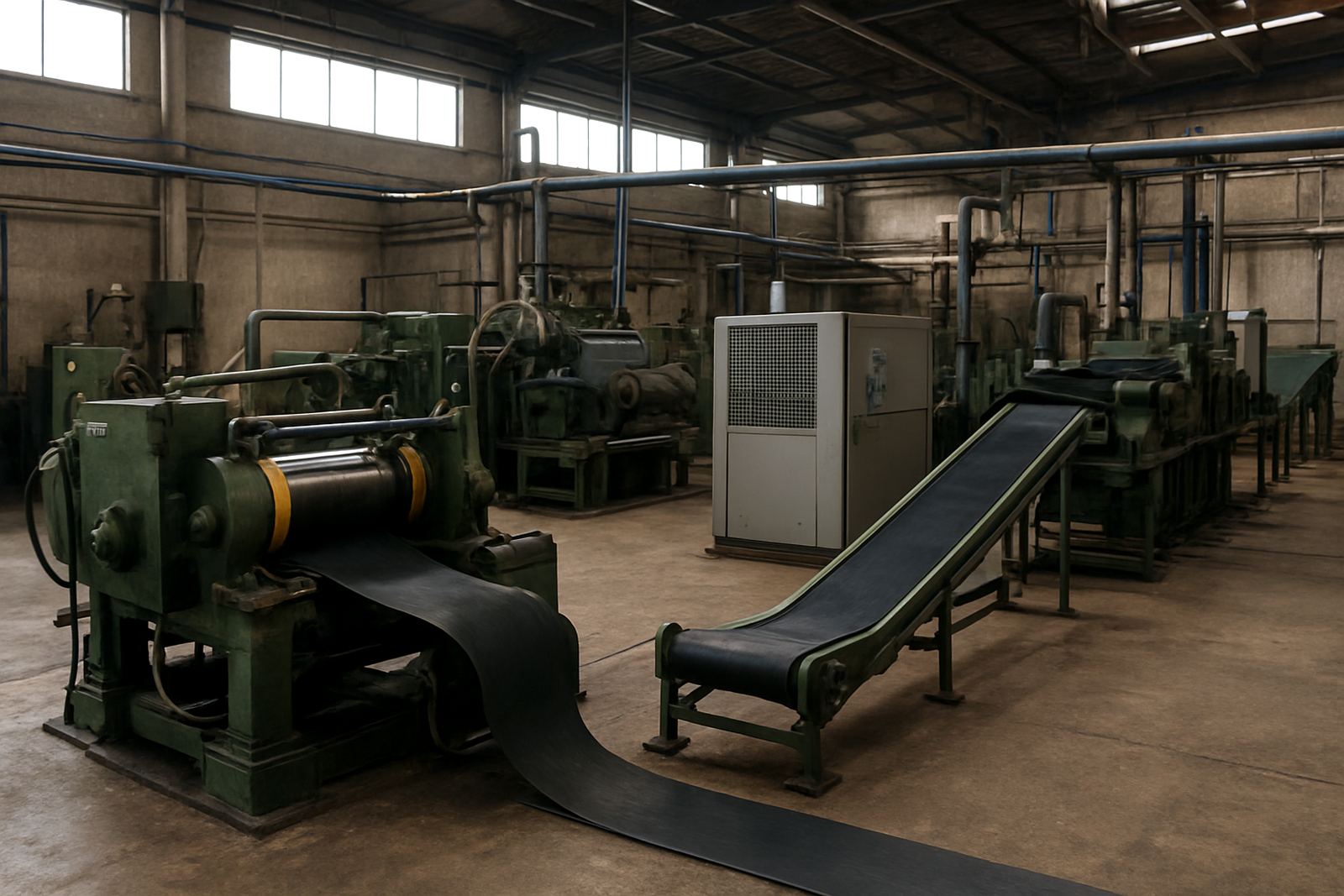
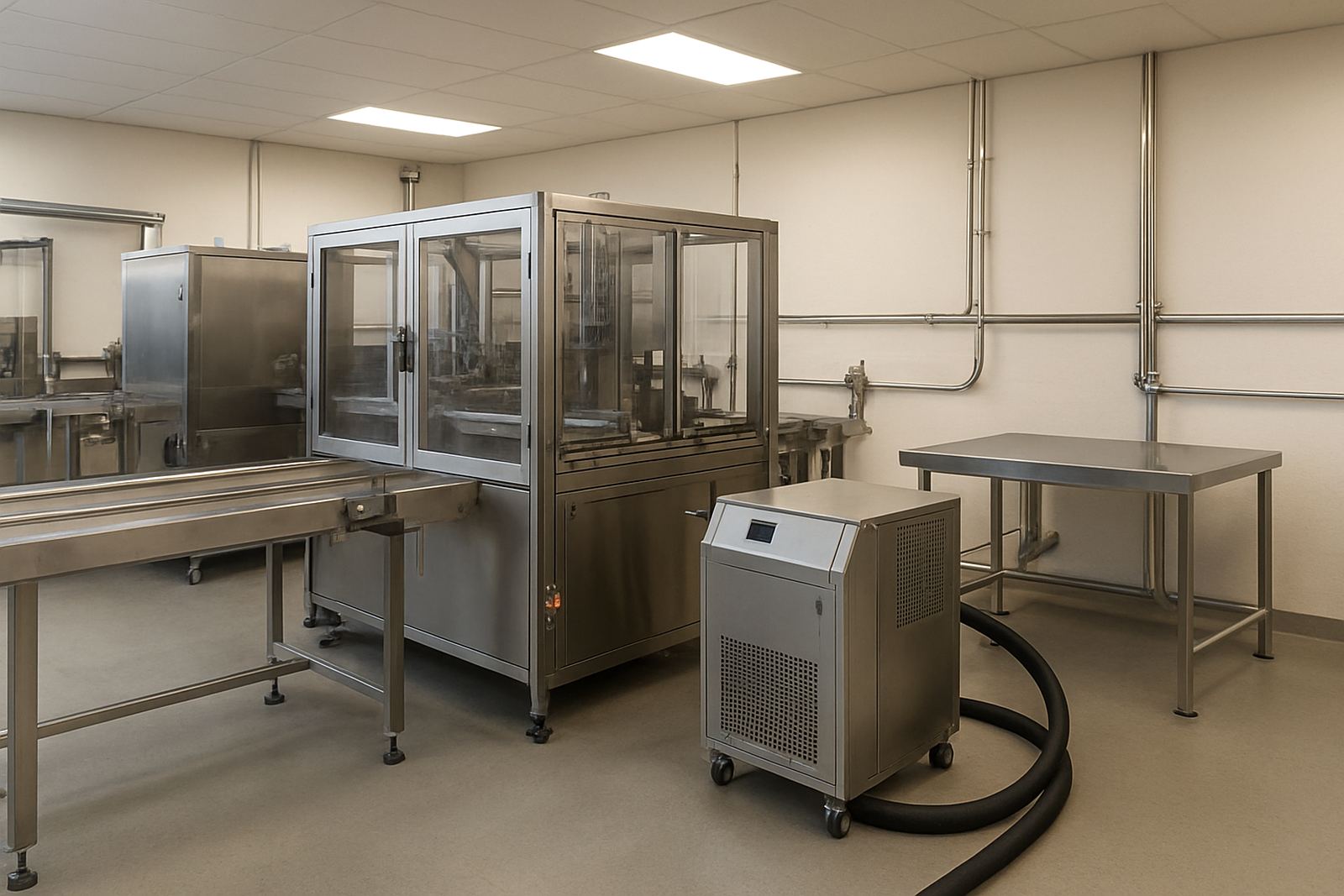
Common equipment sets include air-cooled chillers, buffer tanks, insulated pumps, strainers, temperature controls and water treatment points. For some sites, a temporary cooling unit is useful during shutdowns, equipment relocation or while a main chiller is being repaired. That can keep production within spec while the permanent system is serviced.
- Air-cooled industrial water chiller with pump set
- Insulated buffer tank for better temperature stability
- Dosing or filtration arrangement to reduce scale and sludge
- Flow and pressure controls for multiple machine drops
- Bypass piping for maintenance and changeover work
Layout and planning advice for clean production areas
Packaging rooms in pharmaceutical plants often have tight movement control, so chiller placement has to work with hygiene rules and maintenance access. The unit should sit where technicians can service it without crossing sensitive zones more than necessary. In coastal areas like Durban and Cape Town, corrosion resistance and cabinet protection matter too, because salt air and humidity can shorten the life of poorly protected equipment.
Good planning starts with the full route of the water lines, not just the chiller footprint. Keep pipe runs short where possible, insulate exposed sections, and allow for proper drainage around the plant. If the line runs near the roof or through outdoor service corridors, allow for UV exposure and local weather. On a site with a backup generator, check the start current and recovery time so the chiller will restart cleanly after an outage, not trip the whole area. That step gets overlooked often.
- Leave service clearance around evaporators, pumps and control panels
- Use insulated pipework to cut heat gain on long runs
- Separate clean-room access from routine maintenance access where possible
- Check electrical capacity and generator compatibility early
- Plan for water quality, especially where municipal supply is hard or mineral-heavy
Common mistakes we see on packaging jobs
One common mistake is sizing the chiller only for the machine nameplate and ignoring room heat, warm make-up water and future line changes. Another is placing the unit too far from the point of use, which creates pressure loss and unstable supply temperature. Some sites also skip water treatment checks until scale starts forming, which then affects flow and heat transfer.
We also see rushed pipework retrofits, mixed materials and poor valve placement. That can make maintenance difficult and increase the risk of leaks or air locks. On plants with several packaging lines, it is better to think in zones rather than treating the whole site as one loop. A line that runs morning shift only should not force the same cooling strategy as a 24-hour line with weekend production.
- Oversizing without checking cycling and part-load performance
- Ignoring warm ambient conditions in plant rooms and loading bays
- Using uninsulated hoses where rigid insulated pipe would perform better
- Skipping operator training, so alarms get reset without finding the cause
- Delaying preventative maintenance until product temperatures drift
Budget ranges for pharma packaging cooling
Costs depend on cooling capacity, duty cycle, water quality, pipework distance and whether the project includes controls upgrades or temporary cooling. As a guide, smaller packaging support systems can start around R180 000 to R350 000 fitted, while medium plant applications often fall between R350 000 and R850 000. Larger or multi-line systems, especially where redundancy or process cooling integration is needed, can run from R850 000 to R2 million plus.
Budgeting should also include installation, commissioning, water treatment checks, periodic maintenance and any pump or control panel upgrades needed to match the site. If you are in Pretoria, Cape Town, Durban or Rustenburg, transport and access conditions may change the final figure slightly, particularly where lifting gear, crane access or after-hours shutdowns are required. The cheapest option is rarely the best if it leads to downtime every few months.
How Raynen supports packaging sites across South Africa
Raynen supplies and services industrial water chillers and cooling units from our base in Alrode, Alberton, with support across Johannesburg, Pretoria, Durban, Cape Town and Rustenburg. Our team handles chiller installation, system commissioning, preventative maintenance, breakdown repairs, refrigeration repairs, pump replacements, water treatment checks, pipework retrofits, control panel upgrades, cooling audits, temporary cooling and operator training. That gives packaging teams one point of contact for the full cooling system.
For pharma packaging, we look closely at the actual process need before recommending a unit. The discussion usually covers the number of lines, target water temperature, room conditions, electrical supply, backup power, and how much downtime the site can accept. From there, we match the cooling duty to the plant layout and keep future service in mind. If the plant needs a solution for a new line, a replacement chiller, or a temporary unit during maintenance, our team can size the job properly and keep the project practical.
Clients usually reach us through the enquiry form on our contact page, and from there we can arrange the next step without wasting time on guesswork. That approach works well for factories that need dependable cooling and clear planning from the start.