Why extrusion cooling needs proper control
In extrusion, heat is part of the process, but the cooling stage is what locks in the finished shape. If water temperature drifts, the product can oval, warp, shrink unevenly or come off line at a different size from shift to shift. That shows up quickly in scrap, rework and customer complaints.
For plastic extrusion, rubber profiles, cable sheathing and similar lines, the chiller is not there for comfort. It keeps the process water at a known temperature so the die, calibrator, tank and downstream equipment all work the same way every time. In South Africa, that matters even more during hot afternoons, power interruptions and high coastal humidity, when cooling towers and open systems can struggle to stay consistent.
We work with extrusion operations that need cooling for steady line speed, tighter tolerances and better repeatability. The right unit will also help protect pumps, seals and pipework from excessive cycling, which means fewer callouts and less downtime.
Typical equipment on an extrusion line
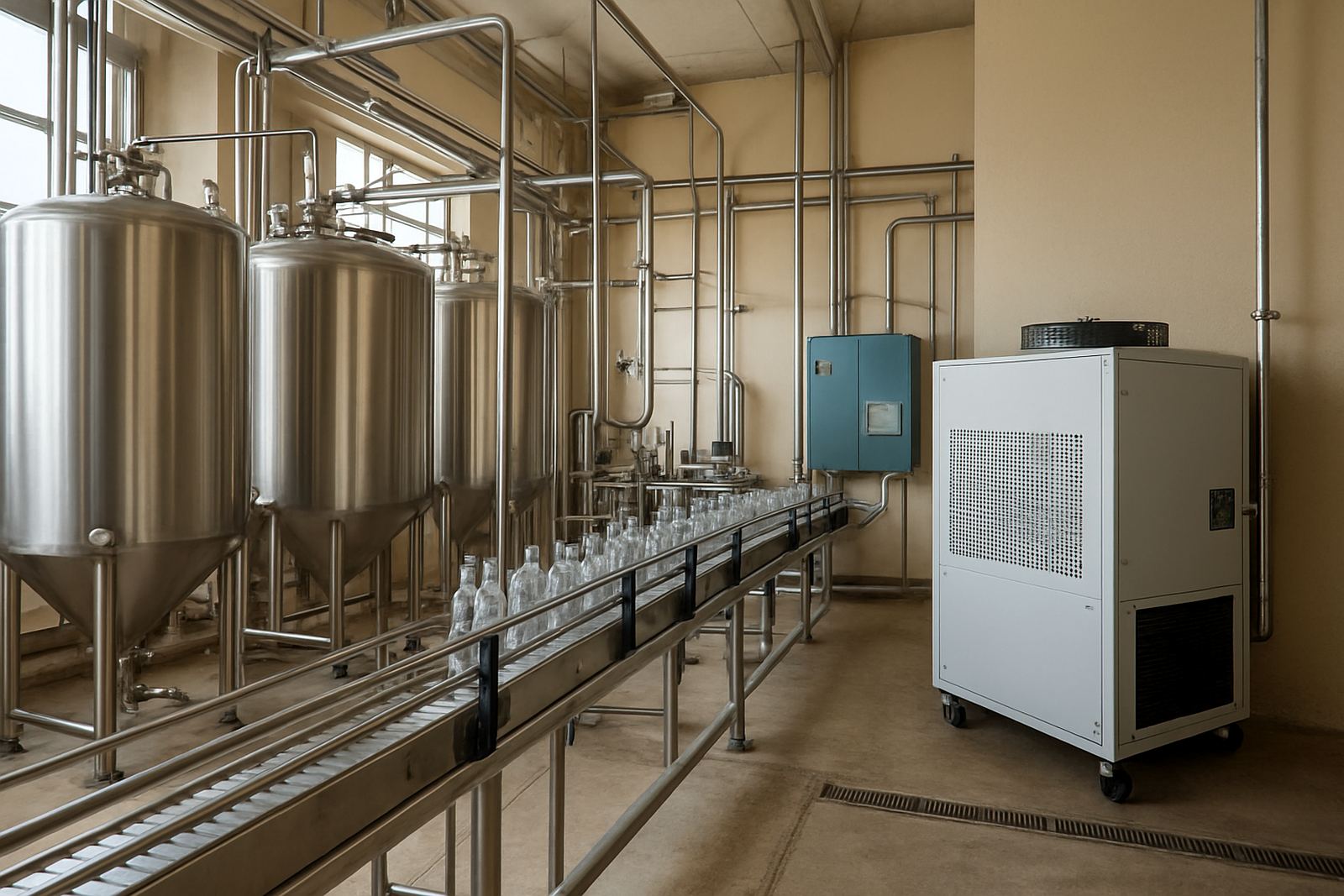
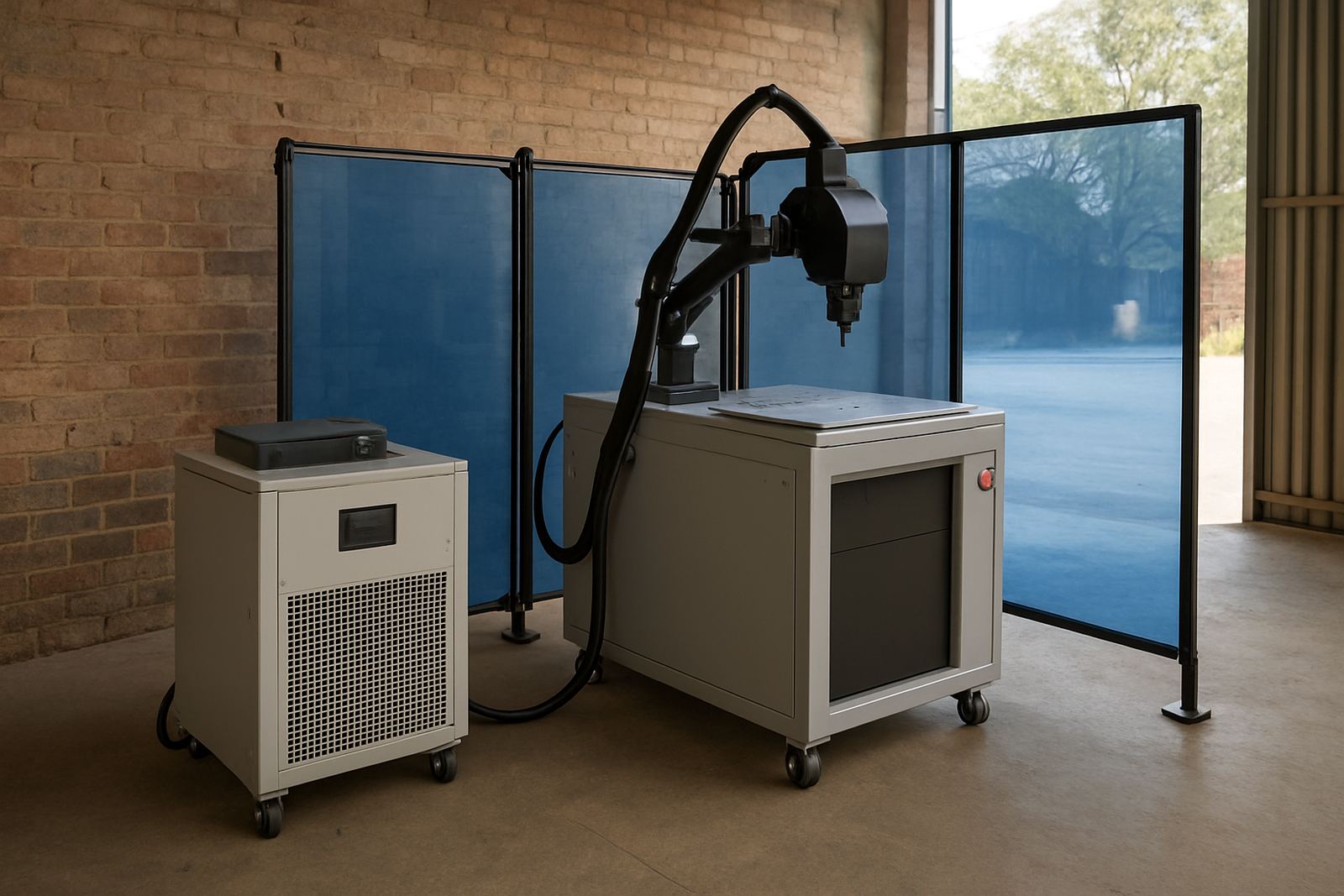
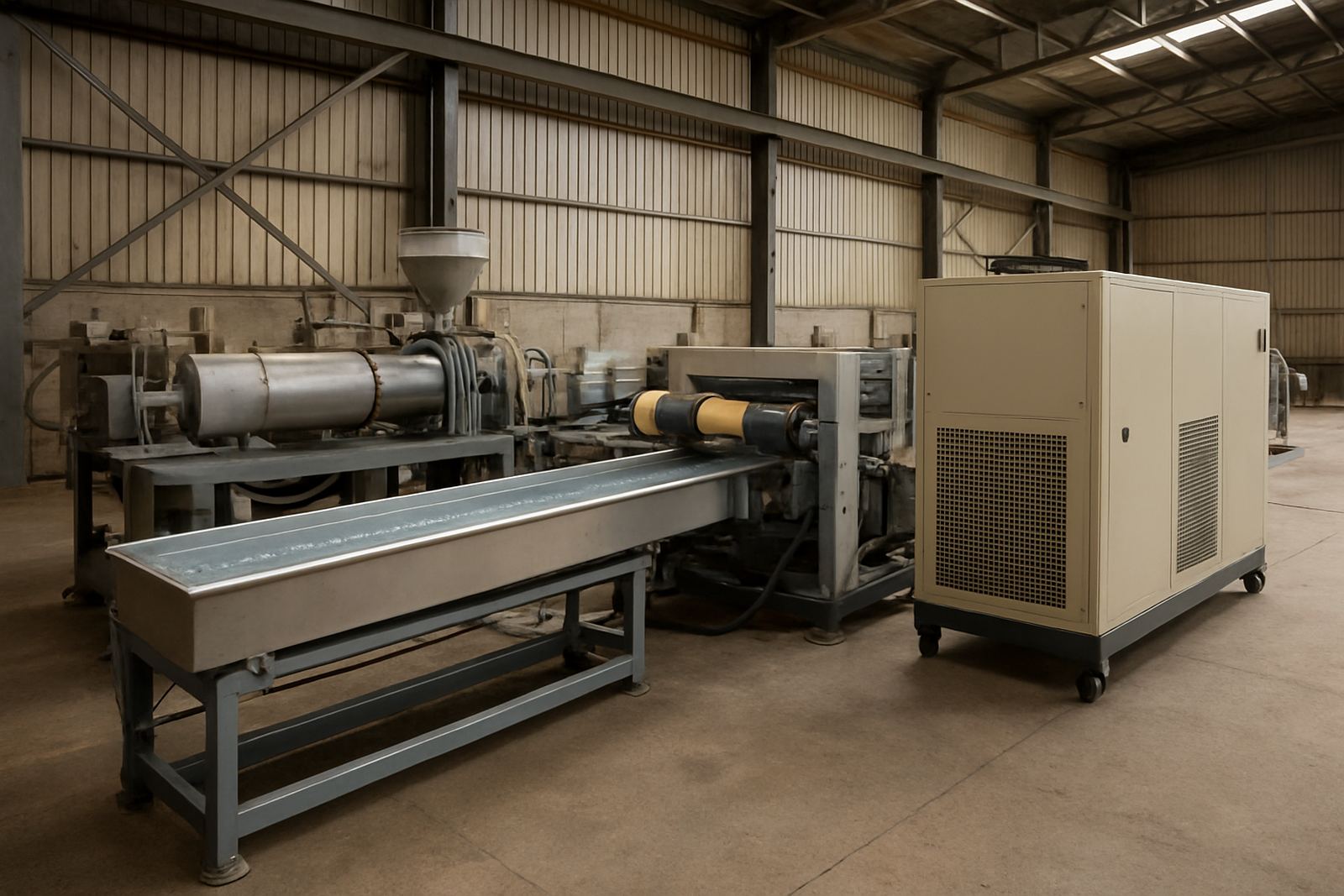
Every plant has its own layout, but most extrusion cooling setups include a chiller, insulated process water tank, circulation pump, heat exchanger or direct load circuit, and temperature controls linked to the line. Some sites also need a buffer tank, filtered water loop, or separate circuits for die cooling and ancillary equipment.
- Die and tooling cooling circuits for stable product form
- Vacuum tank or calibration tank cooling
- Calibration sleeve and sizing table cooling
- Puller and haul-off support cooling where required
- Downstream trimming, cutting or winding area cooling
- Auxiliary cooling for moulds, pumps and heat-generating equipment
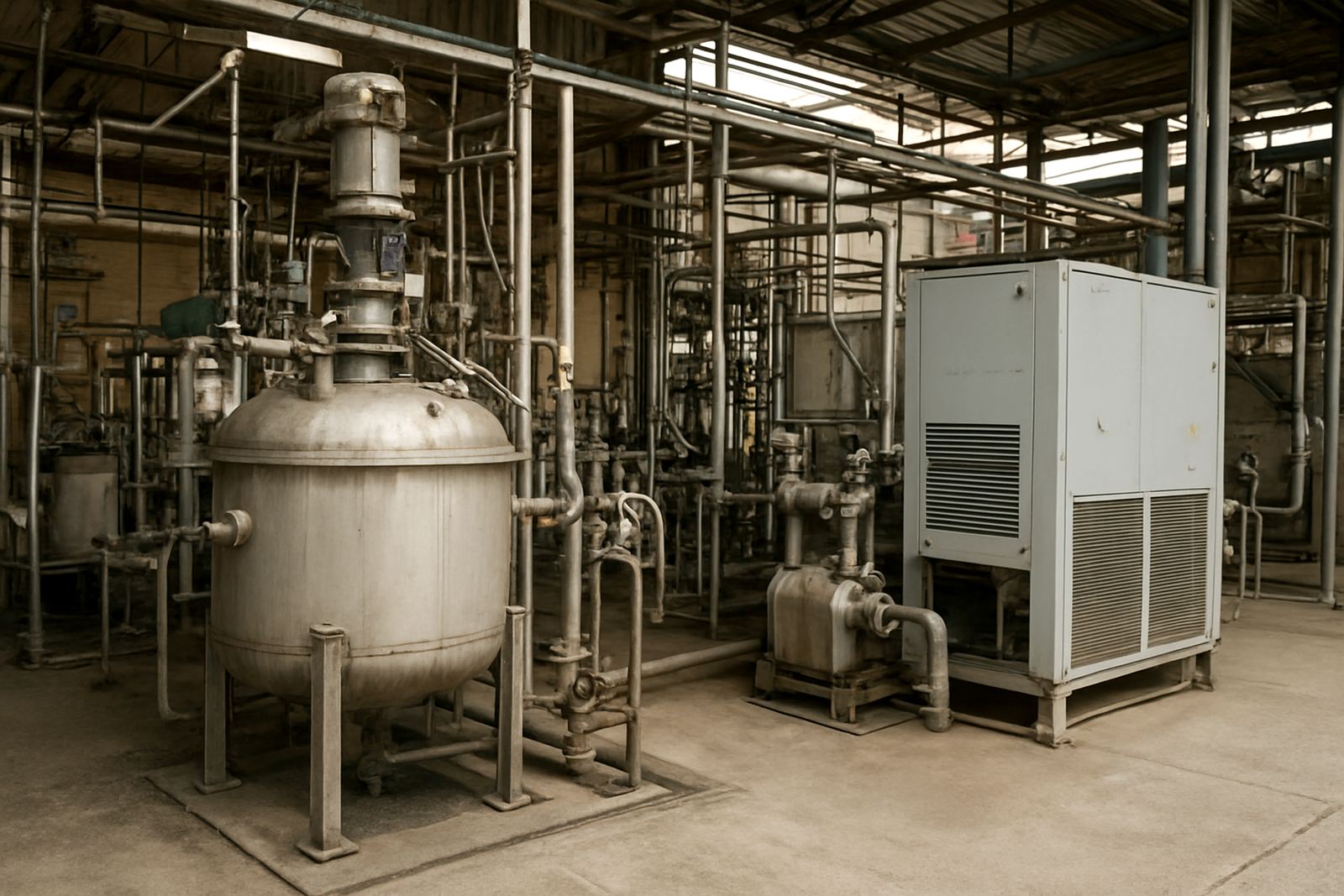
For plants in Gauteng, especially in industrial areas like Alberton, Germiston and Boksburg, we often see a mix of older pipework and newer machinery. That means the chiller has to fit the existing plant rather than forcing a full redesign. An assessment should check pipe sizes, flow rates, pressure drop, ambient temperature and how the plant runs during load-shedding or generator operation.
Planning the layout before you buy
Good cooling starts with the layout. The unit must be positioned where maintenance access is possible, air flow is not blocked, and the pipe run is short enough to avoid unnecessary pressure loss. If the chiller sits too far from the line, you can lose control at the point where the water is most needed.
Indoor installations often work best when dust, heat and vibration are controlled. Outdoor installs can work too, but they need weather protection, proper drainage and attention to coastal corrosion if the plant is near Durban or Cape Town. In high-dust industrial zones or near metal fabrication areas, panel protection and regular cleaning become part of the plan.
It also helps to decide early whether the line needs one central chiller or more than one smaller unit. One central system can be easier to manage, but separate units may be better if different lines run at different temperatures or if production must continue while one machine is down for service. Planning for isolation valves and bypass lines now can save a lot of trouble later.
- Allow space for filters, valves and maintenance access
- Keep electrical panels clear of steam, wash-down spray and heat sources
- Check the floor load where tanks or larger chillers will sit
- Include a backup plan for generator supply or temporary cooling
Common mistakes we see on extrusion sites
One common mistake is oversizing or undersizing the chiller based on guesswork. If the unit is too small, it runs flat out and still cannot hold temperature. If it is too large, it can short-cycle and become inefficient, with more wear on compressors and controls. The right size depends on actual heat load, not just the machine nameplate.
Another problem is ignoring water quality. Scale, algae and dirt reduce heat transfer and block strainers. In some plants, process water is topped up from a borehole or municipal supply without checking hardness or treatment needs. That may look fine at first, but it can lead to blocked passages, pump damage and poor cooling performance. We often advise water treatment checks as part of preventative maintenance, not as an afterthought.
We also see lines where pipework was extended without checking the effect on flow. Long runs, undersized piping and too many bends make the pump work harder than it should. On older sites the control panel may be basic or partly manual, which means temperature variation is noticed too late. A control panel upgrade can improve visibility and reduce operator guesswork.
Budget ranges for extrusion cooling projects
Budget depends on line size, duty cycle, ambient conditions and how much existing equipment can be reused. For small to medium extrusion lines, a basic chiller supply and install can start from about R180,000 to R350,000. For larger lines, multiple circuits or tighter temperature control, projects often sit between R350,000 and R900,000.
When pipework changes, tank modifications, pump replacements or electrical upgrades are needed, the total can move higher. Temporary cooling for a shutdown or emergency breakdown is usually priced separately, and it can be a practical option when production must continue while repairs are completed. Operators sometimes think the cheapest option is the best short-term choice, but an undersized system usually costs more over time in scrap, stoppages and callouts.
We recommend budgeting for commissioning, operator training and one or two follow-up visits after installation. That gives the team a better chance of setting temperatures correctly and keeping the line stable from the start.
Service support across South Africa
Raynen supports extrusion plants from our base in Alrode, Alberton and through service areas in Johannesburg, Pretoria, Durban, Cape Town, Rustenburg, Germiston and Boksburg. That reach matters when a line cannot wait for a fault to be sorted later in the week.
Our team handles chiller installation, system commissioning, preventative maintenance, breakdown repairs, refrigeration repairs, pump replacements, water treatment checks, pipework retrofits, control panel upgrades, cooling audits, temporary cooling and operator training. If your plant is dealing with inconsistent temperatures, repeated trips or cooling that only works on mild days, we can assess the full system and recommend what needs to change.
Extrusion plants need cooling that is steady, practical and easy to maintain. The right setup supports dimensional control, better line speed and fewer surprises on the floor.
- Alberton depot support for Gauteng sites
- Service coverage for production plants across South Africa
- Local response for urgent cooling faults and planned shutdowns