Why batching plants need tighter cooling control
In chemical batching, a few degrees can change viscosity, reaction speed and final product quality. Some products thicken too quickly, others start to foam, and a few will drift out of spec if the batch runs warmer than expected. That is where a properly sized chiller becomes part of the process, not just an add-on.
Batching rooms in Alberton, Germiston, Boksburg and the wider Ekurhuleni area often face heat from pumps, mixers, compressed air lines and poor ventilation. On the coast in Durban and Cape Town, humidity and warm intake air add another layer of strain. A chiller that is sized for South African conditions, and not just a brochure rating, helps keep the cooling water at a stable setpoint through the full shift.
For chemical batching, the main aim is controlled cooling during mixing, transfer and holding stages. That means fewer rejected batches, less stress on seals and valves, and more predictable production during load-shedding recovery when plant starts and stops can be messy.
Typical cooling set-ups for mixing tanks and transfer lines
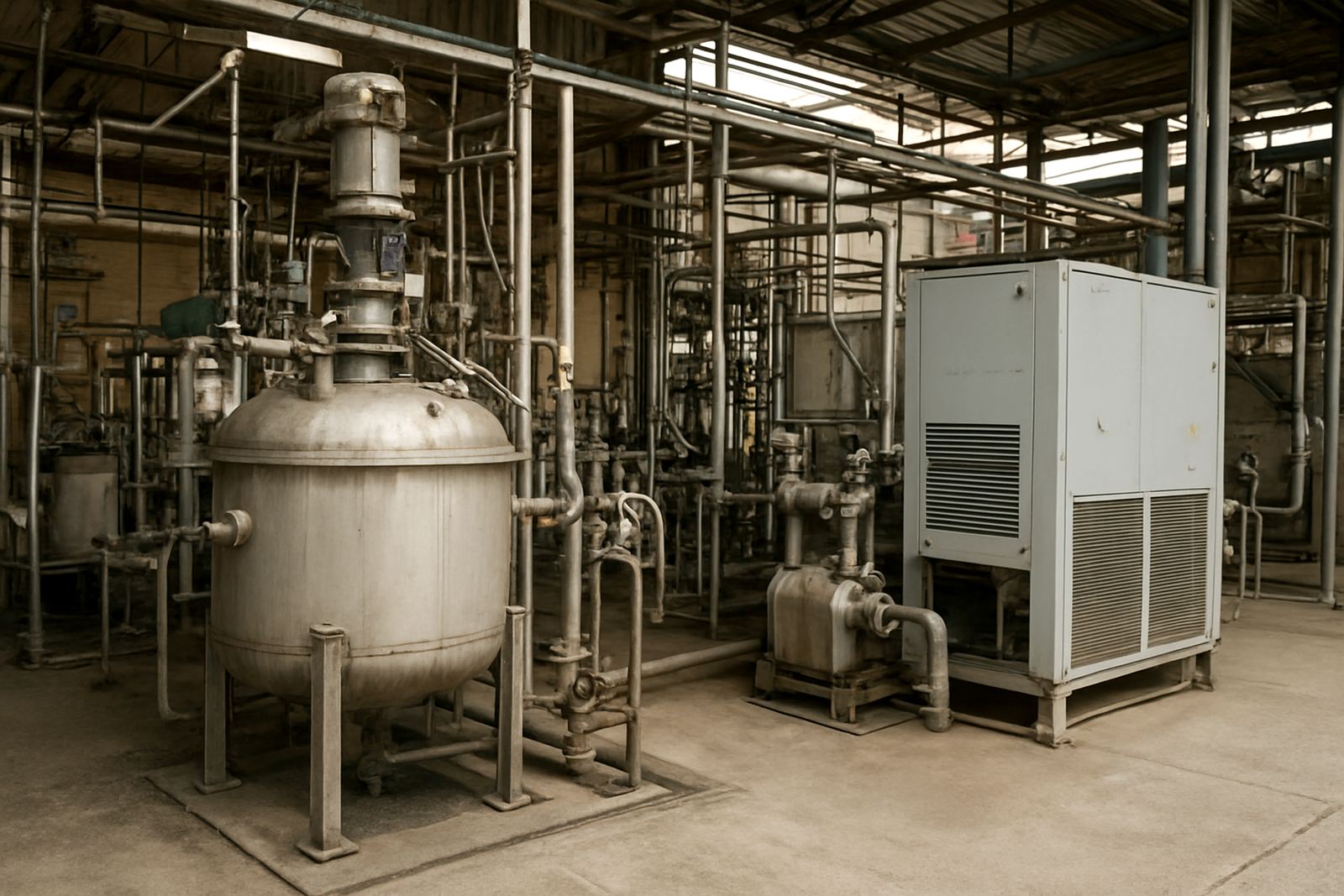
Every batching process is different, but most plants use one or more of these arrangements:
- Jacketed mix tanks with chilled water circulation
- Plate or shell heat exchangers on recirculation loops
- Cooling for transfer lines that carry warmed product between vessels
- Holding tank temperature control to prevent drift between batches
- Small process coolers dedicated to a single reactor or mixer
The chiller is usually paired with a circulation pump, insulated pipework, isolation valves and a control point near the batch vessel. Where the process fluid must stay clean, water treatment checks are important so scale and corrosion do not build up inside plates and pipework. If the plant handles aggressive chemicals, the loop may need extra corrosion allowance, non-ferrous fittings or separate heat exchange sections.
For plants with several batches running in parallel, a central chiller bank can feed multiple points. In smaller facilities, one compact unit might serve a single tank, but the piping route must still be short and well insulated. Long runs lose tempreature fast and the compressor works harder than it should.
Layout and planning points before you buy equipment
Good planning starts with the batch recipe, not with the chiller model. You need to know how much heat must be removed, how fast the batch warms up, the tank size, the ambient temperature in the room and whether the process has peak demand at certain times. A unit that is fine in winter may struggle in a hot production shed in Pretoria or on an exposed industrial site in Rustenburg.
We normally look at access for installation, floor loading, drain points, ventilation and service clearance around the unit. If the equipment sits in an enclosed plant room, there must be enough airflow for the condenser or cooling section to breathe. On sites with dust, chemical mist or coastal salt air, the location needs a bit more thought so the unit is not pulled down by grime and rust.
- Leave space for filter cleaning and panel access
- Keep suction and discharge pipe runs as short as possible
- Insulate all chilled water lines properly
- Plan for a bypass if batches need to continue during maintenance
- Allow for future tank additions or higher batch volumes
Operators should also know what normal pressure and flow look like. Without that, small problems get missed until a batch is lost.
Common mistakes that cost money in chemical batching
One of the biggest mistakes is undersizing the chiller to save on capital spend. The plant may run, but the cooling recovery time becomes too long and each batch takes longer than planned. Another common issue is using poor pipe insulation or running chilled water too far from the process point, which wastes power and puts extra load on pumps.
We also see plants where the cooler is installed, but nobody checks water quality. That leads to blocked strainers, scaling in heat exchangers and premature pump wear. In some cases, the cooling loop was designed without thinking about load-shedding. When power returns, the system starts hard and trips on high pressure or low flow because no one allowed for the restart sequence.
Other problems include poor operator training, no clear maintenance schedule and no spare parts on site. A batch plant can be technically sound but still lose production because the team does not know when to clean a condenser or where to look first after an alarm.
- Skipping a proper cooling audit before installation
- Using a unit with no service access around it
- Ignoring water treatment and filtration
- Running process lines with weak insulation
- Leaving control settings unchanged after recipe changes
What a realistic budget looks like in Rand
Budget depends on cooling duty, number of points served, pipe length, controls and whether the site needs a new installation or a retrofit. For a small batching line with basic cooling needs, a compact chiller package may start in the lower tens of thousands of Rand once installation is included. Medium systems with better controls, pumps and pipework changes often sit in the R150 000 to R450 000 range.
For larger process lines, multiple tanks or plants with tight tolerance requirements, total project spend can move well beyond that, especially where control panel upgrades, pipework retrofits, temporary cooling during shutdowns or water treatment improvements are needed. In many cases the cheapest option is not the least expensive over twelve months, because repeated breakdowns, rejected batches and emergency callouts quickly add up.
A good budget should cover more than the chiller itself. It should include commissioning, operator training, preventative maintenance and spare parts planning. If the plant runs around the clock, you also need to think about standby capacity or a temporary cooling solution for planned shutdowns.
How Raynen supports batching plants across South Africa
Raynen is based in Alrode, Alberton and supports batching operations across Johannesburg, Pretoria, Durban, Cape Town and Rustenburg, with depot and service coverage in Germiston and Boksburg as well. That matters when a process line cannot wait for a casual response. Chemical batching often runs to a production schedule, and a cooling issue can affect more than one shift.
Our team handles chiller installation, system commissioning, preventative maintenance, breakdown repairs, refrigeration repairs, pump replacements, control panel upgrades, cooling audits, temporary cooling, operator training, water treatment checks and pipework retrofits. For batch plants, the aim is always practical: keep temperature under control, avoid lost product and make maintenance predictable.
Managed properly, a process cooler can last for years and keep batch quality steady through hot summers, power interruptions and long production cycles. With the right layout and sensible maintenance, the cooling side of the plant stops being a problem and starts doing its job quietly in the background.