Why fabrication shops need stable cooling
In a metal fabrication workshop, temperature swings can affect cut quality, cycle times and machine life. Laser cutters, press tools, hydraulic systems and some process lines all give off heat, and when that heat is not managed properly you start seeing poor finishes, nuisance trips and premature wear.
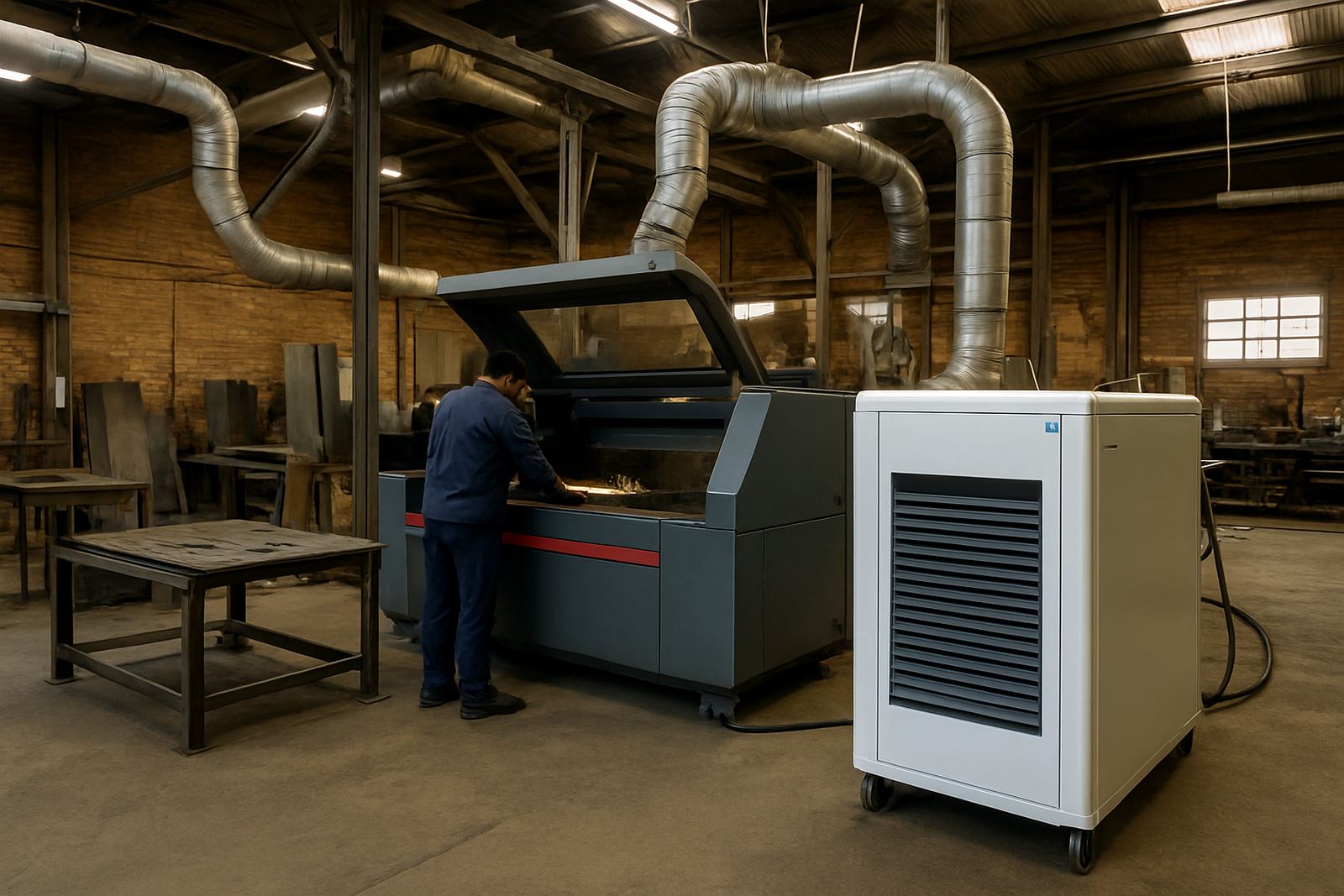
At Raynen, we see this most often in busy shops running long shifts, where the chiller is expected to cope with dust, warm plant rooms and frequent start-stop use. In summer, a unit that is undersized or poorly installed can struggle to hold setpoint, especially where the workshop has open roller doors or limited ventilation. That is where proper sizing and correct pipe routing matter more than most teams realise.
Typical equipment in a fabrication environment
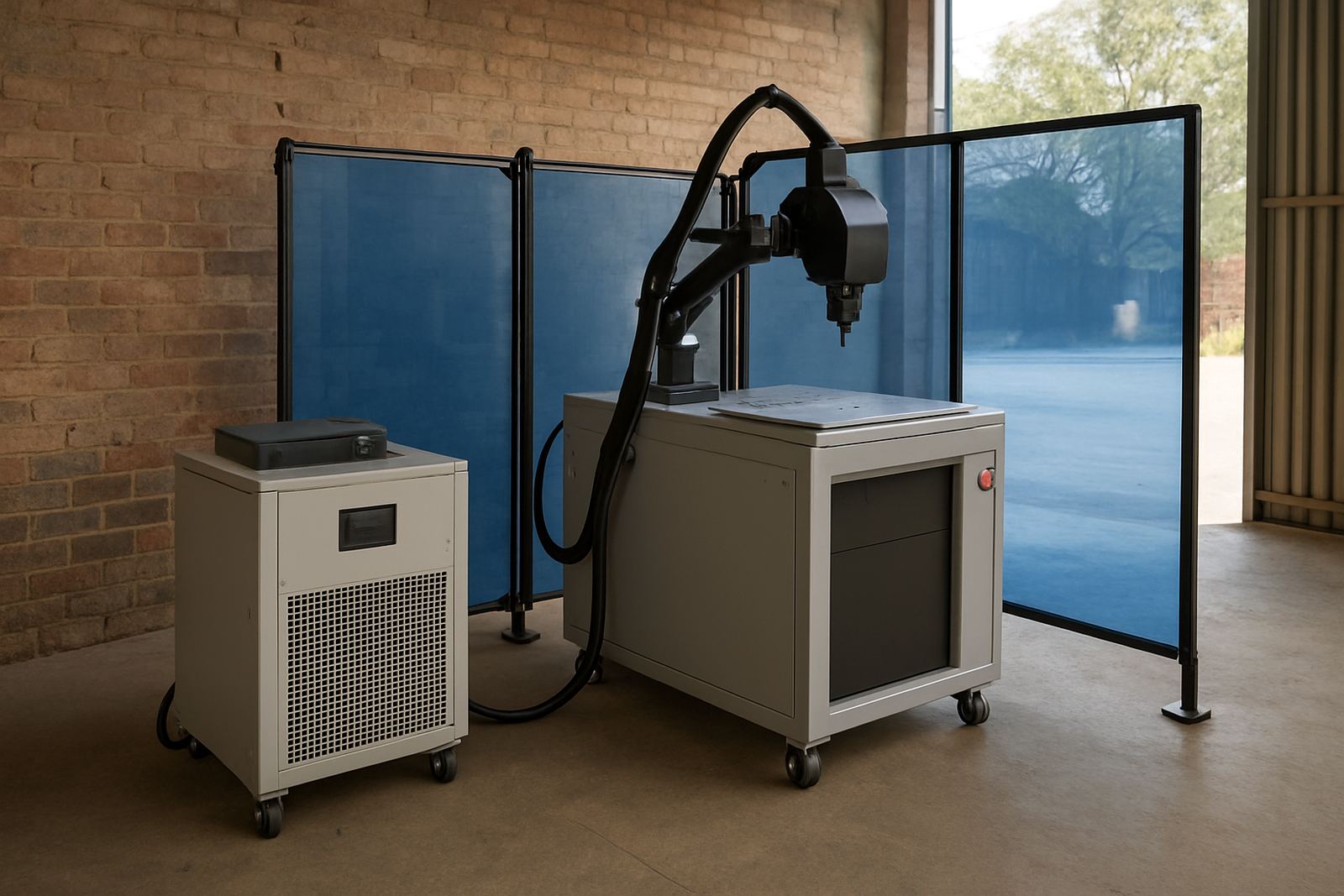
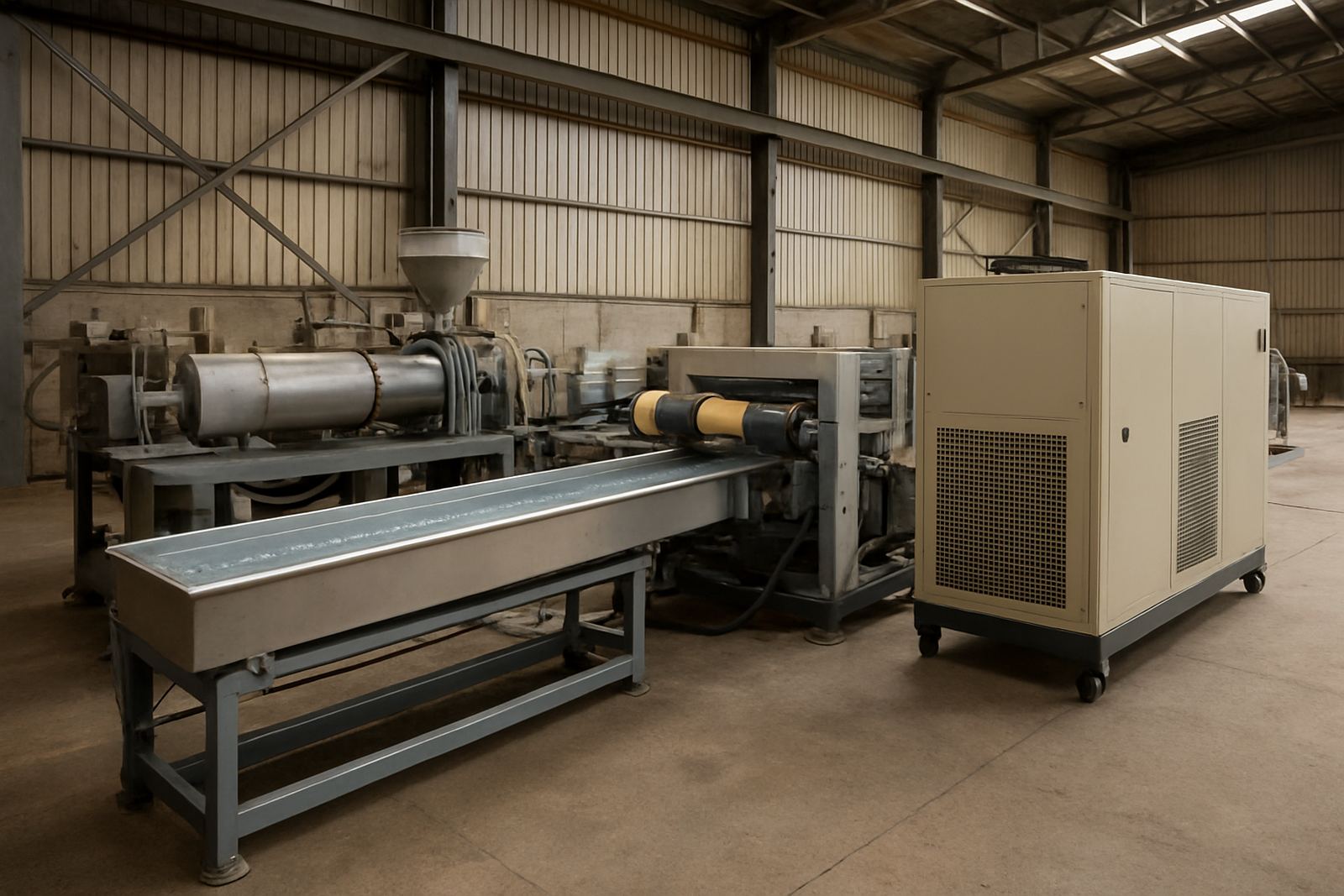
Every shop is different, but the cooling load usually comes from a few common areas. Laser systems need consistent water temperature to protect optics and maintain beam stability. Moulds and forming tools need cooling to control part quality and repeatability. Some fabrication lines also use chilled water for hydraulic packs, coolant circuits and auxiliary skids.
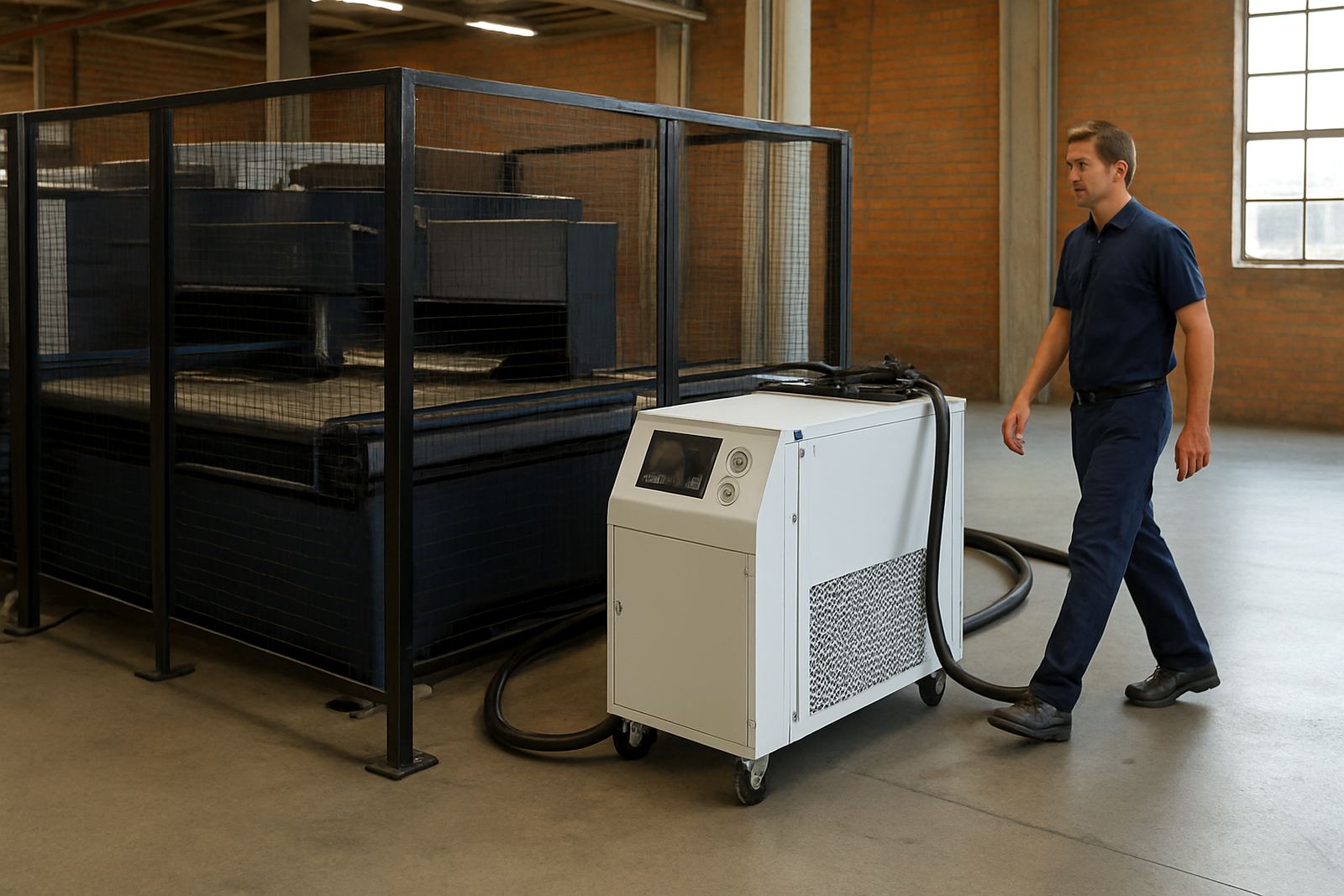
A practical cooling setup may include the chiller itself, a pump set, buffer tank, filtration, insulated pipework and a control panel that is easy for operators to monitor. In larger plants, the chiller may sit outside the main bay while the distribution pipework runs to separate production areas. Where water quality is poor, water treatment checks and routine cleaning are not optional, they are part of keeping the system reliable.
- Laser cutting and engraving systems
- Press tools and mould temperature control
- Hydraulic power packs and process lines
- Dedicated cooling for automated fabrication cells
- Temporary cooling during equipment changeovers or shutdown work
How to plan the layout before installation
The best results come from planning the chiller around the workshop, not the other way around. Start with the heat load, the distance between the chiller and the point of use, and the hours of operation. A machine that runs 8 hours a day has different needs to one that runs on double shifts, and a site in Durban will need to think differently about humidity than a site in Rustenburg or Alberton.
We usually advise keeping the unit where it has clean air flow, good service access and enough space for maintenance. If the plant has dust from grinding or cutting, the chiller should not sit in the thick of it. The same goes for electrical rooms that already carry a lot of heat. Pipe runs should be kept as short as practical, with proper support and insulation, and control wiring should be laid out so operators can see alarms without walking across the shop floor. A small planning mistake here can cost a lot later, and it often shows up as uneven cooling or needless pump strain.
- Measure actual heat load, not just machine nameplate data
- Allow for future machines or a second shift
- Check access for cleaning, lifting and tube inspection
- Keep the unit clear of direct sun and hot exhaust air
- Plan for load-shedding so production can restart cleanly
Common mistakes we see in metal fabrication sites
One of the most common mistakes is choosing a chiller on price alone. A low-cost unit that cannot hold temperature on a hot day ends up creating more downtime than it saves. Another issue is poor water treatment. Scale and corrosion can build up quickly in South African conditions, especially where municipal water quality changes or the plant is near the coast.
We also see systems that are installed with undersized pumps, badly routed pipework or no real maintenance plan. In many workshops the team only calls for help after a breakdown, by then the laser has been down for a full production run and the cost is no longer just the repair. Operators may also bypass alarms because they want to keep working. That sort of shortcut usually makes the problem worse, not better.
- Undersizing the chiller for summer conditions
- Ignoring dust buildup on coils and filters
- Using poor-quality water without checks
- Skipping preventative maintenance until failure
- Overlooking backup cooling during shutdowns or changeovers
Budget ranges for fabrication cooling in Rand
Budget depends on the heat load, duty cycle, site layout and whether you need a single unit or a combination of chillers and buffer tanks. For smaller fabrication shops with one or two laser systems, basic industrial water chilling packages can start in the region of R85 000 to R180 000. Mid-sized operations with multiple machines, better controls and longer pipe runs often land between R180 000 and R450 000.
For larger plants, multi-zone systems, process-line cooling and temporary backup arrangements can move beyond R450 000, especially where pipework retrofits, control panel upgrades or water treatment are included. The real cost should also include installation, commissioning, operator training and a service plan. A proper setup may cost more upfront, but it usually pays back through fewer stoppages, steadier output and longer equipment life.
If your shop is in Johannesburg, Pretoria, Durban, Cape Town or Rustenburg, it is worth comparing the cost of a correct installation against the cost of lost cutting time, scrap and emergency callouts. In fabrication, that calculation is usually clear.
Service support for active workshops
Raynen supplies and services industrial water chillers from our base in Alrode, Alberton, with branch support across Gauteng and into Durban, Cape Town and Rustenburg. Our team, led by Riaan van der Merwe, works with fabrication sites that need dependable cooling for lasers, moulds and process lines. Lerato Mokoena handles operations, Sibusiso Dlamini leads technical servicing, and Pieter Joubert supports technical sales and system sizing. The workshop and projects team can assist with commissioning, repairs and planned maintenance.
For fabrication shops, the difference is often in the follow-through. A chiller should not only be delivered, it must be checked in place, set up correctly and kept in condition through routine maintenance. That includes coolant checks, pump inspections, control checks and cleaning where needed. When a workshop is running under pressure, the last thing it needs is uncertainty around the cooling plant.
- Chiller installation and system commissioning
- Preventative maintenance and breakdown repairs
- Pump replacements and refrigeration repairs
- Cooling audits and temporary cooling
- Operator training and water treatment checks