Where Mining Workshops Lose Cooling Margin
In a mining workshop, cooling failure shows up quickly. Laser machines drift out of tolerance, mould temperatures move around, weld prep slows down and process support equipment starts running hotter than it should. In many sites around Johannesburg, Rustenburg, Pretoria and Durban, the workshop is also dealing with dust, vibration, long shifts and load-shedding, so the cooling plant has to do more than just make cold water.
We often see workshops using cooling units for repair bays, fabrication cells and support lines that run outside normal factory hours. These are not light-duty applications. The water chiller must cope with changing ambient temperatures, dirty air filters, fluctuating power and poor housekeeping around the plant room. If the unit is undersized, the first signs are usually nuisance alarms, unstable temperatures and more downtime than the team can afford.
For mining clients, the aim is simple: keep the process stable, protect the equipment, and reduce avoidable callouts. That starts with matching the chiller to the actual heat load, not just the nameplate on the machine.
Typical Cooling Equipment in a Mining Workshop
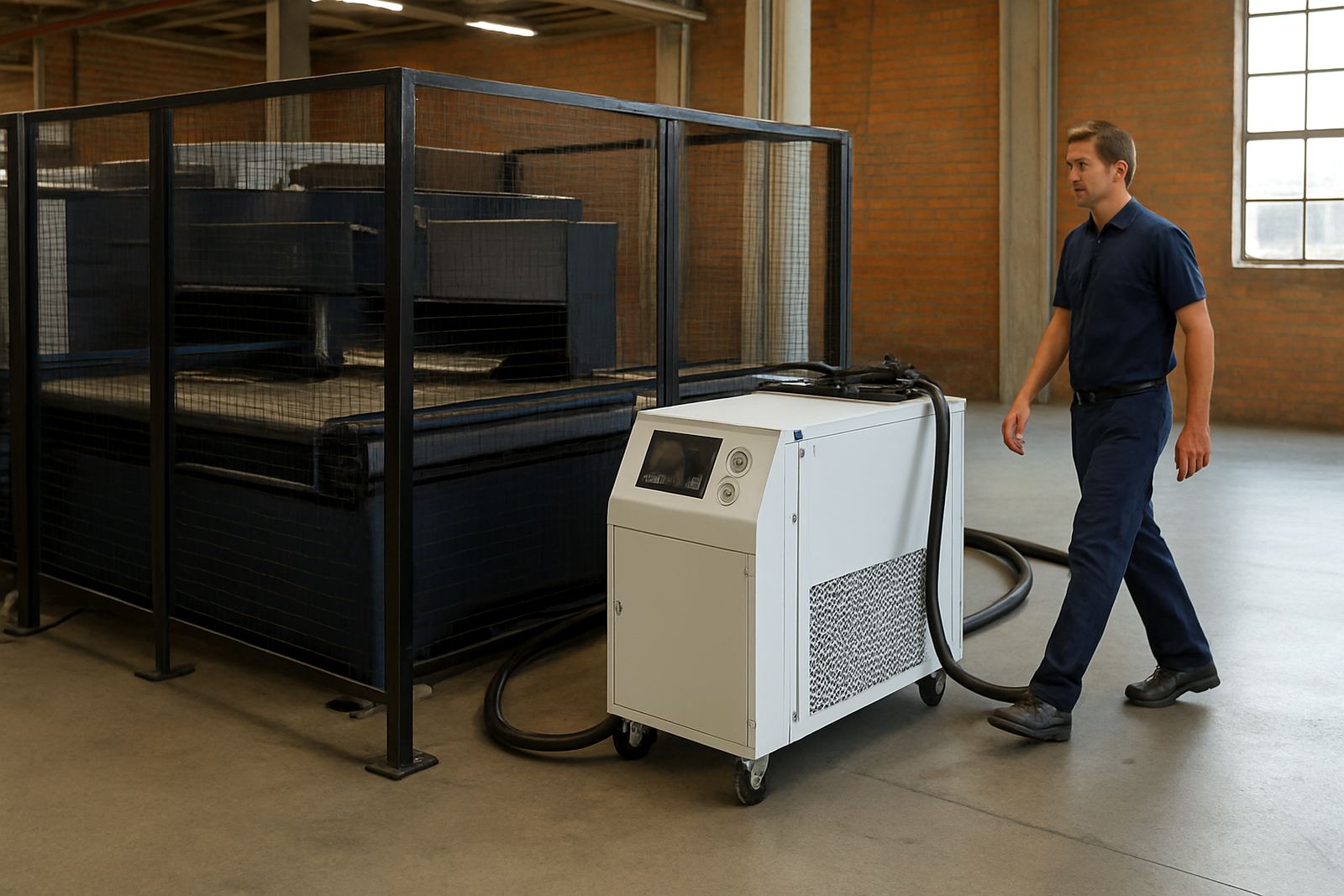
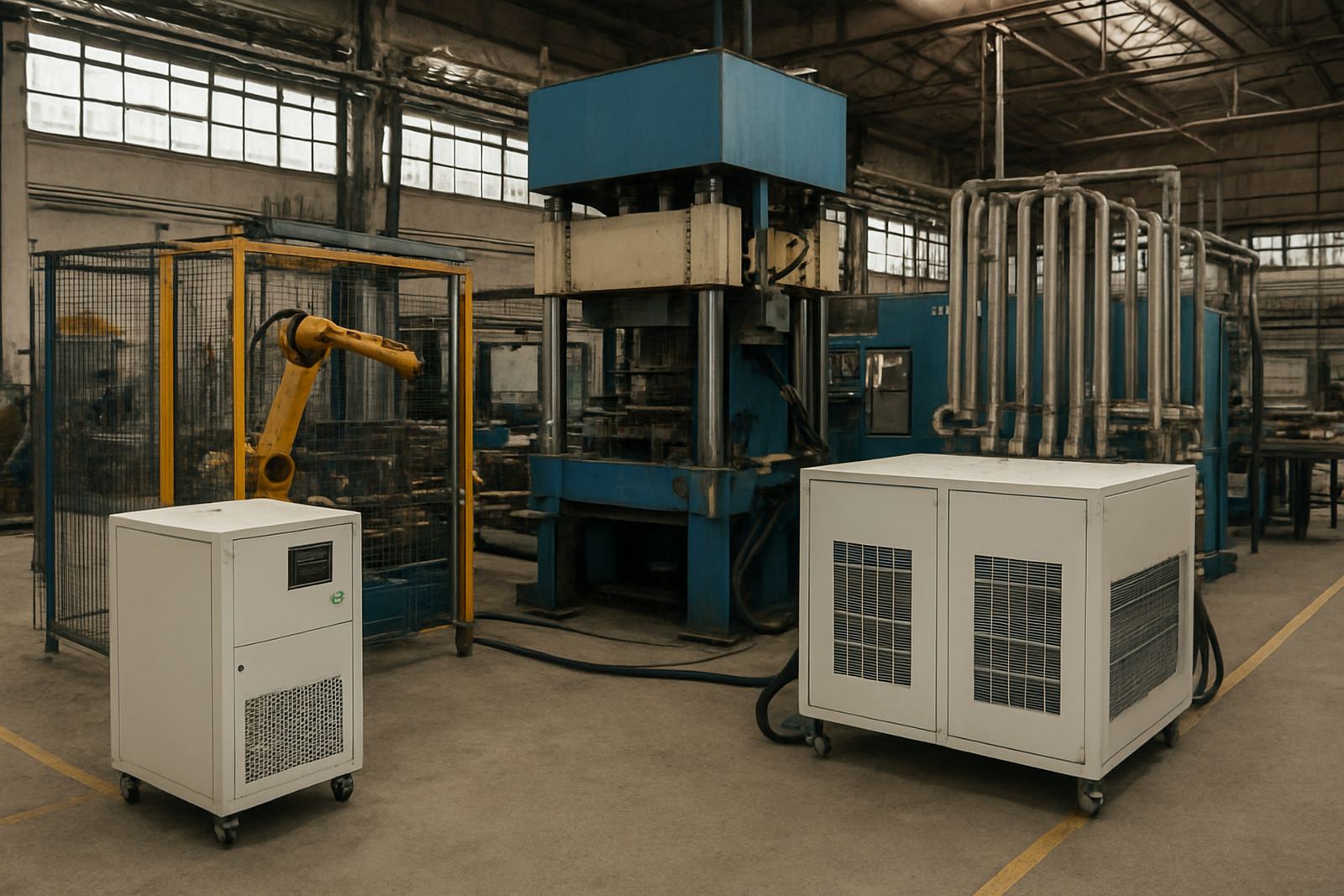
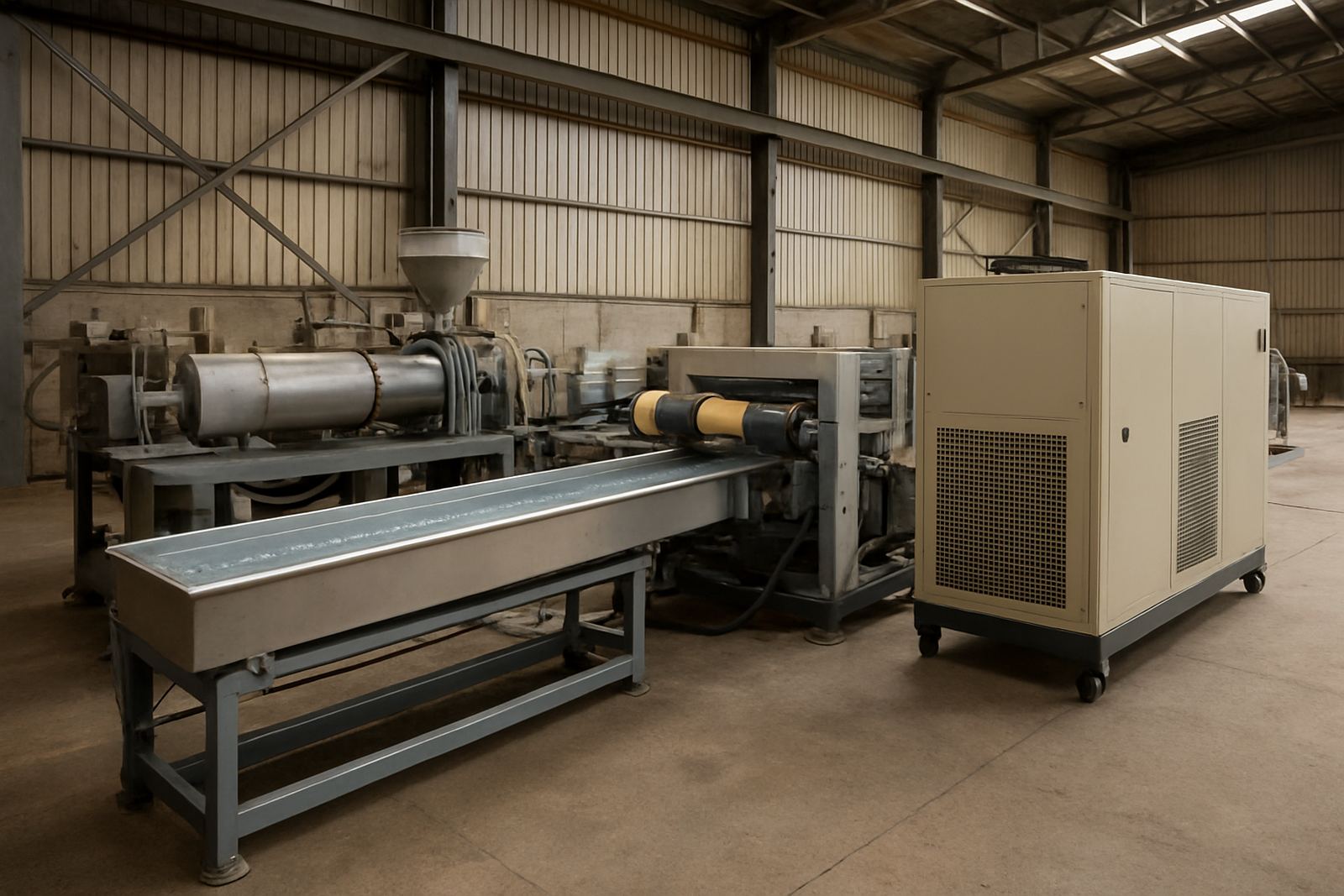
Every site is different, but the common equipment set is fairly consistent. A mining workshop may be cooling laser systems used for cutting or marking, moulds for component repair, hydraulic or hydraulic-adjacent process lines, and auxiliary machines that support fabrication and maintenance work. Some sites also need temporary cooling during shutdowns, expansions or emergency repairs.
- Air-cooled industrial water chillers for indoor or outdoor plant rooms
- Closed-loop cooling skids for dust-prone environments
- Pumps sized for long pipe runs between the workshop and equipment bay
- Buffer tanks where temperature swings need to be reduced
- Control panels with alarms, remote monitoring and fault indication
- Water treatment checks to limit scaling, corrosion and blockages
For sites near the coast, especially in Durban and Cape Town, humidity and salt in the air can shorten component life if the installation is not planned properly. Inland sites often battle with dust and heat instead, so the right fan arrangement and maintenance access matter just as much as cooling capacity.
Layout Advice That Saves Headaches Later
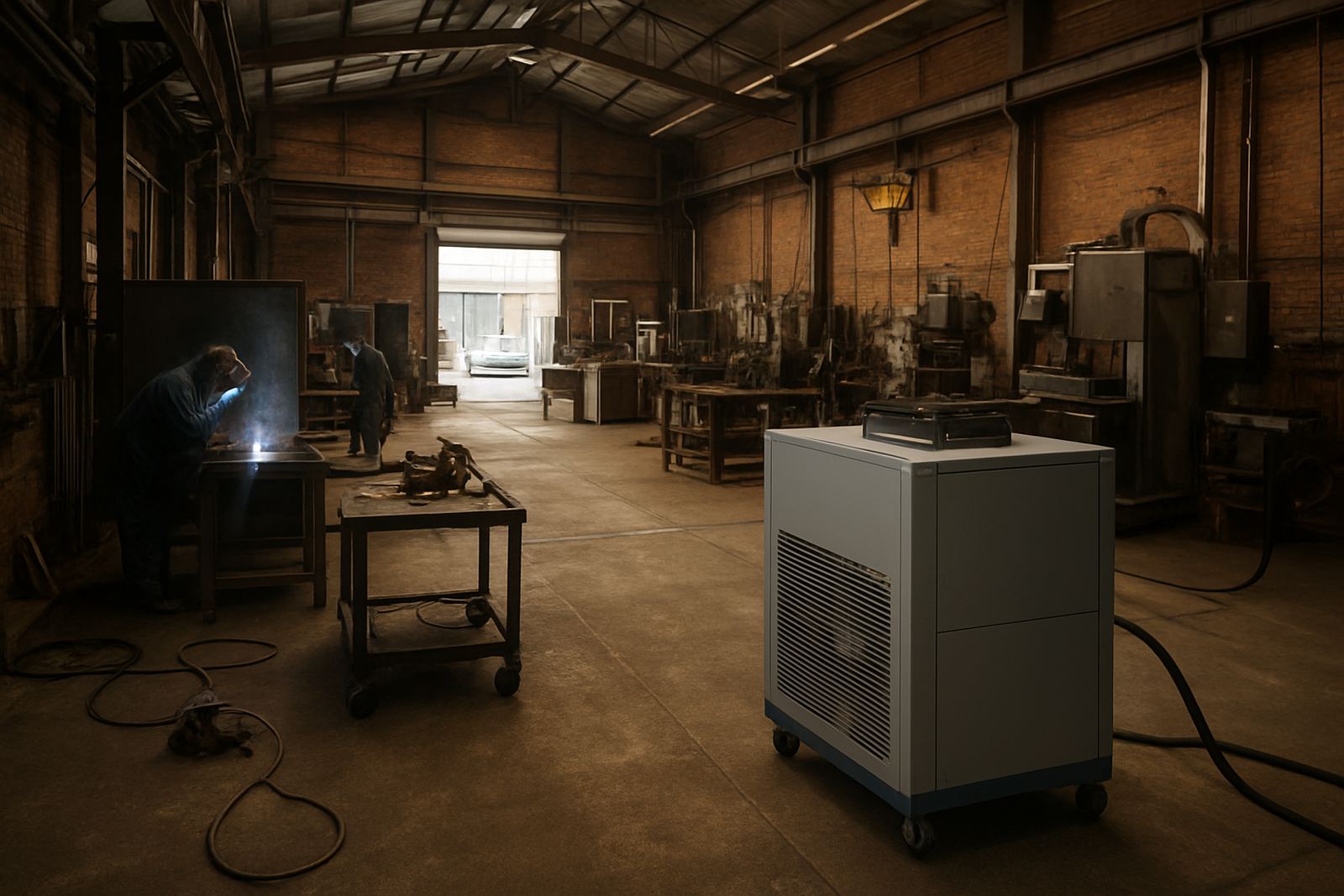
A good workshop layout makes service easier and keeps cooling stable. The chiller should not be crammed against a hot wall or placed where welding fumes and grinding dust are pulled straight through the condenser. It also needs clear access for cleaning, filter checks and future repairs. If the unit sits too far from the equipment, pressure drop rises and the pumps work harder than they should.
We usually recommend that mining clients think about the plant room as part of the workshop flow. The route for pipework, the position of isolation valves, and the location of the electrical isolator all affect downtime when something goes wrong. If the site uses temporary cooling during shutdowns, allow for hose routing and safe walkways so technicians are not working around forklifts and stock movement.
On older sites in Alberton, Germiston and Boksburg, the common issue is retrofitting new cooling into a space that was never planned for it. That can be managed, but it needs proper measurements, pipe support and a clear view of where condensate and drain water will go. Municipal rules on drainage and runoff should also be checked before any new installation starts.
What Goes Wrong on Mining Sites Most Often
The same faults keep coming back on mining workshops, and most of them are preventable. The biggest ones are poor sizing, bad water quality, blocked strainers, neglected filters and weak electrical protection. After that come loose pipework, vibration damage and control settings that were copied from another site without checking the actual process.
- Chillers selected too small for peak load, especially in summer
- Dirty cooling water that causes scaling in plates and pipework
- Pumps that are under pressure from long pipe runs or high lift
- Control settings that allow wide temperature swings
- Poor access for maintenance, so service gets delayed
- Power issues during load-shedding that cause repeated restarts
Another common mistake is treating the chiller as a standalone item. It is part of the workshop system. If the electrical supply is unstable, the water treatment is ignored, or the operators do not know what the alarms mean, the unit will underperform no matter how good it looked on day one.
Budget Ranges for Workshop Cooling in Rand
Mining workshop budgets vary a lot because the loads vary. A small repair bay with one cooling point is very different from a multi-bay fabrication area with process support equipment and longer pipework. As a working guide, smaller industrial water chillers can start in the region of R85 000 to R180 000, depending on capacity and controls. Medium units for more demanding workshop use often sit between R180 000 and R450 000.
For larger mining workshops, or for sites needing multiple cooling points, temporary cooling back-up or upgraded controls, budgets can move from R450 000 to well above R900 000. Installation, pipework, commissioning, water treatment checks and any electrical upgrades must be costed separately, because those items can shift the final figure by a meaningful margin.
It is usually better to spend correctly on sizing, controls and access than to buy the cheapest unit and then deal with breakdown repairs, lost production and short service life, and that is especially true where the workshop runs after hours.
How Raynen Supports Mining Workshops Across South Africa
Raynen works from Alrode, Alberton and supports mining workshops across Johannesburg, Pretoria, Durban, Cape Town and Rustenburg through our service areas and branch network. Our team handles chiller installation, system commissioning, preventative maintenance, breakdown repairs, refrigeration repairs, pump replacements, water treatment checks, pipework retrofits, control panel upgrades, cooling audits, temporary cooling and operator training.
For workshop clients, that means one supplier can look at the full cooling picture. Lerato Mokoena manages operations, Sibusiso Dlamini handles senior service work, Anika Naidoo coordinates projects, Pieter Joubert supports technical sales, Nomsa Khumalo manages customer support, and Thabo Maseko oversees the workshop side. With Riaan van der Merwe as MD, the focus stays on practical support, not overcomplicating the job.
- We assess the actual heat load and service conditions
- We plan for load-shedding, long pipe runs and dusty environments
- We help with temporary cooling during shutdowns or failures
- We recommend maintenance intervals that suit mining duty cycles
If your mining workshop is battling temperature drift, repeated alarms or rising maintenance costs, the first step is a proper cooling review. A good setup protects the equipment and keeps the workshop moving.