Why food processing plants need stable cooling
In food processing, temperature drift shows up fast. A filler can start running slow, seals soften, product consistency changes, and cleaning cycles take longer than planned. Industrial water chillers keep process water, moulds and supporting equipment at the right temperature so production stays repeatable from the first shift to the last.
We commonly support dairies, bakeries, ready meal plants, beverage lines, meat processing sites and packaging operations. Some sites need chilled water for direct product contact equipment, while others need cooling for compressors, jackets, heat exchangers or forming tools. In older plants around Ekurhuleni and Germiston, the real issue is often not the machine itself but the room conditions, undersized pipe runs, or a cooling system that was never planned for load-shedding and summer heat.
Typical equipment we size for food sites
Every plant has its own layout, but most food processing cooling systems include a mix of the following:
- Air-cooled or water-cooled industrial water chillers
- Process water buffer tanks for steadier temperature control
- Pumps matched to pipe length, elevation and flow demand
- Plate heat exchangers or jacketed vessels
- Control panels with alarms and temperature setpoint management
- Filtration and water treatment checks to reduce fouling
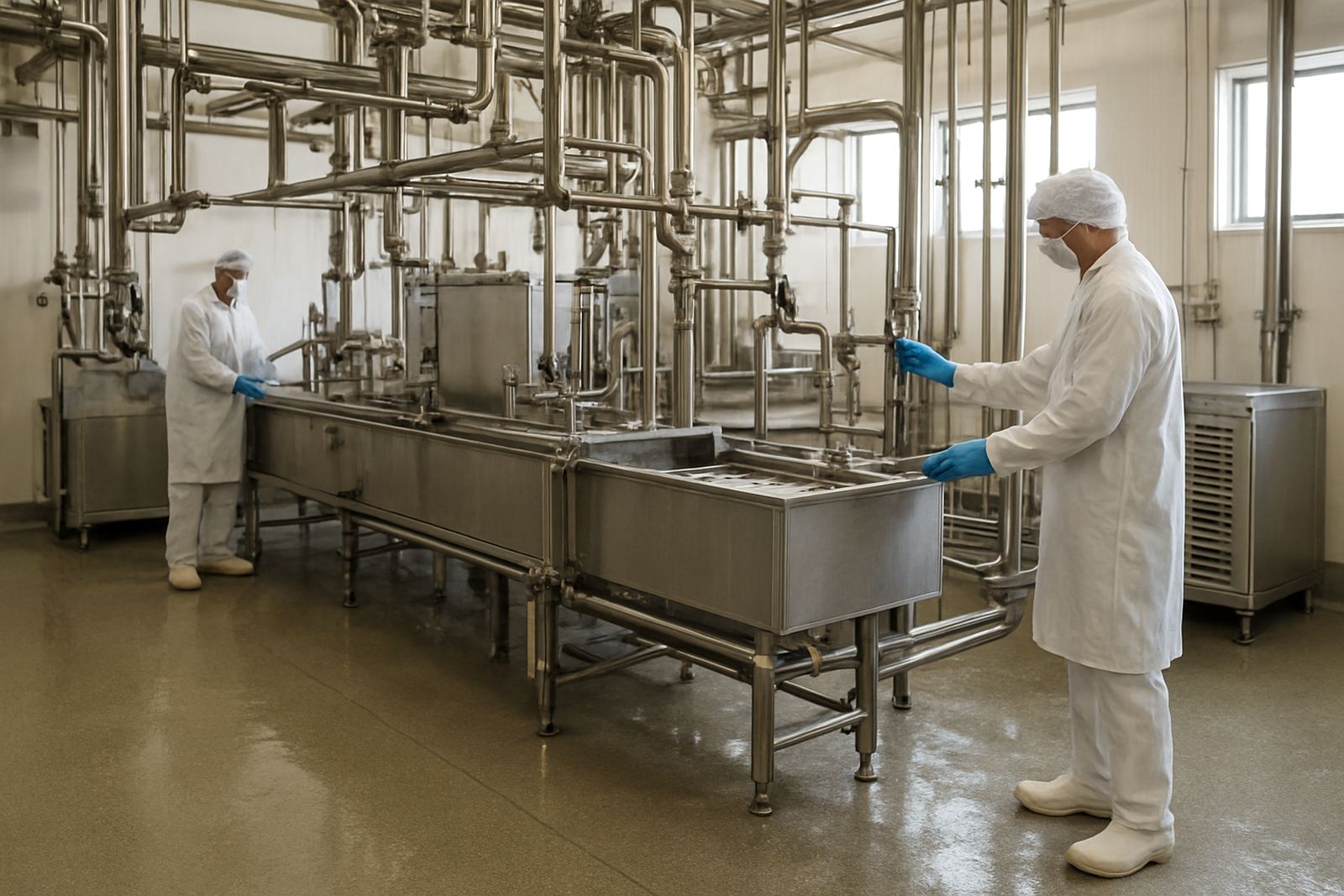
For food environments, stainless steel contact parts, cleanable strainers and accessible service points matter. Where hygiene controls are strict, we plan for easy drain-down, clear access for maintenance and pipework that will not trap stagnant water. On coastal sites like Durban and Cape Town, humidity and corrosion resistance need more attention, while inland plants in Pretoria or Rustenburg often need stronger planning for summer heat and dusty surroundings.
How we plan the layout before installation
A good installation starts with the line layout, not just the chiller size. We look at where the heat is being generated, how far the chilled water must travel, and whether the plant needs backup cooling during maintenance or peak production. If the chiller sits too far from the process line, you lose performance through poor pipe sizing, pressure drop and longer response times.
For food plants in Alberton, Johannesburg or Boksburg, we often recommend placing the unit where service access is simple and forklift movement is not blocked. Roof mounting can work in some cases, but only if structural loading, drainage and maintenance access are properly checked. On the shop floor, we also allow for washdown areas, moisture exposure and clear separation from raw product zones where practical.
- Allow enough space around the unit for coil cleaning and compressor access
- Keep pipe runs short where possible, with proper insulation
- Plan for condensate, drainage and cleaning water management
- Include isolation valves for easier maintenance without stopping the whole line
- Check if standby cooling is needed for critical production windows
Common mistakes that cause downtime and waste
Many food processing problems come from poor planning rather than equipment failure. A chiller that is too small will run flat out and still struggle on hot afternoons. A unit that is oversized can short cycle, waste power and cause temperature swings. We also see plants with no filtration, which leads to blocked strainers, poor flow and avoidable breakdown repairs.
Another common issue is ignoring water quality. If the system uses untreated water, scale and sludge build up in the pipework and heat exchanger surfaces. That pushes energy use up and reduces cooling capacity. In some factories the first sign is not a warning light, but warmer product, slower cycle times or a filling line that cannot hold tolerance. Load-shedding makes this worse if the system has not been set up to restart cleanly after power interruptions.
- Using the wrong flow rate for the actual process demand
- Skipping preventative maintenance until production is already affected
- Running with damaged pumps, tired valves or leaking pipework
- Installing without considering cleaning access and hygiene rules
- Not planning temporary cooling for shutdowns or summer peaks
Maintenance support for food production schedules
Food processors usually need service work done around production windows, not whenever a technician is free. That is why preventative maintenance matters. A scheduled visit can include refrigerant checks, pump inspection, cleaning of coils, electrical testing, control checks and water treatment checks before a small issue becomes a full breakdown.
We also handle breakdown repairs, refrigeration repairs, pump replacements, pipework retrofits, control panel upgrades and cooling audits. If a plant in Cape Town, Durban or Pretoria needs temporary cooling during a major repair or planned changeover, we can help keep essential equipment running while the main system is offline. Our teams operate from Alberton and service sites across South Africa, with branches and service coverage in Johannesburg, Germiston, Boksburg and Rustenburg as well.
Budget ranges for food processing cooling projects
Costs depend on cooling load, distance to the process, whether the site needs backup capacity, and how much pipework or electrical work is involved. As a broad guide, smaller process cooling jobs may start from around R85,000 to R180,000 for basic supply and installation. Mid-size food plant systems with tanks, controls and proper pipework often fall in the R180,000 to R650,000 range. Larger multi-line facilities, or sites needing staged cooling and redundancy, can move beyond R650,000.
For existing plants, a maintenance or repair visit is usually far more affordable than emergency replacement. Water treatment checks, control upgrades and pump replacements can often extend the life of the current system without a full capital outlay. The best budget is the one matched to actual production demand, not just the biggest machine available.
- Basic cooling unit supply and install: from about R85,000
- Mid-range process cooling package: from about R180,000
- Multi-line or high-demand plant systems: from about R650,000 and up
- Temporary cooling support: priced to the duration and load requirement