Workshop Cooling Needs In Rustenburg
The client was a busy workshop in Rustenburg handling repair work, fabrication and equipment refurbishment for mining and industrial customers. Their existing cooling setup was struggling to keep temperature under control during long shifts, especially when several machines ran at once and ambient heat built up in the bay. When coolant temperatures drifted, tools ran harder, tolerances moved and jobs started taking longer than planned.
The brief was practical from the start. They wanted a unit that could support high-demand repair and fabrication equipment, fit into a limited plant area and keep working in a dusty environment with frequent stop-start loads. The site also needed a solution that would hold up during load shedding changeovers and not become a maintenance burden for the workshop team.
- Town: Rustenburg, North West
- Site type: Industrial workshop for repair and fabrication
- Application: Cooling support for high-demand production and repair equipment
- Priority: Stable temperature control with low downtime
What We Had To Work Around
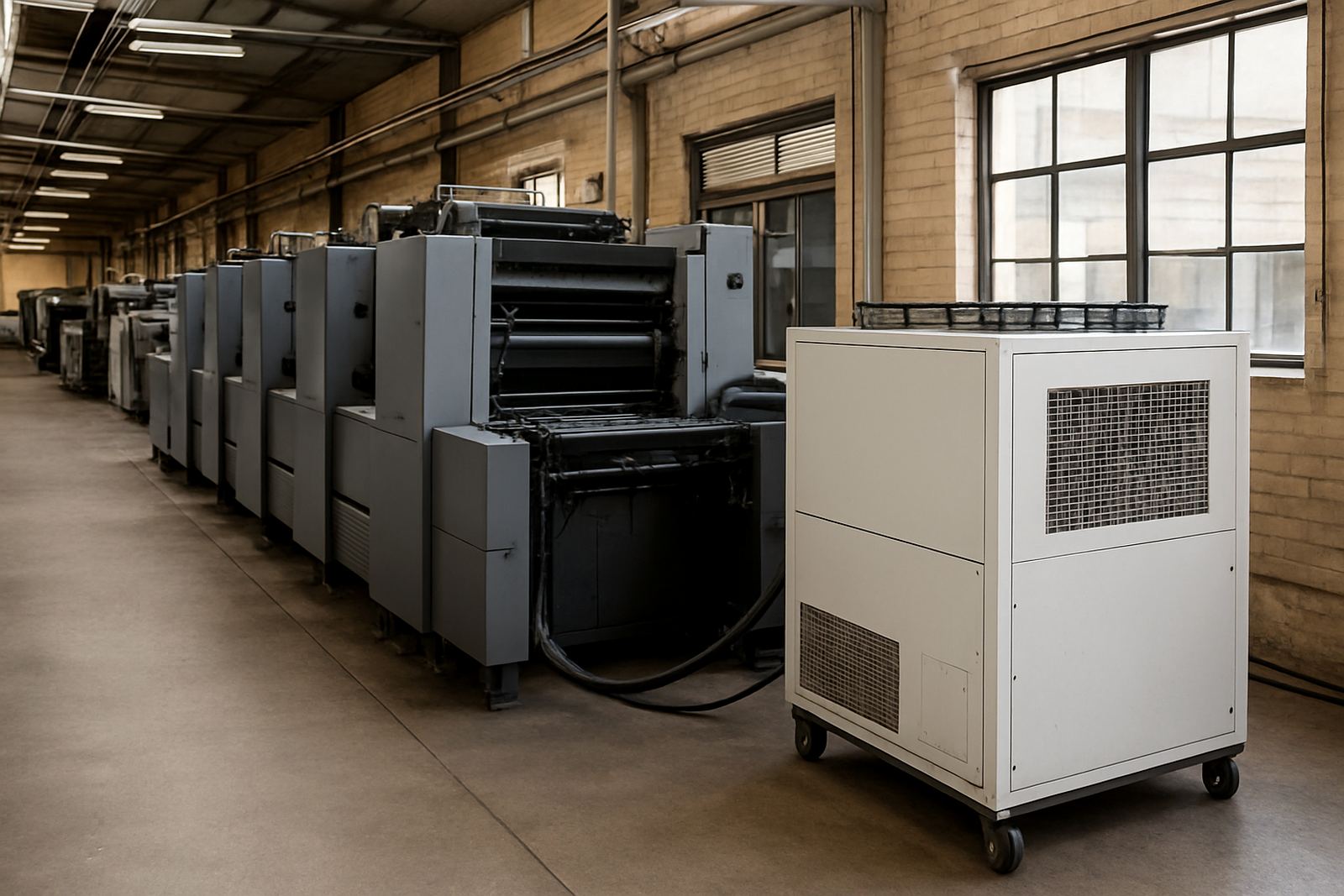
The biggest constraint was space. The workshop had a tight plant area, with existing pipe runs, electrical gear and access routes already in place. We had to position the unit so it would not block movement of machines, forklifts or repair jobs coming in and out. Dust was another factor, along with the vibration and heat that come with a hard-working industrial floor. The client also needed clear access for routine checks because there was no room for a complicated service arrangement.
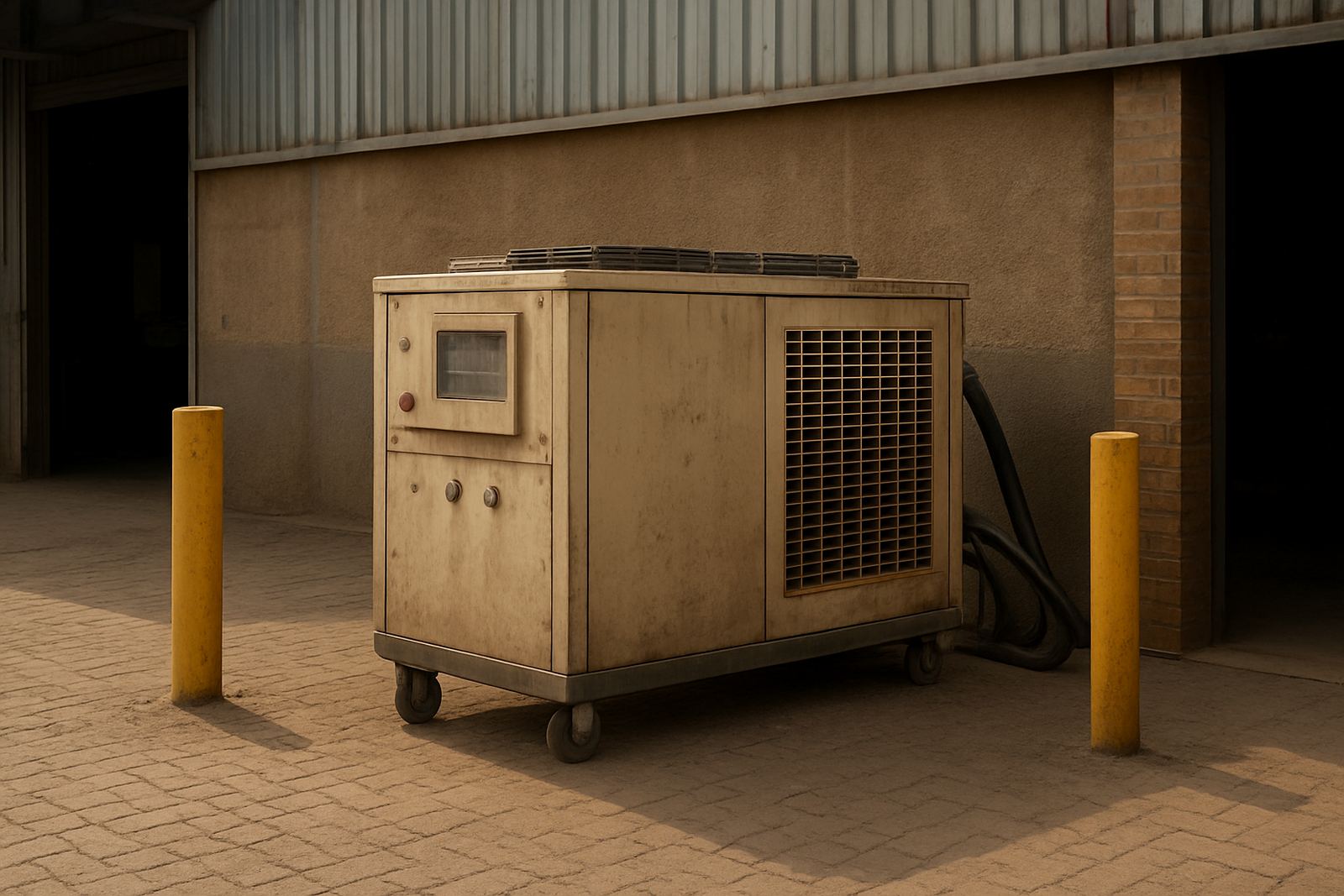
Rustenburg conditions add their own pressure. Warm afternoons, dust from surrounding operations and utility interruptions can all affect a cooling system if it is under-sized or poorly set up. We planned the install to keep pipe runs practical, reduce stress on the pump and allow the operators to isolate the unit quickly when needed. That made the whole setup easier to live with day to day.
- Limited floor space and fixed plant layout
- Dust exposure and vibration from workshop activity
- Need for quick isolation during maintenance
- Resilience during power interruptions and restart cycles
The Unit We Supplied
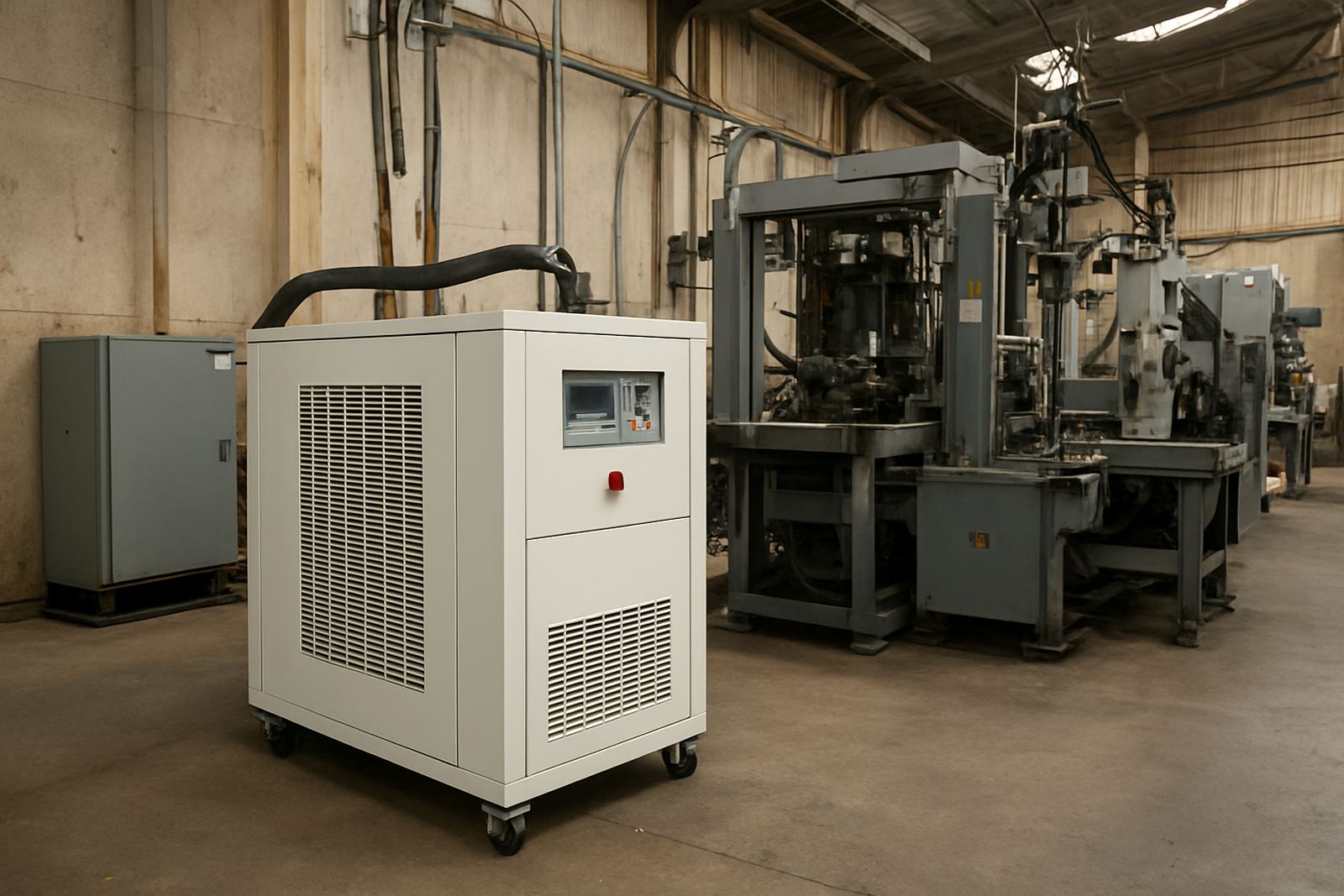
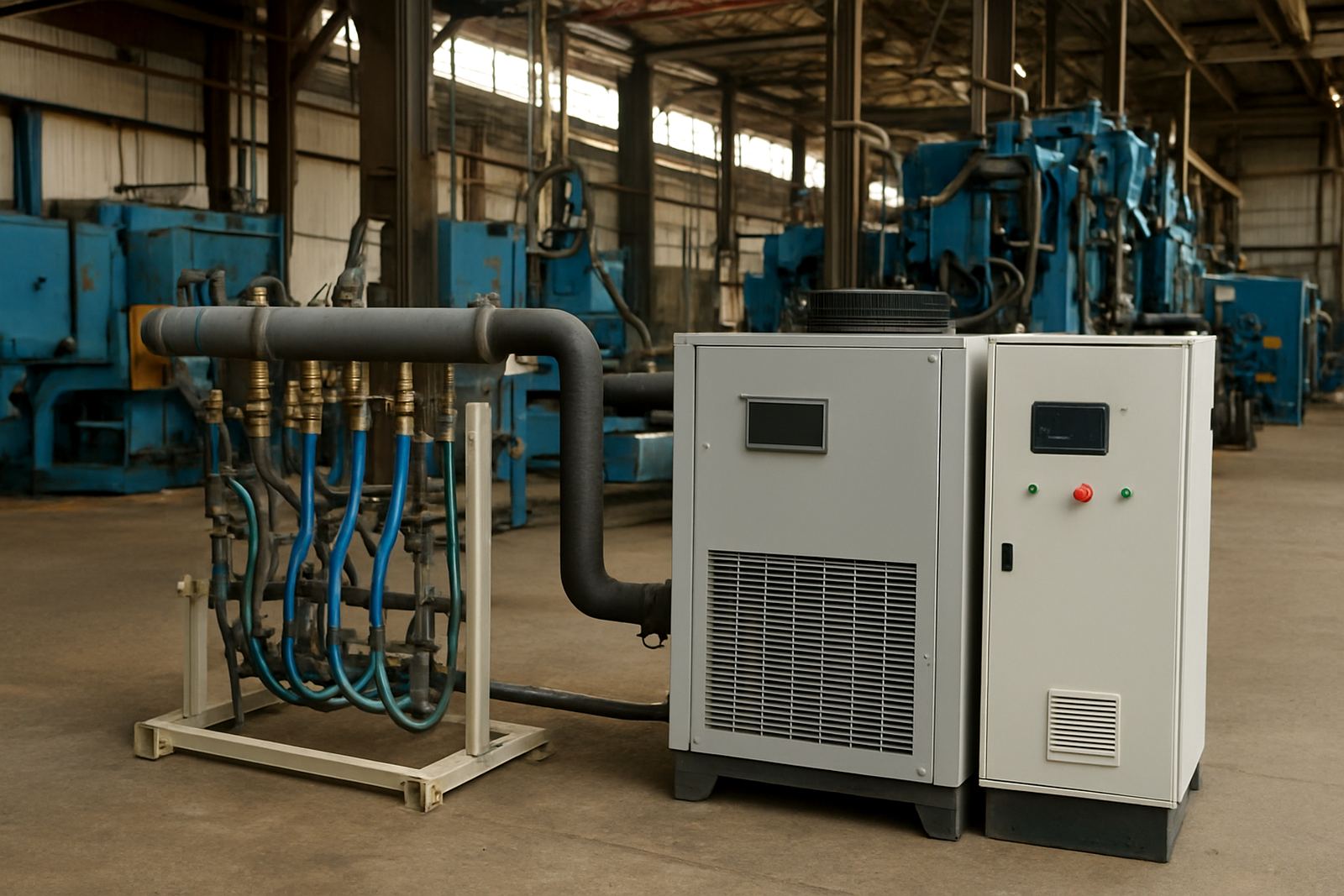
We supplied a rugged industrial water chiller set up for continuous service, with the capacity matched to the workshop’s demand profile rather than a generic nameplate figure. The unit was specified with a corrosion-resistant cabinet, a high-efficiency compressor package, integrated safety controls and a pump arrangement suited to steady flow across the connected equipment. We also included filtration and water treatment checks to help protect the system from scale and debris.
Key parts of the supply were selected for serviceability. The control panel was arranged for straightforward fault finding, the access panels were easy to reach and the pipework layout was kept neat so the workshop team could inspect it without shutting down half the floor. We also sized the system to cope with heavy use during busy periods, not just normal daily running. That matters in a workshop where one late repair job can change the whole load profile.
- Industrial water chiller with continuous-duty rating
- Matched pump and flow control arrangement
- Corrosion-resistant external finish for industrial use
- Safety controls for temperature, flow and compressor protection
- Filtration and water treatment checks included
Installation And Commissioning Over Two Weeks
The project ran over two weeks from site assessment to final handover. In week one we completed the layout review, confirmed the cooling load and mapped the pipework route into the existing workshop area. We then prepared the base position, connected the water lines and integrated the unit with the available electrical supply and control points. Because the site was active, the work had to be phased around live operations and we kept disruption to a minimum.
In week two we carried out system commissioning, checked pressure and flow, confirmed temperature performance and tested the unit under load. We also reviewed the start-up sequence with the workshop team so they knew how to handle normal operation, short interruptions and scheduled maintenance. The final checks included leak inspection, control response and water quality verification. No shortcuts, just careful setup and a proper handover.
- Week 1: Site survey, load confirmation and pipework preparation
- Week 1: Base position, electrical tie-in and mechanical installation
- Week 2: Commissioning, load testing and operator handover
- Week 2: Final checks on flow, temperature and control response
Results On The Floor
Once the chiller was online, the workshop had more consistent cooling across its repair and fabrication equipment. Temperatures held steadier during long shifts, which reduced strain on the connected machinery and helped the team keep work moving when the bay was under pressure. The operators also found the system easier to monitor, because the controls were clear and the service points were accessible.
The practical outcome was less wasted time and fewer interruptions from temperature related issues. Jobs that needed consistent cooling could be run with more confidence, and the site had a better base for planned maintenance instead of reactive fixes. In a workshop environment that deals with hard use every day, that kind of stability is worth a lot. It also reduced the chance of small cooling problems turning into expensive stoppages.
- More stable coolant temperatures during peak shifts
- Less strain on connected repair and fabrication equipment
- Fewer interruptions from cooling-related faults
- Improved operator confidence and simpler daily checks
What We Would Repeat On The Next Job
If we were doing the same kind of project again, we would keep the same approach: size the chiller to the real load, map the pipework around the workshop layout and make sure service access is planned from the beginning. That combination is what keeps the install practical after the handover. It is easy to overcomplicate a cooling project when the site is busy, but the best result usually comes from getting the basics right.
We would also keep water treatment and operator training in the plan from day one. In a dusty inland workshop, maintenance discipline matters as much as the equipment itself. With the right checks in place, the unit stays efficient and the team knows what to look for before a small issue becomes a shutdown. That is especially true where the workshop cannot afford unplanned downtime during a full production week.
Need Industrial Cooling For A Busy Workshop?
Raynen supplies and services industrial water chillers for lasers, moulds and process lines across South Africa, including Rustenburg, Johannesburg, Pretoria, Durban and Cape Town. If your workshop or plant needs a cooling upgrade, our team can assess the load, recommend the right unit and handle installation, commissioning and ongoing maintenance. Clients reach us through the enquiry form on our contact page.
We work from Alrode in Alberton and support industrial sites with practical cooling solutions that are built for real operating conditions. Whether the issue is heat, load variation, water quality or poor performance from an ageing system, we can help with a setup that is sized properly and maintained properly.
Key facts
| Project location | Rustenburg, North West |
|---|---|
| Client type | Industrial repair and fabrication workshop |
| Application | Cooling support for high-demand equipment |
| Project duration | 2 weeks |
| Scope | Supply, installation, commissioning and handover |
| Key extras | Filtration, water treatment checks and operator training |