What the Rosslyn plant needed from cooling
The site in Rosslyn was running parts cooling on a system that had become hard to manage during hot afternoons and power interruptions. The client wanted tighter temperature control, less variation on the production line, and a setup that would protect equipment instead of asking operators to keep chasing temperatures all day.
The brief was straightforward but the site conditions were not. The plant had limited floor space near the process area, active production around the clock, and a requirement to keep changeover time down. The cooling package also had to suit an automotive environment where stoppages are expensive and a small temperature drift can affect part quality, cycle time and tool life.
We assessed the cooling duty, line layout and water quality, then proposed a closed-loop unit that could hold stable supply temperatures without relying on open water make-up. That approach reduced contamination risk and made the system better suited to a busy factory floor where dust, oil mist and heat are part of the daily picture.
Constraints on site and how we planned around them
Rosslyn sites often run on tight schedules with production, maintenance and logistics all moving at once. In this case we had to work around access restrictions, avoid interfering with adjacent equipment, and keep installation tidy enough for the plant’s internal safety requirements. The plant also needed a solution that could handle Gauteng summer heat and the extra strain that comes with unstable incoming power.
Because the cooling duty was tied to process continuity, we planned the change in stages. First came a site survey and load check, then pipework routing and electrical preparation, followed by delivery, placement and commissioning. The goal was to reduce risk on the day and leave the operator with a system that was easy to understand from the start.
- Closed-loop format to limit contamination and top-up issues
- Space conscious footprint for a busy production area
- Setpoint stability for process consistency
- Controls arranged for quick operator checks
- Electrical protection suitable for local load-shedding conditions
What we supplied for the process cooling duty
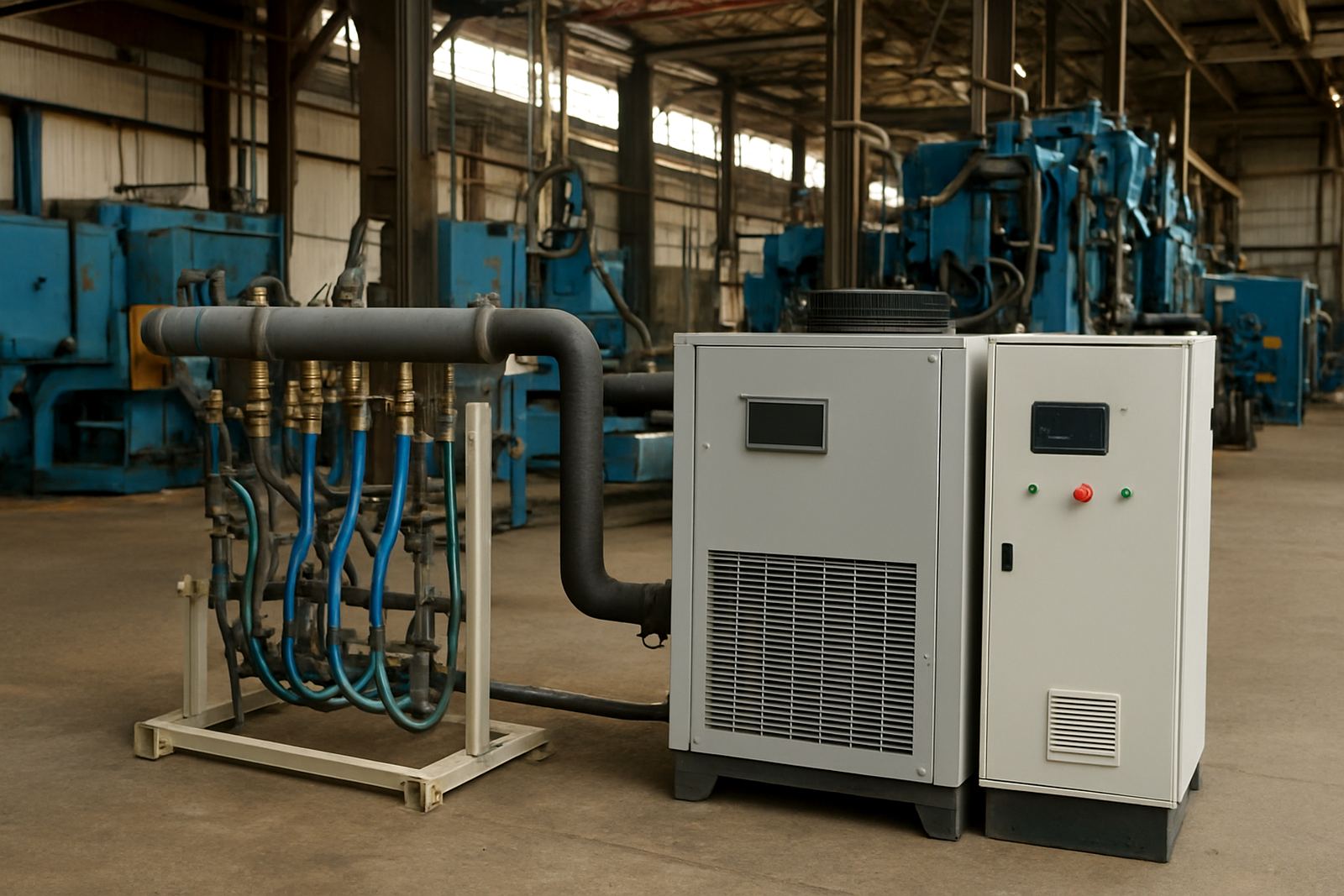
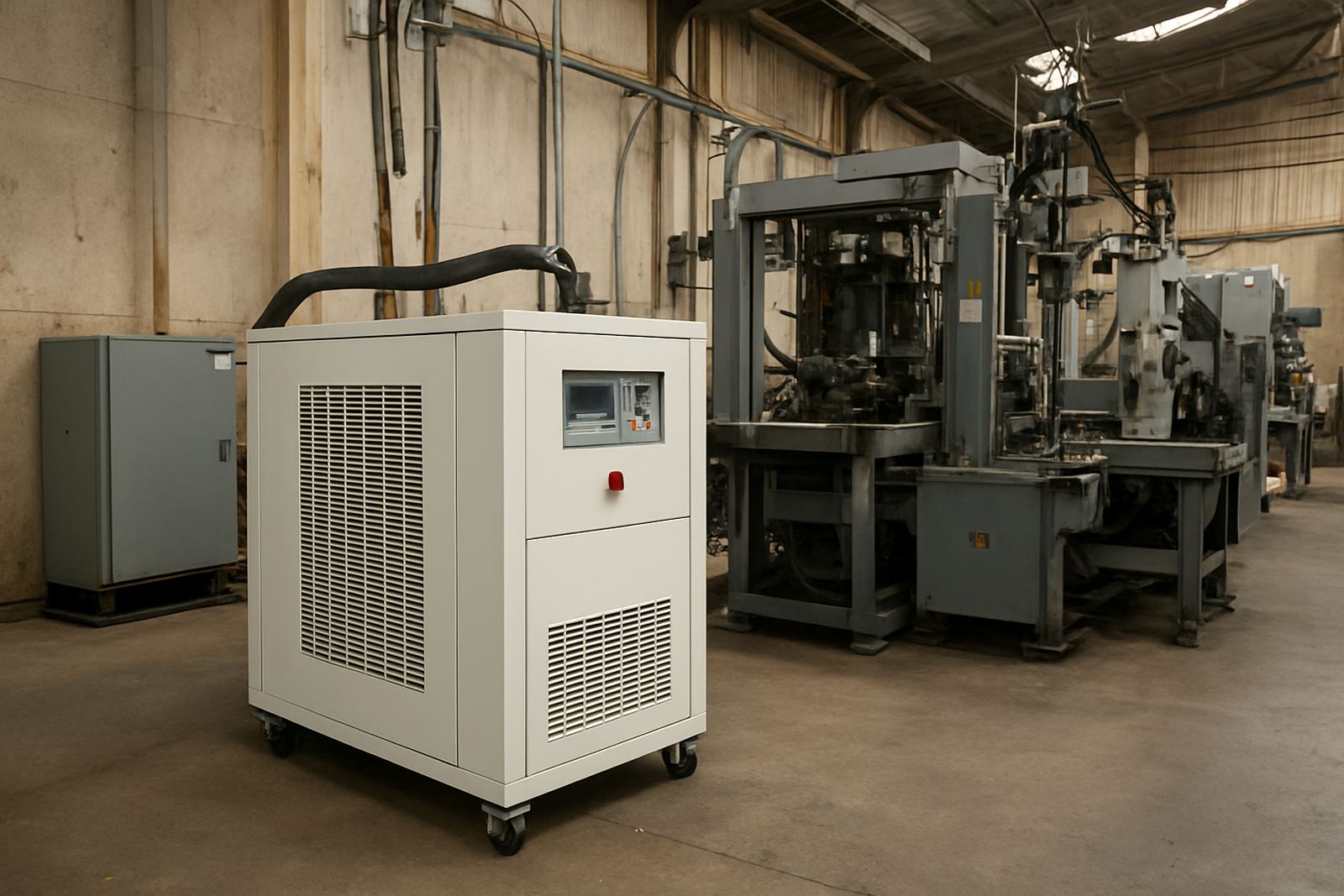
We supplied a closed-loop industrial water chiller sized for the application and set up for parts cooling duty in an automotive environment. The unit was selected for steady temperature control, dependable circulation and practical servicing access. Key specifications included a cooling capacity of 45 kW, a chilled water supply setpoint of 7 degrees Celsius, and a recirculation circuit designed for continuous operation on a production line.
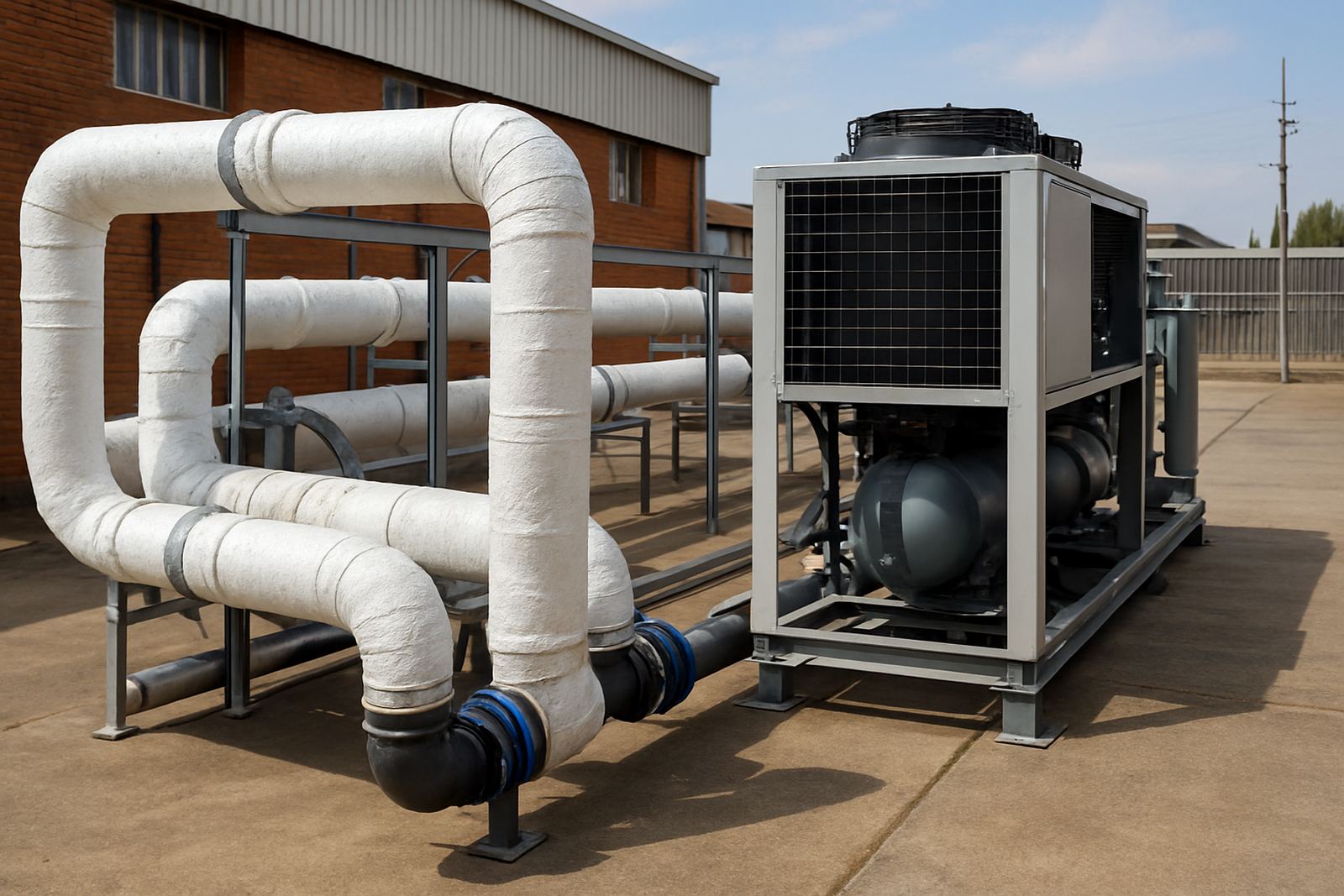
The installation included a suitably rated pump package, insulated pipework tie-ins, isolation valves, strainers and a control arrangement that allowed the site team to monitor temperatures without needing to open the system. We also included commissioning checks on flow, pressure, temperature pull-down and alarm response so the plant would know exactly how the system behaved under load.
Where needed we adjusted the water treatment approach for better heat transfer and to help prevent scale build-up. That matters in Gauteng because untreated water can turn a good cooling system into a maintenance headache faster than many plants expect.
- Cooling capacity: 45 kW
- Supply temperature: 7 degrees Celsius
- Closed-loop chilled water circuit
- Continuous duty circulation package
- Isolation and service points for maintenance
- Commissioned with operational alarms and setpoint checks
Installation, commissioning and handover
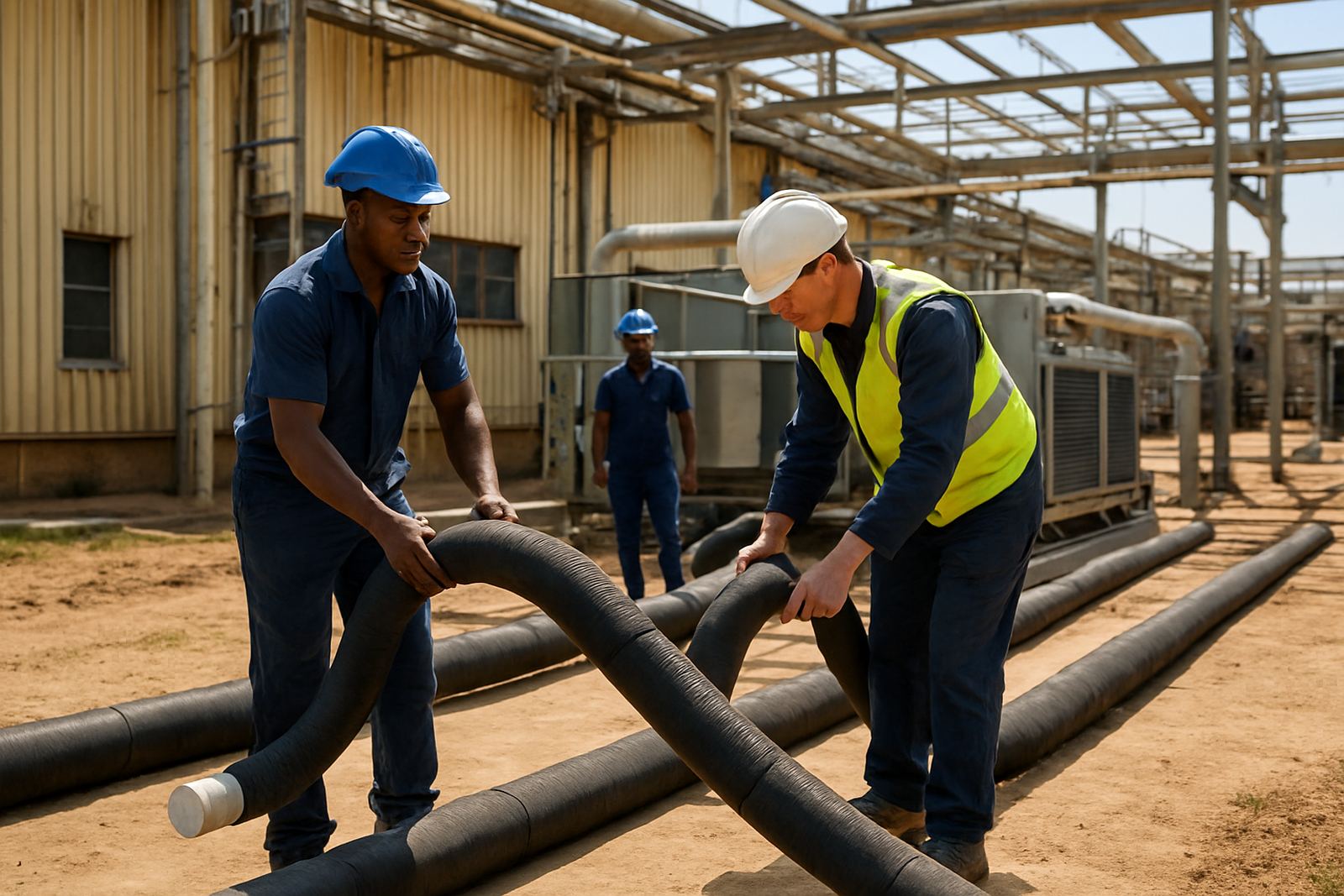
The installation was completed over three weeks from final site verification to handover. Week one covered survey work, final sizing and preparation of the installation plan. Week two covered delivery, placement, pipework connection and electrical integration. Week three was used for commissioning, performance checks and operator training.
During commissioning we checked temperature stability at start-up, under steady production load and after normal stops. We also verified that the controls responded properly to temperature drift and that the pump and compressor cycle pattern was appropriate for the line. The handover included practical guidance for the maintenance team on daily checks, strainer cleaning, alarm response and basic water quality monitoring.
The client wanted a system that would not need constant attention and that is exactly how it was set up. Once the unit was running, the line team could focus on production rather than juggling cooling adjustments every few minutes.
Results on the production floor
The new chiller improved temperature consistency across the parts cooling circuit and gave the plant a more predictable process. Equipment protection improved because the system no longer depended on irregular cooling behaviour or hurried operator intervention when the day warmed up. In practical terms, the line became easier to run and less likely to be knocked off target by ambient heat or power recovery events.
The plant also gained better day-to-day confidence in its cooling capacity. That meant fewer temperature related interruptions, less strain on connected equipment and a cleaner maintenance routine. For a parts facility, these gains matter because a small thermal issue can affect output, repeatability and tool life before anyone notices a bigger problem.
- More stable process temperatures through the day
- Reduced intervention by operators
- Better protection for production equipment
- Cleaner maintenance routine for the site team
- Improved resilience during hotter weather and power interruptions
What we would do again on a similar Rosslyn job
On a similar plant we would follow the same approach: verify the actual duty first, keep the installation path simple, and make sure the operator can see what the system is doing at a glance. That combination saves time during commissioning and reduces the chance of problems later on. It also helps when the facility has changing shifts and not everyone knows the system equally well.
We would also keep a close eye on water quality from the start, especially where the plant is exposed to dust or where the water supply can vary. A good closed-loop chiller performs best when the basic housekeeping is done properly. It sounds simple, but it often makes the difference between a cooling system that just runs and one that keeps running without fuss.
For Rosslyn and other industrial areas around Gauteng, that practical approach works well. It suits automotive plants, moulding operations and process lines that need reliable cooling without unnecessary complication. And if a site needs temporary cooling while larger work is planned, we can factor that in as part of the same project conversation.
Serving Rosslyn and other industrial areas
Raynen supplies and services industrial water chillers from Alberton, with support across Johannesburg, Pretoria, Durban, Cape Town and Rustenburg. Our team handles installations, breakdown repairs, preventative maintenance, refrigeration repairs, pump replacements, water treatment checks, pipework retrofits, control panel upgrades, cooling audits, temporary cooling and operator training.
For the Rosslyn project, the key was matching the cooling system to the plant’s real operating conditions rather than a paper figure. That is what keeps equipment protected and production steady.
Clients get in touch through the enquiry form on our contact page, and we take it from there with the technical details, site information and timing needed to plan the job properly.
Key facts
| Project location | Rosslyn, Pretoria North |
|---|---|
| Client type | Automotive parts facility |
| System type | Closed-loop industrial water chiller |
| Cooling capacity | 45 kW |
| Chilled water setpoint | 7 degrees Celsius |
| Timeline | 3 weeks from survey to handover |