Boksburg production line brief and operating pressure
The client was a mid-sized industrial production site in Boksburg running a continuous line with heat-sensitive stages and repeat production cycles. Their existing cooling arrangement was struggling to hold temperature when ambient conditions climbed, and the problem showed up most on warm afternoons and during load-shedding recovery when the plant came back online.
The brief was to replace uncertainty with a system that could keep coolant stable, handle regular starts and stops, and fit neatly into a working line without causing major downtime. The team also wanted a setup that could be serviced locally, with parts and support that would not leave the line waiting for weeks.
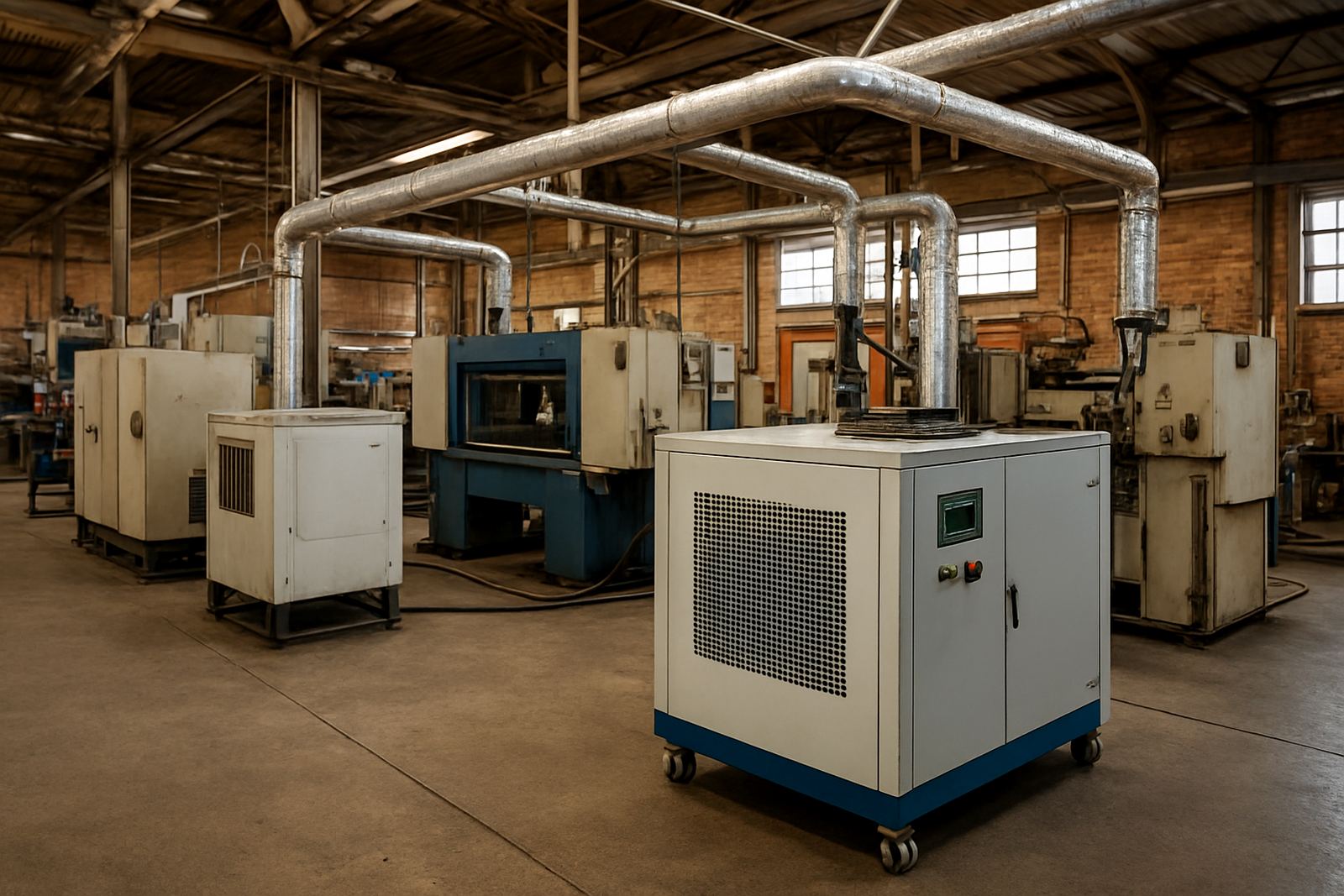
We were asked to work around a tight production schedule and a compact plant area, so access, pipe routing and maintenance clearances had to be planned carefully. The site also needed a cooling package that would tolerate dust, vibration and the usual Ekurhuleni workshop conditions without constant adjustment.
What the site needed from the cooling package
Before supplying anything, we checked the process duty, flow requirements and temperature band needed at the point of use. The line required consistent coolant delivery, stable return temperatures and enough spare capacity to absorb normal process swings without short cycling. That kind of application is common in Boksburg where a line cannot afford temperature drift during peak shift hours.
- Stable coolant temperature for a continuous process line
- Enough capacity for warm ambient conditions and duty changes
- Controls that operators could read quickly on shift change
- Space-saving layout for a constrained plant room
- Equipment that could be maintained without shutting the whole area down
We also looked at water quality because scale and debris can shorten the life of pumps, valves and heat exchangers. In a factory this matters more than people think, especially where a line runs hard and the same coolant keeps circulating day after day.
What we supplied and how it was arranged
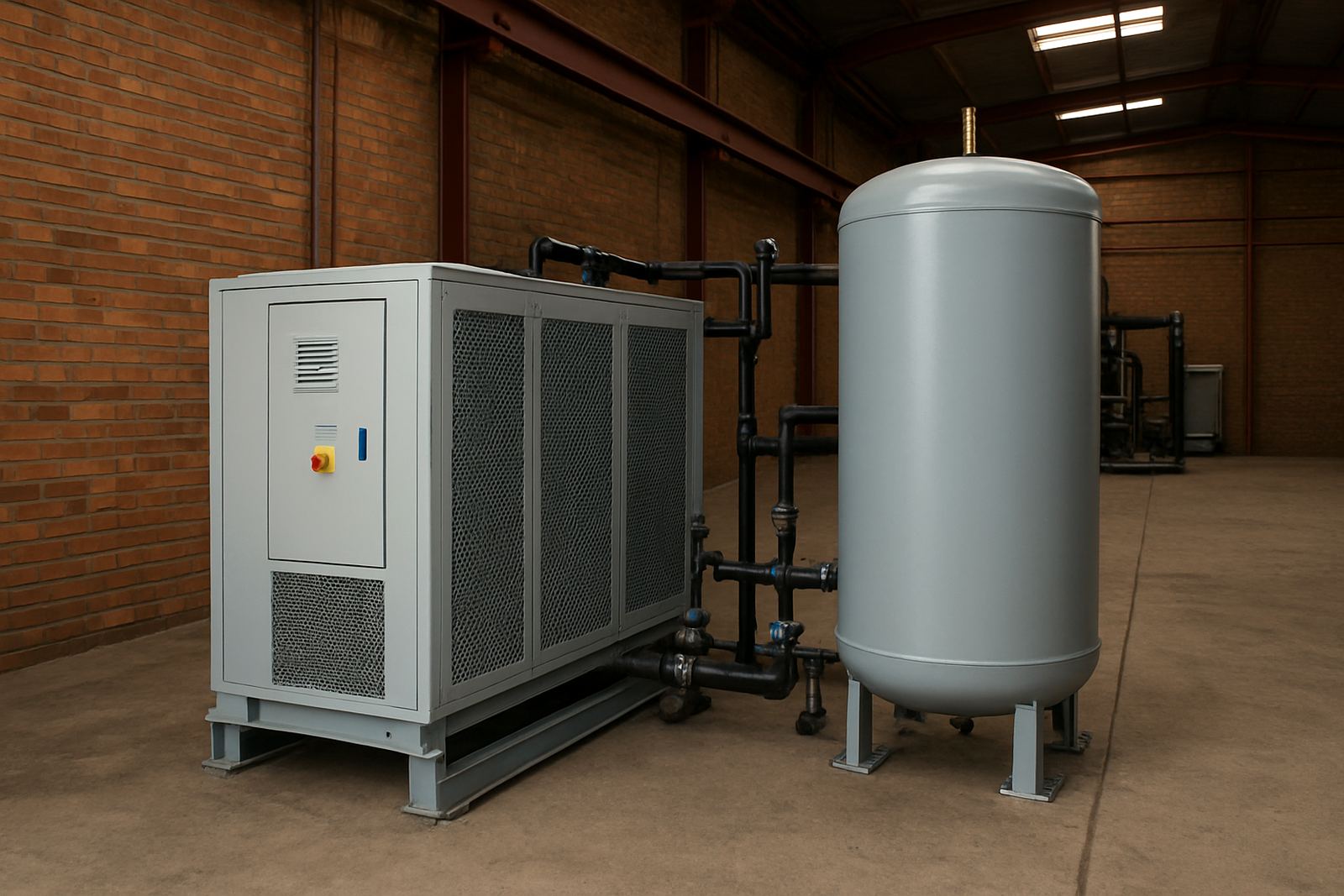
Raynen supplied a process chiller package sized for the line duty, with a circulation pump set matched to the application and controls suited to production use. The package included temperature control, system protection and the practical fittings needed to integrate into the existing pipework without rebuilding the whole line.
The unit was configured for reliable operation under local conditions, with attention to heat rejection, access for service and a control setup that made fault checking straightforward. We also set up the system so operators could monitor key readings quickly rather than guessing what the coolant was doing from one hour to the next.
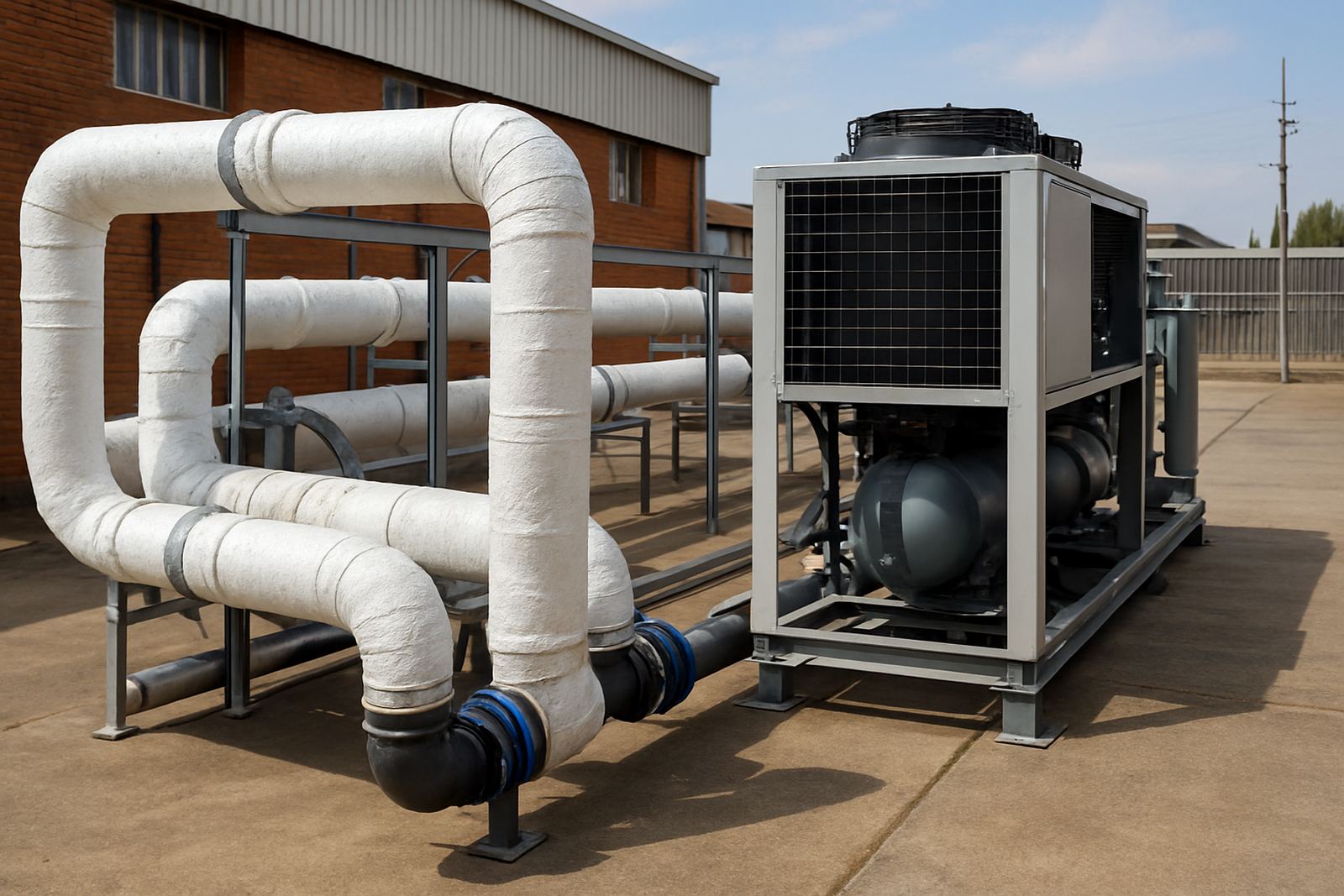
Key supply details included a packaged chiller skid, insulated process lines, isolation valves, strainers, flow checks and control settings matched to the line requirements. The installation was planned so future maintenance would be easier, not harder, which is where many projects go wrong.
- Process chiller package with matched pump set
- Insulated pipework and practical isolations
- Flow and temperature control set for production duty
- Service access left clear around major components
- Commissioning checks completed on site
Installation and commissioning in a live plant
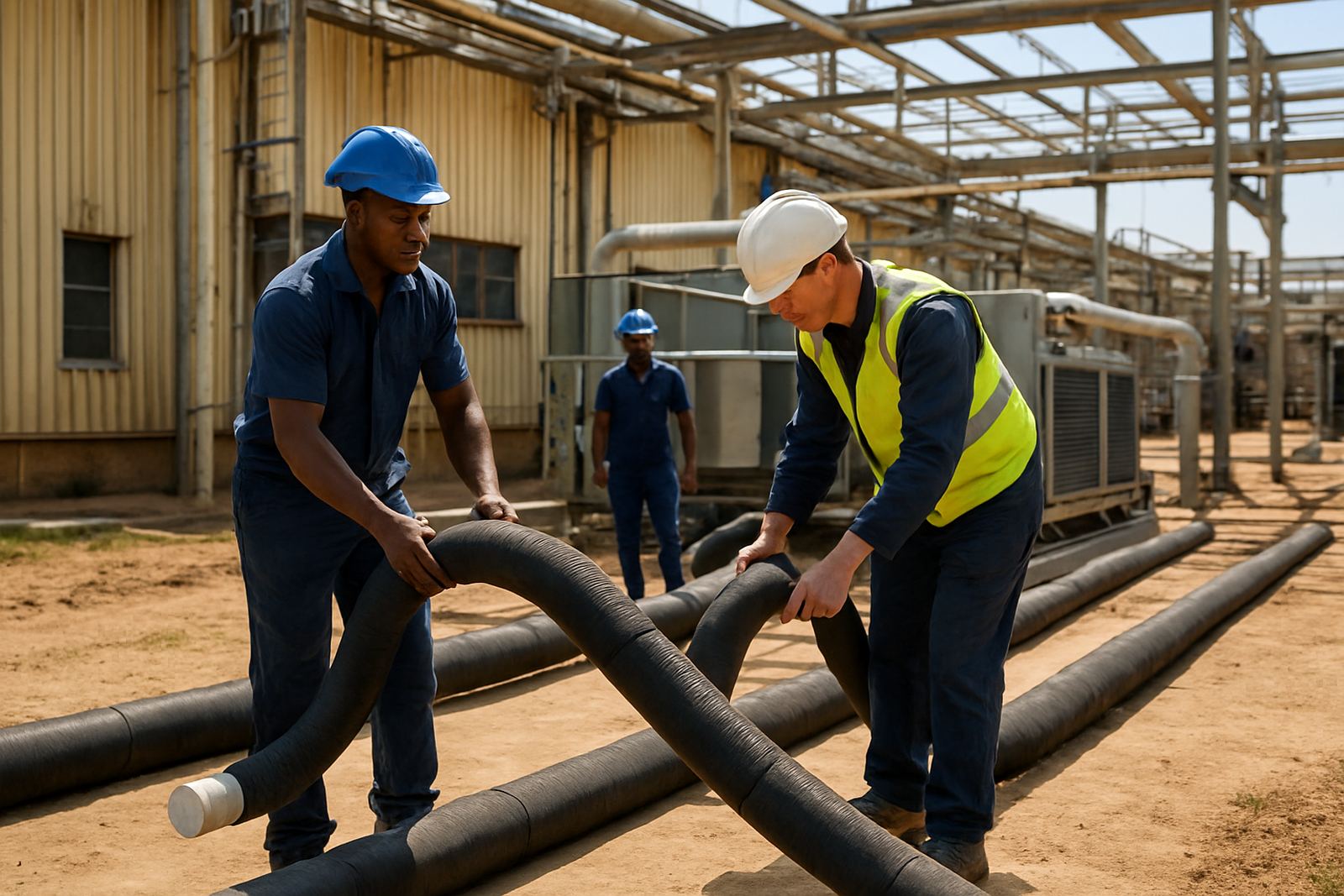
We completed the work over two weeks, starting with site preparation and a staged tie-in to limit disruption. The first phase covered removal of the old problem points, pipework adjustments and final positioning of the new equipment. The second phase covered electrical checks, refrigerant side verification, water side flushing and control testing.
Commissioning was done with the line running under real operating conditions so we could see how the system behaved when the process actually pulled heat. That mattered, because a chiller can look fine on paper but still need small setting changes once the line is under load. We adjusted the set points, checked flow stability and confirmed that return temperatures remained inside the agreed range.
The team on site worked with the client to make sure operators understood the alarms, restart sequence and daily checks. It sounds basic, but if the people on shift are not comfortable with the plant, small issues can grow into unplanned stoppages pretty quickly.
Results on the line after changeover
Once the new system was running, the process temperature became far more predictable and the line stopped chasing temperature swings through the day. That gave the client steadier production, less manual intervention and fewer interruptions tied to coolant instability. The operators noticed the difference first, then maintenance saw it in the reduced callouts.
The plant also benefited from better restart behaviour after power interruptions. In Boksburg, where supply dips and load-shedding can still upset production timing, a cooling system has to recover without creating another problem. This setup came back into service cleanly and held steady once the line resumed.
In practical terms, the result was less scrap risk, less waiting on coolant recovery and a cooler process environment for the equipment on the line. The client also got a clearer maintenance picture, since the new controls and access points made checks simpler.
What we would repeat on the next similar job
If we were doing the same job again for another Boksburg line, we would keep the same approach: measure the real process duty first, build in service access and commission under load rather than only on idle test. That sequence saves trouble later and helps the client settle into normal production faster.
We would also repeat the water treatment checks at handover and schedule an early follow-up inspection once the line had seen a few weeks of operation. For process cooling, small corrections early on can prevent bigger repairs later, especially where water quality or room heat changes with the seasons.
Raynen continues to support process lines, mould cooling and laser applications from Alberton and across South Africa, with local service teams in Johannesburg, Pretoria, Durban, Cape Town and Rustenburg. For Boksburg and the surrounding Ekurhuleni area, the value is simple: practical cooling that fits the plant and keeps working.
- Keep the duty calculation based on real process load
- Allow space for maintenance and future pipe changes
- Commission under operating conditions, not just idle conditions
- Check water quality and flow again after the first few weeks
Key facts
| Project type | Process chiller package for a production line |
|---|---|
| Location | Boksburg, Ekurhuleni |
| Timeline | 2 weeks |
| Cooling duty | Sized to match the line load and temperature band |
| Key components | Packaged chiller, pump set, insulated pipework, controls |
| Support scope | Installation, commissioning, operator handover and follow-up support |