A Pretoria West line that needed one cooling point for several machines
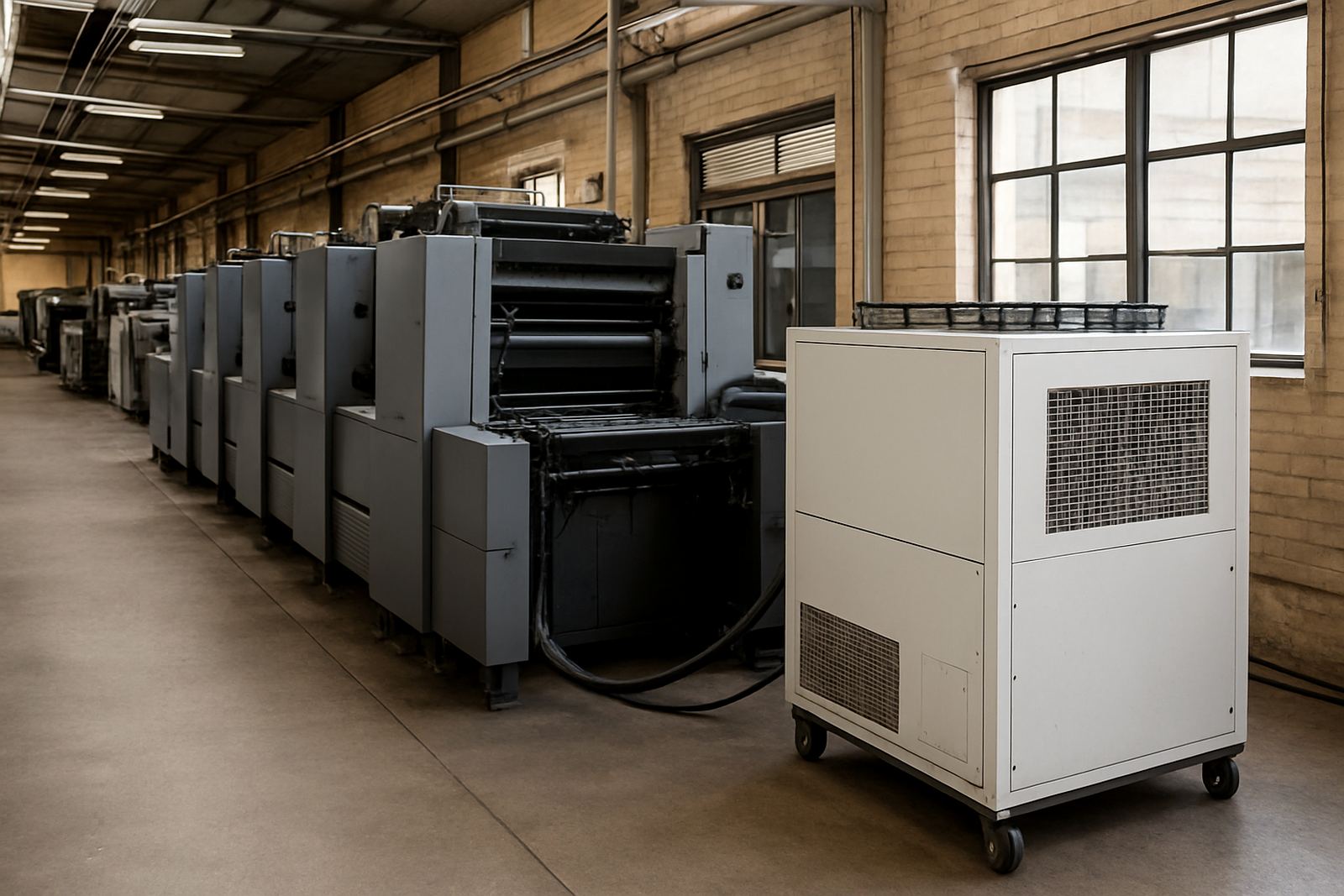
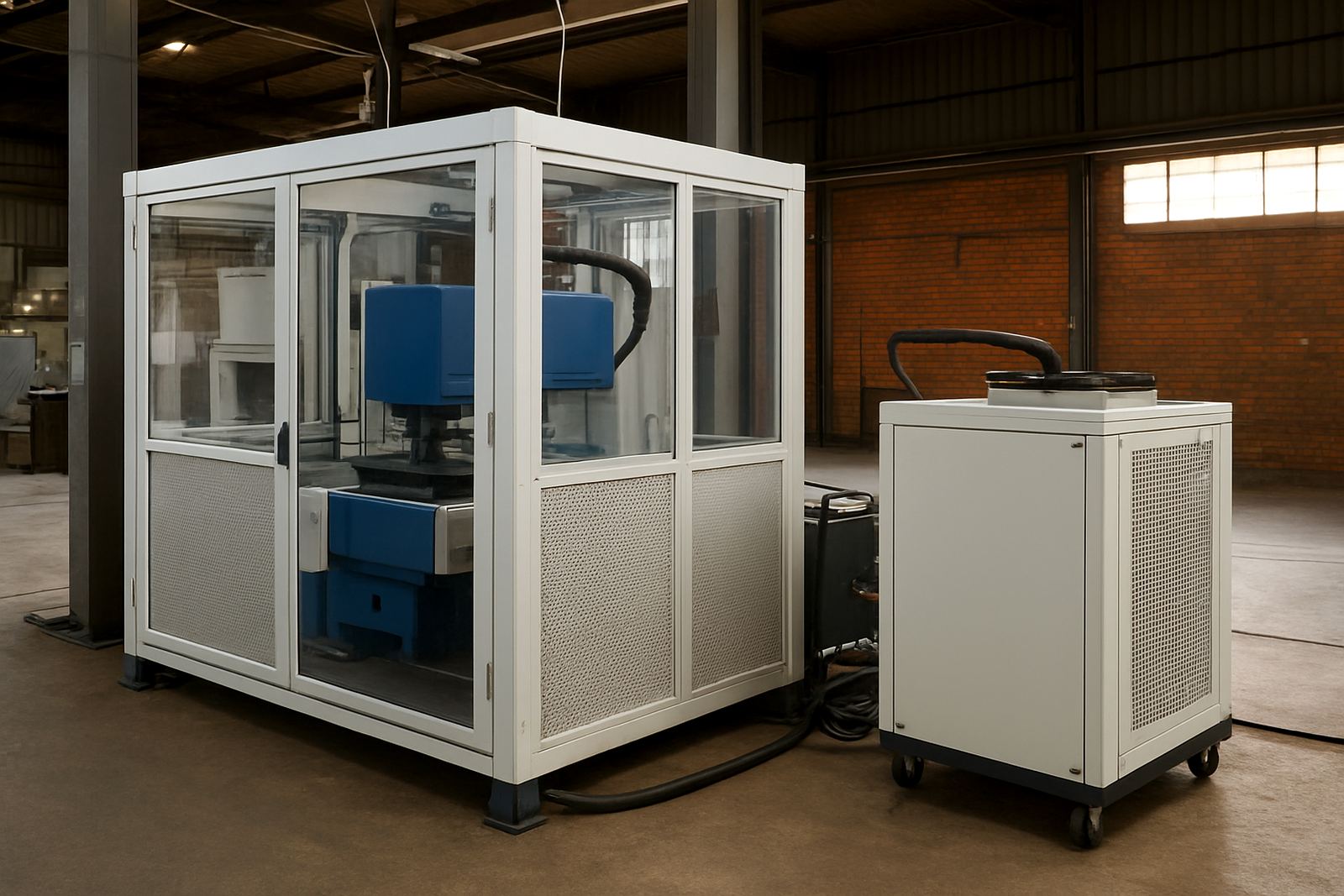
The site was a manufacturing process line in Pretoria West, serving a busy production schedule with multiple machines that all depended on stable cooling. The client wanted one central system rather than several smaller units scattered around the floor, so the team could control temperature more consistently and cut down on maintenance across the plant.
The brief was straightforward in principle but tight in execution. The line could not afford long downtime, the installation area was limited, and the cooling had to cope with load changes through the day. In addition, the plant worked in a part of Pretoria where summer heat pushes internal temperatures up quickly, so the system had to be sized for real conditions and not just nameplate figures.
What the site needed, and what made it tricky
The process line handled equipment with different heat loads, which meant the cooling system needed to respond evenly when one machine ramped up faster than another. A shared cooling circuit can save space and reduce duplication, but only if the pipework, pumps and controls are balanced properly. If not, one machine can starve while another gets too much flow.
There were also practical site constraints. The plant needed to keep access clear for operators and maintenance staff, and the installation had to fit around existing services already running through the area. Power interruptions and load shedding were part of the planning too, so the control strategy had to recover cleanly after outages and restart without upsetting the line. Coastal corrosion was not an issue in Pretoria, but dust and heat still matter and affect filters, coils and service intervals.
- Centralised cooling for multiple machines from one system
- Designed for variable process loads through the day
- Installed to fit a constrained plant layout
- Set up for clean restart after power interruptions
What we supplied and installed
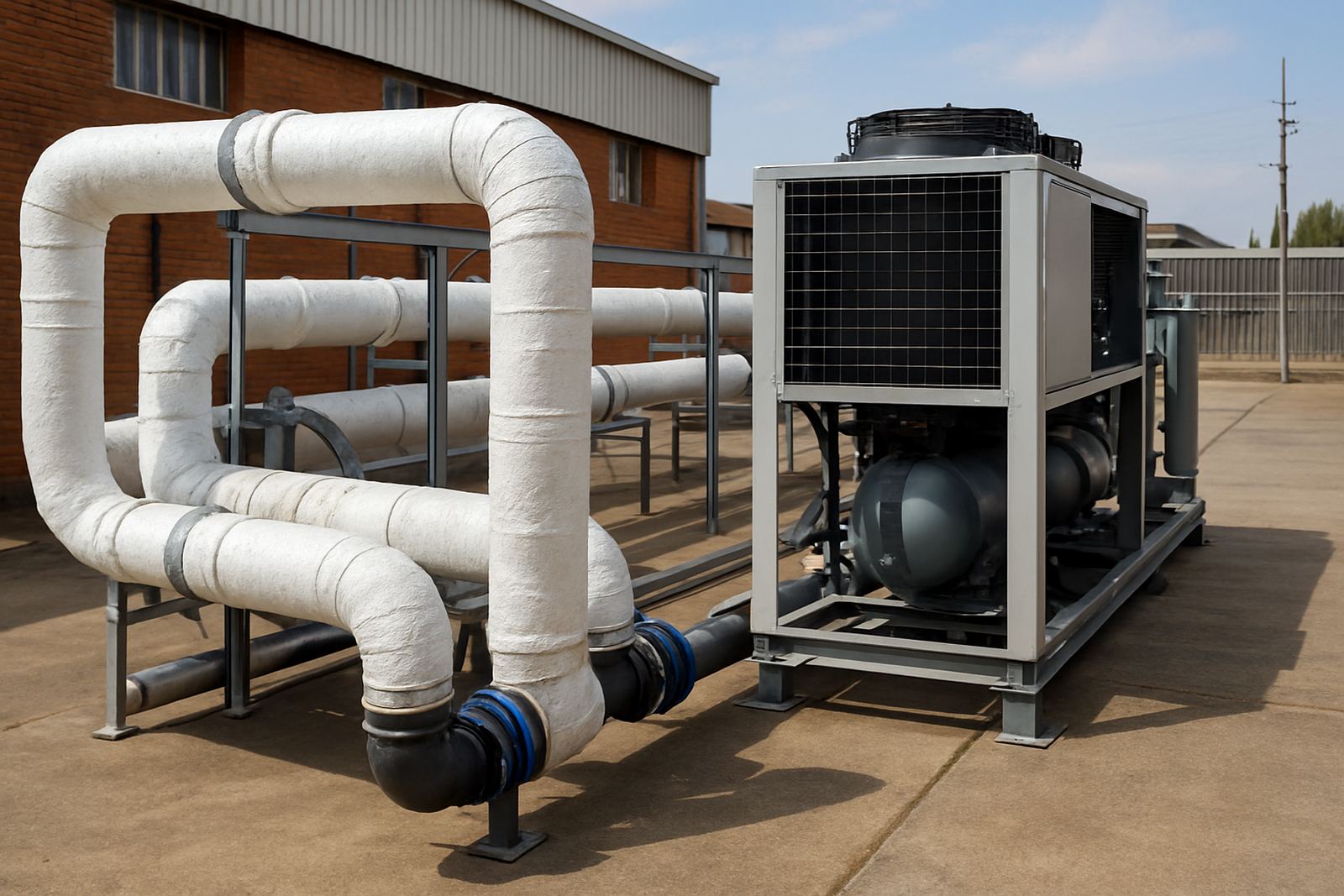
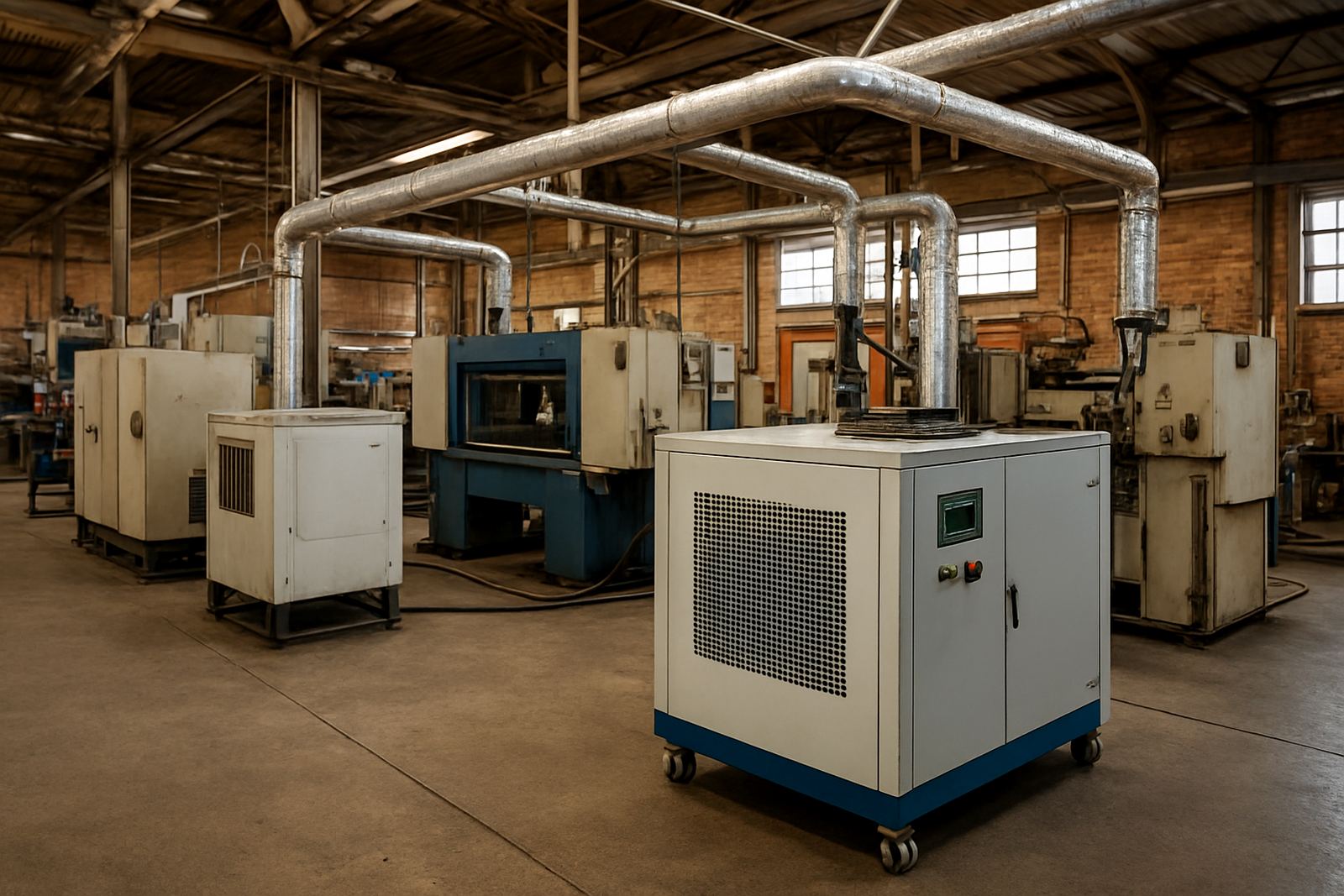
Raynen supplied an industrial water chiller sized for the combined duty of the line, together with the supporting equipment needed to make the system work as one unit. That included circulation pumps, control components, isolation points and pipework changes to suit the actual site layout. Where the existing piping did not suit the new arrangement, we carried out pipework retrofits so flow could be distributed properly.
The system was commissioned to the operating range agreed with the client, with attention to temperature stability, flow rate and alarm settings. We also checked the water quality and advised on treatment to reduce scale and corrosion, because poor water condition shortens equipment life very quickly. The final setup gave the operators a single point of control instead of juggling several separate coolers and improvised settings.
- Industrial water chiller matched to the total process duty
- Circulation pumps and control panel integration
- Pipework retrofits to suit the line layout
- Water treatment checks and operating guidance
How the work was carried out over three weeks
The full project ran over three weeks from site assessment to handover. The first week focused on measurements, duty confirmation and checking how the process line was using cooling at different times of the shift. That let us confirm the likely heat load and identify where the old arrangement was causing uneven temperatures.
During week two the equipment was installed, pipework was altered and the control connections were completed. The final week was used for commissioning, balancing and operator handover. We spent time with the production team so they could understand normal running, basic checks and the warning signs that mean service is due. A quick training session on the controls made a big difference, since small settings errors can cause bigger problems later on.
The installation was timed to limit disruption and keep the line moving. Where the schedule had to be adjusted, the work was resequenced so the critical connections could still be completed safely and on time.
What changed after commissioning
Once the central cooling system was running, the process line held temperature more steadily from shift to shift. That improved consistency across the machines and reduced the small fluctuations that often lead to rejected product or stop-start running. The operators also had one system to monitor instead of several, which made it easier to spot pressure changes, flow issues or early signs of fouling.
There was a noticeable improvement in maintenance planning as well. With the system centralised, inspections could be scheduled around one set of service points and one set of records. That cuts admin and gives the maintenance team a clearer picture of what is happening. In practical terms, the line became easier to run, easier to monitor and more predictable in hot weather too.
- More stable process temperatures across the line
- Less variation between machines on shared cooling
- Cleaner maintenance planning and fewer separate units to service
- Better day-to-day control for operators and supervisors
What we would do again on a similar Pretoria West project
If we were to repeat a project like this on another Pretoria West line, we would follow the same approach: confirm the actual process duty first, then design the cooling around the plant layout rather than forcing the layout around the equipment. That is usually the difference between a system that works well and one that becomes a source of complaints.
We would also keep the commissioning period long enough to test real production conditions, not just empty-line operation. Process lines change through the day and cooling must cope with those swings. It is better to spend a little extra time on balancing and operator training than to return later for avoidable adjustment work. That said, this site was a good example of how central cooling can simplify a line when it is planned properly.
For plants in Pretoria, Johannesburg and the wider Gauteng area, the same principle applies. The right cooling system should match the load, the water quality and the operating pattern, not just the equipment list on paper.
Key facts
| Project location | Pretoria West, Tshwane |
|---|---|
| Application | Centralised cooling for multiple machines on one process line |
| Timeline | 3 weeks from assessment to handover |
| System type | Industrial water chiller with circulation and control support |
| Work completed | Installation, commissioning, pipework retrofits and operator training |
| Service area | Pretoria, Johannesburg, Durban, Cape Town and Rustenburg |