What the Midrand laser cell needed
The client was a metal processing operation in Midrand running a laser cell on a mixed production schedule, with longer shifts and more frequent changeovers than before. Their existing cooling arrangement was coping on cooler days, but during peak runs the laser temperature would drift, alarms became more common, and output had to be slowed to keep the machine within safe limits.
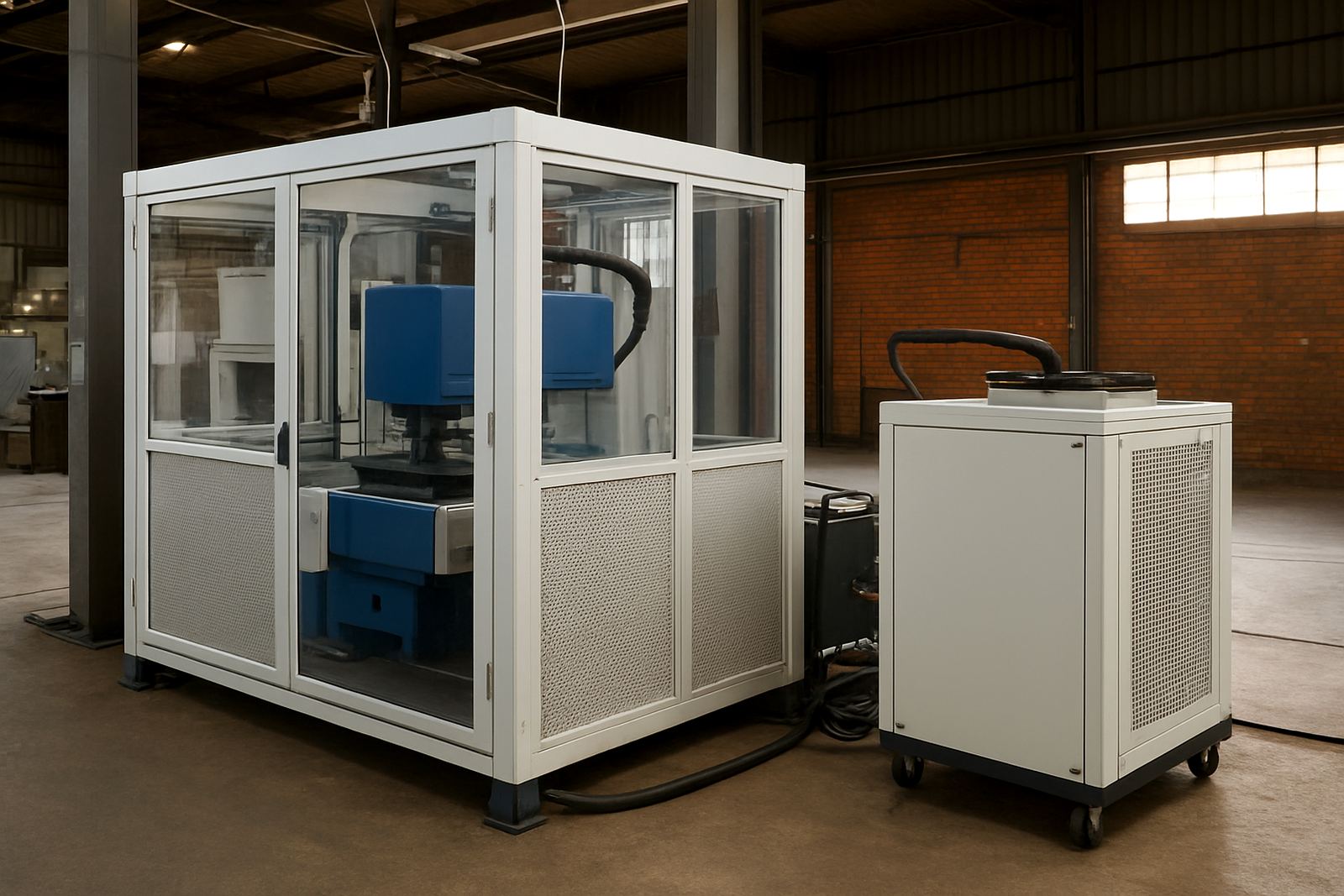
The brief was straightforward: supply a dedicated industrial water chiller for the laser cell, sized for current demand and the next phase of growth. The unit had to hold a steady process temperature, fit into a tight plant area, and keep running properly when the site was under pressure from summer heat, dust, and the realities of local power interruptions.
- Site: Midrand, Gauteng
- Application: laser cell cooling for expanded throughput
- Need: stable water temperature and better uptime
- Constraint: limited floor space near the machine line
Site constraints and cooling risks
We first looked at the plant layout, heat gain in the room, pipe runs, and the likely increase in thermal load once the cell moved to higher output. Midrand sites can see sharp daytime temperature swings in summer, and that matters when a laser has to stay within a narrow operating band. If the cooling system is undersized, the result is often nuisance trips, poorer cut consistency, and extra wear on the laser source and related components.
Another issue was water quality. In industrial cooling circuits, poor water treatment can create scale, corrosion, and blocked strainers before the team notices any visible problem. We also checked how the system would behave during brief outages and generator changeover, since some production lines do not recover well after a hard stop. The new solution needed to start cleanly, protect the equipment, and give operators clear feedback without needing constant attention.
- Reviewed heat load for expanded production
- Checked pipe routing and pump head requirements
- Allowed for ambient temperatures and dust exposure
- Confirmed practical access for servicing and cleaning
The unit we supplied
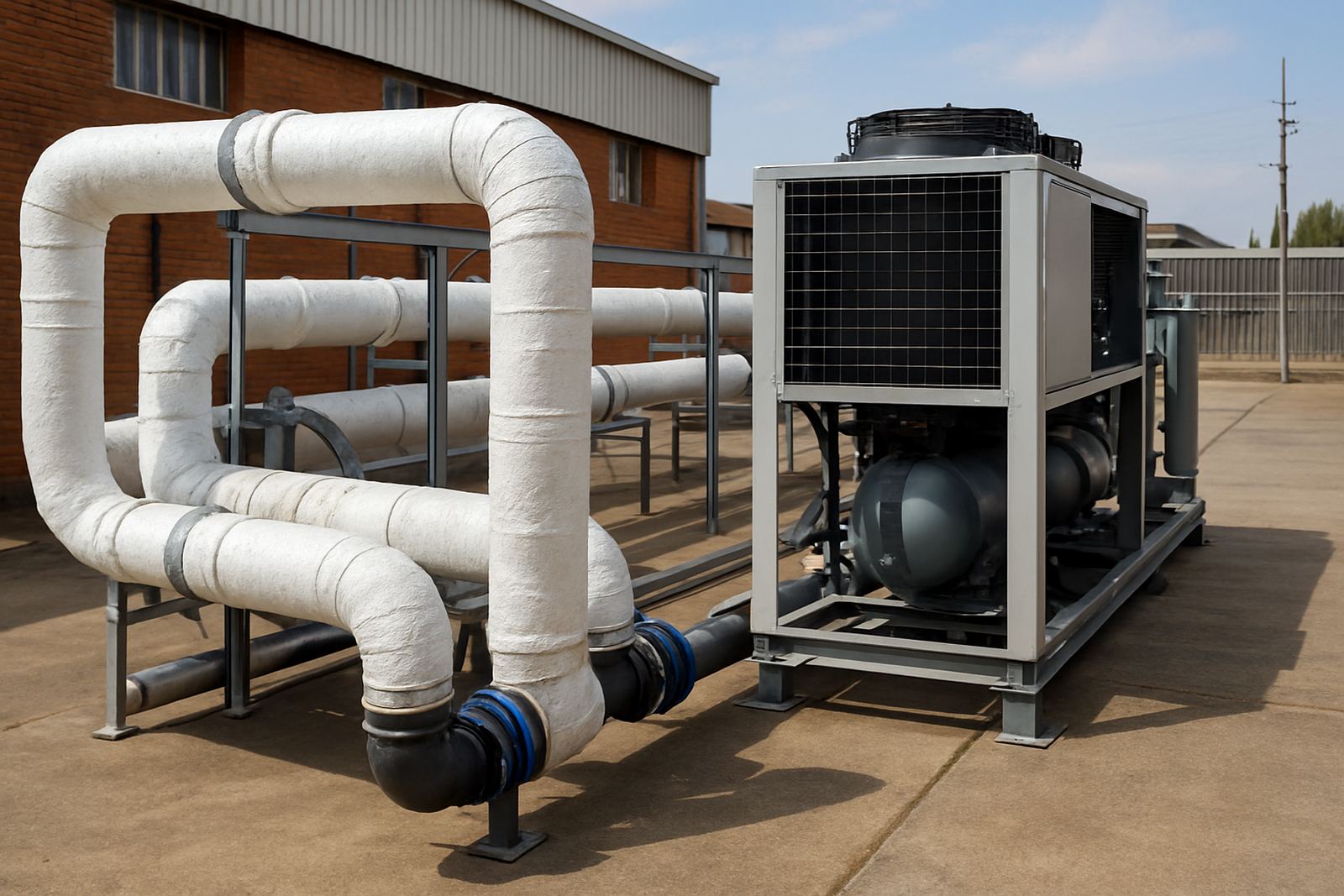
We supplied a dedicated industrial water chiller with a refrigeration circuit matched to the laser cell duty. The system was selected for steady control rather than oversized capacity, because an oversized unit can short cycle and lose efficiency. The final setup included a stainless water contact section, insulated pipework, a circulating pump sized for the application, and a control panel set up for easy monitoring by the shift team.
The cooling package was built around a temperature range suitable for laser processing, with stable control under continuous operation. We also included low-flow and high-temperature protection, plus alarm outputs so the plant could respond before a small issue became a shutdown. The installation was planned to keep the footprint tidy, with all services grouped neatly to reduce trip hazards and make future maintenance easier.
- Cooling capacity: 18 kW at design conditions
- Temperature control: 20 C setpoint with tight differential control
- Tank volume: 150 litres
- Pump duty: sized for the laser circuit and pipe run
- Protection: high temp, low flow, phase failure and overload protection
Installation, commissioning and handover
The installation took place over two weeks, including delivery, positioning, pipe connections, electrical integration, testing, and operator handover. Our team from Alberton coordinated the work with the client’s maintenance staff so the laser line could be brought back into service without unnecessary delays. The physical fit was checked carefully because space around the cell was limited and access had to remain clear for routine production movement.
During commissioning we flushed the system, verified flow rate, checked for pressure drop across the circuit, and confirmed the temperature held steady under load. We then ran the chiller through a practical operating cycle and trained the operators on start-up, alarm response, basic checks, and what to watch for during load shedding recovery. A clear service point was left in place for filter checks and scheduled maintenance.
- Project duration: 2 weeks
- Included pipework connection and final leak testing
- Electrical checks completed before load trial
- Operator training done on site
Results after the first production runs
Once the new unit was in service, the laser cell held temperature much more consistently through long production runs. That translated into steadier cutting performance, fewer pauses for cooling-related alarms, and better confidence when the line was pushed harder. The client also reported that the machine room felt easier to manage because the cooling system was no longer being pushed to its limit every afternoon.
From a maintenance point of view, the improvement was just as important. Lower thermal stress means less strain on pumps, seals, hoses, and the laser equipment itself. The team could focus on production rather than chasing temperature fluctuations. There was also a practical gain in planning, because the new system gave enough headroom for future increases without needing a rushed replacement later.
- More stable laser temperature during extended runs
- Fewer process interruptions from cooling alarms
- Better readiness for higher throughput
- Reduced stress on connected equipment
What we would do again on a similar project
On a repeat project like this, we would again start with the actual load profile rather than guessing from nameplate figures alone. In laser work, the difference between nominal and real duty can be significant, especially when shifts get longer or the machine is used harder than expected. We would also keep the piping layout simple, leave room for filter access, and specify controls that operators can read quickly without needing a manual every time.
For a Midrand site, we would keep planning around summer heat, dust control, and power stability from the start. Those are ordinary conditions in Gauteng industrial parks, and the cooling system should be built to handle them. That approach gives the client a safer margin, fewer callouts, and a cleaner path for maintenance over the long term. It also gives the production manager something valuable: predictability.
- Size for real operating load, not just paper specs
- Keep maintenance access simple
- Allow headroom for expansion
- Plan for local power and ambient conditions
Key facts
| Project location | Midrand, Gauteng |
|---|---|
| Client type | Industrial laser processing operation |
| Application | Dedicated laser cell cooling |
| Installed capacity | 18 kW cooling duty |
| Timeline | 2 weeks from site assessment to handover |
| Key services | Installation, commissioning, pipework, operator training |