Centurion mould line needed tighter temperature control
The client was a plastics manufacturer in Centurion running an older moulding line that still had sound equipment, but the cooling side had become inconsistent. Temperature swings were affecting cycle times and the workshop team was spending too much time clearing blockages, checking valves and sorting out minor leaks. The brief was practical: improve control, tidy the layout, and keep the moulds within a stable operating range without interrupting production for long.
The site had a few common constraints for an older industrial installation. Space around the mould area was tight, some of the pipework had been patched over the years, and access for maintenance was awkward. The plant also had to deal with load-shedding and hot summer conditions in Gauteng, so the upgraded arrangement had to recover quickly after power interruptions and cope with higher ambient temperatures without drifting out of spec.
What we found on the existing cooling setup
On inspection, the original cooling arrangement was serviceable but no longer suited to the line. Control was basic, the return water quality showed signs of scale, and there was a mixture of old fittings and replacement sections that made tracing faults harder than it should have been. The client did not need a full plant replacement. They needed a focused retrofit that would extend the life of the current system and make daily operation easier for the team.
The main issues were poor flow balance, unstable supply temperature under changing load, and pipework that had been installed in stages over time. That type of setup often causes uneven cooling between mould circuits and makes it difficult to see where a problem starts. We also noted that the existing control panel had limited alarms, so operators were relying on reaction rather than early warning. That was one of the first areas we targeted.
- Uneven cooling across multiple mould circuits
- Old pipe runs with unnecessary bends and dead legs
- Limited temperature alarms and no clear fault history
- Scale build-up in the water circuit
- Poor access for routine checks and maintenance
The retrofit package we supplied
We designed the retrofit to fit the existing plant room and keep downtime manageable. The work included control upgrades, cleaner pipework routing, improved filtration checks, and new components where the old ones were no longer reliable. We also set up the system so the operators could see more clearly what was happening at each stage, instead of guessing from product quality alone.
Raynen supplied and installed the following as part of the project:
- New temperature control components with more stable setpoint control
- Pipework retrofits using properly supported, labelled runs
- Isolation valves for easier servicing of individual circuits
- Strainers and water treatment checks to help manage scale and debris
- Pump replacement on the weaker circulation section
- Control panel upgrades with clearer alarm indications
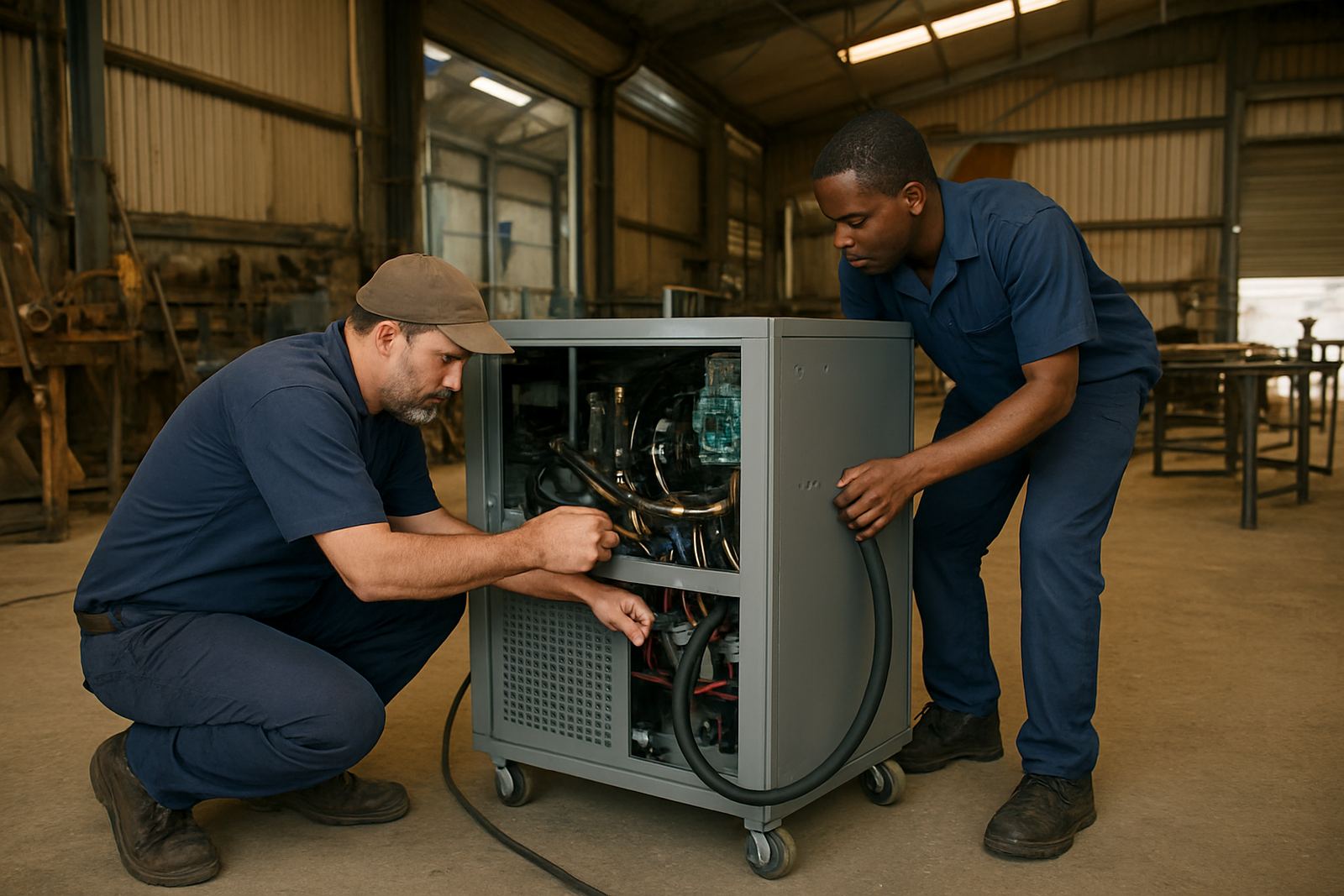
- Commissioning and operator handover on site
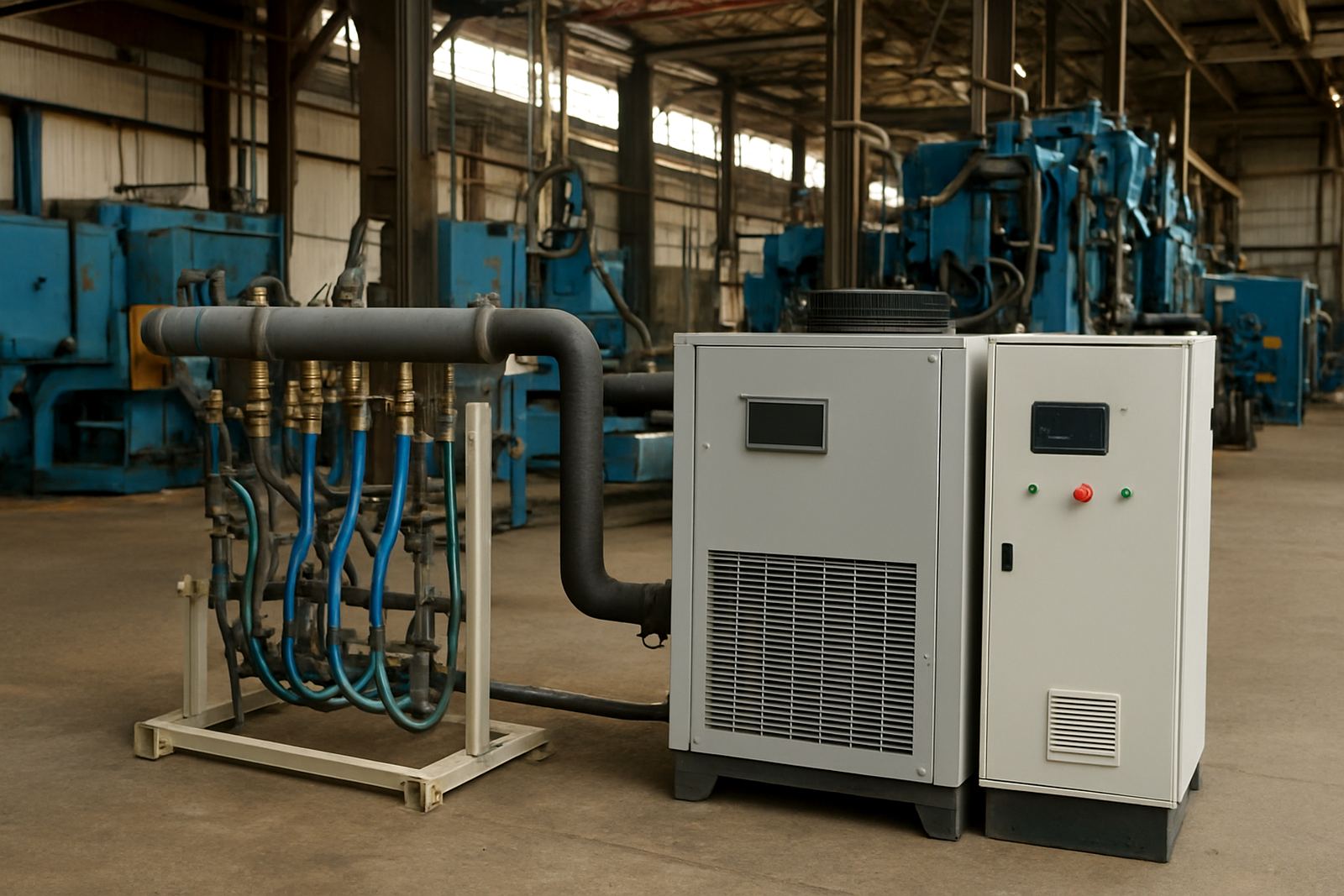
The cooling arrangement was set up for cleaner circulation, quicker fault finding and easier future maintenance. We kept the layout practical, so the team could still work around it without having to shut down the whole area for every small repair.
How the work was phased over four weeks
The project ran over four weeks from site survey to final handover. In week one we completed the assessment, checked the mould cooling demand and confirmed the pipework changes needed. Week two covered procurement and workshop preparation, including the assembly of the new control sections and support hardware. During week three the on-site installation took place in planned sections so the production team could keep part of the line running where possible.
Week four was used for commissioning, balancing and operator training. We tested the temperature response under different loads, checked for leaks, and verified that each circuit could be isolated and returned to service cleanly. The handover also included a short maintenance discussion with the client team so they knew what to watch for during the first few weeks after the retrofit. The team appreciated that the changeover was steady and not rushed, which mattered because the plant had fixed production windows and limited tolerance for extended stoppages.
- Week 1: site survey and cooling assessment
- Week 2: workshop preparation and component assembly
- Week 3: staged installation on site
- Week 4: commissioning, balancing and training
Results on the mould line after commissioning
Once the upgraded system was commissioned, the mould line held temperature more steadily and the operators had better visibility of what was happening on each circuit. The improved controls reduced guesswork during shift changes, and the cleaner pipework made it easier to identify and isolate a fault without disturbing the full system. That helped reduce lost time on the floor, especially when the plant was under pressure to keep up with orders.
The client also reported less nuisance maintenance. With the flow paths tidied up and the water side checked properly, the system was no longer constantly pulling the team away from production for small adjustments. The new arrangement gave the workshop staff a clearer base to work from, and it should make future maintenance more predictable. In a plant like this, that matters just as much as the immediate cooling improvement.
- More stable mould temperatures during extended runs
- Shorter fault finding time for operators and technicians
- Cleaner pipe routing with easier access for servicing
- Better response after power interruptions
- Less unplanned intervention during production
What we would repeat on a similar Centurion site
If we were doing a similar mould retrofit again in Centurion, we would keep the same approach: survey first, understand the actual cooling demand, then phase the changes so production is not pushed off balance. Older plants often have usable equipment that simply needs better control, better water management and neater installation work. A full replacement is not always the answer.
We would also insist on clear labelling from day one, especially where several mould circuits share the same area. It saves time later and reduces mistakes when the team is working under pressure. On sites near the East Rand and Pretoria corridor, where summer heat and load-shedding can both cause headaches, the ability to recover quickly after a stop is worth planning for. That is why we favour simple layouts, good isolation points and controls that the operators can trust without needing constant supervision.
For this Centurion plant, the retrofit delivered what the brief called for: steadier cooling, cleaner pipework, and a system that is easier to live with every day. It was a good example of how a targeted upgrade can give an older line a proper second life.
Key facts
| Project type | Mould cooling retrofit and control upgrade |
|---|---|
| Town | Centurion, Gauteng |
| Timeline | 4 weeks from survey to handover |
| Scope | Controls, pipework, pumps, filtration and commissioning |
| System focus | Stable mould temperatures and easier maintenance |
| Site constraints | Tight plant area, live production, load-shedding recovery |