What the Alrode workshop needed
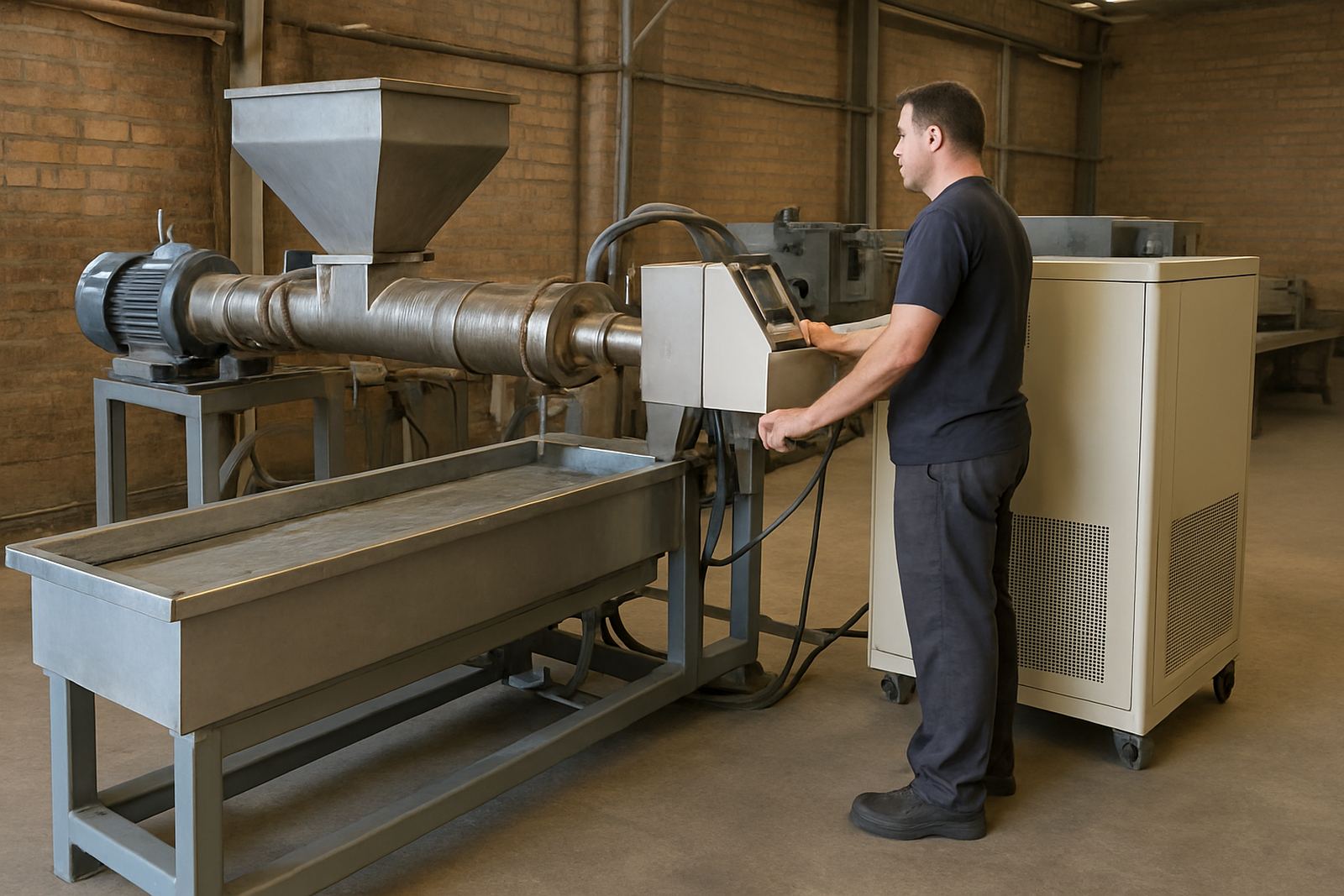
The client is a fabrication operation in Alrode, Alberton, running a laser line with high daily demand and repeat cuts across mixed material thicknesses. The existing cooling setup was reaching its limit during busy runs, especially in hot weather and when the workshop was drawing extra load from other equipment. Their main concern was not just temperature, but how often the laser would drift when the chiller could not hold a stable setpoint for long enough. That kind of drift affects cut quality, increases stoppages, and puts extra wear on the laser components.
The brief was straightforward: improve cooling capacity, tighten temperature control, and keep the line running through South African summer conditions and load-shedding recovery periods. They also wanted a practical arrangement that would be easy to service locally, with sensible access for cleaning, inspections and future maintenance. The unit had to fit the available floor space at the Alrode site and work with the current pipe routing without turning the workshop into a patchwork of temporary fixes.
Site constraints and operating risks
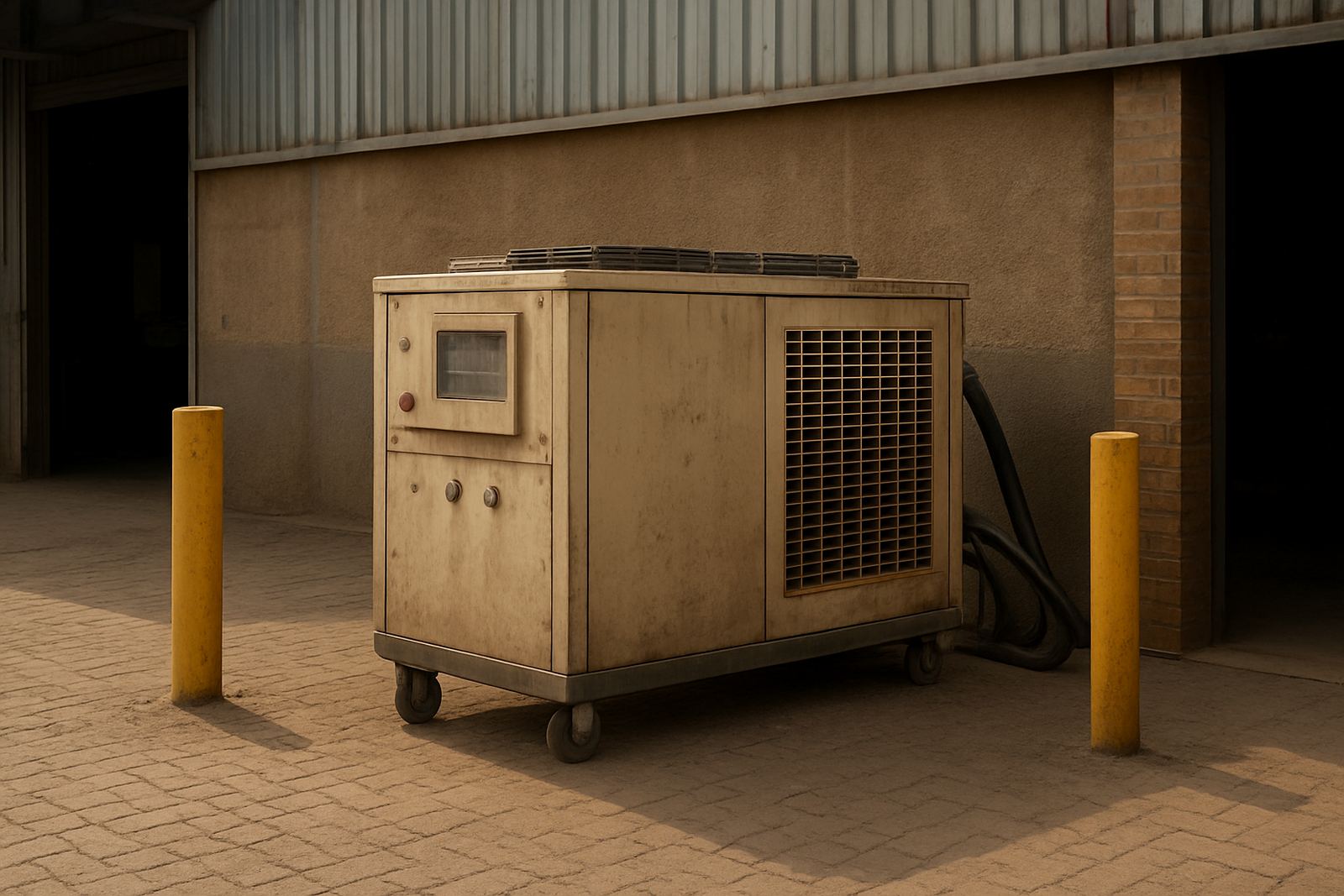
Alrode industrial sites often have cramped plant areas, dust from fabrication work, and heat build-up around enclosed equipment bays. In this case, there was limited space beside the machine, plus a need to keep pipework tidy so operators could still move around safely. The client also needed equipment that could tolerate brownouts, restart conditions and the sort of stop-start pattern that comes with municipal supply interruptions. On top of that, the laser had to remain protected from temperature spikes when ambient conditions climbed in the afternoon.
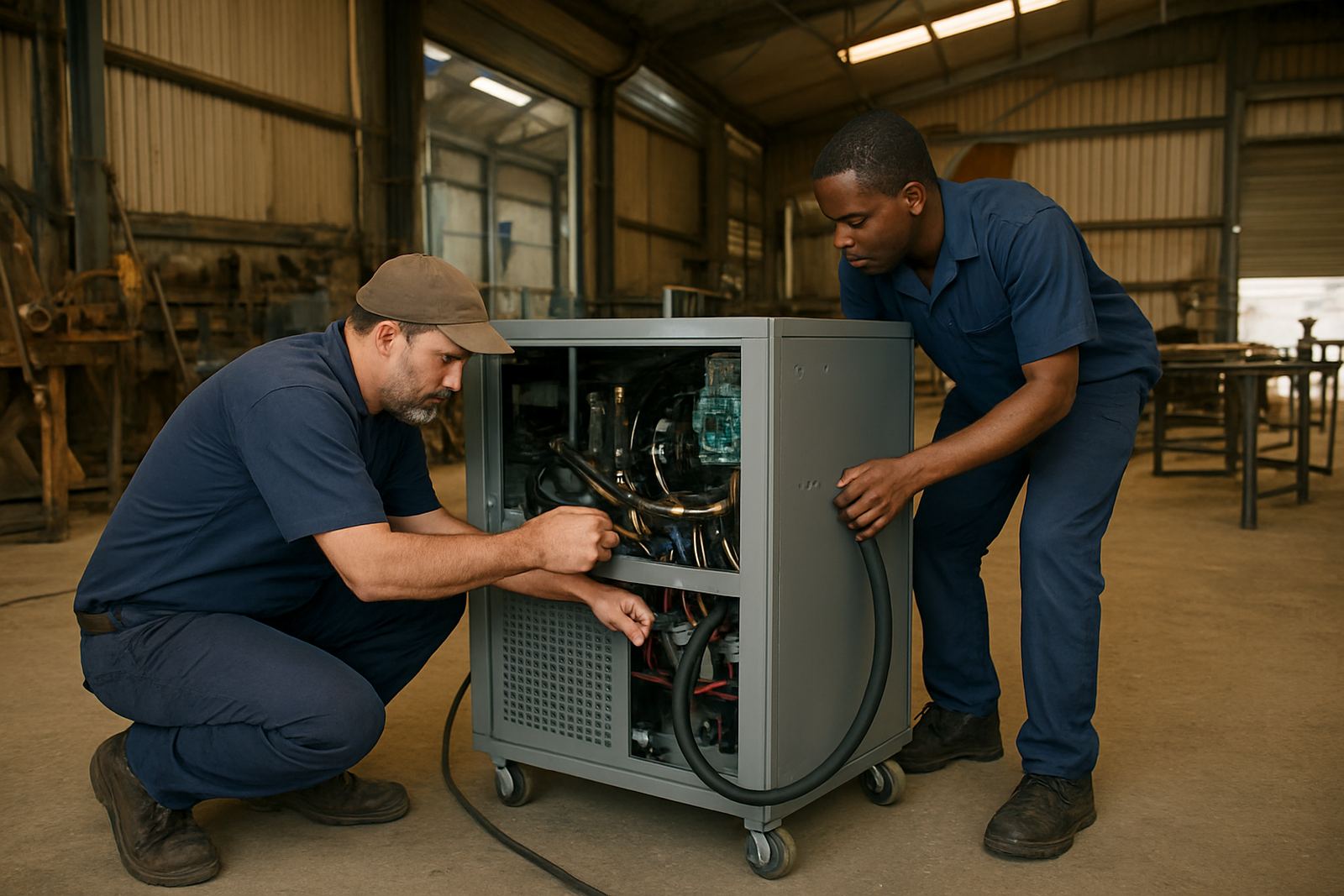
We also had to consider maintenance access. If a chiller is difficult to reach, small issues get ignored until they become bigger ones. So the layout had to allow clear access to strainers, isolating valves, electrical controls and service points. We kept the installation practical and compact, with enough breathing room around the unit for airflow and routine checks. A small detail, but it matters when the workshop is busy and nobody has time to fight with the equipment.
- Restricted plant space beside the laser
- High ambient temperature during summer shifts
- Dust and fine debris from fabrication work
- Load-shedding recovery and voltage fluctuation risk
- Need for simple maintenance access and clear pipe routing
What we supplied and installed
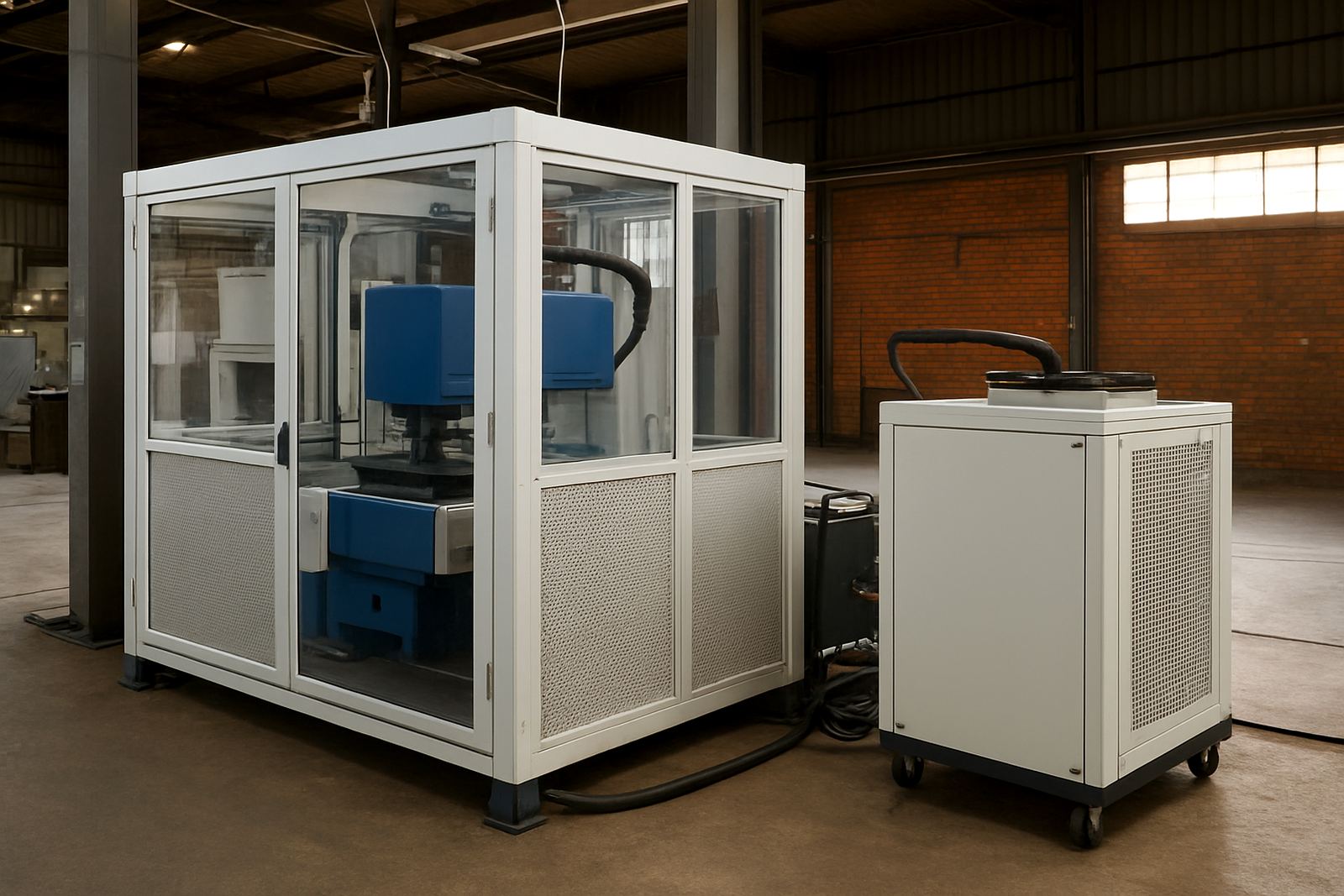
We supplied an upgraded industrial laser chiller package sized for the application, with the control range selected to support stable process cooling rather than basic temperature reduction. The package included a water-cooled loop with refrigeration capacity matched to the duty, a circulation pump selected for the pipe run and flow requirement, and a control panel set up for reliable operator use. We also upgraded the associated water treatment checks and filtration approach so the cooling circuit would stay cleaner for longer. That helps reduce fouling, protects heat exchangers, and supports better long-term reliability.
The installation included new pipework sections where needed, isolating valves for service work, proper hose support, and a neater final tie-in to the laser circuit. We checked flow direction, verified pressure drop across the run, and confirmed that the water return path was not introducing unnecessary strain on the pump. Where required, we adjusted the controls to suit the client’s operating pattern. The end result was a package that could do the job without overcomplicating the workshop layout.
- Upgraded industrial laser chiller package
- Matched pump selection for the installed pipe run
- Control panel setup and parameter checks
- Pipework tie-in with isolating valves and support
- Water treatment checks to support cleaner operation
Installation and commissioning timeline
The project ran over two weeks from site assessment to final handover. Week one covered measurements, load review, pipe routing checks and final specification sign-off. We then prepared the equipment, confirmed the mechanical arrangement, and scheduled the installation around the client’s production plan so the laser did not sit idle longer than necessary. Week two covered installation, commissioning, flow verification and temperature testing under operating conditions. That testing stage was important because a chiller can look right on paper and still behave badly once it is under real workshop load.
Commissioning included checking the setpoint stability, confirming the laser was receiving the correct chilled water condition, and monitoring the system through startup and steady operation. We also walked the team through the daily checks they should keep an eye on, including visual inspections, basic fault indicators and what to do if ambient conditions rise sharply. The handover was kept practical. No long theory session, just the information the team actually needed to keep the plant running.
Results after the upgrade
After the upgrade, the client had tighter thermal control and fewer temperature swings during long production runs. That meant more consistent laser performance and less time spent waiting for the system to settle after busy cutting cycles. In practical terms, it helped reduce nuisance interruptions and gave the operators more confidence that the line could run through the day without constant adjustment. The laser also had better protection from heat-related stress, which should support longer equipment life if the maintenance schedule is kept up.
The improved stability made a clear difference on the floor. Cut quality stayed more consistent, the machine had fewer cooling-related pauses, and the workshop team could manage production with less second-guessing. We also found that the cleaner pipe arrangement and clearer access points made the installation easier to work around. That sort of detail saves time later, especially when the site is busy and downtime costs money. The client wanted uptime and temperature control, and that is exactly what the upgrade was aimed at.
- Improved temperature stability on extended runs
- Less downtime linked to cooling fluctuation
- Better laser protection against thermal stress
- Cleaner service access for future maintenance
- More predictable operation in hot weather
What we would do again on a similar job
If we were to repeat this type of project, we would keep the same approach: start with the actual operating duty, not just the nameplate figures, and size the chiller for real workshop conditions. In Alrode and similar industrial areas, ambient heat, dust and power interruptions are part of daily life, so the cooling package must be built around those realities from the start. We would also keep the pipework as direct as possible, with proper isolation for maintenance and enough room around the unit for service work. That saves time later and keeps the plant easier to manage.
For fabrication clients, the lesson is simple. A laser chiller should not be treated as a side item. It is part of the production system, and if it is undersized or badly arranged, the machine will show it quickly. We would repeat the same focus on stable water treatment, commissioning checks, and operator handover. It is not flashy work, but it prevents small problems from turning into a bigger repair bill. The client got a cooling setup that is practical, serviceable and suited to the demands of a South African workshop, which is exactly how it should be.
Key facts
| Project type | Laser chiller upgrade for a fabrication workshop |
|---|---|
| Location | Alrode, Alberton, Ekurhuleni |
| Timeline | 2 weeks from assessment to handover |
| Application | Industrial laser cooling for production cutting |
| System features | Upgraded chiller, circulation pump, control panel, pipework tie-in |
| Support focus | Thermal stability, uptime and easier maintenance access |