Why the factory needed a higher-capacity chiller
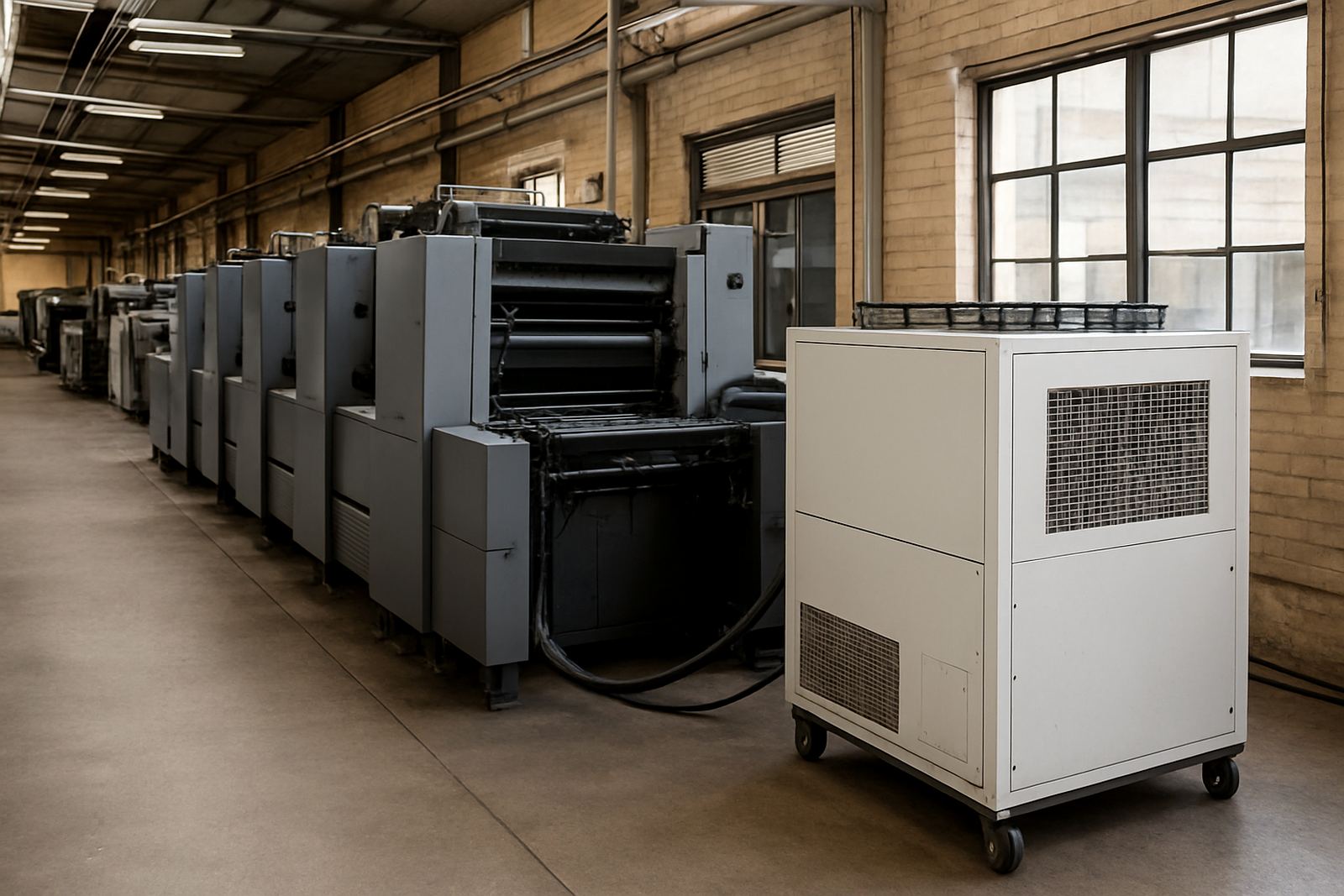
The client was a light industrial manufacturer in Prospecton, Durban, running extended shifts through the warmer part of the year. Their existing cooling unit was working hard but could not hold temperature once ambient heat climbed and production stayed on for longer periods. Product quality was starting to vary and operators were having to manage the line more closely than they should have.
The brief was straightforward: increase cooling capacity without disrupting production, improve temperature stability for the main process line, and make sure the new unit would cope with Durban humidity, salt-laden air and the demands of a busy factory floor. The site also needed a setup that could be serviced locally and kept going through load-shedding events with sensible controls in place.
- Factory location: Prospecton, Durban
- Application: process line cooling for extended daily runs
- Main issue: seasonal heat load and temperature drift during peak shifts
- Concern: limited downtime, space around the production area and coastal corrosion
Site constraints and the cooling brief
Prospecton sites often have tight access, busy loading areas and limited room around equipment pads. This one was no different. We had to work around live production, existing pipework and an older control arrangement that had been patched over time. The electrical supply also needed checking carefully because the site had already experienced interruptions and voltage swings during local power cuts.
Our approach was to match the unit to the actual duty rather than simply fitting a larger machine and hoping for the best. We checked heat rejection, flow rates, pipe size, control logic and the practical space available for maintenance access. That made it possible to select a higher-capacity industrial water chiller that would fit the site without forcing major building changes.
- Live production environment with limited shutdown windows
- Coastal exposure calling for corrosion-aware installation materials
- Need for simple operator controls and quick fault checks
- Allowance for future maintenance without stripping half the line apart
What we supplied and installed
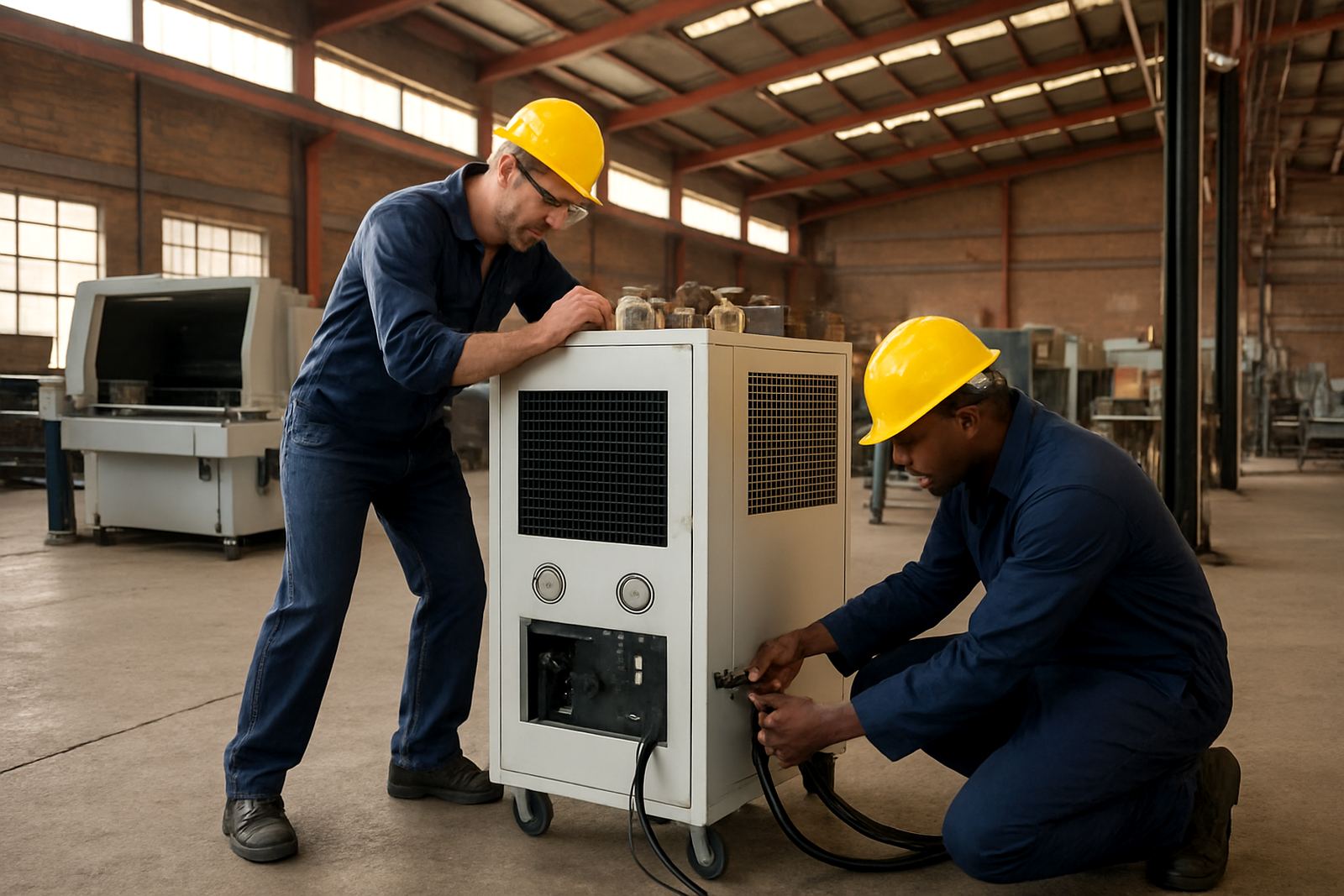
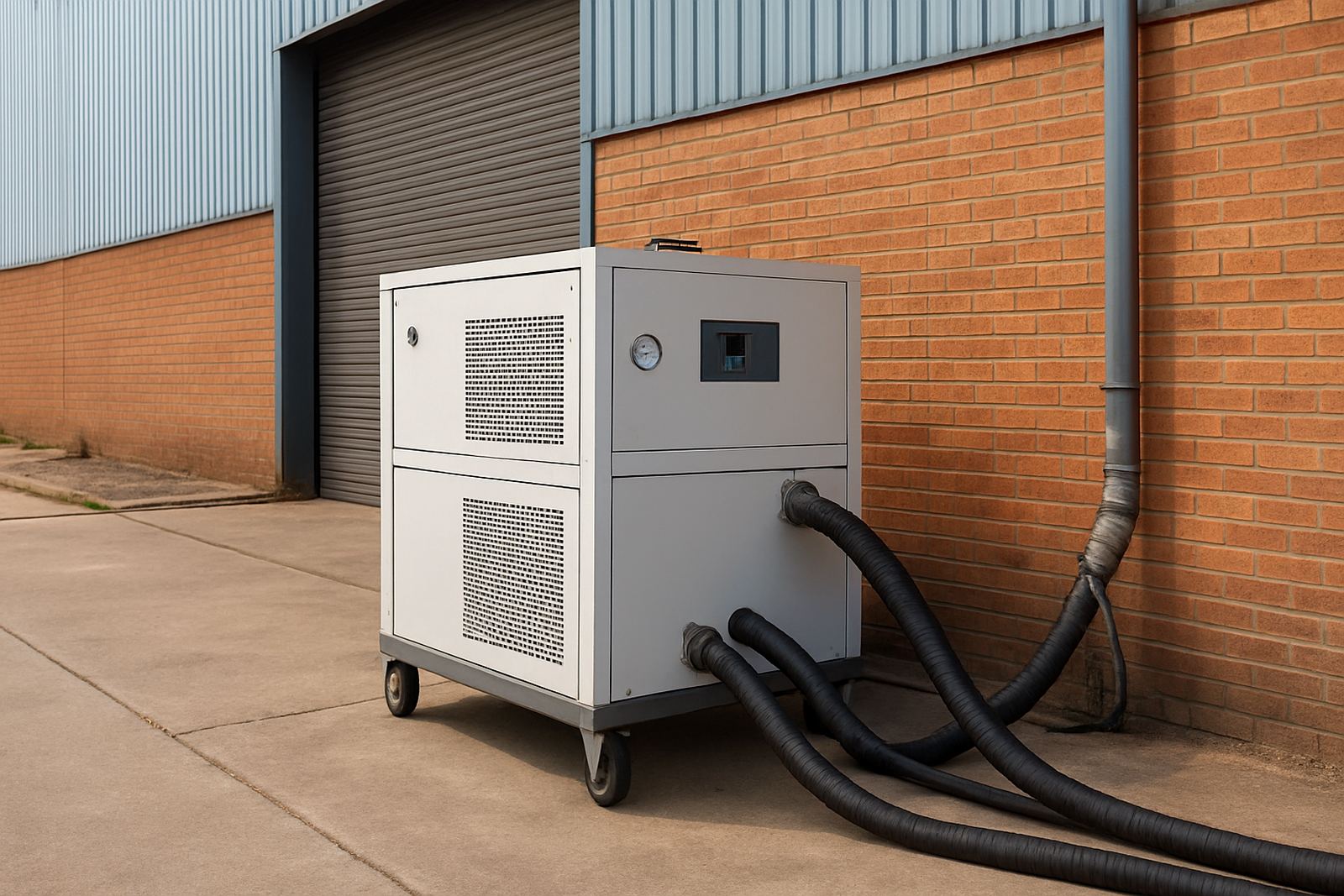
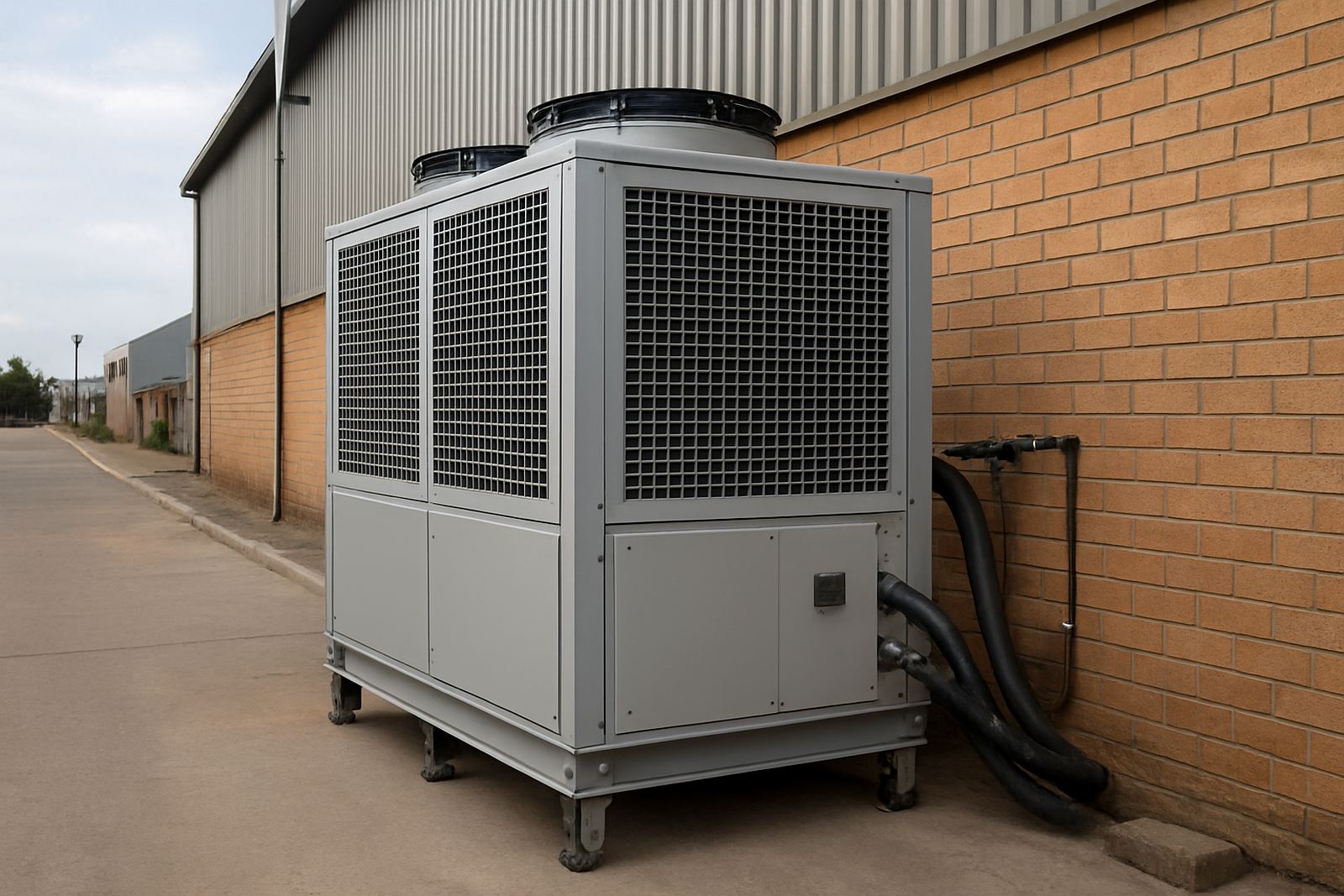
We supplied a higher-capacity industrial water chiller sized for the factory’s peak summer demand, together with the related pumps, isolation valves, filtration support and control integration needed to make the system work properly. The installation included pipework adjustments, connection to the process loop and commissioning of the new temperature control settings.
The equipment package was selected for steady water temperature control and reliable day to day operation. We also added the practical items that matter on a factory site, such as service isolation points, proper drain arrangements and clearer access around the unit for inspections. Where the existing pipework needed correction, we completed pipework retrofits so the flow stayed balanced and the new chiller was not fighting old restrictions.
- Higher-capacity industrial water chiller for process cooling
- Associated pump set and flow control adjustments
- Pipework retrofits to suit the new duty and layout
- Control integration and setpoint tuning for stable operation
- Isolation points added for easier maintenance
Installation and commissioning in three weeks
The project ran over three weeks from site assessment to final handover. In week one, we completed the cooling audit, checked the heat load profile and confirmed the best placement for the new unit. In week two, we carried out the installation work, including pipework changes, electrical coordination and equipment positioning. In week three, we commissioned the chiller, checked performance under load and trained the operators on basic daily checks.
Because production could not stop for long, the work was planned around quieter plant periods and coordinated closely with the client team. That kept disruption down and allowed us to bring the new system online in a controlled way, not rushed. It also gave us time to verify water treatment status before the final sign-off.
- Week 1: site survey, load checks and installation planning
- Week 2: mechanical installation and pipework changes
- Week 3: commissioning, operator training and handover
- Work sequenced around production windows to avoid unnecessary downtime
Results after the first production cycle
Once the new chiller was online, the factory saw much steadier temperature control across the line, even during hot weather and longer shifts. The process no longer drifted as much in the afternoon, which reduced the need for operators to keep chasing settings. That gave the team a more predictable production run and better protection for temperature-sensitive equipment.
From a maintenance point of view, the new setup also made the plant easier to manage. The flow was more consistent, the system had better access for inspections and the operators had a clearer idea of what normal operation should look like. In a humid coastal area like Durban, that sort of practical reliability matters because small cooling issues can turn into bigger stoppages quickly.
- More stable process temperatures during long runs
- Less operator intervention to keep the line within spec
- Improved protection for equipment and product consistency
- Better maintainability for routine checks and future servicing
What we would repeat on the next Prospecton job
If we were doing a similar factory chiller upgrade again in Prospecton, we would follow the same approach. Start with a proper cooling audit, size the unit for the real peak load, and build in enough access for maintenance from day one. It saves trouble later and gives the client a system that works through summer, not just in mild weather.
We would also keep the commissioning phase long enough to confirm performance under actual production conditions, not only on a quiet test run. That is where the real value shows. A chiller needs to hold temperature when the plant is busy, the weather is hot and the shift is stretched. That is exactly where this installation proved itself.
- Audit first, then size the cooling plant properly
- Allow for coastal conditions and routine maintenance access
- Commission under real load before handover
- Train operators on simple checks so issues are caught early
Key facts
| Project | Prospecton Factory Chiller |
|---|---|
| Town | Prospecton, Durban |
| Client type | Industrial manufacturing site |
| Application | Process line cooling |
| Timeline | 3 weeks |
| Scope | Higher-capacity chiller, pipework retrofits, commissioning and operator training |