What the Germiston plant needed from its cooling system
The site was running extended moulding shifts and the existing cooling arrangement could not hold a consistent water temperature once ambient heat built up in the workshop. That created variation at the moulds, slower cycle consistency and more time spent making manual adjustments. The brief was to stabilise process water for the moulding line, keep equipment within a reliable operating range and reduce avoidable downtime.
The plant manager also wanted a solution that could work through load-shedding events and return to normal operation quickly after power interruptions. In Germiston, where many industrial sites share the same pressure on utilities, the cooling system had to be practical, easy to service and built for daily use not just ideal conditions.
- Application: mould temperature control for a production line in Germiston
- Requirement: steady process water temperature across longer shifts
- Key concern: inconsistent output during hot afternoons and after power cuts
- Site condition: limited plant room space with existing pipe routes already in place
Site constraints we had to work around
The biggest constraint was keeping production available while the upgrade took place. The team could not afford a long shutdown, so the installation had to be planned around shift handovers and the moulding schedule. Space in the service area was tight, which meant the new equipment had to be positioned for proper airflow and simple access to filters, valves and service panels.
There were also water quality concerns. Mould cooling circuits are sensitive to scale and debris, and the client had seen fouling in strainers and inconsistent flow at some points in the line. Because of that we built the scope around better water management as well as the chiller itself. Coastal humidity is not the issue in Germiston, but dust, heat and dirty cooling water can be just as hard on a system over time.
- Phased work to avoid stopping the entire moulding line
- Space planning for service access and airflow clearance
- Water quality checks to reduce scaling and blockages
- Allowance for future maintenance without major pipework changes
The process cooling package we supplied
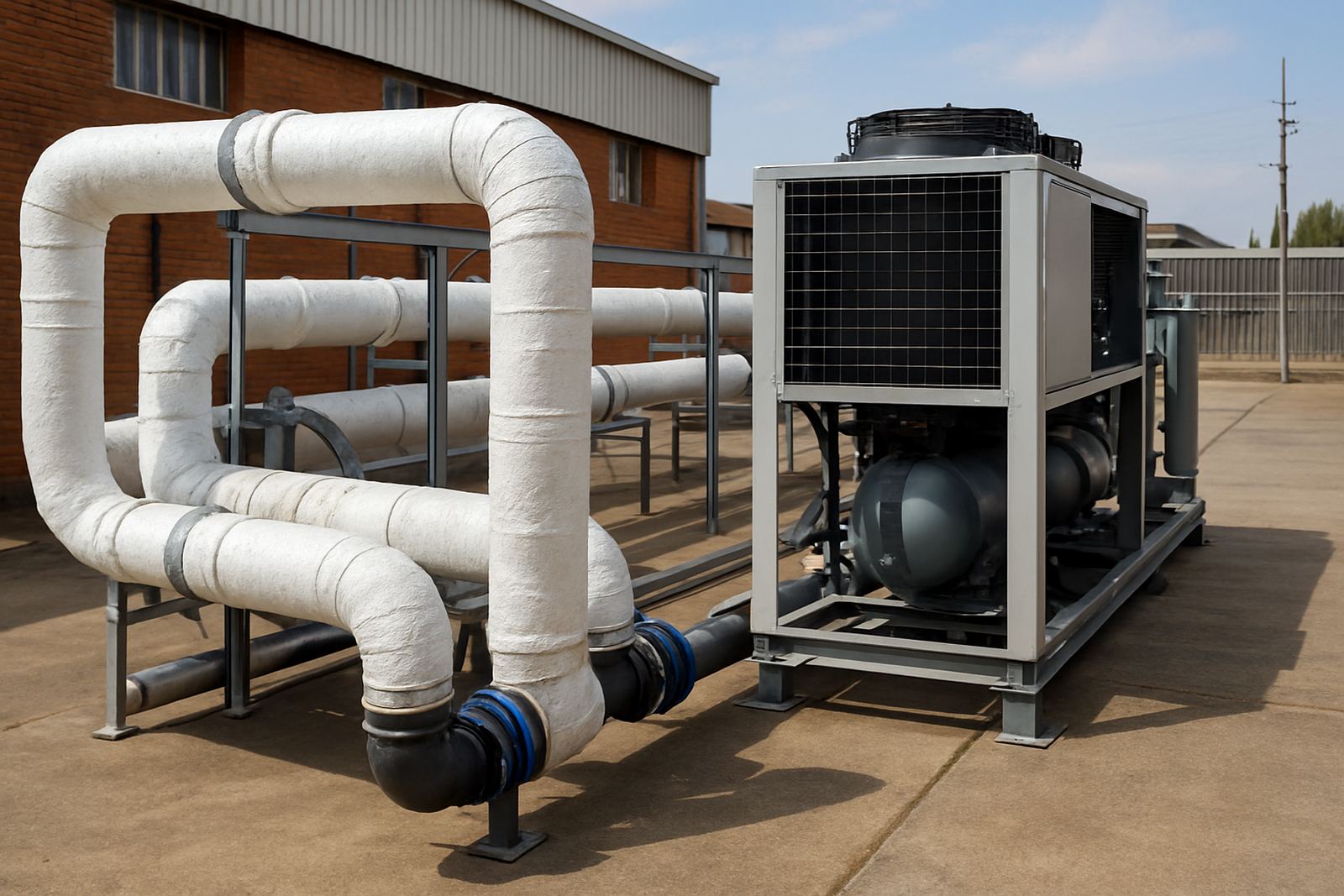
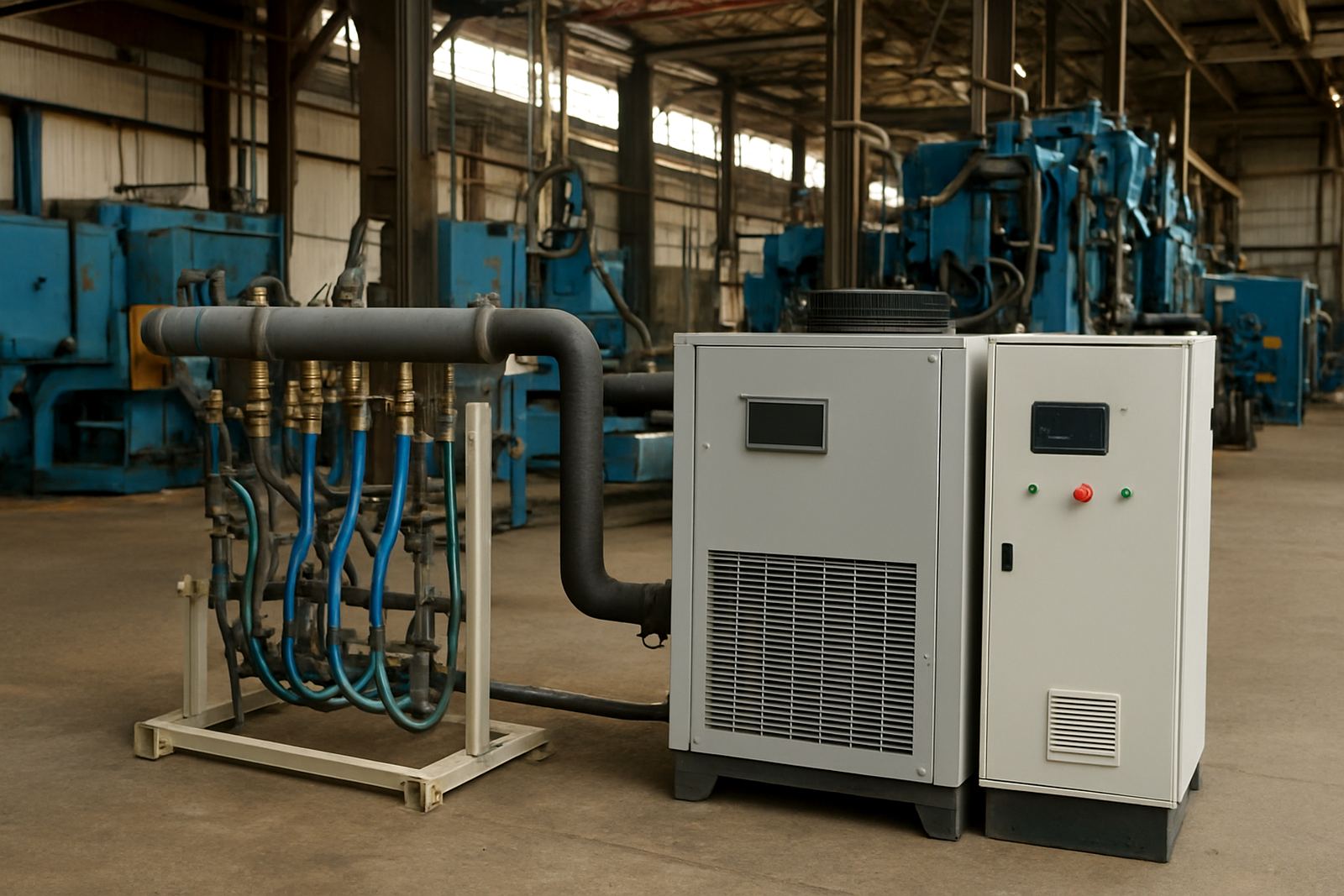
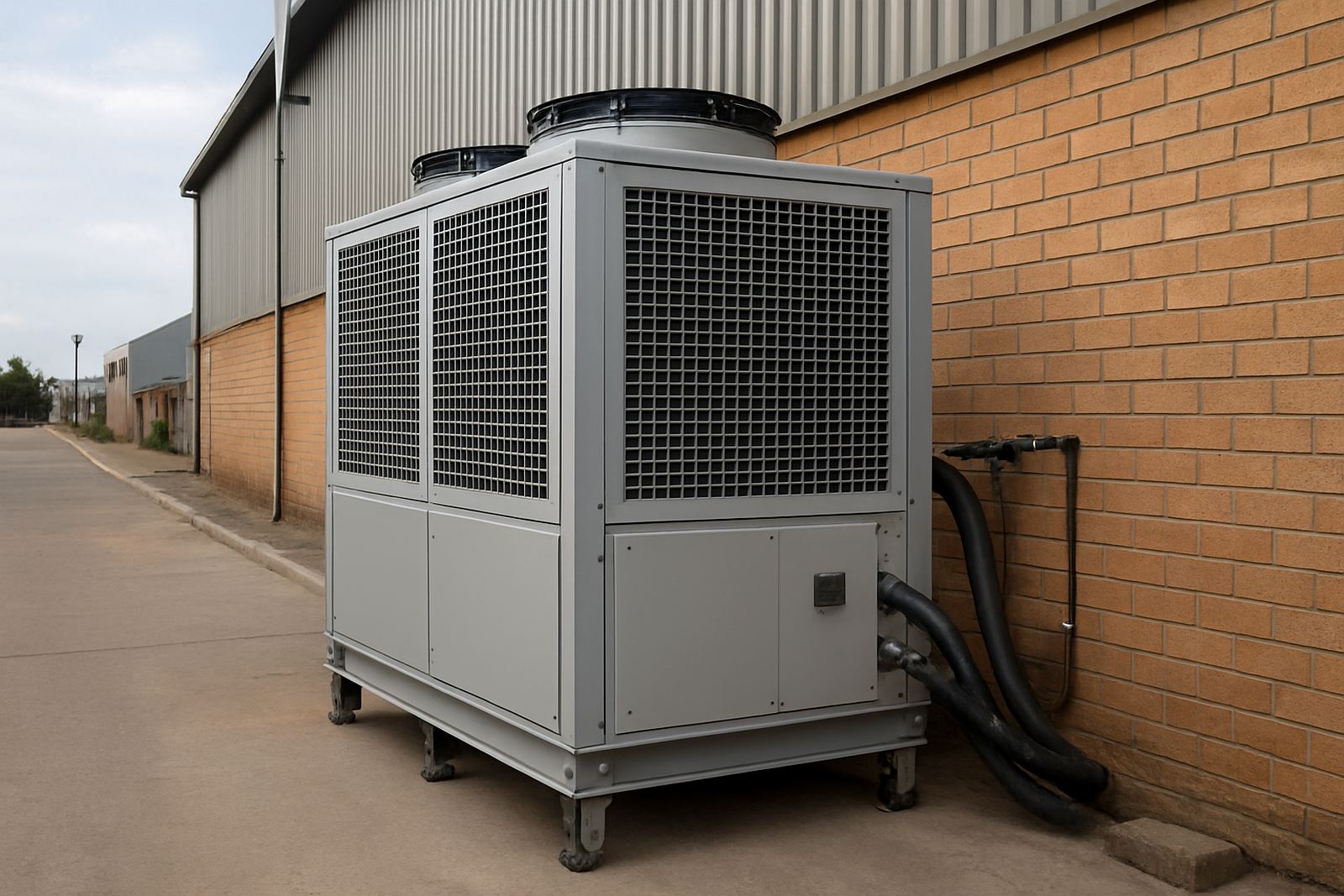
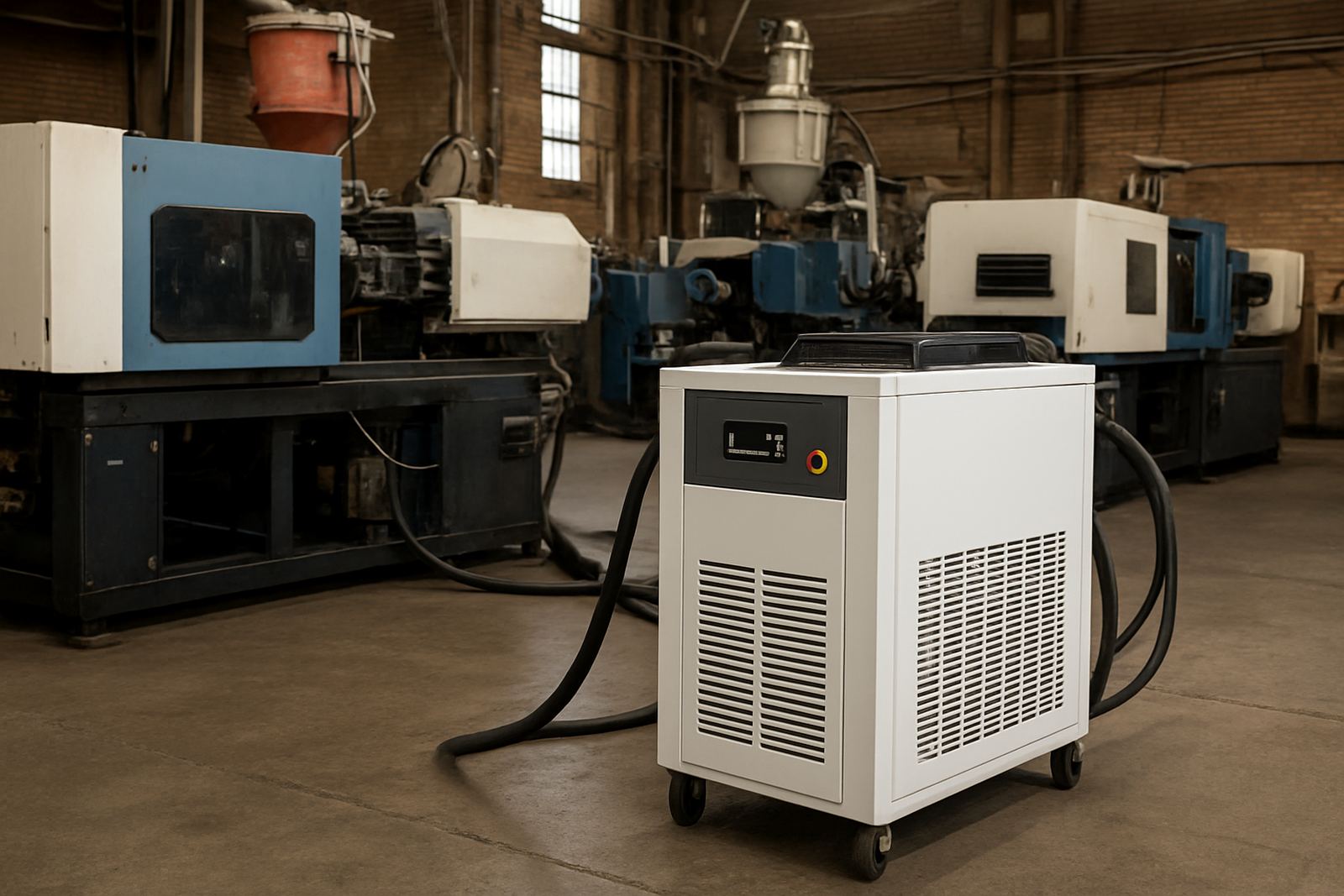
Raynen supplied an industrial water chiller package matched to the moulding load, together with the support components needed for stable operation. The system was selected to give tight temperature control, reliable flow and practical maintenance access for the on-site team. We also added the controls and pipework changes needed to tie the chiller into the existing process circuit cleanly.
The equipment was sized for a steady duty cycle rather than short peaks only. That matters on moulding lines, where temperature drift shows up in product variation, longer setup times and less predictable cycle performance. The final package included insulated connections, isolation points and service-friendly fittings so future maintenance can be handled without unnecessary downtime.
- Industrial water chiller sized for mould cooling duty
- Dedicated pump arrangement to support stable flow
- Isolation valves and strainers for easier servicing
- Pipework tie-ins to integrate with the existing circuit
- Control settings calibrated for the required mould temperature band
Installation and commissioning over three weeks
The project ran over three weeks from site assessment to final handover. In week one we completed the cooling audit, confirmed the line requirements and checked the plant room layout, electrical supply and pipe routes. In week two the equipment was delivered, positioned and connected into the process line. In week three we carried out commissioning, temperature testing and operator familiarisation.
During commissioning we checked flow rates, return temperatures and alarm settings while the moulding team monitored the system under production conditions. We also reviewed the changeover procedure for power interruptions so the system could restart safely after load-shedding. That detail matters in Ekurhuleni where a plant can lose valuable time if equipment is not set up for quick recovery.
- Week 1: audit, measurements and cooling load review
- Week 2: equipment placement, pipework and electrical tie-in
- Week 3: commissioning, testing and handover
- Training provided to operators and maintenance staff
Results after the cooling upgrade
Once the new system was online, the plant had far better temperature stability on the mould circuit and less variation between shifts. Operators no longer had to keep chasing temperature swings during warmer parts of the day. That improved consistency on the production line and reduced the risk of rejected product caused by unstable cooling.
It also made maintenance easier. With better filtration, clearer isolation points and a more orderly pipe layout, routine checks became quicker and troubleshooting more direct. The client wanted a practical result and that is what the system delivered: steadier mould temperatures, fewer interruptions and a cooling setup that could support longer operating hours without being pushed to its limit.
- More stable mould temperatures across extended shifts
- Less manual adjustment during hot periods
- Faster recovery after power interruptions
- Cleaner maintenance access for the site team
What we would repeat on the next mould cooling job
If we were doing the same kind of project again, we would follow the same approach: start with a proper cooling audit, check the real production pattern and size the equipment for the duty rather than a guessed peak load. That is the difference between a chiller that simply runs and a chiller that supports production day after day.
We would also keep the water treatment checks in the scope from the start. Mould cooling systems are much easier to manage when the water quality is watched from day one. For sites in Germiston, Boksburg, Johannesburg and Pretoria, that habit pays back quickly because it reduces scale, keeps flow steady and avoids unnecessary wear on pumps and valves.
- Measure the actual production load before specifying equipment
- Plan for maintenance access, not just installation day
- Include water quality checks in the routine from the start
- Allow for power interruptions and quick restart procedures
Key facts
| Project type | Mould cooling upgrade for a Germiston production site |
|---|---|
| Location | Germiston, Ekurhuleni |
| Timeline | 3 weeks from audit to handover |
| Cooling duty | Industrial water chiller for mould temperature control |
| Controls | Temperature setpoint control with alarm monitoring |
| Services included | Audit, installation, commissioning, training and pipework tie-in |