Why a small leak becomes an expensive shutdown
On an industrial chiller, a leak is never just water on the floor. It can seep into cable trays, sit under skids, soften insulation and corrode fittings long before anyone sees the full problem. If the leak is on a laser cooling circuit or a mould line, temperature drift can follow within minutes and the process may start rejecting product.
In Alberton and the rest of Ekurhuleni, many plants run long shifts with limited downtime. That makes leak risks worse because the first sign is often a wet patch or a topping-up routine that becomes normal. Once a system needs water added every few days, something is wrong and it usually gets worse not better.
Leaks also increase the chance of pump strain. A pump that draws air because the system is low on water can lose prime, run noisier, and wear out faster. If the cooling water is treated, a leak can change chemical balance as well, so the system may stop protecting against scale and corrosion.
What usually causes leaks on chiller lines
Most leaks start with pressure, movement or a poor connection. In practice that means loose unions, cracked hoses, worn seals, vibration at pump discharge points, or pipework that was installed without enough support. We also see leaks where temporary cooling was connected in a hurry and left in place longer than planned.
Heat cycling matters too. Cooling systems start, stop and change load through the day, so fittings expand and contract. Over time that movement can loosen threaded joints or open a tiny split in a flexible hose. Coastal humidity in Durban can speed up corrosion on exposed metal parts, while dust and heat in inland plants can harden seals sooner than expected.
- Over-tightened fittings that distort seals
- Poor pipe support causing vibration at bends
- Old hose that has gone hard or brittle
- Seal wear on pumps and valves
- Blocked strainers increasing system pressure
- Freeze damage where water sat too long in idle lines
Even a neat installation can leak if the water quality is poor. Hard water, dirt and rust particles can damage seats and seals, then the drip starts at the weakest point. It is not always dramatic, just a slow failure that gets ignored until the panel trips or the floor is slick.
The hidden damage to lasers, moulds and process lines
Different applications suffer in different ways, but the pattern is the same: leaks interrupt control. On laser equipment, unstable temperature can affect beam performance and trigger alarms. On moulds, poor cooling can lengthen cycle time, change part dimensions and create rejects. On process lines, a small leak may cause the chiller to cycle harder than normal, which raises running costs and shortens component life.
Water that reaches electrical panels is especially dangerous. Even if a short trip does not happen immediately, moisture can leave behind oxidation and tracking on terminals. That creates faults later, often when the plant is under pressure or load-shedding has already changed the schedule. A leak near control wiring is never worth leaving for later.
There is also a safety side. Wet floors around plant rooms, walkways and loading areas increase slip risk for staff and contractors. If the leak is under a machine base, it may also hide until someone moves the unit for service and finds staining, rust or mould growth under the skid.
Early warning signs worth acting on straight away
Most leak problems give warnings before they become major repairs. The trouble is that busy sites often ignore the first signs because production is still running. If a cooling system is asking for more water, making unusual pump noise or showing a pressure change, that is the time to inspect not next week.
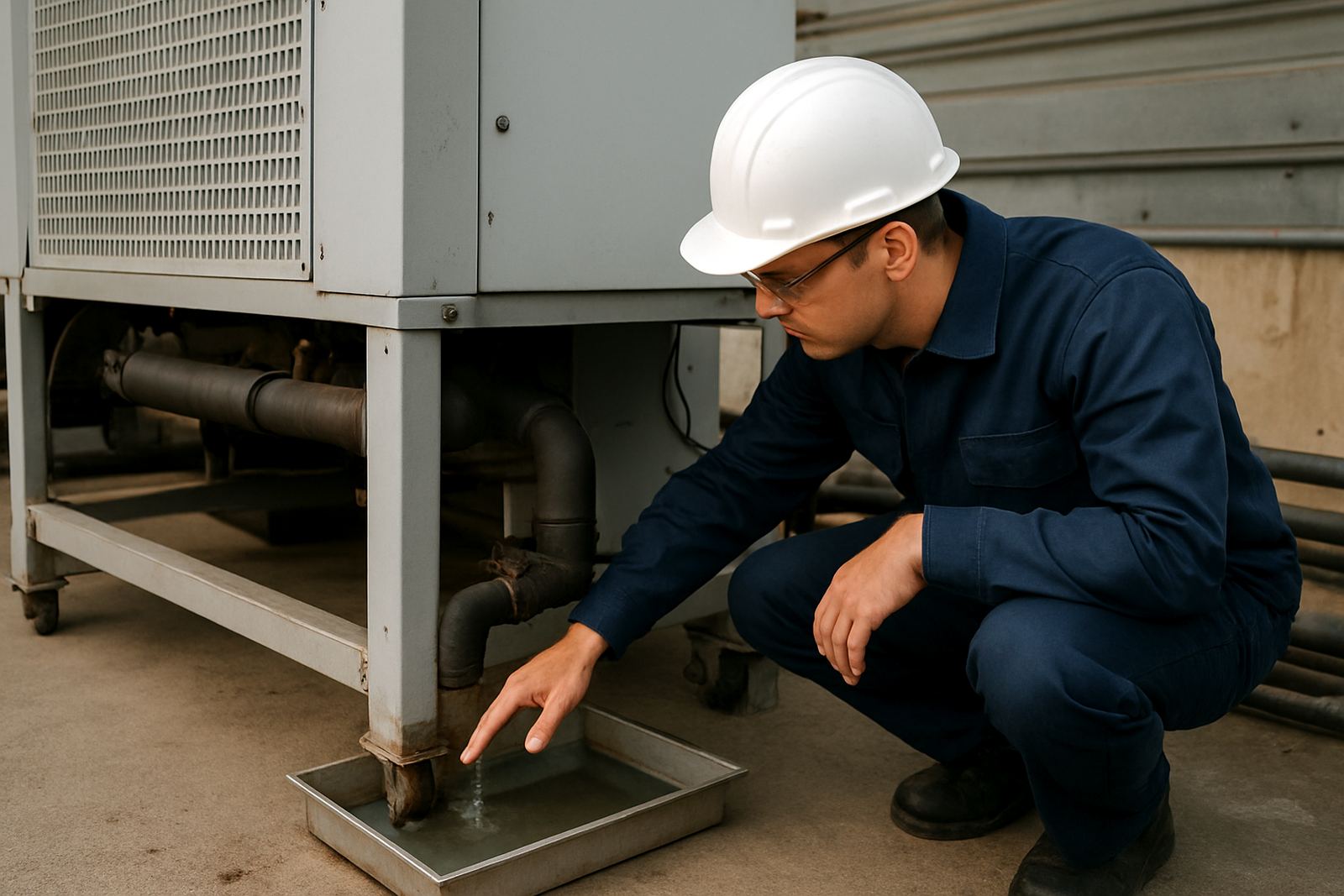
- Wet patches under the chiller or along pipe runs
- Frequent top-ups or a dropping reservoir level
- Air in the line or unstable flow readings
- Rust stains, white scale, or greenish corrosion around joints
- Unexpected temperature swings on the machine
- Vibration, knocking, or a pump that sounds rough
A quick visual check can save a full breakdown repair. Look at every joint, valve, flexible hose and connection point. Check where pipework passes through walls or under steel floors, because rubbing points often crack first. If the system has just been moved or serviced, recheck it after the first few hours of operation and again the next day.
What a practical response looks like on site
When a leak is found, the first step is to protect the equipment and contain the water. Then isolate the circuit in a controlled way, so the plant does not suffer more damage while someone investigates. If the machine must keep running, temporary cooling may be the safest short-term option while repairs are planned. That keeps the process stable while the leak is traced properly.
Good leak repair is not only about replacing a hose or tightening a union. The cause has to be found. If vibration caused the issue, the pipework may need extra support. If pressure is too high, the relief or control setup may need adjustment. If a seal failed, the pump condition and water quality should be checked too.
For South African sites, especially those running through load-shedding, it helps to plan for start-stop stress. Power interruptions can change flow conditions and lead to pressure spikes when systems restart. That is one reason preventative maintenance and cooling audits matter so much. They catch the weak points before they turn into repeated leaks.
A local example from an Alberton production floor
At a packaging plant in Alberton, a chiller feeding a mould line was losing just enough water to keep the reservoir low. At first the team topped it up and carried on. After a few days the mould cooling times started drifting, the pump became noisy and a fine spray appeared near a return joint. The real issue was a combination of loose support brackets and a worn fitting that had been vibrating for weeks.
Once the pipework was secured and the damaged connection replaced, the line stabilised again. The plant also had the water checked and the strainers cleaned, because dirt had been sitting in the circuit. The lesson was simple: the leak was small, but it was warning the team about a bigger mechanical problem. Catching it early avoided further downtime and saved a lot of unnecessary product loss.
That kind of case is common across Johannesburg, Pretoria, Durban, Cape Town and Rustenburg. The location changes, but the pattern does not. Leaks start small, they spread quietly, and they usually tell you something important about pressure, vibration or installation quality.