Why chiller placement starts with the floor plan
A chiller is only as easy to manage as the space around it. In many South African plants, the cooling unit is squeezed into a corner near a wall, a loading bay, or a hot machine line because that is where there is space. It may look practical on day one, but once the system needs filter changes, pump checks or a refrigerant inspection, the cramped setup becomes a problem.
Good placement allows clear airflow around the condenser, safe access for technicians, and a route for chilled water pipes that is short and direct. On a laser line or moulding line, that matters because temperature drift can affect cut quality, cycle time and tool life. A sensible layout also makes it easier to isolate one machine without disturbing the whole factory.
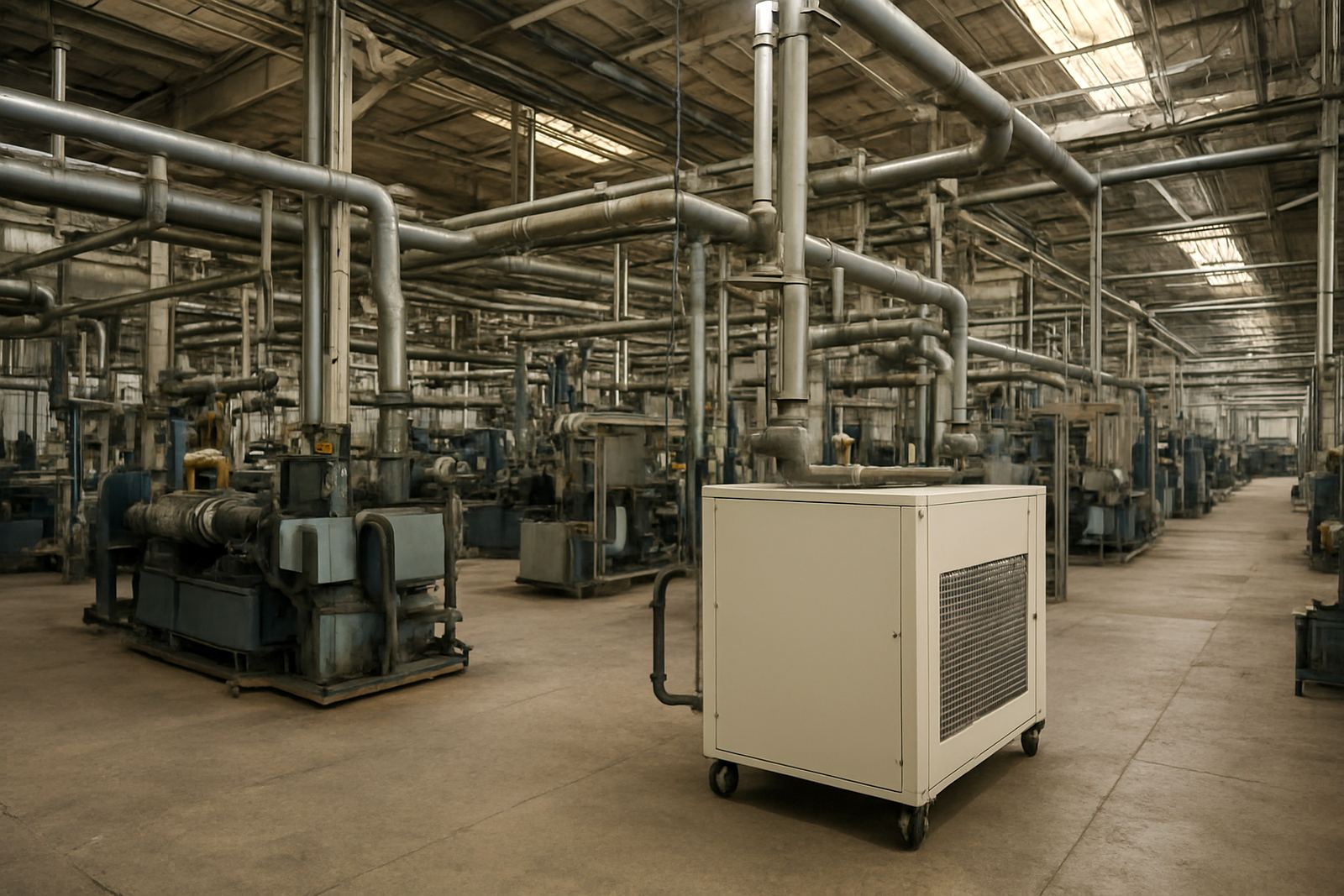
In Alberton and the wider Ekurhuleni area, factories often work in older buildings where the original services were never designed for today’s cooling demand. That means the chiller may be carrying more load than the pipework or room arrangement was built for, especially when summer temperatures rise and load shedding causes start stop cycling.
Heat, airflow and the cost of poor positioning
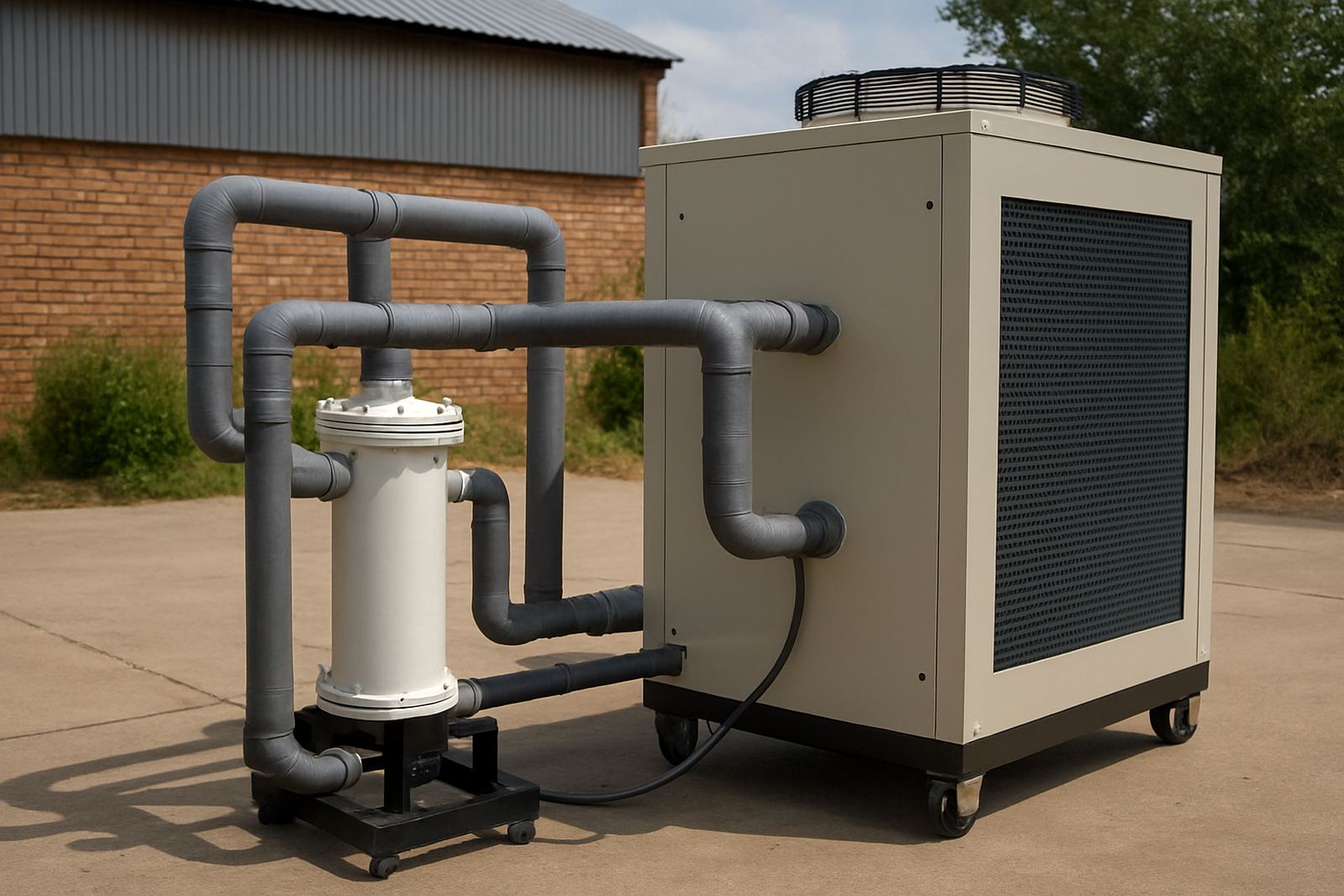
Chillers reject heat, so they need space to breathe. If a unit is installed too close to a wall, another machine, or a warm roof area, the hot air can recirculate and push head pressure up. The result is higher power draw and more wear on the refrigeration side. In coastal cities like Durban or Cape Town, humid air can add another layer of strain, while dusty inland sites near Rustenburg can block coils faster than expected.
Poor positioning also affects maintenance. If a technician has to move drums, pallets or safety barriers just to reach the panels and service valves, routine work takes longer and small faults are easier to miss. That can lead to breakdown repairs that could have been avoided with a better layout from the start.
Watch for these common mistakes:
- Placing the chiller in direct sun without shade or roof cover
- Blocking airflow with stored material or loose packaging
- Running pipework through hot areas with no insulation
- Putting valves and strainers where they cannot be reached safely
- Allowing warm return water to mix with chilled supply lines
Pipe routing that protects temperature control
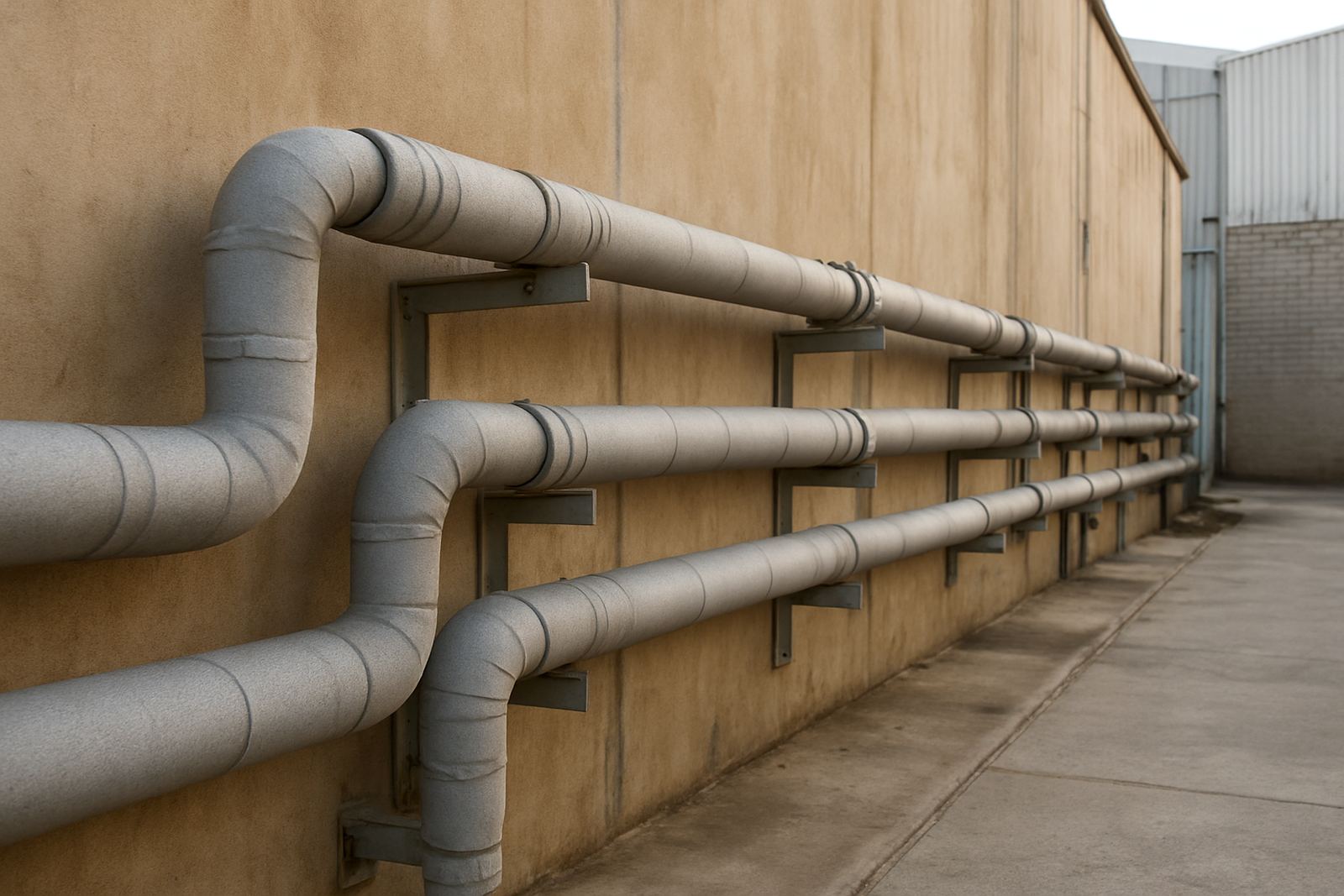
Pipe layout can make the difference between stable cooling and constant adjustment. Long pipe runs increase pressure drop, which means pumps work harder and flow rates may fall below what the laser, mould or process line needs. Sharp bends, undersized pipe and unnecessary vertical lifts all add resistance. A system that looks neat on paper can still perform badly if the routing is not practical.
It helps to keep chilled water lines as direct as possible, with proper support and insulation across the full run. If the pipes pass through a hot workshop, a roof space, or an area exposed to sunlight, the water can pick up heat before it reaches the equipment. That is wasted energy and can shorten compressor running intervals in a way that stresses the whole system.
For plants with several process points, zoning is worth serious thought. Some lines need colder water than others, and one common set of headers may not suit every machine. A good layout can allow each area to be balanced properly instead of forcing one chiller to compensate for poor pipe design elsewhere.
- Keep pipe runs short and as straight as possible
- Use correct pipe size for the required flow rate
- Insulate both supply and return lines where heat gain is likely
- Allow drain points and isolation valves at sensible positions
- Label branches clearly so servicing is quicker during shutdowns
Service access is part of factory planning
One of the most overlooked layout issues is simple access. If a chiller is tucked behind a line of machines or placed in a locked service yard with poor turning space, every visit becomes slower. That affects preventative maintenance, breakdown repairs and even temporary cooling changes when a plant is under pressure.
Access is not only about the front door or gate. It is about enough space to remove panels, clean coils, test controls and replace pumps without damaging nearby equipment. In a busy factory, a tight layout can force maintenance to happen after hours and that raises the risk of rushed work. It also makes it harder to keep spare parts and tools close to the unit in a safe way.
When a plant is being planned or rearranged, these are useful access checks:
- Can a technician reach all service panels without moving production equipment?
- Is there room for lifting a pump or motor out safely?
- Can filters and strainers be opened without draining half the system?
- Is the area well lit and dry enough for maintenance work?
- Will service staff still have access during a shutdown or night shift?
A local example from a busy Alberton plant
A fabrication plant in Alrode needed cooler water for a laser and two process lines. The original chiller sat next to a hot compressor room and the main pipe run crossed a roof space with poor insulation. The team was seeing temperature swings on warmer afternoons and the service crew had to work around stacked materials every time the system needed attention.
After a layout review, the chiller was moved to a better ventilated position with a cleaner access path. The pipework was shortened, critical branches were re insulated and the controls were made easier to reach for checks. The result was steadier supply temperature and less time spent on fault finding. The plant did not need a bigger machine, just a better arrangement of the equipment already on site.
This sort of change matters across Johannesburg, Pretoria, Durban, Cape Town and Rustenburg because each site has its own space limits. In one factory the issue is heat soak, in another it is long pipe runs and in another it is poor access due to shared yards or municipal setbacks. The answer starts with looking at the floor plan, not only the cooling load.
Layout choices that make future servicing easier
Factories change over time. A line is moved, a new machine is added, or production grows faster than the original services. If the chiller area was planned with some spare room, those changes are easier to handle. If not, every upgrade turns into a small reconstruction job.
It is worth planning for future work from the beginning. Leave space for extra pipe branches, reserve a clear path to the control panel, and keep the unit away from areas where forklifts reverse or where pallets get stacked. Where possible, choose a position that allows safe shutoff and isolation without stopping the entire plant.
For facilities dealing with load shedding, a tidy layout also helps when backup power or temporary cooling has to be brought in. If access is open and pipe routes are clearly marked, response time improves and the risk of mistakes drops. That can save production hours when every shift counts.
How Raynen approaches layout related cooling problems
When a cooling system is not performing as expected, the equipment itself is not always the only issue. Raynen looks at placement, airflow, pipe routing, water quality and service access together because these factors work as one system. A chiller that is technically sound can still struggle if it is boxed in, undersized for the route, or connected to a poorly planned distribution network.
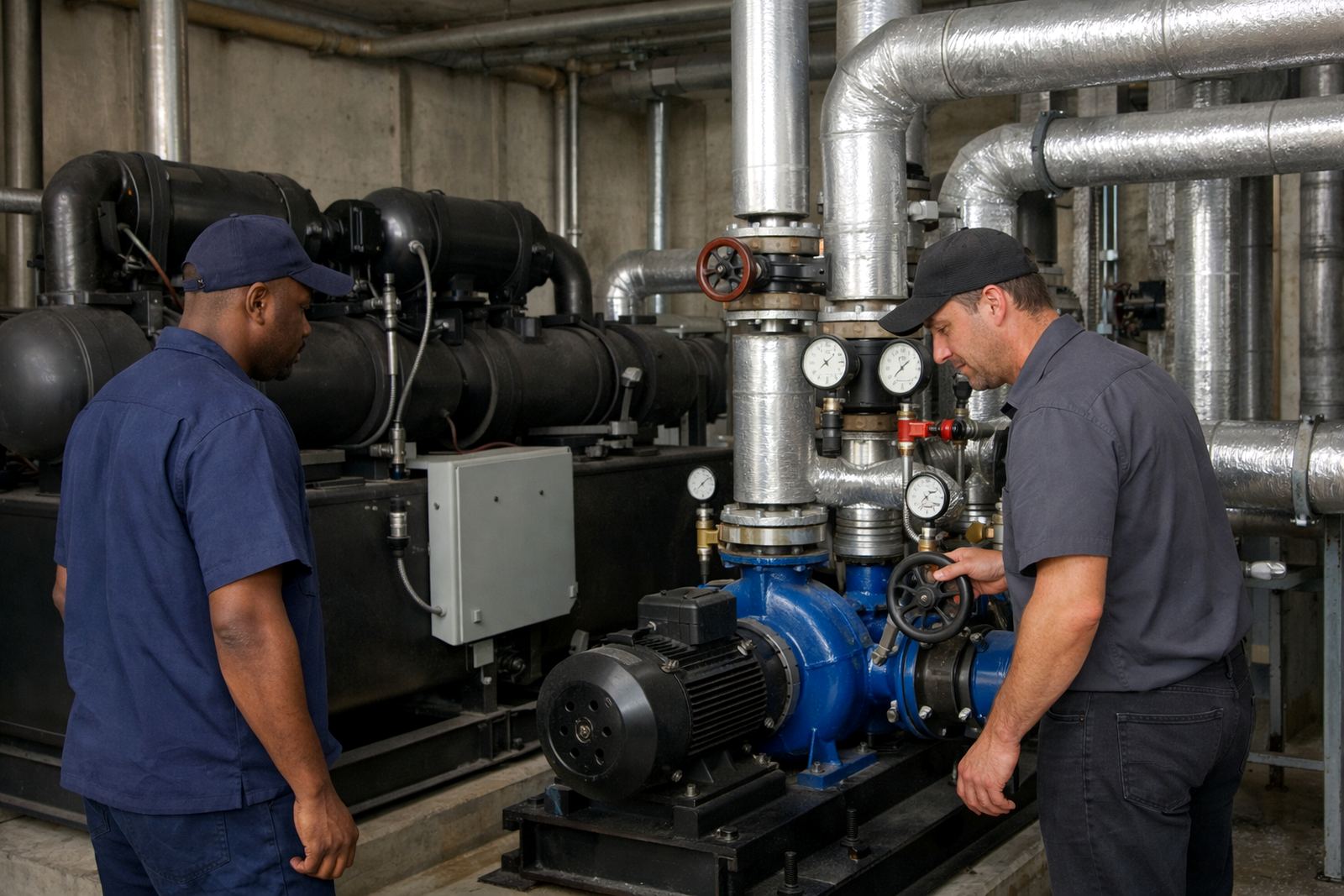
Our team can help with chiller installation, system commissioning, preventative maintenance, cooling audits, pipework retrofits, control panel upgrades, pump replacements and temporary cooling support. We also check the practical details that affect day to day use, such as access, isolation points, drain arrangements and operator workflow. A sensible layout reduces callouts and makes it easier to keep temperature under control through summer heat, dusty conditions and power interruptions.
If your factory floor has changed over the years, it may be time to review how the chiller fits into the space. Small layout corrections can improve service access and cooling efficiency without a full plant rebuild.