Load profile matters more than many teams expect
The biggest driver of energy use is not just the size of the chiller, but the way the load behaves through the shift. A laser line that runs steady all day will use power differently from a moulding line that cycles hard for 20 minutes, then sits idle, then starts again. Every stop-start cycle changes how long compressors, pumps and fans must work.
In practical terms, the more variable the process, the more important it is to match the cooling unit to the actual duty pattern. Oversized equipment can short-cycle and waste power, while undersized equipment may run flat out for too long. That is where a proper cooling audit helps, especially on sites with more than one process line sharing water from a common loop.
- Steady loads usually give more predictable consumption.
- Cycling loads need better control logic and buffer volume.
- Shared systems should be checked for flow balance and peak demand.
Setpoints that are too low increase the bill fast
Every degree counts. If the setpoint is lower than the process really needs, the chiller works harder for no practical gain. On laser applications, for example, operators sometimes set temperatures too cold because they want a safety margin. The result is extra compressor run time and unnecessary strain on the refrigeration circuit.
The same applies to mould cooling and process lines. A stable temperature band is usually better than chasing a very low figure. The right setpoint should protect product quality, maintain cycle times and still leave the machine with some breathing room. In many plants, adjusting the setpoint by even 1 or 2 degrees can make a noticeable difference over a month.
- Check whether the process really needs sub zero thinking, or just stable chilled water.
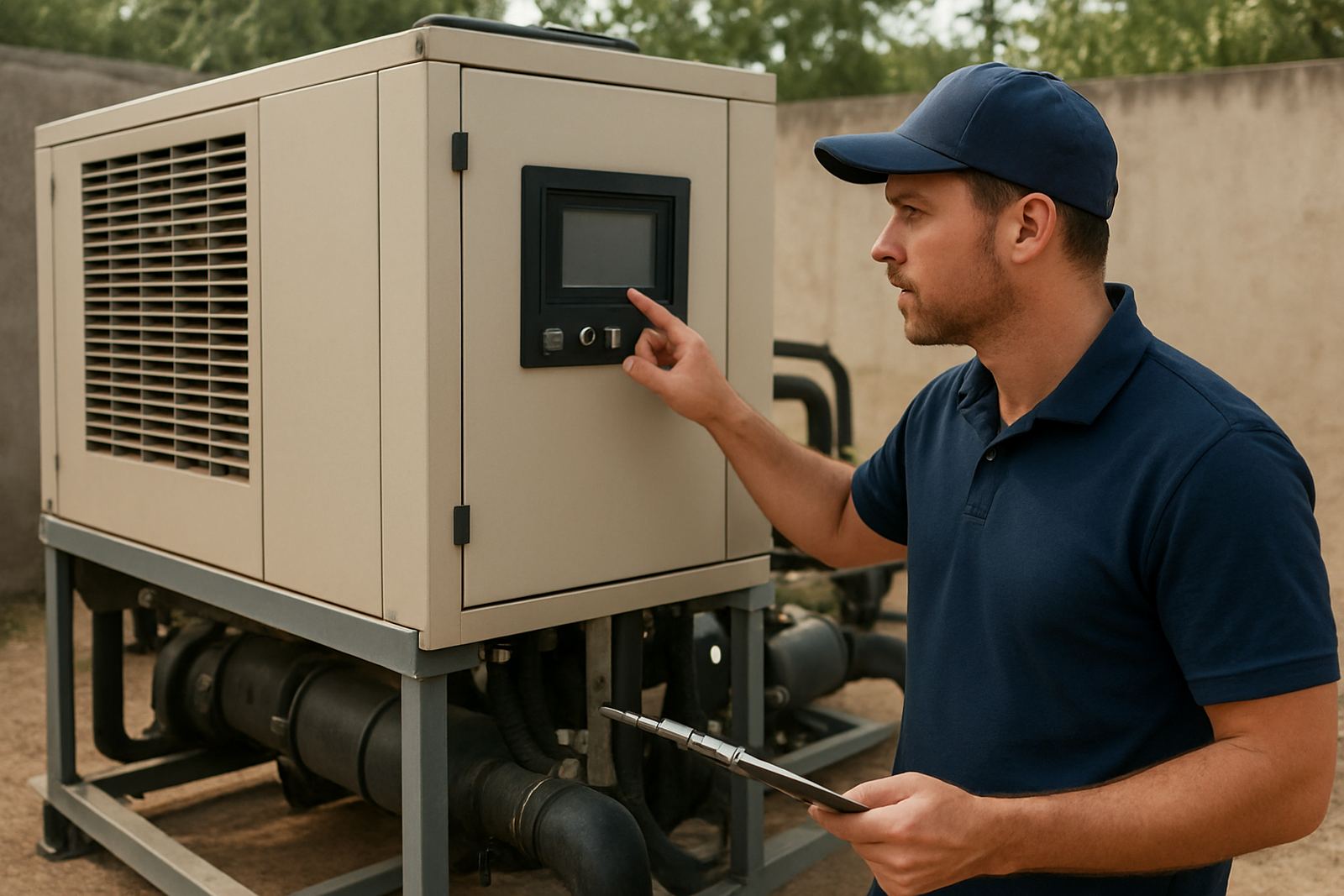
- Review the dead band and control settings on the panel.
- Make changes only after confirming the effect on output and quality.
Hot weather in Gauteng and coastal humidity both push consumption up
Ambient temperature has a direct effect on cooling energy use. In Alberton, Germiston and Boksburg, a warm afternoon in summer can lift condenser pressure and force the unit to work harder. In Durban, the challenge is often heat plus humidity, which can make rejection of heat less efficient and put extra strain on equipment installed in poorly ventilated plant rooms.
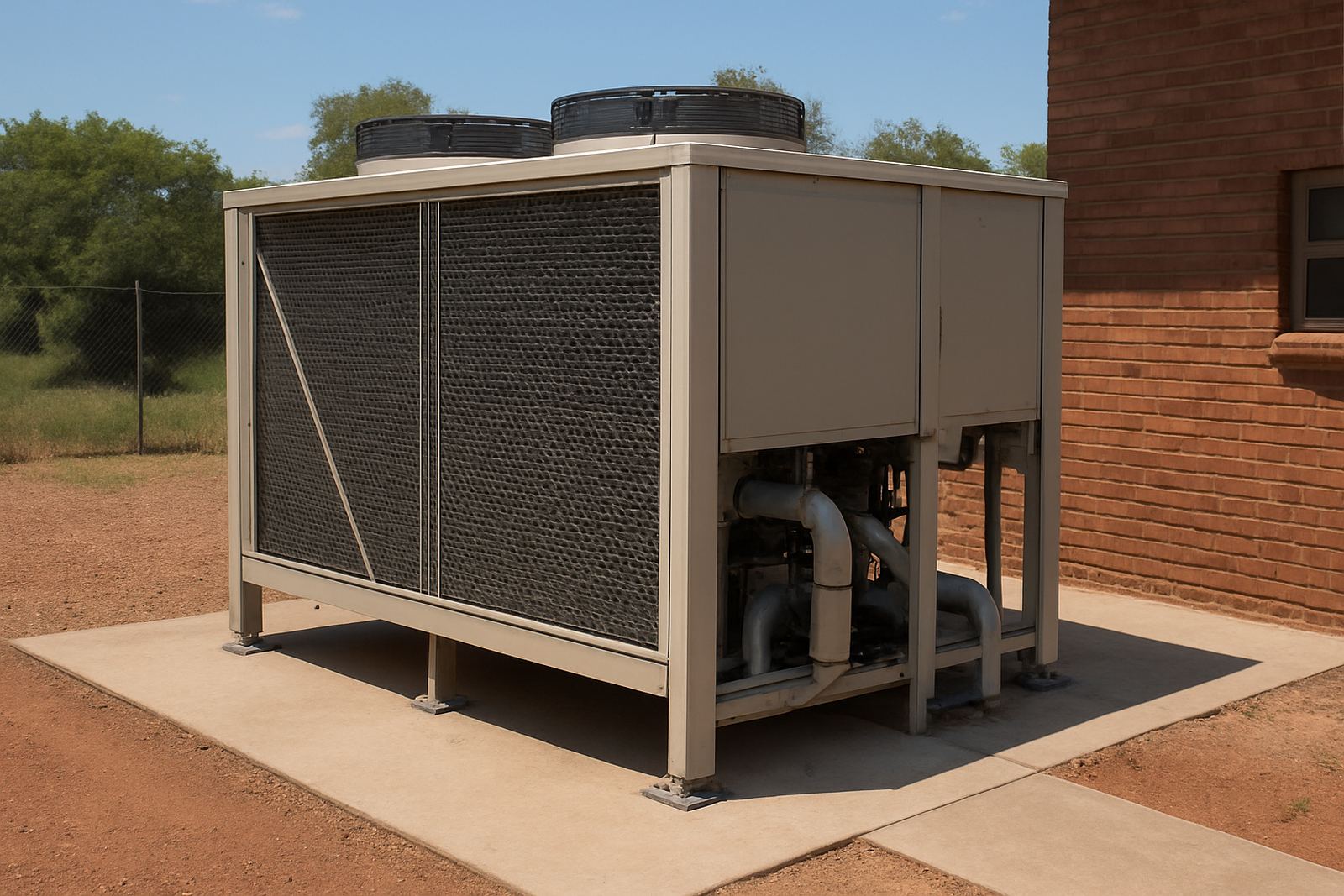
That is why a chiller that performs well in May may behave very differently in January. Roof space, poor airflow around the unit, dust build-up on condenser fins and hot discharge air recirculating back into the machine all add to the load. Load-shedding can also complicate matters because systems restarting after an outage may draw more power at the worst possible time.
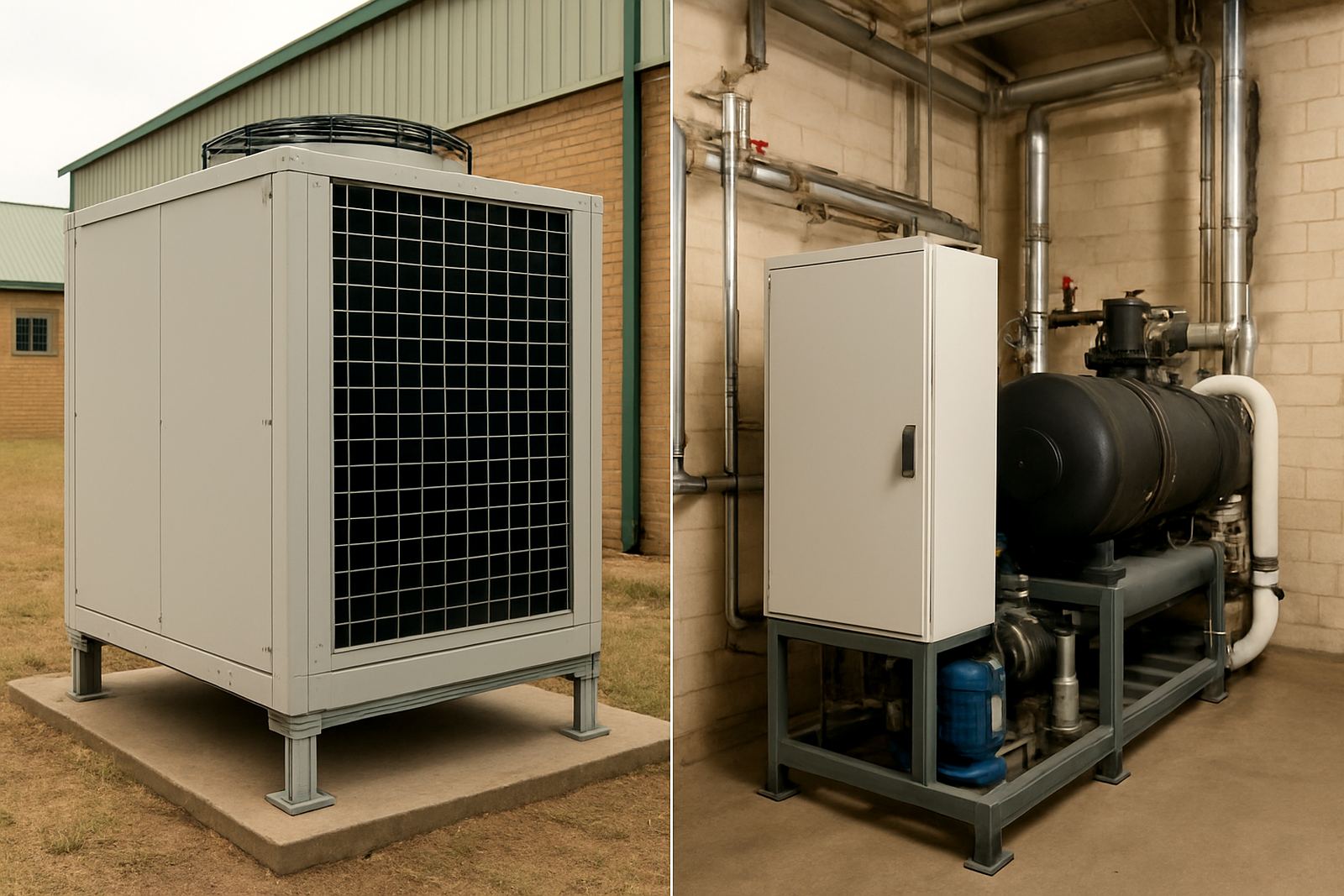
- Keep plant rooms cool and allow clear airflow around equipment.
- Clean condensers and strainers before summer peaks.
- Plan restart procedures for sites that face frequent outages.
Water condition affects both efficiency and lifespan
Water quality is often overlooked until a problem shows up in the form of blocked strainers, poor heat transfer or pump issues. Scale, sludge and corrosion reduce the system’s ability to move heat, which means longer run times and more power use. A chiller does not only cool water, it depends on that water being clean enough to do its job properly.
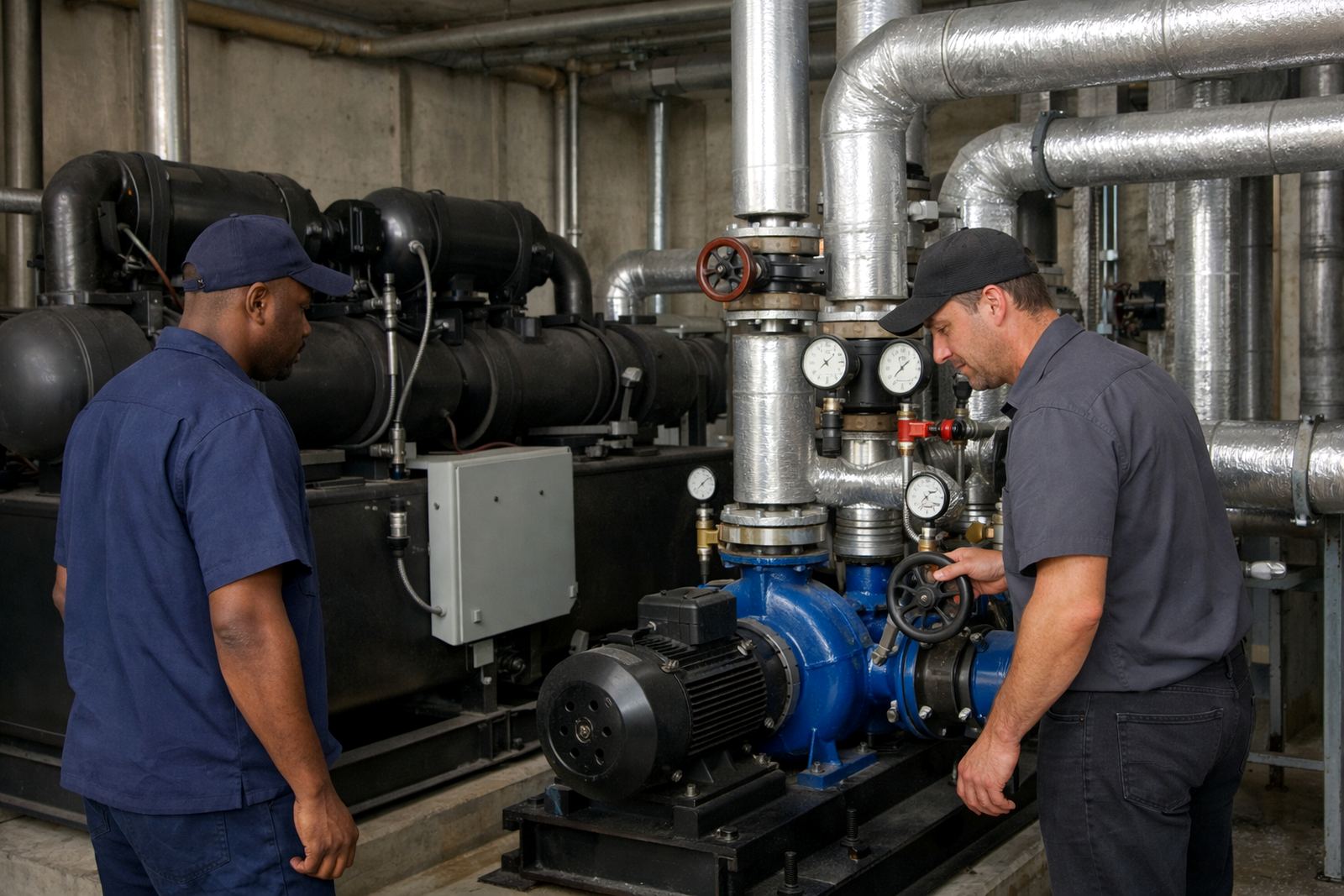
On sites using borehole water, untreated top-up water or older pipework, the effect can be severe. In industrial areas around Johannesburg and Pretoria, we often see systems where the cooling unit itself is in decent condition but the water side has been neglected. Simple checks on conductivity, pH, debris and flow can prevent a lot of wasted energy.
- Check filters, strainers and flow switches on a routine basis.
- Inspect for scale in plate heat exchangers and pipework.
- Use suitable water treatment where the system needs it.
Condition of the machine changes the power draw
A well maintained chiller should run with less effort than one that has been ignored for a year. Low refrigerant charge, worn pumps, dirty filters, tired contactors and damaged sensors all make the system work harder than it should. Even a small fault can push energy use up because the machine stays on longer to achieve the same result.
This is why preventative maintenance is not just about avoiding breakdowns. It is also about keeping electricity use under control. A technician should be checking operating pressures, temperatures, current draw, control response and general condition of the refrigeration circuit. If a unit is running for longer cycles than normal, there is usually a reason and it is worth finding early, not after a production stoppage.
- Watch for short cycling, long run times and unstable temperatures.
- Service fans, pumps and electrical controls before the hot season.
- Record trends so you can spot gradual performance loss.
A local example from an Alberton production site
At a busy production site in Alberton, one process line feeding moulds and a laser head was running with a conservative setpoint and a partially blocked water circuit. The operators had already accepted the higher electricity use as normal, because the equipment still produced product. After a cooling audit, the team adjusted the setpoint to the actual process need, cleaned the water side, corrected a flow restriction and checked the control panel settings.
The improvement was not dramatic in a single day, but over the next few weeks the system ran with shorter compressor periods and more stable temperatures. The plant also had fewer nuisance alarms during warmer afternoons. That is the point to remember: energy savings often come from small corrections, not one big fix.
For sites in Johannesburg, Pretoria, Durban, Cape Town and Rustenburg, the same principle applies. Local climate, water condition and operating hours all change the answer, so the best settings in one factory may not suit another at all. A proper assessment should always start with actual process demand, not guesswork.