Why the outside position matters from day one
An industrial water chiller only works properly when it can reject heat without fighting its surroundings. If the unit is wedged against a wall, boxed in by fencing or installed where hot exhaust air can recirculate, the condenser has to work harder and the system will run longer to achieve the same temperature.
That extra strain shows up in real life as unstable process temperatures, more frequent faults and rising running costs. On laser systems and mould cooling, small temperature swings can affect cut quality, cycle times and finish. For process lines, it can mean inconsistent product quality, especially during hot afternoons in Gauteng or humid coastal weather in Durban.
The outside position also matters for maintenance. Technicians need enough space to inspect coils, test controls, replace pumps if fitted externally and service valves without moving other equipment. If the unit is placed where access is awkward, maintenance gets delayed and small issues become bigger ones.
Give the condenser enough clean air to breathe
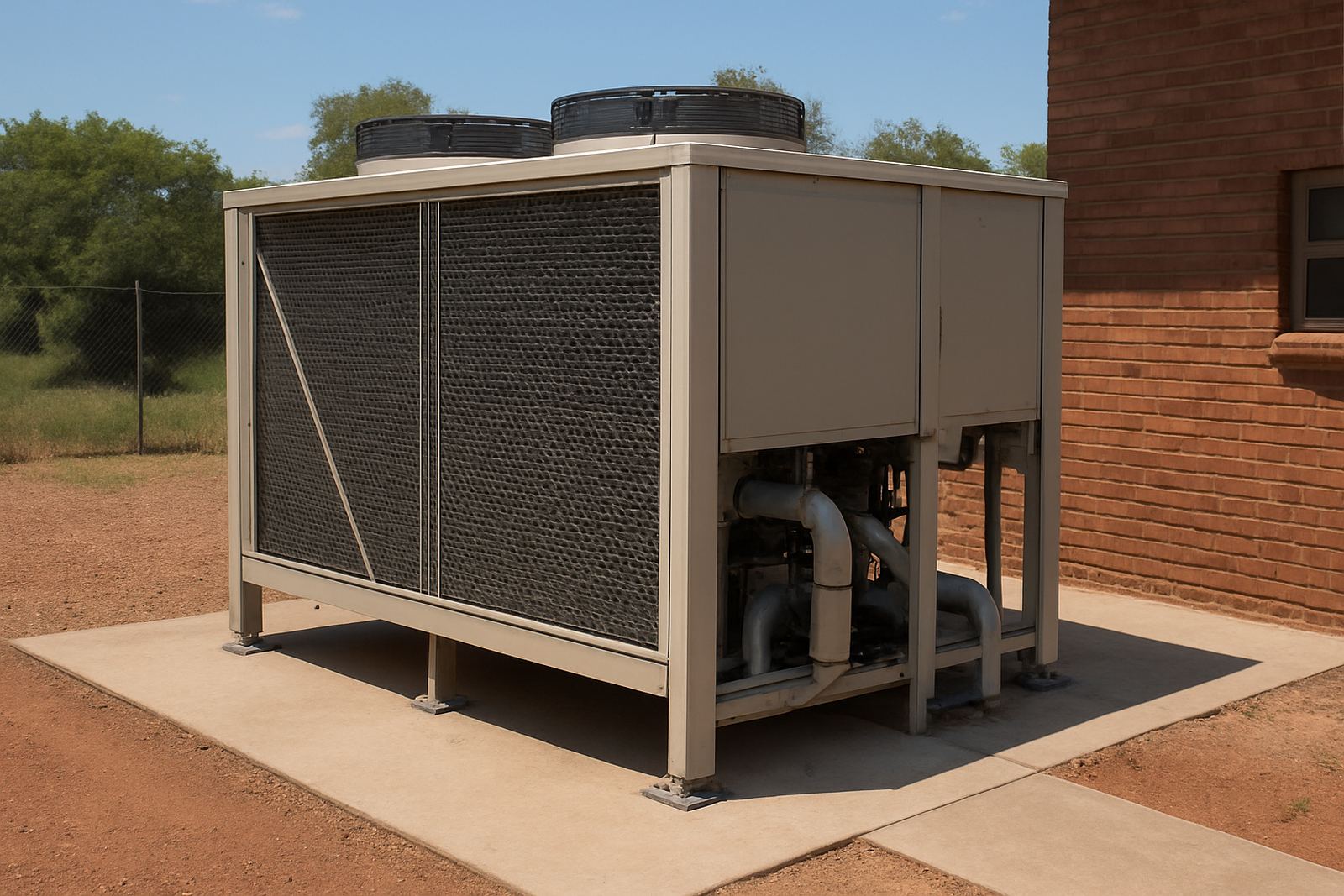
The first rule is simple: the unit needs free airflow around it. Hot discharge air must move away from the machine, and the unit must draw in fresh air that is not already heated by another process. This is especially important in plant yards where multiple machines, compressors and extraction fans are working at the same time.
As a practical guide, allow clear space on all service sides and do not trap the unit in a corner. Leave room above the fan discharge as well. If warm air rises into a roof overhang or low canopy, it can recirculate back into the condenser and push the operating pressure up. That becomes a problem on hot days when the ambient temperature is already high.
- Keep the unit away from walls, stock cages and tight plant passages
- Avoid placing it next to exhaust outlets, boiler flues or hot process vents
- Do not let the fan blow into a dead end where the air has nowhere to go
- Provide enough clearance for coil cleaning and refrigerant checks
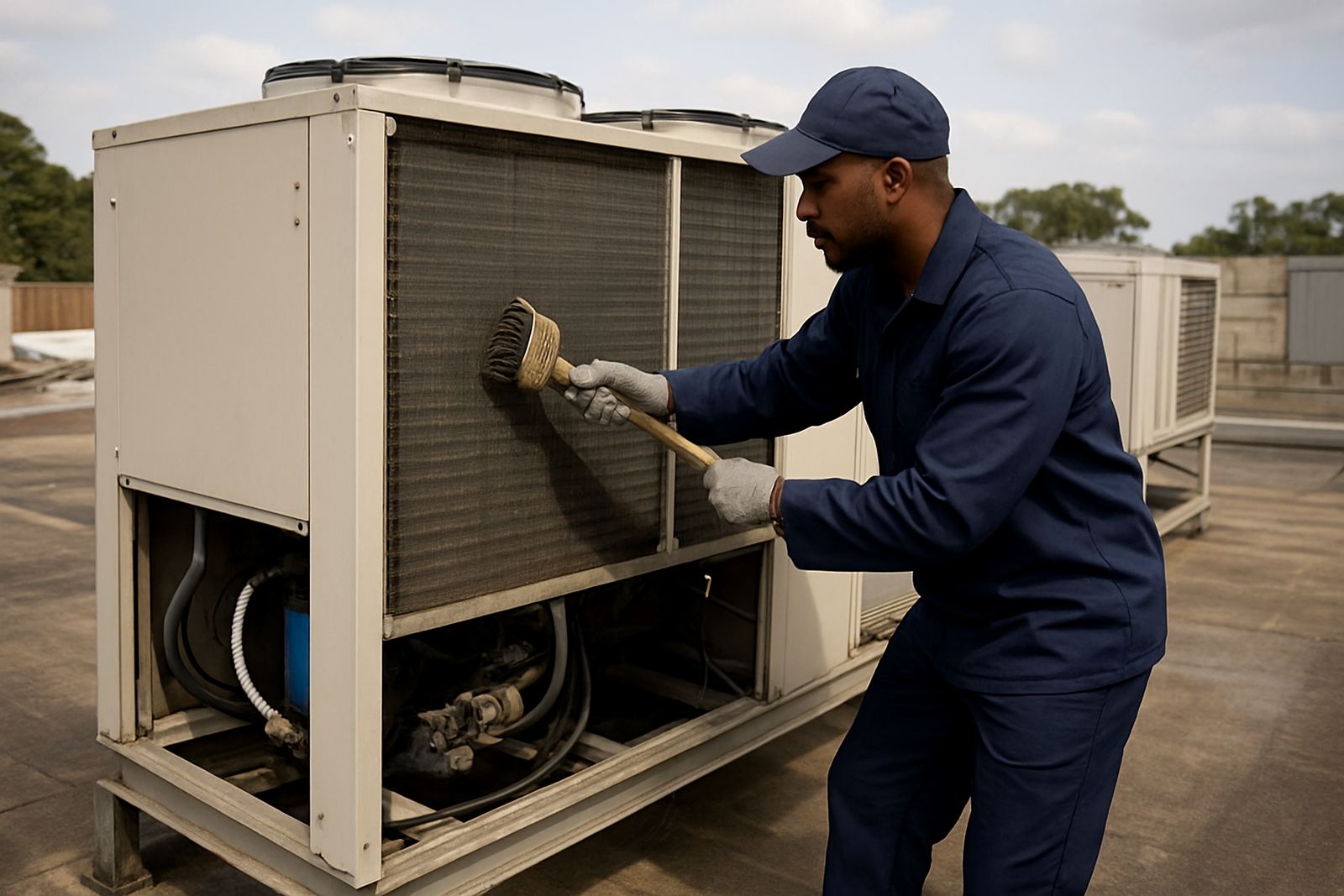
If the site has dust from cutting, grinding or forklifts, position the chiller so it is not constantly pulling in dirty air. Dust builds up on coils and reduces heat transfer. In towns like Rustenburg or Germiston, where industrial dust can be part of daily operations, this is not a small issue it is a maintenance issue from the start.
Plan for noise, vibration and the people working nearby
Outdoor placement is not only about performance. It must also fit the working environment around it. A chiller mounted beside a staff entrance, smoking area or security post can create unnecessary noise complaints. If the unit sits too close to a light structure or boundary wall, vibration can be amplified and reflected back into the equipment.
A solid level base helps prevent strain on pipe connections and reduces noise transfer. The unit should stand on a proper plinth or support frame, not on loose paving that shifts after heavy rain. In areas with poor drainage, standing water around the base can also cause corrosion and make electrical work unsafe. Along the coast, salt in the air will do its own damage, so the location should allow for regular washing down and easy inspection of brackets, fasteners and pipework.
Where people work nearby, think about safe access routes too. Operators should not need to walk through forklift lanes or open loading bays just to check a sight glass or reset a controller. A tidy route around the unit helps keep the installation practical, especially during load-shedding when teams are already working under pressure.
Keep service access open for real maintenance, not just installation day
A chiller can look fine on commissioning day and still be badly positioned for the long term. Service access is often overlooked because the unit is new and everything is easy to reach. Six months later, the story changes once cable trays, spare drums, scrap material or pipe racks start filling the area.
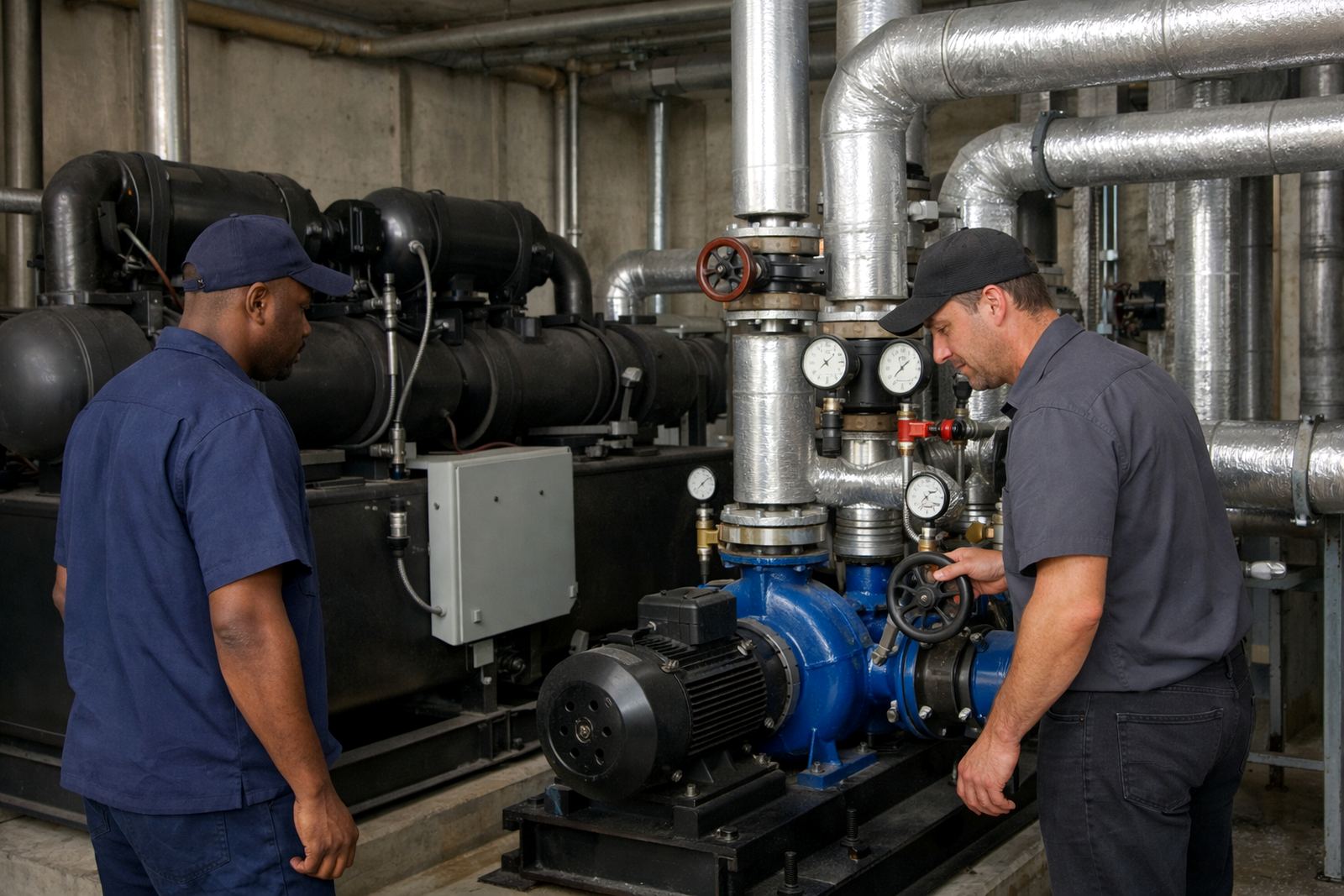
Good planning means leaving enough room for regular tasks such as coil cleaning, filter checks, pump inspection, control panel testing and water treatment checks. If the chiller uses a remote condenser or has external pumps, the route to those items should remain open at all times. A technician should be able to work safely without asking production to stop half the yard.
- Allow space for a ladder or service trolley where needed
- Leave the control panel side accessible without moving other equipment
- Make sure isolation points are visible and reachable
- Keep pipework neat so valves and unions can be checked quickly
Access also helps during breakdown repairs. If a fault occurs late in the day and the site is under time pressure, clear access can cut repair time by hours. That matters on mould cooling and laser support systems where downtime affects the whole shift.
Choose a position that suits South African weather and site conditions
South African conditions vary a lot from one region to the next, so placement should suit the local environment. In Johannesburg and Pretoria, dust, thunderstorms and strong summer heat are common concerns. In Durban and Cape Town, humidity and salt air call for extra care. In Alberton and the broader Ekurhuleni area, industrial yards often have mixed traffic, limited space and a fair amount of airborne grit.
Where possible, place the unit out of direct water run-off from roofs or gutters. Stormwater can overwhelm a bad site, especially if drains are blocked or the unit sits in a low spot. If the installation is near a boundary wall or under a canopy, check that rainwater cannot pool around the base or enter electrical enclosures.
For exposed sites, it may be worth adding simple weather protection without choking airflow. The goal is shelter from direct sun and rain spray, not a sealed box. A properly designed shade or cover can reduce heat loading, but it must not trap warm air or restrict fan discharge.
Remember that municipal and site rules may affect where equipment can sit. Fire access, boundary setbacks, noise control and safe walkways all matter. A placement that works for the machine but blocks access or breaks a site rule will cause problems later.
A real-world example from an Alberton manufacturing yard
One common situation comes up in production yards around Alrode and Germiston. A chiller is placed against a boundary wall because that corner looks unused, but the space soon becomes crowded with pallets and waste bins. The fan then pulls in hot air from the wall side, while the service side ends up blocked by stored material.
In one such case, the unit started running hot on afternoons and tripping more often during high ambient temperatures. Once the chiller was moved to a better open position, with proper clearance and a cleaner air path, the operating temperatures settled down and service work became quicker. The fix was not a major redesign, just better placement and a few practical changes to the surrounding layout.
That is usually the point people miss. Outdoor placement is not only about getting the unit outside. It is about giving the machine clean air, safe access and enough space to do its job properly through winter, summer and load-shedding periods.
A simple placement checklist before commissioning
Before final handover, it helps to walk the site and confirm the position against day-to-day use, not only the drawing. If the unit is easy to see and reach now, it is more likely to stay serviceable later. A small adjustment at installation stage can save repeated call-outs and unnecessary wear.
- Is there enough free airflow on all working sides?
- Will hot discharge air recirculate from a wall, roof or fence?
- Can technicians reach valves, panels and filters without obstruction?
- Is the base level, stable and above likely standing water?
- Will nearby dust, steam or process heat affect performance?
- Can the site keep the area clear after commissioning?
For businesses running lasers, moulds or process lines across Johannesburg, Pretoria, Durban, Cape Town and Rustenburg, outdoor placement should be treated as part of the cooling design, not an afterthought. The right position supports reliable operation, cleaner maintenance and a longer working life for the equipment.