Why summer exposes weak points fast
When ambient temperatures climb in Alberton, Johannesburg or Durban, a chiller that was coping in winter can start to struggle. The same unit may now run longer, cycle more often and pull higher amps, which shows up as unstable process temperatures, nuisance trips or slower production.
Summer is also the season when dust, fluff and oily film build up faster on condenser coils and filters. In industrial areas like Alrode and Germiston, that dirt load is usually heavier than people expect, and once airflow is restricted the unit has to work harder just to hold setpoint.
For laser cooling, mould temperature control and process lines, that extra strain can shorten component life if it is ignored. A short maintenance visit before peak heat is far cheaper than chasing a breakdown in the middle of a production run.
Start with condenser cleaning and airflow checks
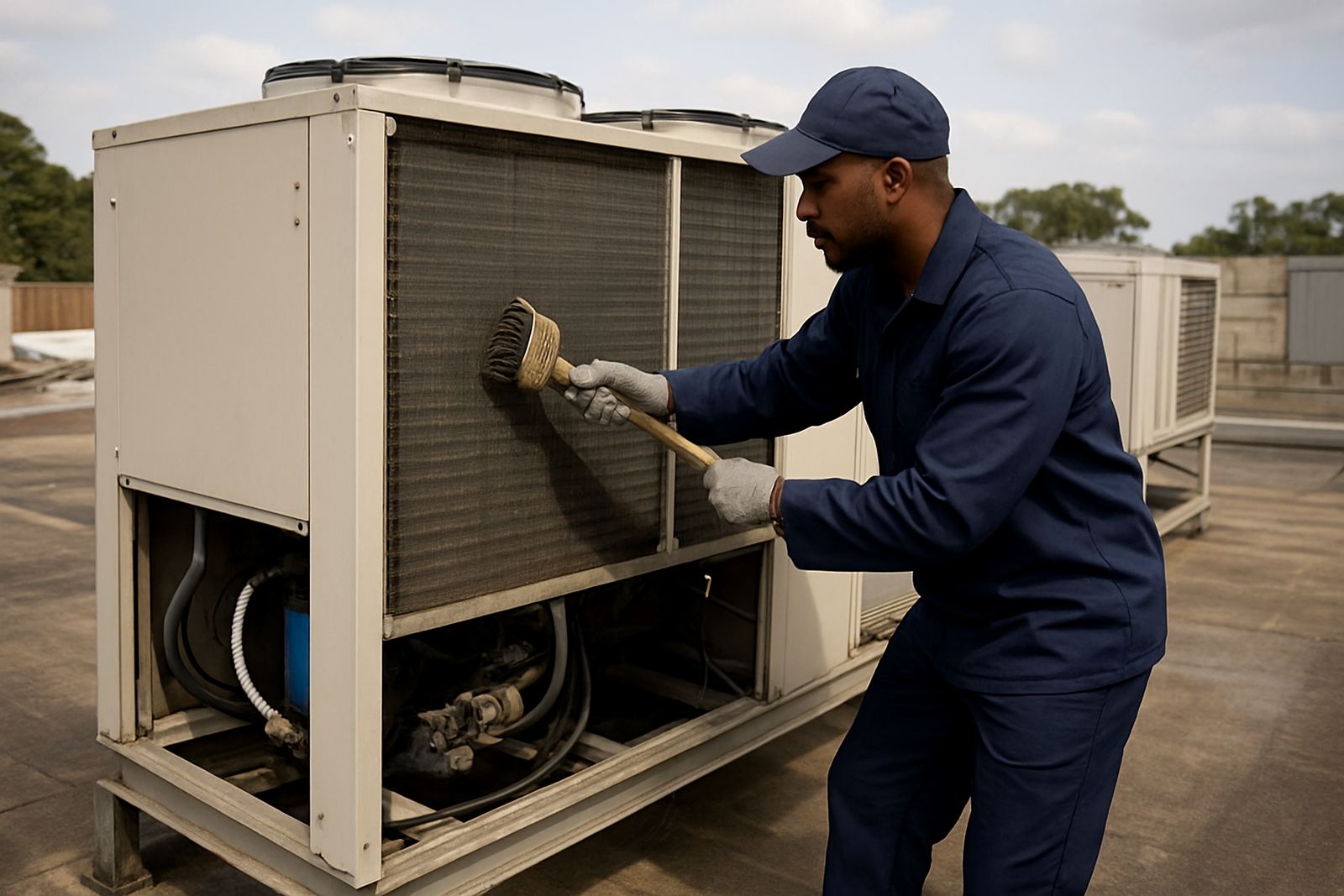
The condenser is the first place to check because it handles the heat rejection side of the job. If the coil face is choked with dust, the chiller cannot reject heat properly, and the refrigeration circuit will run under stress. On units installed near cutting bays, loading areas or workshop entrances, the coil can pick up debris in just a few weeks.
Airflow matters just as much as cleaning. Panels, louvers, fan blades and surrounding clearances should all be checked so the unit is not recirculating its own hot discharge air. In coastal centres like Durban and Cape Town, humidity adds another layer too, because damp air can carry grime that sticks to the coil fins and casing.
- Wash coils carefully with the correct method for the fin spacing and surface condition
- Check fan motors, fan rotation and blade condition
- Confirm there is enough space around the chiller for intake and discharge air
- Inspect filters and strainers for dust, scale and loose debris
A clean coil and open airflow path can make a measurable difference to performance, especially during long production shifts.
Review cooling capacity before the heat arrives
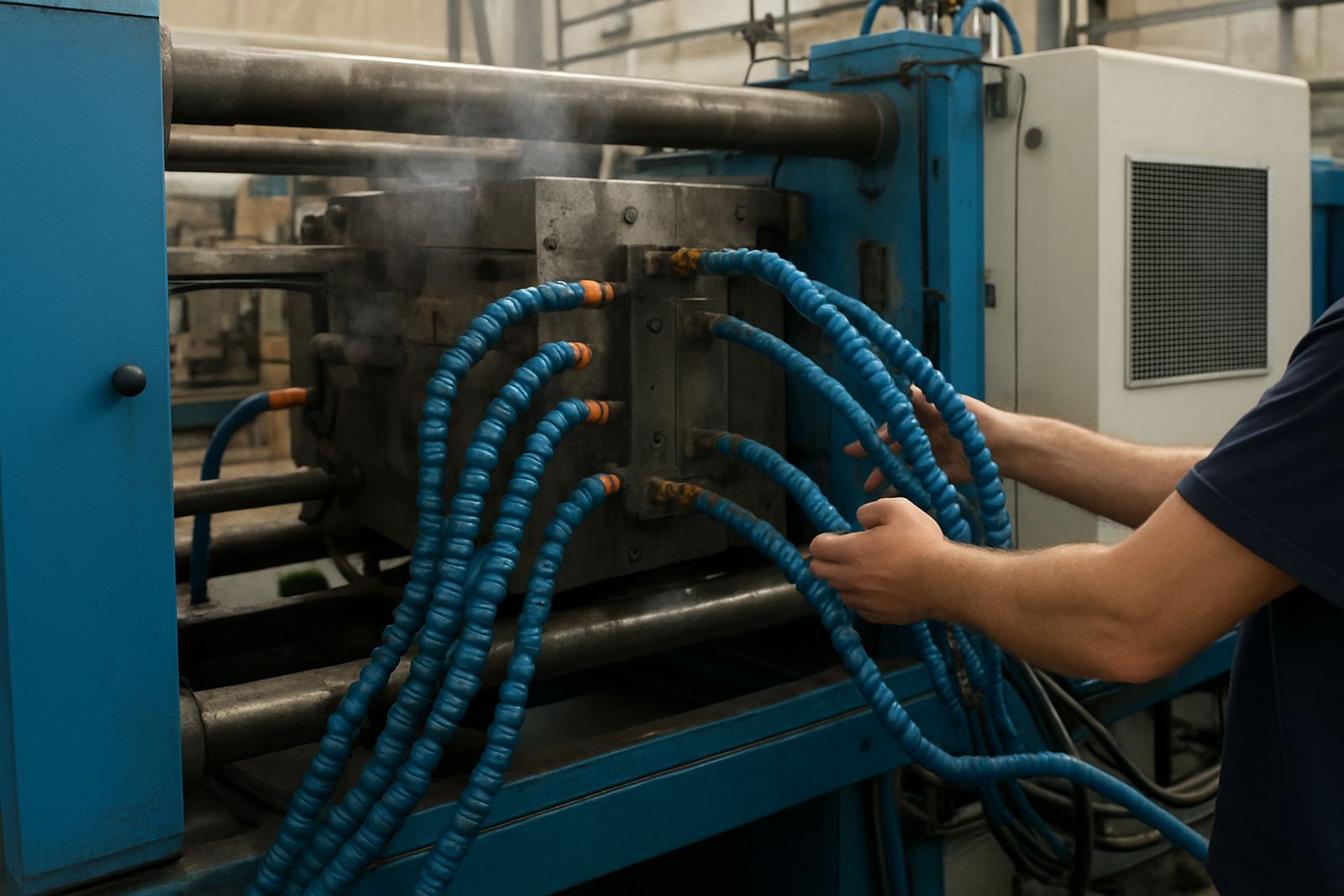
Many systems were sized for a past production rate, not for what the site is doing now. A moulding line may have added cycles, a laser may be running longer shifts, or extra equipment may have been connected to the same cooling circuit. That is why a summer capacity review matters.
The review should look at actual operating load, return water temperature, supply temperature, pump duty and whether the chiller has enough reserve for hot days. If the unit is already running near maximum output in mild weather, it may not cope well when a January heat wave hits Gauteng.
- Compare current process load against the original design duty
- Check whether setpoints are practical for summer ambient conditions
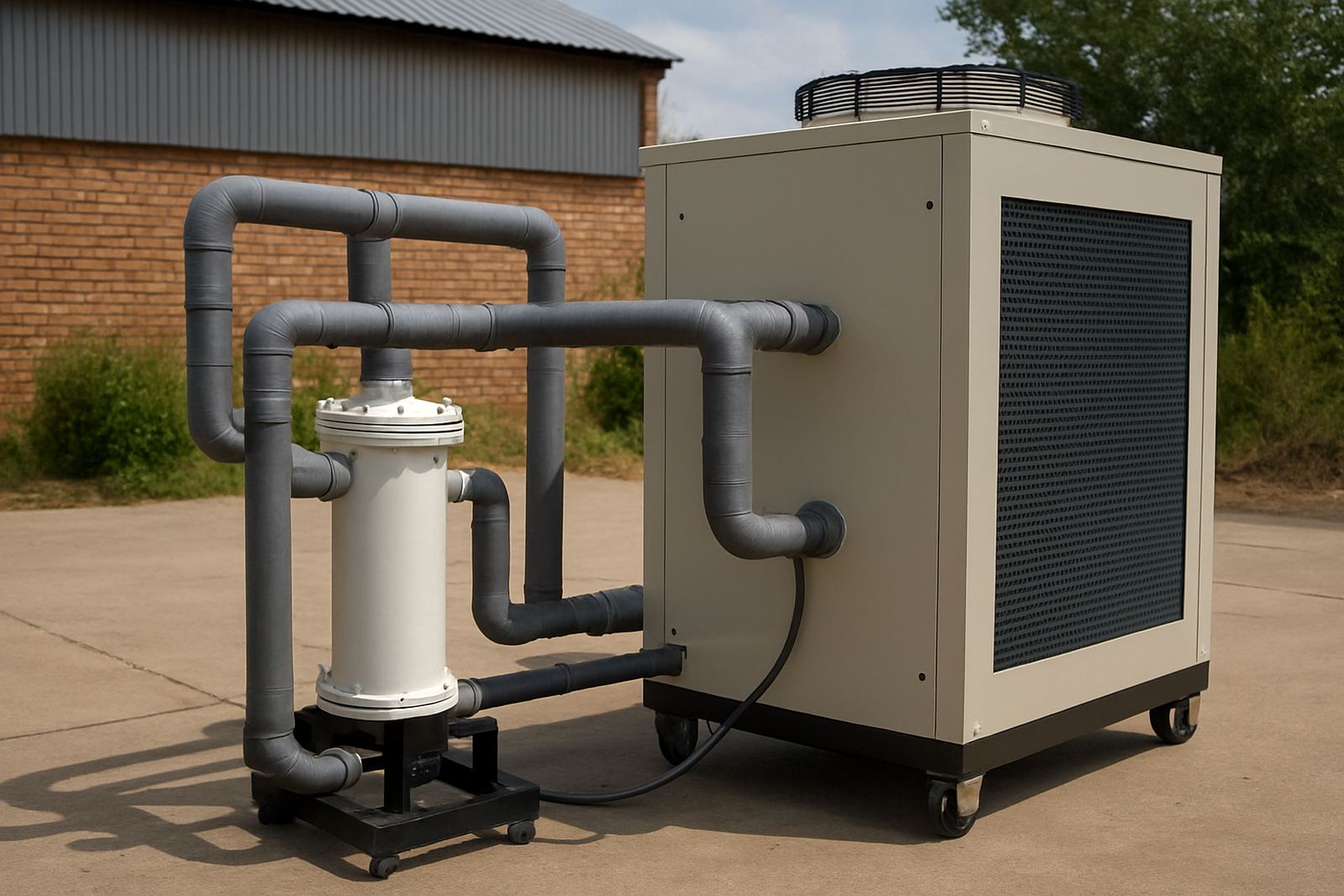
- Confirm water flow, pump pressure and pipework are not restricting performance
- Assess whether temporary cooling is needed during shutdowns or peak demand
This is also the time to decide whether a simple service is enough or if the site needs a control panel upgrade, pipework retrofit or pump replacement. A small change now can prevent a bigger failure later.
Water quality and pipework need attention too
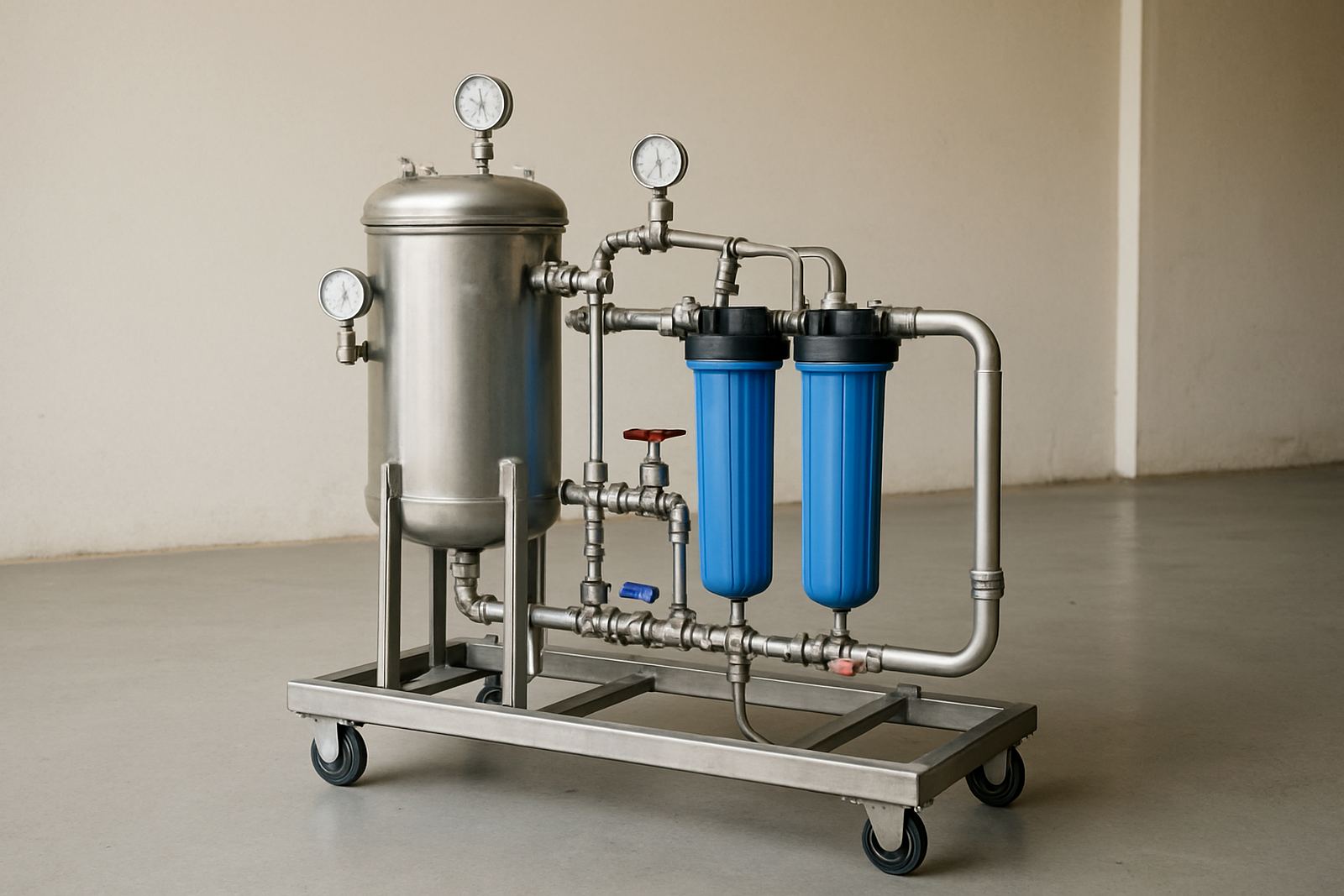
Cooling problems are not always caused by the refrigeration side. Poor water quality can lead to scale, corrosion, blocked strainers and sticking valves, all of which affect the way the chiller performs. On process lines that run continuously, this can become a recurring issue if the system is never checked properly.
Water treatment checks should confirm conductivity, pH and visible contamination. If the site uses open or semi open systems, summer heat can accelerate biological growth too, so the water condition should be monitored more regularly. In some plants, a quick check every few weeks is the difference between stable temperatures and an annoying drift that nobody can explain at first.
Pipework also deserves a look. Insulation that is damaged or missing will sweat heavily in humid weather, and that moisture can create slip hazards or corrosion around supports and joints. A retrofit on old pipework can improve both efficiency and reliability.
Breakdown prevention is easier than emergency repairs
Most summer callouts do not begin as major failures. They start with warning signs like higher than normal water temperature, louder compressor operation, weak flow, or an alarm that clears and returns later. If those signs are ignored, the issue can move quickly from a minor refrigeration fault to a full production stoppage.
Preventative maintenance is designed to catch the small problems early. It usually includes inspection of compressors, refrigerant performance, electrical components, pumps, controls and general system condition. For sites in Pretoria, Rustenburg or Cape Town, scheduling this before the hottest months is often more practical than trying to fit in emergency repairs during production pressure.
- Check compressor operating current and general condition
- Inspect contactors, relays and control wiring for heat damage
- Test alarms, safeties and temperature controls
- Look for leaks, unusual vibration and pump noise
Even a well built chiller will need planned attention if it is expected to run hard through the season.
A practical summer example from a busy Ekurhuleni site
A typical local example is a metalworking plant in the Alberton and Germiston area that runs laser cutting during the day and mould cooling on a second shift. The plant may start summer with no obvious issues, then after a few hot weeks the chiller begins to run longer to hold temperature. Operators notice the water leaving the unit is a little warmer, but production still continues so it gets put off.
When the service team inspects the system, the cause is often a combination of dirty condenser coils, restricted airflow near the wall, and water side fouling that has slowly reduced performance. Sometimes the problem is made worse by a load change that was never reflected in the original setup. Once the coils are cleaned, the flow is corrected and the control settings are checked, the unit usually settles back into proper operating range.
That kind of intervention is not dramatic, but it protects the equipment and keeps the line moving. It also helps the maintenance team plan for the next season instead of firefighting every time the weather turns hot.
What a summer-ready maintenance plan should include
Before the heat peaks, a sensible site plan should cover the full cooling system, not just the visible chiller cabinet. The aim is to keep the equipment stable, predictable and ready for long operating hours, especially where downtime costs money and schedule pressure is tight.
- Condenser cleaning and airflow inspection
- Capacity review against current production demand
- Water treatment checks and strainers cleaned
- Pump, pipework and insulation inspection
- Control settings, alarms and safeties tested
- Operator training so warning signs are spotted early
For facilities across Johannesburg, Pretoria, Durban, Cape Town, Rustenburg and the wider Ekurhuleni area, the best time to prepare for summer is before the first high temperature run. A proper service visit now can save a lot of time, water and production stress later.