Why filtration matters before the chiller starts losing performance
In a water chiller, filtration is not just about keeping the water looking clean. It helps stop grit, rust flakes, pipe scale and workshop debris from moving through pumps, valves, heat exchangers and narrow cooling channels. Once those passages start to restrict, the unit works harder to hold temperature and the load on the refrigeration side can rise as well.
For laser machines, mould cooling and process lines, the problem is often gradual. Operators see a small temperature drift first, then slower pull-down times, then nuisance alarms or unstable process temperatures. By the time that happens, the issue is usually not the chiller alone. It is often a mix of contamination, poor water treatment and a filter that has not been checked often enough.
At our base in Alrode, Alberton, we see this frequently in plants that run long shifts and during load-shedding recovery periods, when systems cycle harder than usual. A clean filter helps the cooling circuit recover quicker and keeps the water moving where it should.
What filtration should catch in a South African plant
Filtration needs depend on the site, but most industrial cooling systems in Johannesburg, Pretoria, Durban, Cape Town and Rustenburg face a similar set of contaminants. These are not always obvious at first, especially in closed-loop systems that have been running for years.
- Rust and metal fines from pipework, tanks and fittings
- Scale from hard water or poor make-up water control
- Seal wear particles from pumps and valves
- Dust from workshops, moulding areas or nearby fabrication bays
- Algae or biological growth in systems with light exposure or poor chemical control
- Flux, swarf and construction residue after pipework changes or retrofits
In coastal areas like Durban and Cape Town, humidity and salt carry-over can also contribute to corrosion around external pipe runs and plant rooms. Inland, the issue is often dust and hard water. Either way, the filter has to suit the site, not just the chiller rating on paper.
Signs the filtration system needs attention
When filtration starts to fall behind, the warning signs usually show up in day-to-day operation. Staff may notice that the return water is warmer, the chiller cycles more often, or the unit takes longer to recover after a heavy production run. On some systems, the flow switch starts to trip because the restriction has grown across the filter element or strainer.
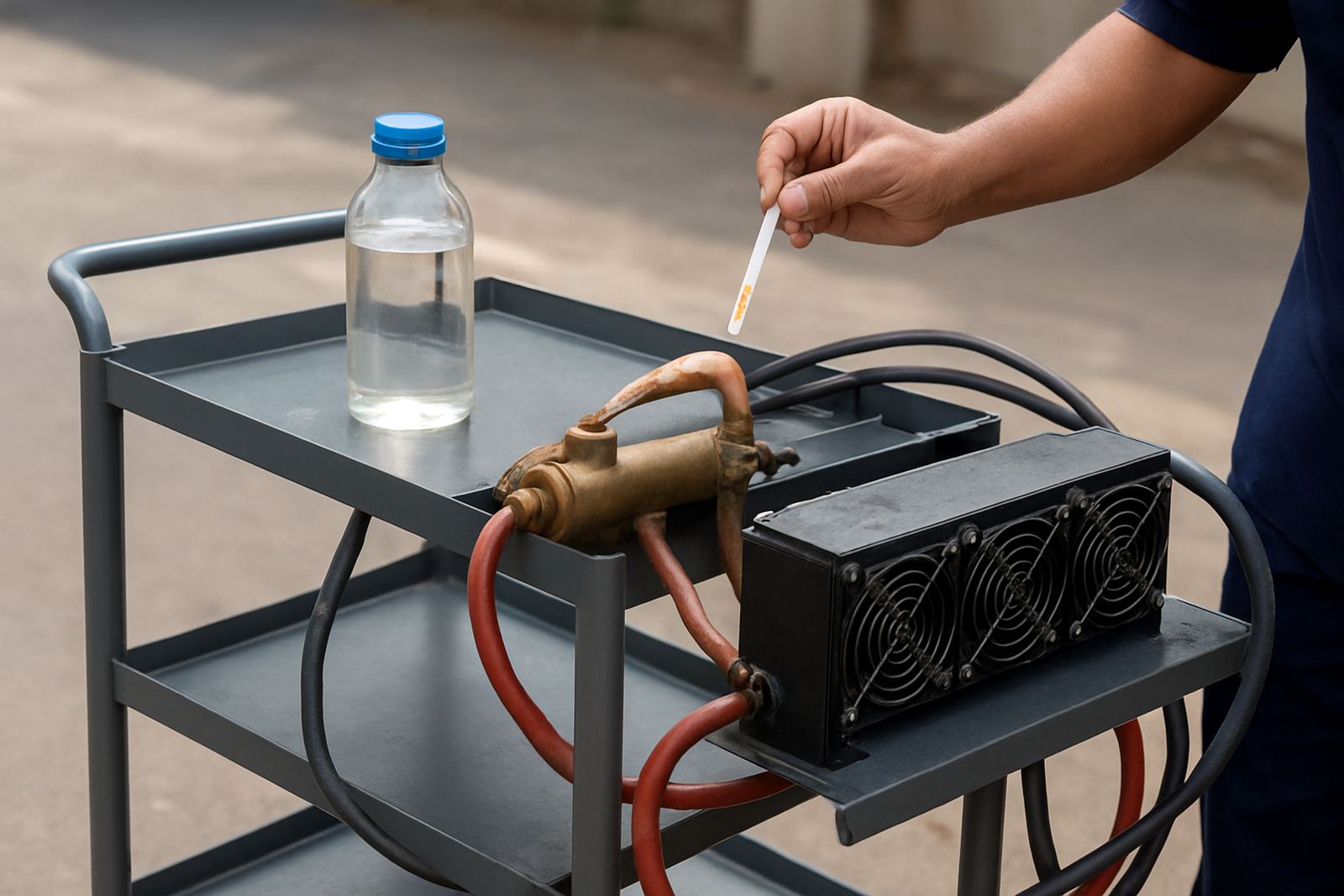
Other signs are more physical. A pump may sound strained, gauges may show a pressure drop across the filter, or the water in the sight glass may look cloudy after maintenance. If a laser line or mould cooling circuit relies on stable flow, even a small blockage can affect product quality. That is why filter checks should form part of the normal service routine, not only a repair visit.
If your team is already doing preventative maintenance, ask for a quick inspection of the filter housing, basket, and any strainers fitted near the process connection points. It is a small job that can prevent a bigger shutdown.
Choosing the right filter setup for lasers, moulds and process lines
There is no single filter that suits every chiller. A system supporting a laser machine needs very fine control and clean water with minimal debris. A mould cooling loop may need stronger particulate protection because the circuit sees more frequent opening, hose changes and plant-side contamination. Process lines can sit somewhere in between, depending on the product and the water quality on site.
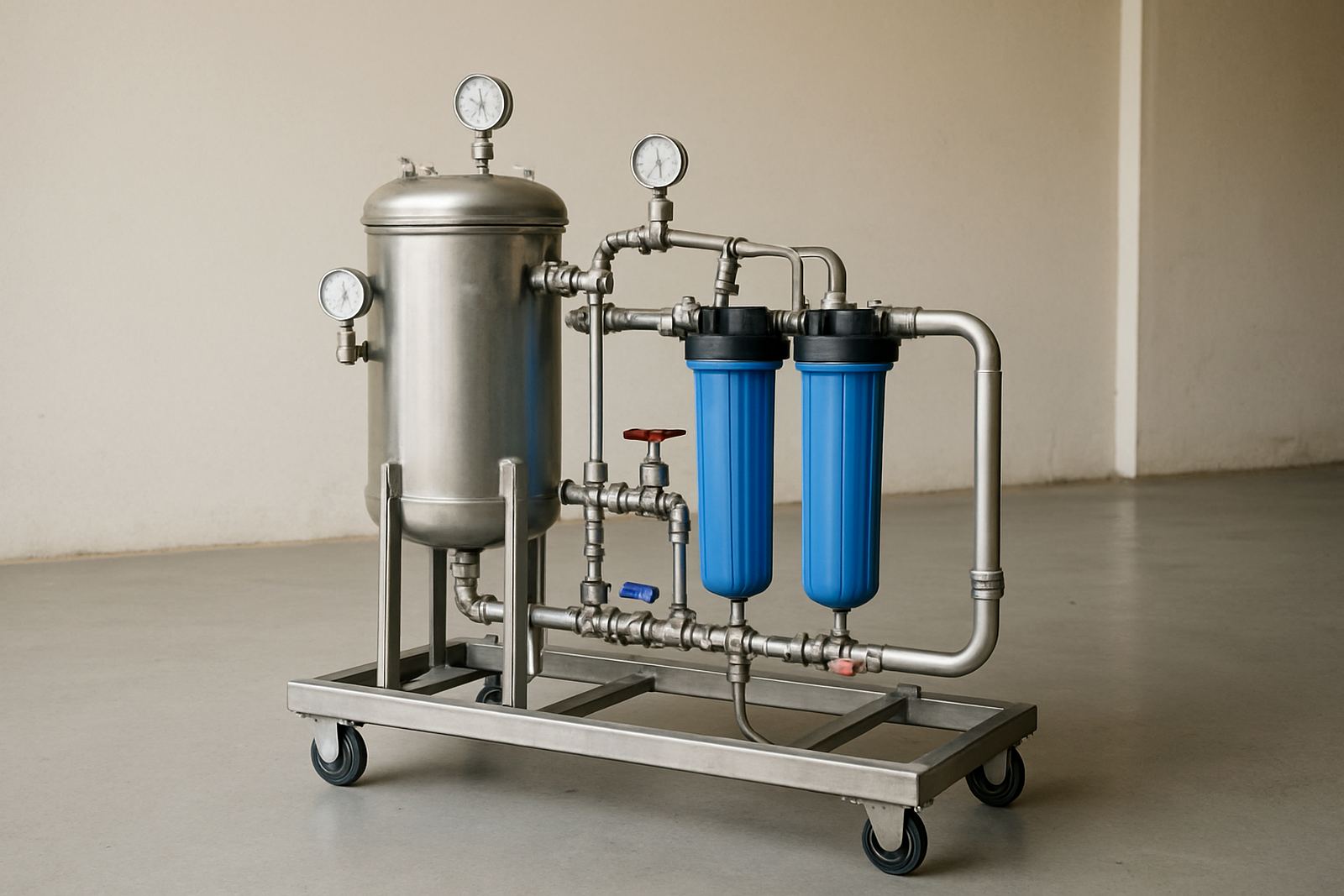
The right setup depends on flow rate, pipe size, pressure tolerance and how often the circuit is exposed to air during maintenance. On some sites, a simple inline strainer is enough. On others, a staged arrangement works better, with a coarse basket at the pump side and a finer filter before the load. If the water treatment is weak, filtration alone wont solve the full problem, but it does give the treatment chemicals a better chance to work properly.
- Match the filter rating to the smallest passage in the cooling circuit
- Check whether the filter needs to be serviceable without draining the whole system
- Allow space for pressure gauges before and after the filter
- Use materials that suit the water chemistry and site conditions
- Confirm that spare elements are available locally before commissioning
Maintenance habits that keep filters useful, not forgotten
A filter only helps if someone is actually checking it. That sounds basic, but in busy plants it is easy to ignore until there is a fault. A good rule is to link filter checks with the same routine used for pump inspection, water top-up and general chiller housekeeping. On high-duty systems, the interval may be weekly. On lighter use, it can be part of the monthly preventative maintenance visit.
Our service team often recommends a simple log sheet for each unit: date, condition of the element, pressure difference, water clarity and any changes in temperature stability. That gives the maintenance team a proper picture of what is happening inside the circuit, not just a note that the system “seems fine”.
Also, do not wash a dirty element and put it back if the fibres, mesh or seal are already tired. Reusing a damaged filter can send loosened debris straight back into the line. It saves a few Rand today and costs more later in repair time, production loss and worn components.
A local example from a moulding plant in Gauteng
A moulding plant in the Ekurhuleni area recently started seeing uneven cycle times on a cooling loop connected to a central chiller. The operators first suspected the refrigeration side, but the real issue was a partly blocked filter and fine scale buildup after a water treatment lapse. The unit was still running, yet the flow had dropped enough to affect mould temperature control.
After the filter housing was cleaned, the pipework was checked and the water treatment was adjusted, the system returned to a more stable operating range. The plant did not need a full replacement, just better filtration discipline and a proper maintenance plan. That is often the difference between a small service call and a full production stoppage.
For sites in Alberton, Germiston, Boksburg and the broader Gauteng belt, this kind of problem can build quickly because many plants run extended hours and share water systems across multiple machines. If one part of the circuit gets dirty, the rest usually follows.
A practical filter checklist before the next shutdown
If you are planning a shutdown, it is a good time to review the filtration side of the chiller system. The aim is not to overcomplicate the setup, but to make sure the water can move cleanly and consistently through the cooling circuit.
- Inspect all strainers, baskets and inline filter housings
- Confirm the filter rating suits the application and flow
- Check for leaks around housings, lids and seals
- Measure pressure drop across the filter before and after cleaning
- Review the water treatment program and top-up water quality
- Replace worn elements rather than cleaning them beyond service life
If you need help assessing a chiller, process line or mould cooling circuit, our team in Alrode supports sites across South Africa with installation, servicing, repairs, water treatment checks and temporary cooling support. You can send an enquiry through the contact page and we will advise on the right filtration approach for your system.