Why mould cycle temperature changes the whole job
Mould cycle temperature is one of those settings that can quietly make or break a production run. If the mould is too warm, parts may stick, warp or vary from shot to shot. If it is too cold, the plastic may freeze too early, the surface finish can suffer and cycle times can stretch without giving better quality.
For local moulders, this matters across everything from packaging to technical parts. A stable mould temperature helps the tool repeat the same conditions hour after hour, which means fewer rejects and less time spent adjusting the machine. It also protects the mould itself, because unnecessary hot spots and thermal stress can shorten tool life.
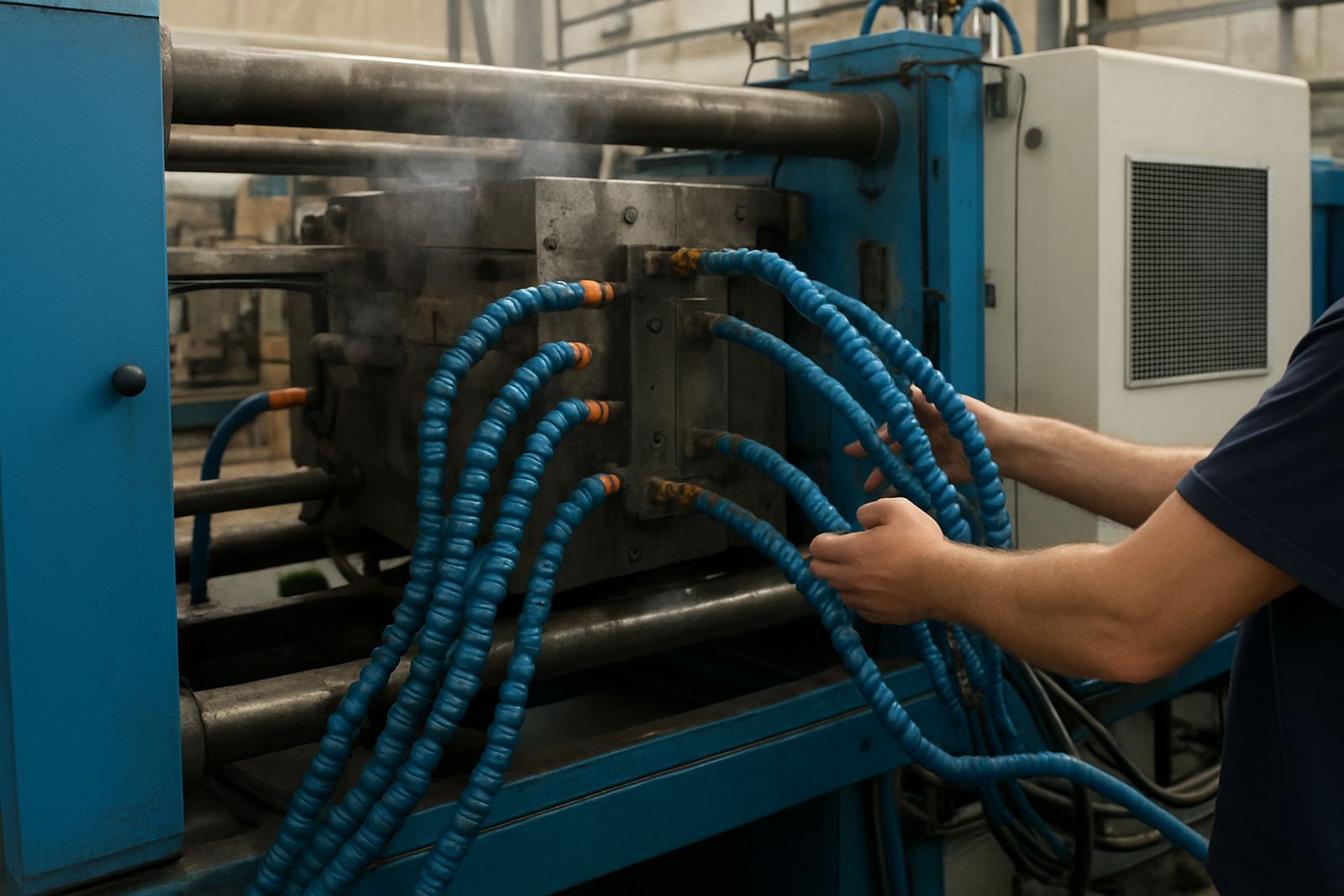
In practice, temperature control is not only about the chiller setpoint. It is about flow rate, water quality, hose sizing, heat load and whether the cooling unit can cope when the ambient temperature climbs in summer. That is why a mould can run fine in the morning and start drifting by mid afternoon if the cooling system is undersized or poorly maintained.
Getting the setpoint right for the material and tool
There is no single mould temperature that suits every job. The correct range depends on the polymer, the mould design, wall thickness, surface finish and the required tolerances. A thick moulded part may need a different water temperature and circulation pattern than a thin walled component, even if both run on similar machines.
A practical approach is to work from the part requirement backwards. Start with the target surface quality and dimensional stability, then confirm the mould maker’s recommended temperature range, then check whether the chiller can hold that range under real plant conditions. If the cooling unit is set too low, operators sometimes see a short term gain in cycle time but the part can become brittle or unstable. If it is too high, the line slows down and inconsistency creeps in.
- Check the mould temperature at start-up and again once the line has settled.
- Compare actual flow and return temperatures, not only the controller reading.
- Watch for uneven cooling between cavities, which often points to blockages or poor circuit balancing.
- Record adjustments during the first few runs so the same settings can be repeated later.
What South African conditions do to mould cooling
South African plants deal with a few extra pressures. In Alberton and the wider Ekurhuleni area, high summer temperatures can push cooling equipment harder than expected. In coastal areas like Durban and Cape Town, humidity and salt in the air can affect heat exchangers, pipework and electrical panels. In industrial areas around Rustenburg and the inland hubs, dust and mineral build-up can also become a problem.
Load-shedding adds another layer. When power is interrupted, the mould temperature can rise quickly and the system may take time to recover when production restarts. If the cooling loop is not planned properly, a shift can lose consistency for the rest of the run. That is why many plants now look at temporary cooling support, backup planning and faster restart procedures.
A real example is a moulding line in Germiston that was struggling with warpage on a high volume part during hot afternoons. The issue was not the press itself. The return water temperature was climbing because the cooler was undersized for the heat load and the water treatment was poor, so the flow dropped. Once the system was upgraded and the circuits were cleaned, the cycle became steadier and the reject rate fell.
Signs your mould temperature control is drifting
When mould cycle temperature starts drifting, operators usually notice the symptoms before they find the cause. The challenge is that the problem often looks like a process issue when it is actually a cooling issue.
- Parts vary in size or appearance from the first shot to the last.
- Cycle time creeps up as the shift goes on.
- The mould needs more frequent cleaning because residue builds up.
- Some cavities fill well while others remain inconsistent.
- Water hoses feel warmer than normal, or the return line is hotter than expected.
- Pressure alarms or low flow warnings appear after a pump or valve change.
These signs are worth acting on early. A small drop in cooling performance can lead to a lot of scrap over a full week. It can also mask other faults, because operators keep adjusting injection settings to compensate for a temperature problem that should have been fixed at source.
The maintenance checks that keep cycle temperature steady
Preventative maintenance is usually cheaper than chasing faults after a breakdown. For mould cooling systems, the basics matter: clean strainers, healthy pumps, clear pipework, accurate temperature controls and water that will not cause scale or corrosion. When these are neglected, the system loses efficiency and the mould temperature starts to wander.
A proper maintenance routine should look at both the chiller and the mould circuit. If the plant uses hard water or makes frequent top ups, water treatment checks become important. If hoses are old or the routing is poor, pressure loss can affect flow to the mould. If the control panel is outdated, the operator may not see the fault soon enough to prevent spoilage.
- Inspect filters, strainers and pumps on a set schedule.
- Check for scale, rust or sludge in the mould circuits.
- Test temperature stability under load, not only at idle.
- Review control settings after any tooling change or line expansion.
Choosing cooling support that matches production reality
For many operations, the answer is not just a larger chiller. It may be a better matched system, a pipework retrofit, or temporary cooling while a line is being expanded. The right setup depends on the heat load, the number of moulds running, the operating hours and how often the plant stops and starts.
That is where practical site knowledge helps. A line in Pretoria may need a different response from one in Cape Town because the ambient conditions, water supply and production pattern are not the same. Likewise, a manufacturer in Johannesburg running several moulds at once may need commissioning support, operator training and control panel upgrades to keep every circuit within range.
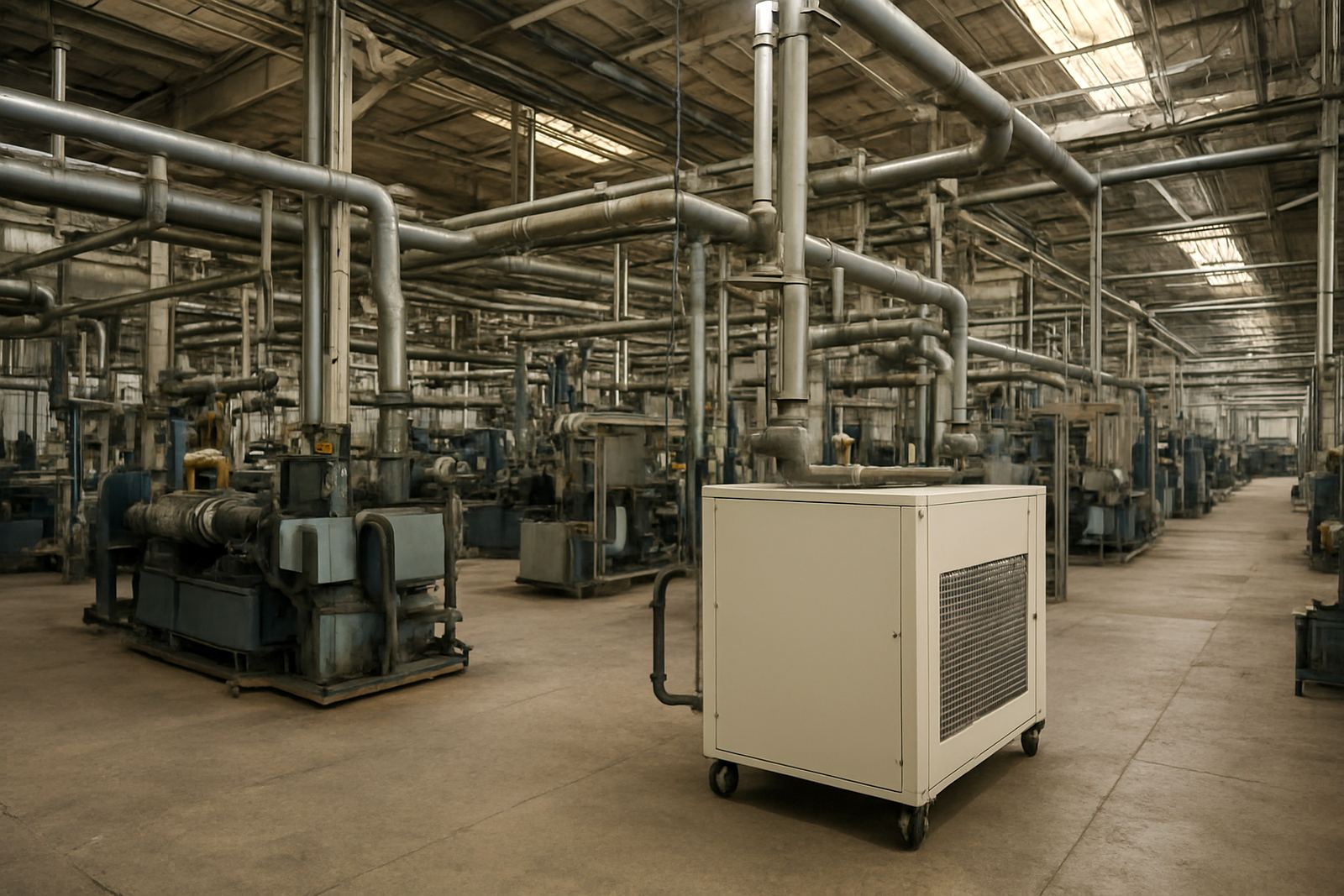
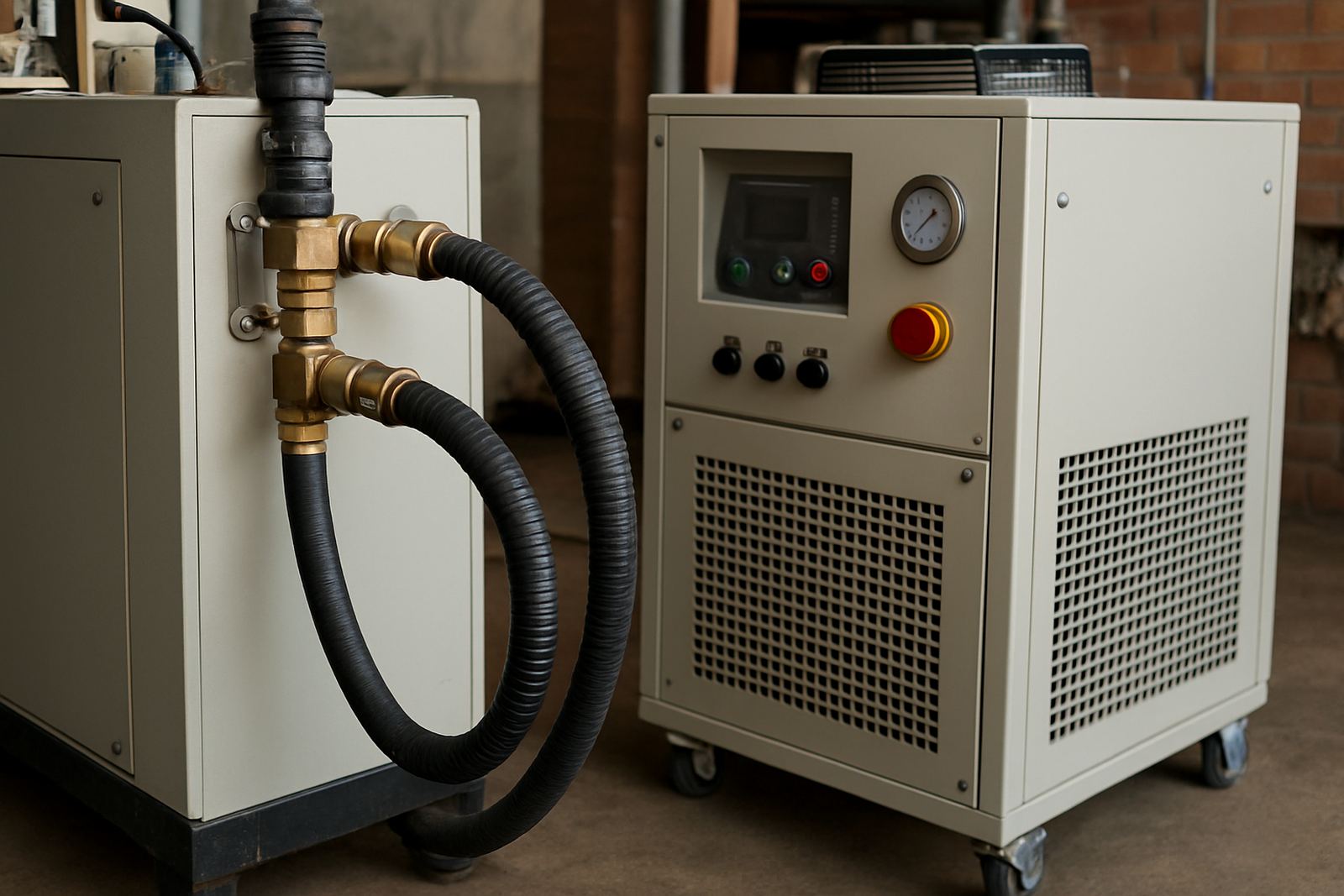
At Raynen, we work with industrial water chillers and cooling units for lasers, moulds and process lines, with service support from Alberton across Johannesburg, Pretoria, Durban, Cape Town and Rustenburg. The aim is simple: keep the mould temperature where it should be, so the tool runs properly and the line stays productive.
What good mould temperature control looks like on the floor
Good mould temperature control is not flashy. You see it in the small things: less scrap, smoother start-ups, repeatable cycle times and fewer emergency calls when production is already under pressure. It also shows up in tool life, because a mould that is kept within the right range is less likely to suffer unnecessary wear or thermal shock.
For a South African production manager, the real value is predictability. When the cooling system is sized correctly, maintained properly and checked against actual process conditions, the line becomes easier to plan. That matters whether the plant is in Alrode, Boksburg or farther afield, because every unplanned stoppage costs time and money.
In moulding, temperature control is not a side issue. It is part of the process itself, and it needs the same attention as material, pressure and cycle settings.