Why the compressor is the first part to suffer
The compressor is the heart of an industrial water chiller. It keeps refrigerant moving, builds pressure and supports the cooling process that protects lasers, moulds and process lines. When it starts to run hot, short cycle or work against poor water flow, wear builds up quickly and the whole unit loses efficiency.
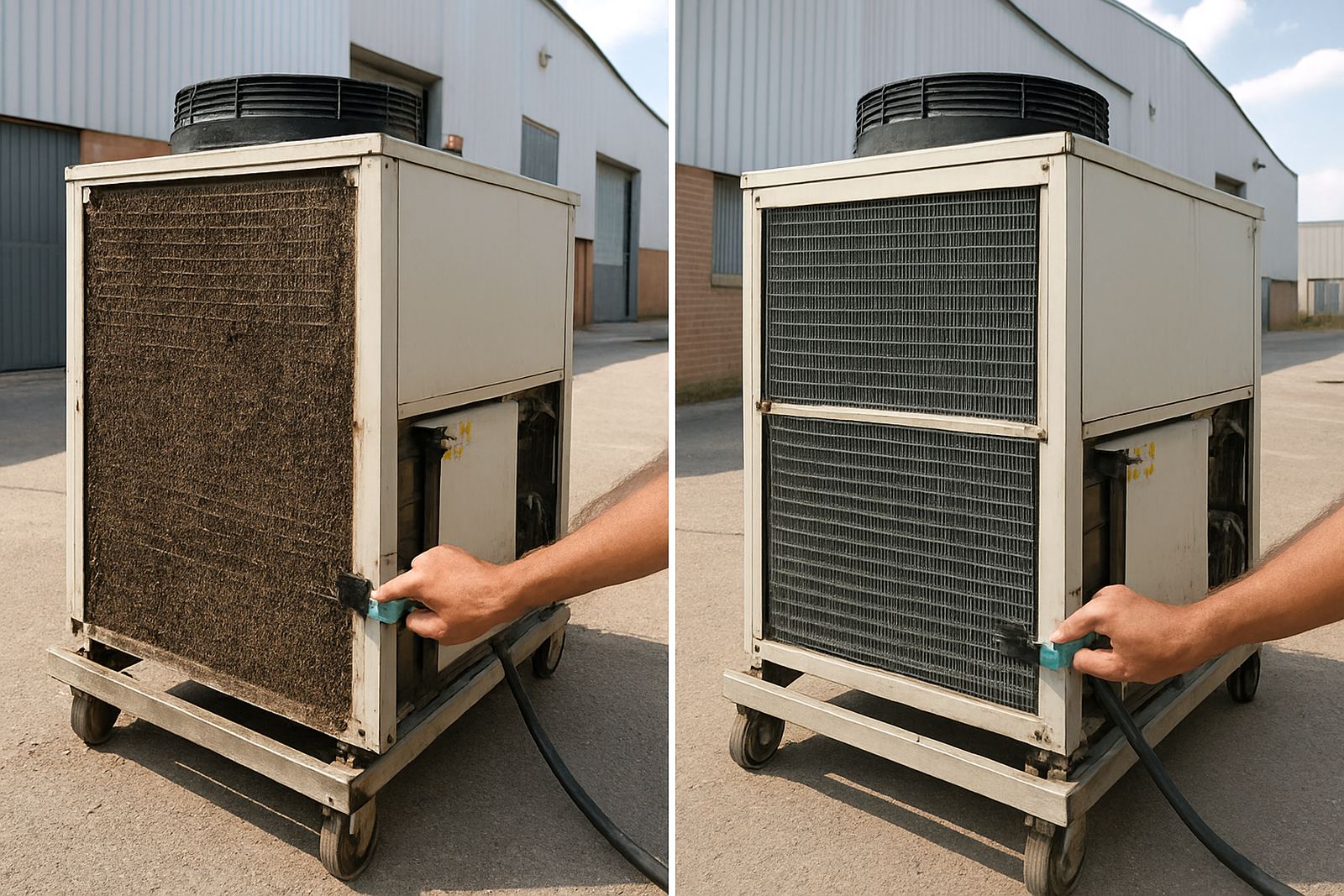
In South African plants, the pressure on a compressor often comes from everyday issues rather than one major fault. Dirty strainers, blocked condenser fins, weak water quality, unstable power and poor airflow all force the compressor to work harder than it should. That means more heat, more current draw and a higher chance of a breakdown during a busy shift.
For factories in Alberton, Germiston and Boksburg, the problem often shows up after a few weeks of dusty conditions or following load-shedding, when equipment is restarted without a proper check. A compressor that is protected properly will usually run quieter, draw steadier current and hold temperature better under load.
Keep water flow steady and within the right range
Low water flow is one of the quickest ways to stress a chiller compressor. If the flow through the system drops too far, heat is not removed properly and the compressor can run hotter than design limits. In simple terms, it keeps working but the job gets harder every minute.
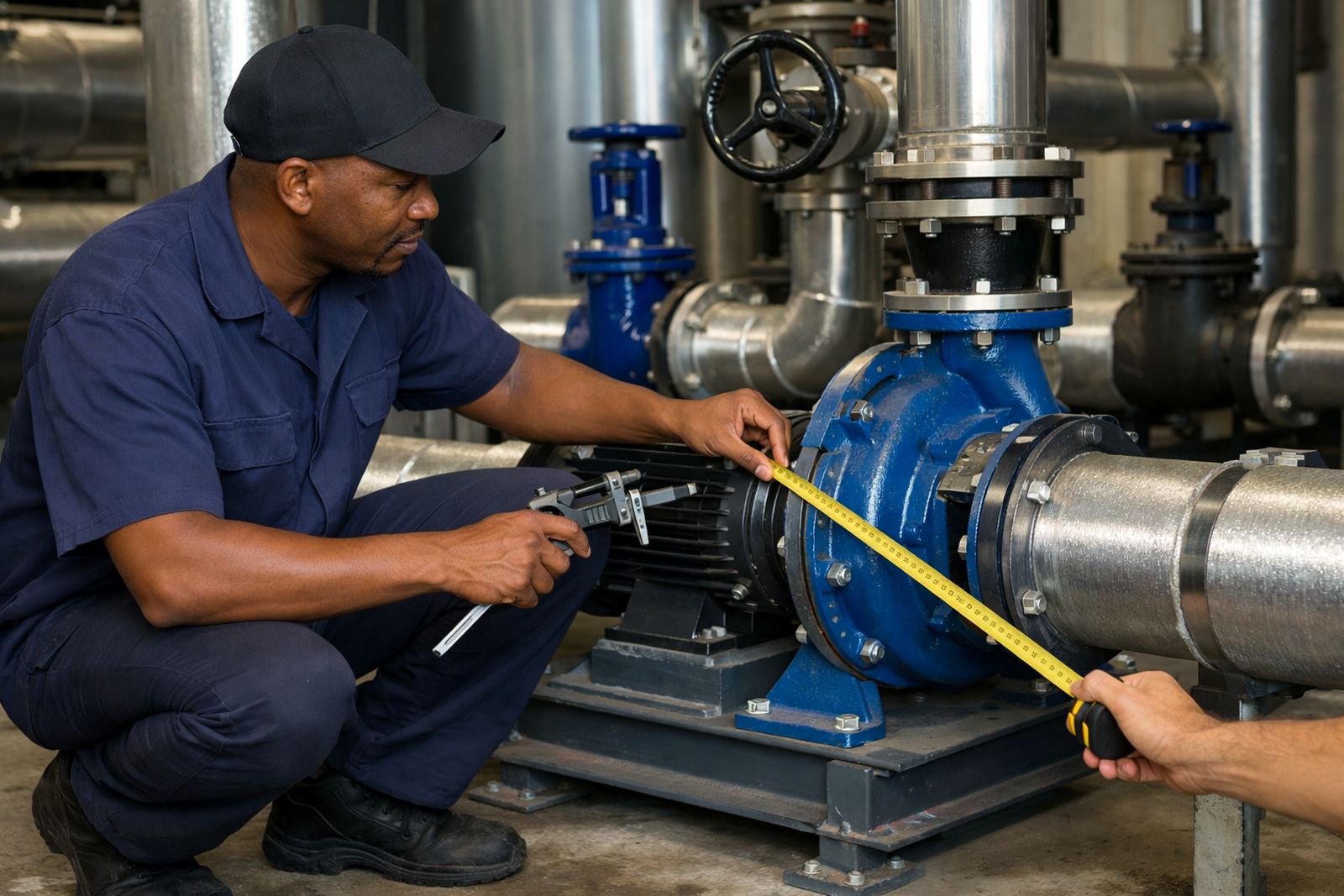
Check pumps, strainers, valves and pipework for restrictions. A partially closed valve or a clogged filter can be enough to upset the balance. If the system uses long pipe runs or has been extended for a new machine line, the pressure drop may be higher than expected and needs to be checked properly.
- Inspect strainers on a fixed schedule, especially on systems with open water circuits
- Confirm that the pump is delivering the correct flow and pressure
- Look for air in the line, which can reduce circulation and cause uneven cooling
- Make sure pipework has not been kinked, crushed or modified without checking the impact
On mould cooling systems, a small flow problem can quickly affect product quality too. A compressor that is protected by stable flow will usually spend less time at the top end of its duty cycle, which helps extend service life.
Water quality matters more than many teams expect
Cooling water that looks clear is not always healthy for the system. Scale, corrosion and biological growth can build up inside heat exchangers and pipework, then the compressor ends up carrying the load. When heat transfer drops, the refrigeration side has to work harder to hold the set point.
Water treatment checks should form part of routine maintenance, not only a response after a fault. In coastal areas like Durban and Cape Town, humid air and salt carry-over can create extra corrosion risk. In industrial areas around Johannesburg, dust and process contamination can also enter the system if the setup is not properly sealed or filtered.
A clean system helps the compressor by keeping temperatures predictable. It also reduces nuisance trips and helps the unit recover faster after a production pause. If a chiller is serving a laser line, even a small change in temperature can affect output consistency and equipment protection.
- Test water condition regularly and adjust treatment when readings drift
- Clean heat exchangers before scale becomes hard to remove
- Check for rust, sludge or algae in tanks and sumps
- Use proper filtration where process contamination is likely
Power interruptions and restart habits can damage compressors
Load-shedding has made restart discipline a practical maintenance issue, not just an inconvenience. If a chiller comes back online too quickly after a power cut, the compressor may restart under poor conditions or against an unstable system. That can lead to hard starts, pressure spikes and repeated trips.
The safest approach is to allow enough time for pressures to equalise before restarting, then check that fans, pumps and controls come back in the correct order. If your plant has frequent outages, it is worth reviewing how the chiller is integrated with backup power and whether the operating sequence is still suitable for the current setup.
Temporary cooling can also protect production during planned shutdowns or repairs. If one system is down, a short-term cooling solution can reduce pressure on the remaining equipment and stop teams from pushing a chiller beyond its normal duty. That is often cheaper than trying to force one machine to carry too much load for too long.
Good restart habits matter because compressor damage usually builds up in small steps. A unit may still run after a bad restart, but the hidden wear shows later in higher noise, poor pull-down times and repeated service calls.
Watch the warning signs before a small fault becomes a failure
Compressor problems usually give some warning before they stop the plant. The key is to notice the change early and not wait until the chiller trips completely. A trained operator can often spot a problem at the machine long before it becomes a costly repair.
Common warning signs include unusual vibration, short cycling, higher running temperature, unstable discharge pressure and a visible drop in cooling performance. If the compressor starts pulling more current than normal, that is another sign to investigate quickly.
- Listen for new knocking, humming or rattling sounds
- Check whether the unit is starting and stopping too often
- Look for oil leaks, refrigerant leaks or icing on lines
- Compare present readings with the normal operating log
Keeping a simple log helps a lot. Record water temperature, suction and discharge readings, current draw and any alarms. Over time, that log shows whether the compressor is being protected well or slowly being pushed outside its comfort zone.
A local example from an Alberton production floor
A moulding plant in the Alberton area had a chiller that kept tripping after midday. The compressor itself was still serviceable, but the root cause was poor flow through the system and a build-up of scale in the circuit. The team had been resetting the unit and carrying on, which only made the heat load worse.
After the flow path was checked, the strainer cleaned and the water treatment corrected, the compressor started running within its normal range again. The plant also changed its restart routine after outages so the system was not switched back on in a rush. The result was fewer alarms, steadier mould temperatures and less strain on the refrigeration side.
That example shows the main point of compressor protection basics: most problems are not solved by the compressor alone. They are solved by the conditions around it. If water flow, power quality and maintenance are controlled, the compressor usually does its job without complaint.
What a practical maintenance routine should include
A good maintenance routine does not need to be complicated, but it does need to be regular. The aim is to keep the system inside its design range and remove small issues before they become expensive. That matters whether the chiller supports a laser, a moulding line or a process line with tight temperature control.
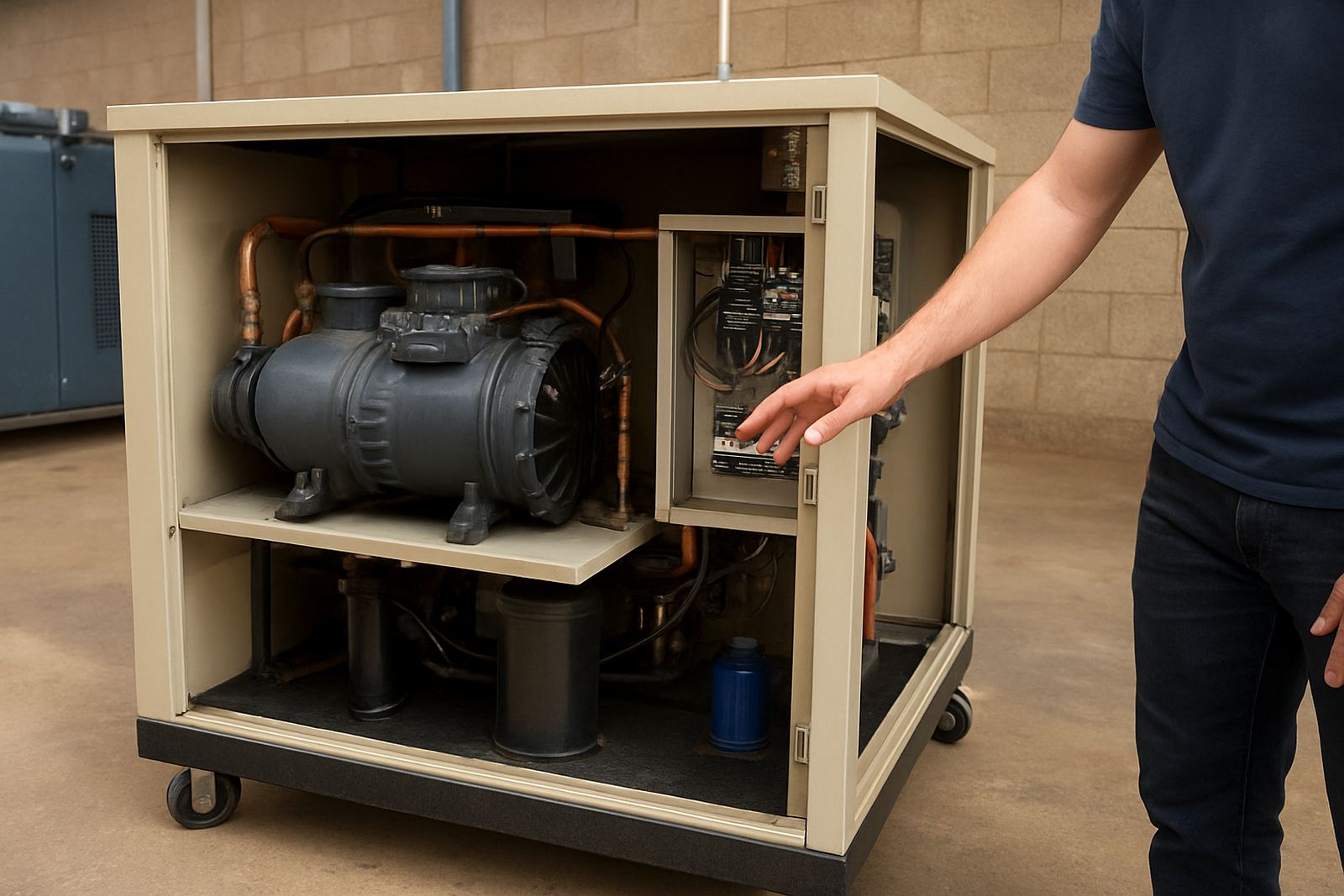
For many sites, a monthly inspection is a sensible starting point, with more frequent checks in dusty plants or where the system runs hard. Preventative maintenance should cover the compressor area, controls, refrigeration circuit, pump set, water circuit and electrical condition. If a unit is ageing, it may also need upgrades to the control panel or pipework to keep it reliable.
Good compressor protection is practical work. It is not about guessing, it is about keeping the cooling system clean, stable and correctly set. When the basic conditions are right, the compressor lasts longer and the whole plant benefits.