Why pump sizing matters in a cooling circuit
In industrial water chilling, the pump is not just pushing water around. It has to move the correct volume at the correct pressure so the chiller, load and pipework all work together. If flow is too low, heat transfer drops and the machine may cycle more often than it should. If flow is too high, you can get noise, vibration and unnecessary wear on valves, seals and fittings.
The aim is stable circulation. That means enough flow to carry heat away from a laser, mould or process line without forcing the pump to work harder than needed. A properly sized pump also helps during load-shedding recovery, when systems restart and need to pull temperatures back down quickly.
Start with flow, then work out total head
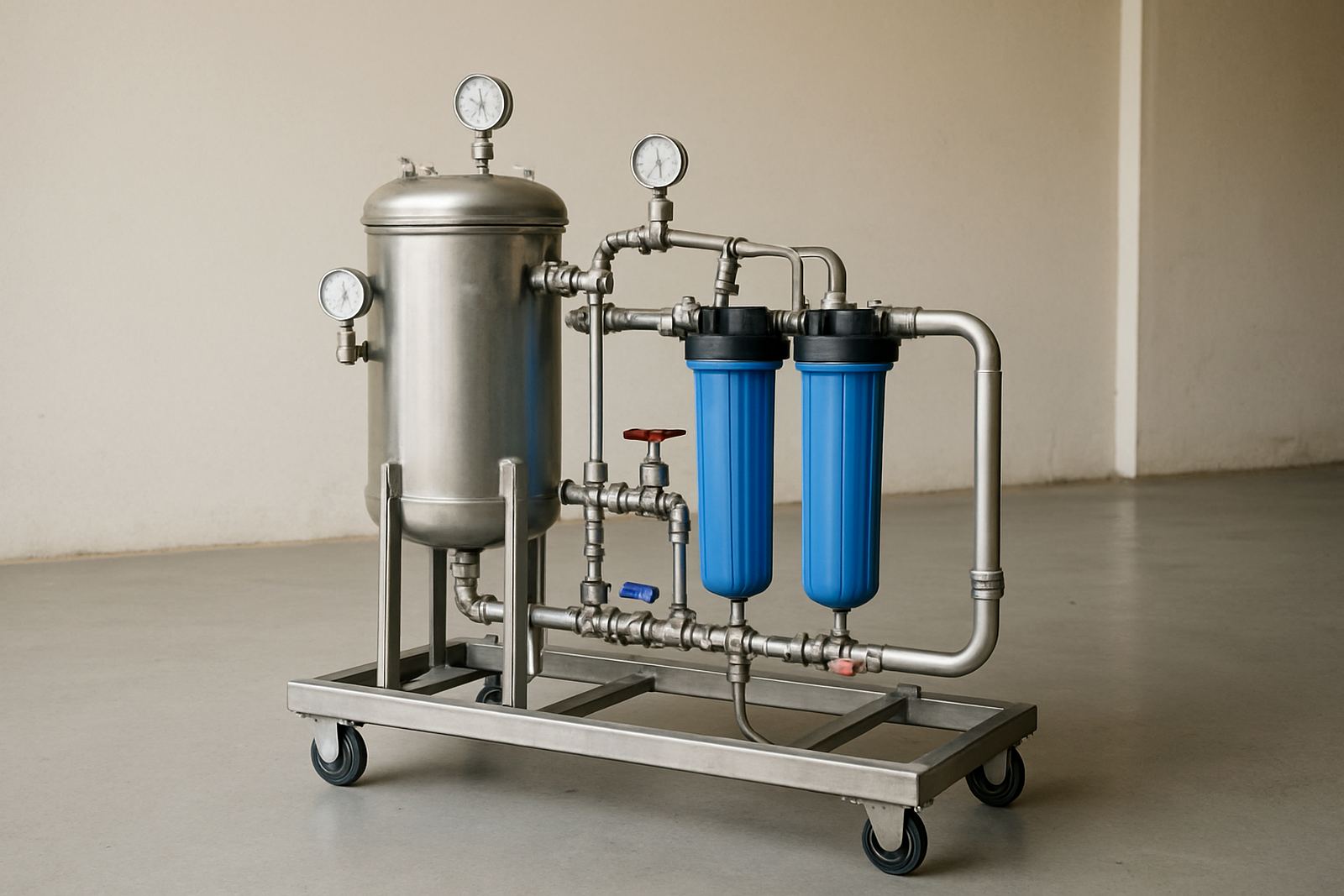
The first number to confirm is the required flow rate, usually shown in litres per minute. This comes from the heat load, the water temperature difference and the equipment being cooled. From there, calculate total head. Total head is the resistance the pump must overcome, including pipe length, vertical rise, bends, strainers, control valves and heat exchangers.
Many sites focus only on distance between the chiller and the machine. That is a mistake. A 20 metre run with several elbows and a plate heat exchanger can create more resistance than a much longer straight run. On older installations in Alberton or Germiston, retrofitted pipework often has hidden restrictions too, which can make the original pump no longer suitable.
- Confirm the required litres per minute for each circuit
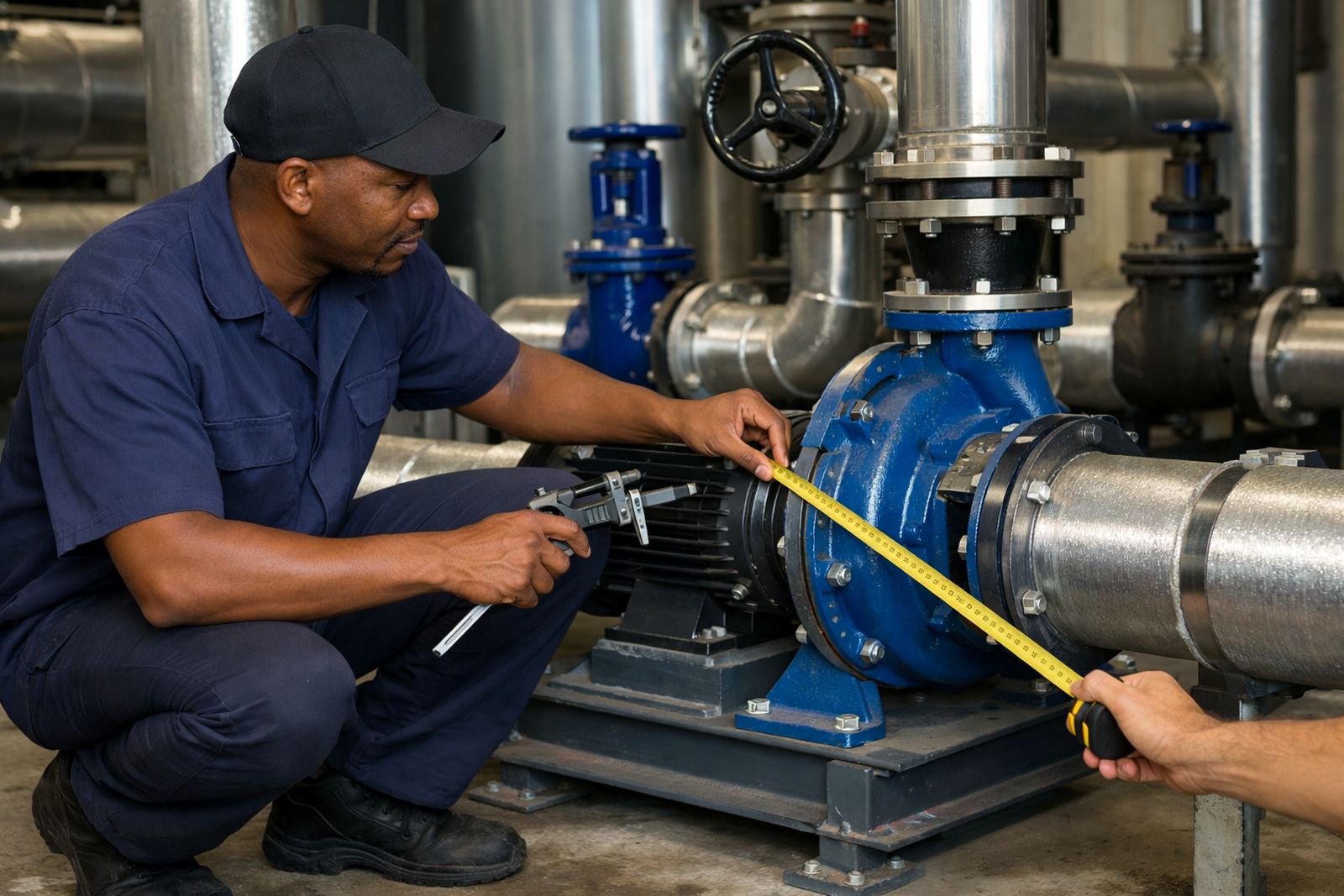
- Measure pipe size, length and vertical lift
- Include fittings, valves and filters in the head calculation
- Check whether the circuit is open or closed
Matching pump curves to real operating conditions
A pump curve shows where a pump can operate safely and efficiently. The useful point is not the maximum output on the brochure, but the point where your system sits on the curve. A pump that is too large may look impressive, but it can push the operating point outside the best-efficiency range and cause extra wear.
It is also important to think about water quality and seasonal conditions. Coastal humidity in Durban can increase corrosion risk, while dusty industrial areas around Johannesburg and Rustenburg can load strainers faster than expected. If the circuit is carrying treated water, glycol mix or chilled process water through fine passages, even a small mismatch in pump performance can affect seperation and heat transfer.
- Use the actual duty point, not a guess
- Leave room for filter loading and future pipework changes
- Check whether the pump can handle continuous duty
- Ask whether variable speed control is suitable for the application
Common sizing mistakes seen on South African sites
One of the biggest errors is oversizing because the designer wants to be safe. In practice, oversizing can be as troublesome as undersizing. Excess flow can erode components, raise energy use and create unwanted pressure spikes when valves close. Another common mistake is forgetting that a mould circuit and a laser circuit do not always have the same temperature stability needs.
We also see pumps selected without enough attention to suction conditions. If the water tank is low, the suction pipe is undersized or the pump sits too far from the reservoir, cavitation can start. That sounds like gravel inside the casing and it shortens pump life quickly. In busy factories, the first sign is often a growing noise problem and then a sudden breakdown.
- Do not choose a pump from flow alone
- Avoid using the same size for every circuit
- Check suction lift and inlet conditions carefully
- Do not ignore strainers, filters and water quality
A local example from a Gauteng production floor
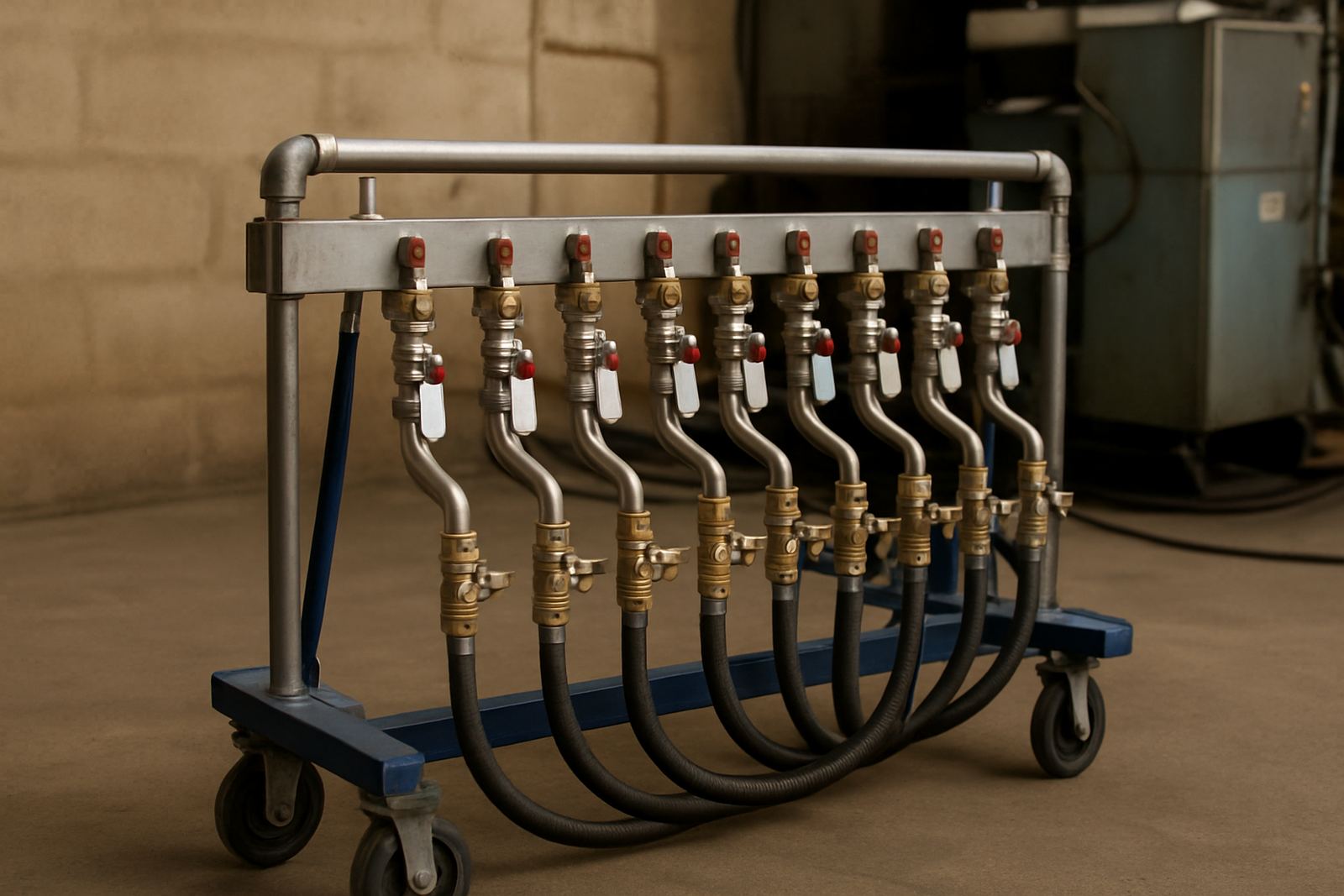
A plastics plant in the Ekurhuleni area was running a mould cooling circuit with uneven temperatures across several machines. The chiller was in decent condition, but the pump was too small for the new pipe layout after a workshop move. Water was reaching the moulds, but not at the designed flow, so cycle times drifted and operators kept adjusting settings.
After a cooling audit, the duty point was recalculated and the pump replaced with a correctly sized unit. Pipe restrictions were reduced, the strainer arrangement was improved and the control settings were checked again. The result was steadier mould temperatures and fewer alarms. It was not a dramatic change on paper, but on the floor the difference was clear within a single shift.
What to check before replacing or upgrading a pump
Before a replacement, gather the operating details from the site, not just the old pump nameplate. If the process has changed since installation, the original pump may no longer suit the duty. New machinery, longer pipe runs or extra branches can all change the requirements. It is also worth checking power supply conditions and whether a variable speed drive or soft start will help with starting current and control.
For South African plants, reliability matters. A pump should be easy to service, with parts that can be maintained locally and a layout that does not make routine checks difficult. If the system runs through long hours, or across hot summer periods in Pretoria and Cape Town, proper sizing protects the chiller and keeps temperature control more predictable.
- Record the actual flow and pressure on site
- Check motor load and starting method
- Review suction arrangement, valves and filters
- Consider future expansion before selecting the final size
The practical rule: size for the system, not the label
Good pump sizing is about the whole cooling circuit. The right unit matches the required flow, handles the real head and supports stable heat transfer without wasting energy. It should also fit the way the plant operates day to day, including stop-start use, maintenance access and any seasonal changes in demand.
If you are planning a new chiller installation, replacing an old pump or troubleshooting uneven temperatures, a proper site check is the safest way to avoid guesswork. In industrial cooling, small errors at the pump can turn into bigger problems at the machine, so it pays to get the duty point right from the start.