Why a clean condenser keeps the chiller in control
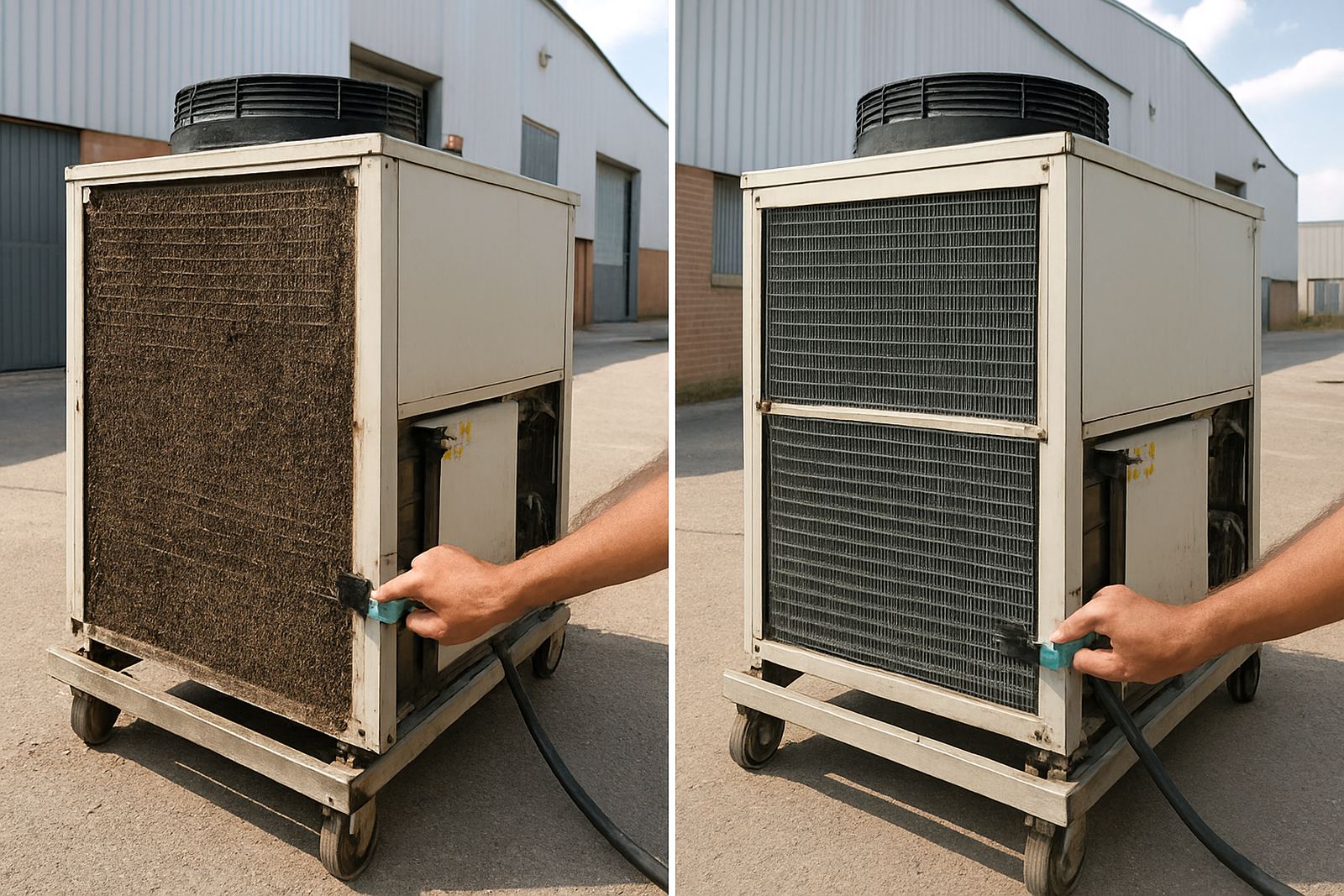
The condenser is where the chiller gets rid of heat. If the fins or tubes are coated in grime, that heat has nowhere to go and the unit starts running hotter, longer and less efficiently. The result is often higher power draw, unstable process temperatures and unnecessary wear on compressors, fans and controls.
This matters in laser cooling, mould temperature control and process lines because these systems depend on steady temperatures, not just cold water. Even a small drop in heat transfer can mean more alarm trips, slower cycle times and a process that never quite settles. If the chiller is already working against high ambient temperatures in Gauteng or humid conditions near Durban, dirt on the condenser makes the problem worse.
What blocks condenser performance in South African plants
In local factories and workshops, condenser fouling does not come from one source alone. It builds up gradually and often goes unnoticed until the chiller starts underperforming. A plant in Alrode, for example may be dealing with fine metal dust, cardboard fibres and oily residue from nearby machinery at the same time.
- Dust from cutting, grinding and packaging areas
- Grease or oil mist from production equipment
- Lint and fibres in textile, plastics and food spaces
- Coastal salt deposits in Durban, Cape Town and other humid areas
- Garden waste, leaves and airborne debris around outdoor units
- Scale and sediment where water treatment is neglected
Once these layers sit on the heat exchange surface, airflow drops and the condenser cannot reject heat properly. The chiller then cycles harder, which can shorten component life and create avoidable maintenance calls.
Signs the condenser needs attention before a fault starts
Many operators only think about the condenser after a high pressure trip or warm process water alarm. By then the system has usually been struggling for some time. Regular checks help catch the issue early, before it becomes a breakdown repair.
- Rising discharge pressure or frequent high pressure alarms
- Cooling water temperature creeping up on the same load
- Fans running longer or louder than normal
- Short cycling, especially during warm afternoons
- More frequent trips after load-shedding when systems restart under stress
If a chiller used to hold temperature easily and now needs constant resets or operator attention, the condenser should be checked first. In many cases the fault is not electrical or refrigerant related, it is simply poor heat rejection caused by a dirty surface.
How a proper cleaning routine protects capacity
Cleaning a condenser is not only about spraying off visible dirt. The work needs to suit the unit type, the site conditions and the access available around the plant. On some sites a light service clean is enough. On others, especially where there is oil mist or coastal corrosion, a more detailed wash and inspection is needed.
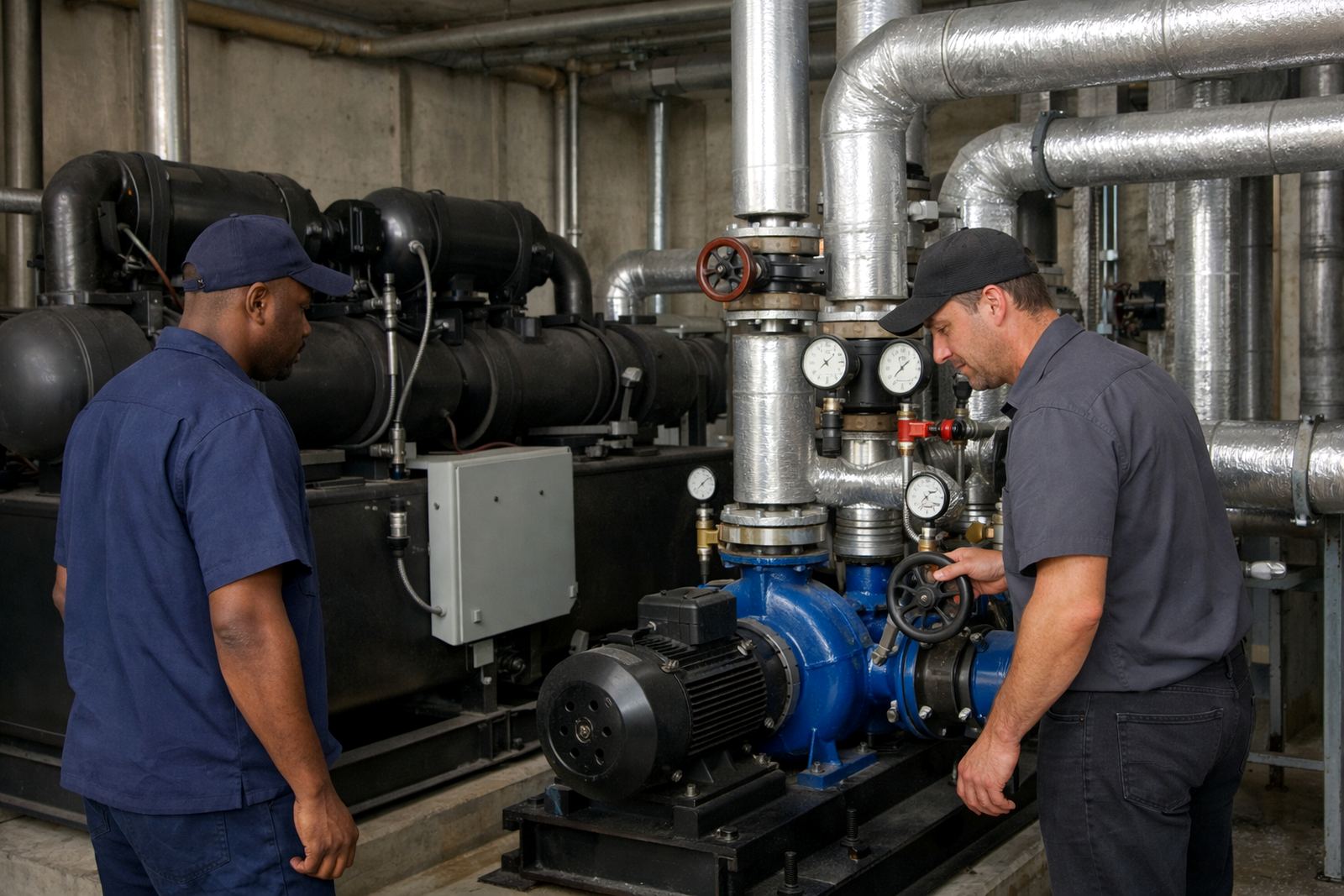
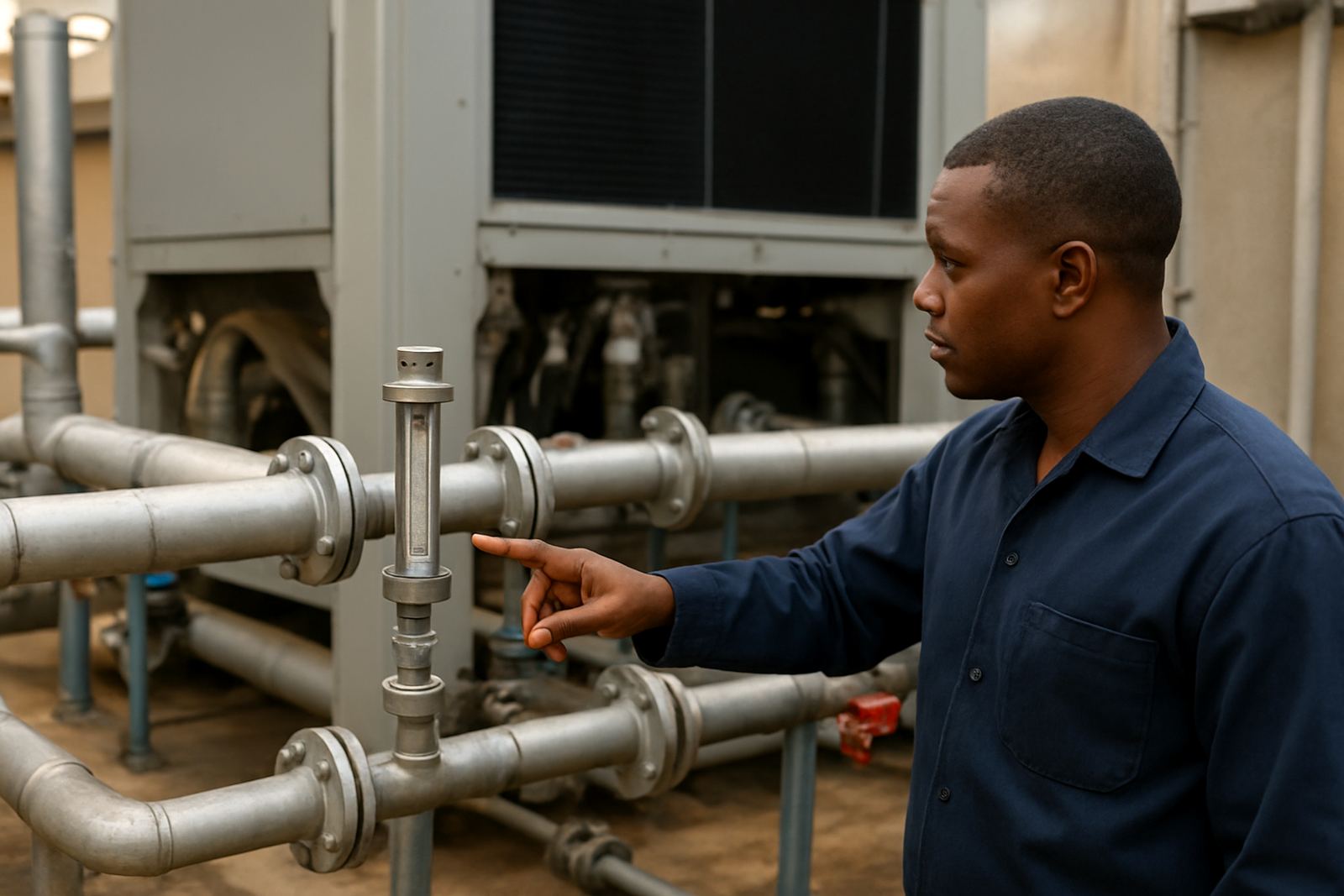
A good routine should include fin inspection, fan checks, coil straightening where necessary and confirmation that air can move freely through the unit. Water cooled systems also need attention to tubes, strainers and water treatment, because scale inside the circuit can have the same effect as dirt on the outside. A clean condenser helps the chiller reach set point faster and keeps the machine from fighting itself all day.
For production teams, that usually means better consistency and fewer surprises. It can also help avoid the false economy of running a machine that is slowly costing more each month in electricity and lost output.
A simple maintenance checklist for plant teams
Most condenser care can be built into normal maintenance without disrupting production. The key is to treat it as a planned task, not an emergency reaction. In busy Johannesburg or Pretoria plants, this can be timed around shift changes or over weekends so the equipment is not stopped during peak demand.
- Inspect the condenser monthly in dusty areas, and more often near grinding or cutting lines
- Check for blocked airflow around the unit
- Remove loose debris from guards, fins and surrounds
- Confirm fans are running evenly and no motor is overheating
- Record operating pressures and temperatures after cleaning
- Schedule professional cleaning before summer heat or after heavy production periods
It also helps to keep the area around the chiller clear. Boxes, pallets and scrap placed too close to the unit can restrict airflow and make cleaning less effective. A neat plant is usually easier to service, and safer too.
Local example: when dust and heat cut cooling capacity
A metal fabrication site in Ekurhuleni called for support after its process water started creeping above the normal range during hot afternoons. The chiller had not failed, but the condenser was heavily coated with fine dust from nearby cutting and finishing work. After cleaning, checking the air path and confirming the fan operation, the unit recovered its cooling performance and the nuisance trips reduced.
That kind of issue is common across South Africa because the climate and the production environment both work against the condenser. In Durban, moisture and salt can stick to the surface. In Rustenburg and the West Rand, dust from surrounding activity can build up quickly. The lesson is simple: if the condenser is neglected, the chiller has to work harder for the same result and sometimes it cannot keep up at all.
When to bring in a service team
If a condenser needs more than a basic clean, or if the chiller still struggles after the surface has been cleared, it is time for a proper inspection. There may be blocked tubes, weak fans, refrigerant issues or poor water quality behind the symptom. A technician can test the full system, not just the visible dirt.
Raynen supplies and services industrial water chillers for lasers, moulds and process lines from Alrode, Alberton across Johannesburg, Pretoria, Durban, Cape Town and Rustenburg. Our team handles condenser checks, preventative maintenance, breakdown repairs, water treatment checks and cooling audits so plants can keep temperatures under control without guesswork.
For operators, the rule is straightforward: if the condenser is clean, the chiller has a fair chance of doing its job. If it is dirty, the system starts losing capacity long before anyone notices a fault.