Start with the symptom, not the switch
When a flow switch alarm appears, do not assume the switch is bad. On industrial water chillers the alarm may be the first sign of a blocked strainer, a weak pump, air in the line, or a bypass valve left partly open after maintenance.
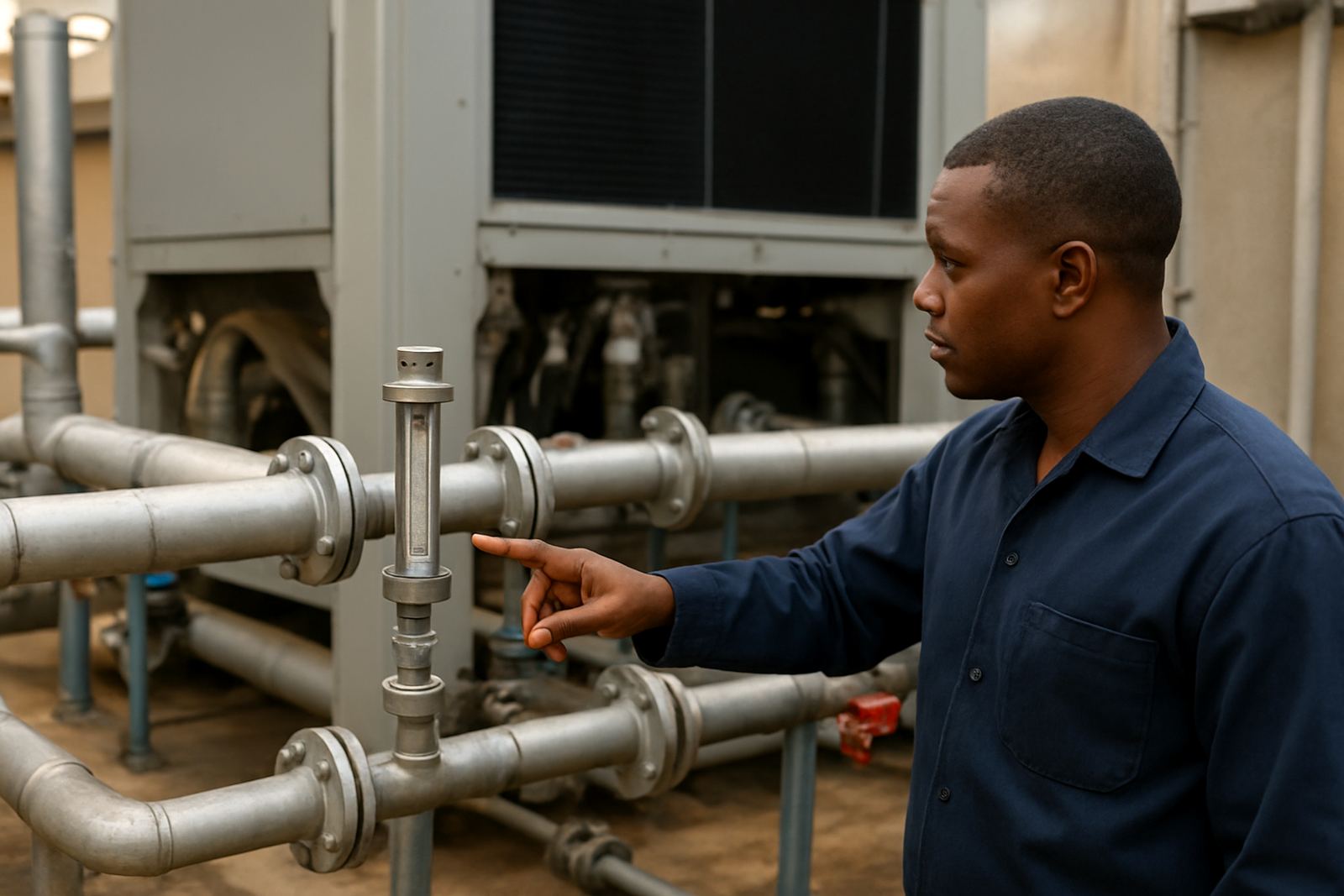
The quickest way to narrow it down is to ask three questions: is there visible flow, is the pump actually moving water, and did the fault appear after a service, power cut or process change? In Alberton and the rest of Ekurhuleni, we see plenty of cases where the chiller is blamed but the real issue is scale build-up from poor water treatment or a valve that was never fully reopened.
For laser systems, mould cooling and process lines, a false trip can be costly. A machine may cycle off every few minutes, or the operator may reset the fault and carry on until temperature starts drifting. That is where a proper check beats guesswork.
Check the switch body for fouling and stuck movement
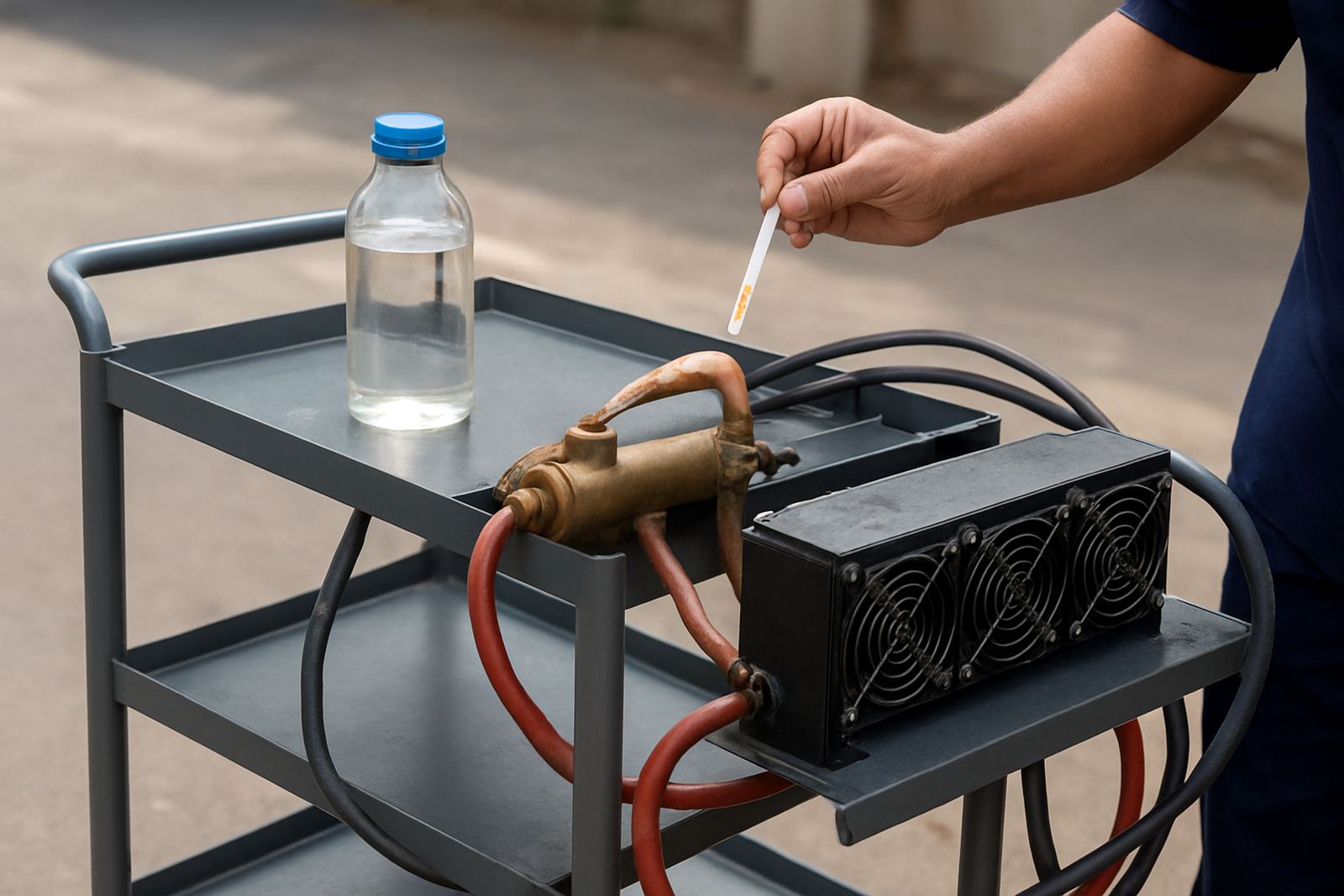
Flow switches work best when the water is clean and the moving parts can respond freely. Dirt, rust flakes, sludge and even bits of PTFE tape can cause the paddle or piston type switch to stick. In chilled water systems with older pipework, it is common to find a switch that is mechanically fine but coated in fine debris.
If the switch has a manual test feature, use it carefully and follow the equipment instructions. If it is removed for inspection, check the flow direction, seal condition and signs of wear. A switch fitted the wrong way round can give unstable readings or no reading at all.
Coastal humidity in Durban and Cape Town can also affect enclosures and terminals. Corrosion at the housing or gland points can create intermittent alarms that only show up on hot afternoons or after washdown. It may look like a flow fault, but the real issue is moisture ingress.
- Inspect for visible dirt, rust or sludge around the switch.
- Check that the paddle or piston moves freely by hand where applicable.
- Make sure the switch is installed in the correct direction and at the correct orientation.
Test the wiring and control panel before replacing parts
A surprising number of flow switch problems are electrical, not mechanical. Loose terminals, damaged cable insulation, or a relay input issue can create an alarm even when water flow is acceptable. On older installations, a cable may be pulled tight, crushed behind a panel or affected by heat near compressors and contactors.
Inside the control panel, check for loose ferrules, burnt terminals and signs of vibration. If a machine has been moved or a pipework retrofit was done, wiring may have been disturbed. We also see this after load-shedding events, where power returns and a weak connection shows up immediately.
If the switch is part of a safety circuit, do not bypass it as a quick fix. That only hides the problem and can put lasers, pumps and heat exchangers at risk. A proper continuity test and input check on the controller usually tells you whether the fault sits in the switch, cable or control logic.
- Check terminal tightness and any sign of heat damage.
- Look for broken cable sheathing, especially at bend points.
- Confirm the controller is receiving the correct signal from the switch.
Low circulation can mimic a bad flow switch
Before replacing a switch, check whether the system is truly moving enough water. A dirty strainer, worn pump impeller, air lock or closed valve can all reduce flow to the point where the switch trips correctly. In that case the switch is doing its job.
On mould cooling and process lines, even a small drop in circulation can create temperature swings. If the process is sensitive, the machine may run fine for a while then alarm once demand increases. That is common in high ambient conditions around Gauteng summer, when chilled water systems are already working hard.
Temporary cooling setups are worth checking carefully too. Hose runs that are too long, too many bends, or undersized pipework can starve the switch and cause nuisance trips. The same applies after a pipework retrofit where the system layout changed but the flow balance was never rechecked.
- Inspect strainers and filters for blockage.
- Check pump operation, pressure and noise for signs of wear.
- Bleed trapped air from the circuit where applicable.
A local example from a production line in Germiston
We recently saw a case in Germiston where a laser chiller kept tripping on flow after every restart. The team had already replaced the switch once, but the fault returned. On site, the switch itself tested fine. The real issue was a partially blocked strainer and a pump that was pulling air from a loose suction joint.
Once the strainer was cleaned, the suction joint resealed and the pipe support corrected, the alarm stopped. The customer had lost nearly a full shift chasing the wrong part. That sort of fault is common across Johannesburg and Pretoria too, especially on systems that have had changes made by different contractors over time.
The lesson is simple: if the switch keeps tripping, look at the whole circuit. Fouling, wiring and circulation each need to be ruled out in order, otherwise the same problem will come back next week.
When to call for service and what details to have ready
If the fault is repeated, intermittent or tied to temperature rise, it is time for a proper inspection. For industrial chillers used on lasers, moulds and process lines, a technician should check the switch, controls, circulation and water quality together. That saves time and avoids swapping parts blindly.
When you log an enquiry through the contact page, it helps to have the chiller model, the alarm wording, recent maintenance history and whether the unit is on a single machine or a central loop. If there was a recent power interruption, pump replacement or pipe change, mention that as well. Those details often point straight to the cause.
Raynen services industrial water chillers from Alberton across South Africa, including Johannesburg, Pretoria, Durban, Cape Town and Rustenburg. Whether the issue is a blocked switch, a damaged cable or poor circulation, the fix usually starts with careful checks and a calm process, not a parts swap.