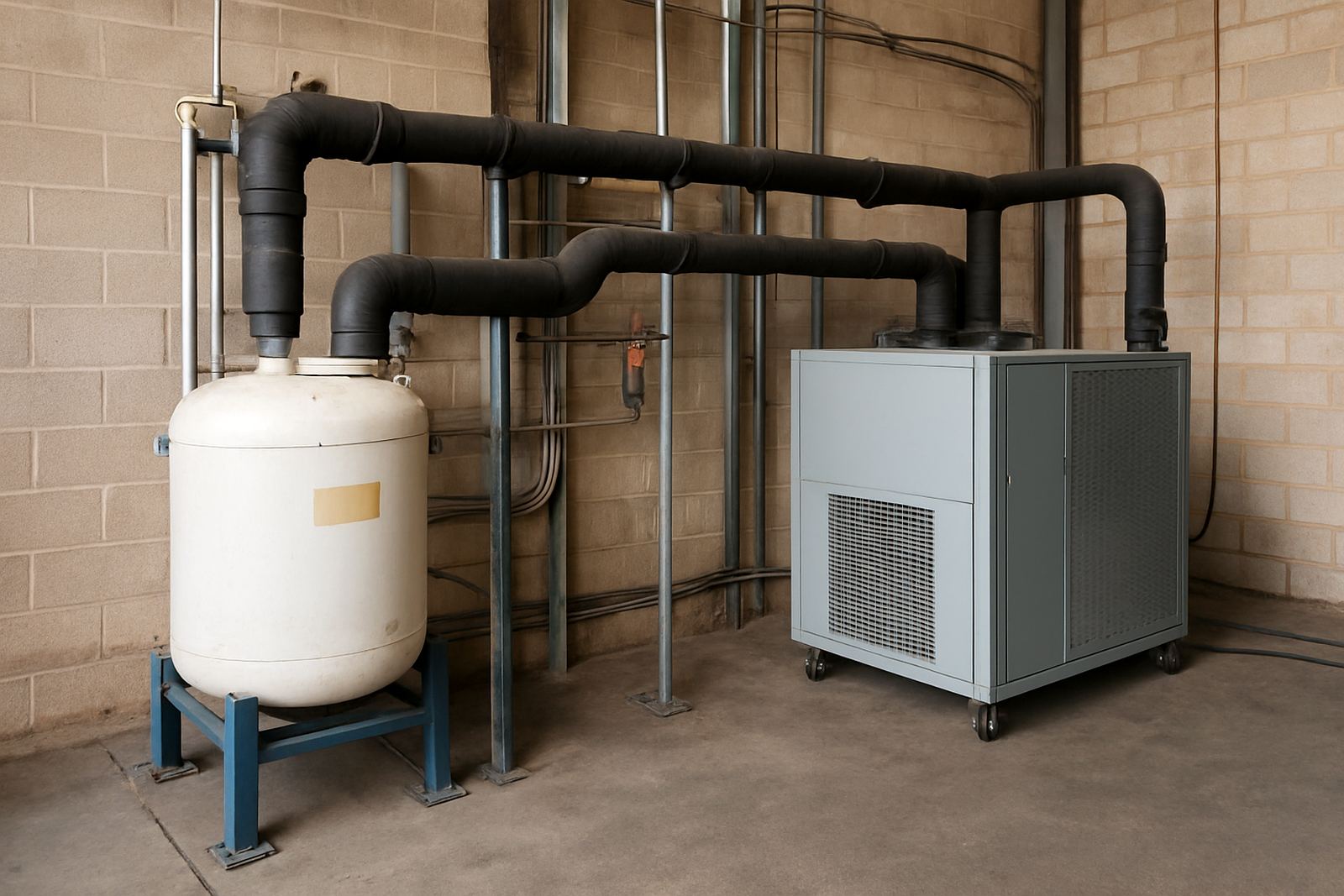
When a plain water circuit is enough
For many industrial water chillers, clean water is still the right choice. If the plant runs indoors, the pipework is short, and the setpoint stays comfortably above freezing, a water-only circuit is simpler to service and easier to keep clean. That matters on laser systems, mould temperature control, and process lines where scale, silt, and oily residue can already create trouble.
In Alberton and Germiston, a lot of sites run inside enclosed production bays and do not need freeze protection at all. In those cases, adding glycol can reduce heat transfer a bit, and the pump may work harder than it should. The better answer is usually correct sizing, clean strainers, and proper maintenance, not adding chemicals for no reason.
- Indoor plant room with stable ambient temperatures
- Short pipe runs with no exposed sections
- Setpoint above 5 deg C
- No freeze risk during load-shedding or night shutdowns
Where glycol earns its place
Glycol becomes useful when a system may sit in cold air, lose power, or run with low fluid temperatures for long periods. That includes rooftop pipework, outdoor condensers, remote process lines, and sites in colder inland areas where winter mornings can be sharp. It also helps where equipment must keep running during stop-start production, or where a laser process needs a lower fluid temperature for stable output.
For exposed systems, the aim is not just freeze protection. Glycol can also help reduce the risk of burst coils, split hoses, and cracked fittings if a chiller is off over a weekend or during a municipal water interruption. On some jobs the cost of one damaged exchanger is far higher than the extra chemical and service work. The trick is matching the mix to the real risk, not guessing.
- Outdoor or exposed pipe runs
- Low-temperature setpoints near freezing
- Sites with frequent power cuts or long shutdowns
- Remote installations where access for emergency repairs is slow
Choosing the right concentration for the job
More glycol is not always better. The correct concentration depends on the minimum temperature the circuit may see, the type of cooler, and the flow rate through the system. Too little glycol gives weak protection, while too much can thicken the fluid and make pumps work harder. That can lower flow, reduce heat transfer, and put extra strain on seals and valves.
As a rule, industrial systems need a measured approach, not a bucket-and-hope method. A service technician should test the fluid, confirm the concentration, and check that the pump curve still suits the load. If the mix is wrong, the chiller may show stable numbers on the panel but still struggle at the point of use. That is when mould temperatures drift and laser performance becomes inconsistent.
- Check the lowest expected ambient temperature
- Match the mix to the actual setpoint, not just the badge on the unit
- Test concentration after top-ups and repairs
- Record the reading for future maintenance visits
What changes once glycol is in the system
Once glycol is introduced, maintenance needs to be more disciplined. Water treatment checks matter more, because the fluid now has to stay clean as well as protected. Dirty or weak mix can pick up contaminants, block strainers, and reduce cooling output. On process lines, that may cause product variation that is hard to trace until the damage is already done.
Glycol systems also need proper labelting on the plant, so the next technician knows what is inside the circuit before opening a valve or topping up. It is worth checking hoses, seals, and insulation too. Some older systems leak a little and then get topped up over and over, which slowly changes the mix and hides a bigger problem. A quick inspection can save a lot of grief.
- Carry out regular water treatment checks
- Inspect for leaks, especially at joints and pump seals
- Confirm the concentration after any drain-down
- Make sure pipe insulation is intact on exposed sections
A local example from an exposed line in Gauteng
A plastics producer near Alberton had a chiller feeding a mould circuit across a loading area. The line crossed open yard space, so winter mornings and after-hours shutdowns created a genuine freeze risk. The site had already had one split hose after a cold weekend, and the result was a messy start-up and a day of lost production.
After a cooling audit, the circuit was changed to the correct glycol mix, the exposed pipework was insulated, and the team was shown how to check the fluid before each maintenance round. The system is now more stable and breakdowns are far less likely. That solution did not need a bigger chiller, just the right fluid and a proper review of the pipe route. Sometimes that is the practical fix.
The maintenance questions worth asking before winter
Before the cold months set in, it helps to ask a few direct questions about the cooling system. Is the setpoint low enough to need freeze protection? Are any pipes outside, under canopies, or near loading bays? Has the fluid been tested this year? Are there signs of scaling, contamination, or low flow? A clear answer to those questions usually shows whether glycol is needed or not.
If the system already has glycol, the next question is whether it still has the right strength. A lot can change after top-ups, repairs, or temporary cooling arrangements. For plants in Johannesburg, Pretoria, Durban, Cape Town, and Rustenburg, the weather and the installation layout can be very different, so the same answer does not fit every site. Good maintenance is local and specific, not guesswork.
- Review setpoint and ambient exposure before winter
- Test glycol strength after any major service
- Check insulation on exposed pipework and fittings
- Plan for load-shedding and weekend shutdowns