Why a cooling circuit needs somewhere to move
When water changes temperature, its volume changes too. In a laser chiller, mould cooling loop or process line, that small change can turn into pressure spikes if there is no expansion tank to absorb it. The tank acts like a cushion in the system, helping the pump, pipework and fittings cope with daily cycles and start-stop running.
In South African plants, this matters more than many owners expect. During a hot Alberton afternoon, or when a machine starts after a load-shedding pause, the circuit can see sudden shifts in temperature and pressure. A correctly sized expansion tank helps the system settle again instead of forcing pressure relief valves to do all the work.
What the expansion tank actually does
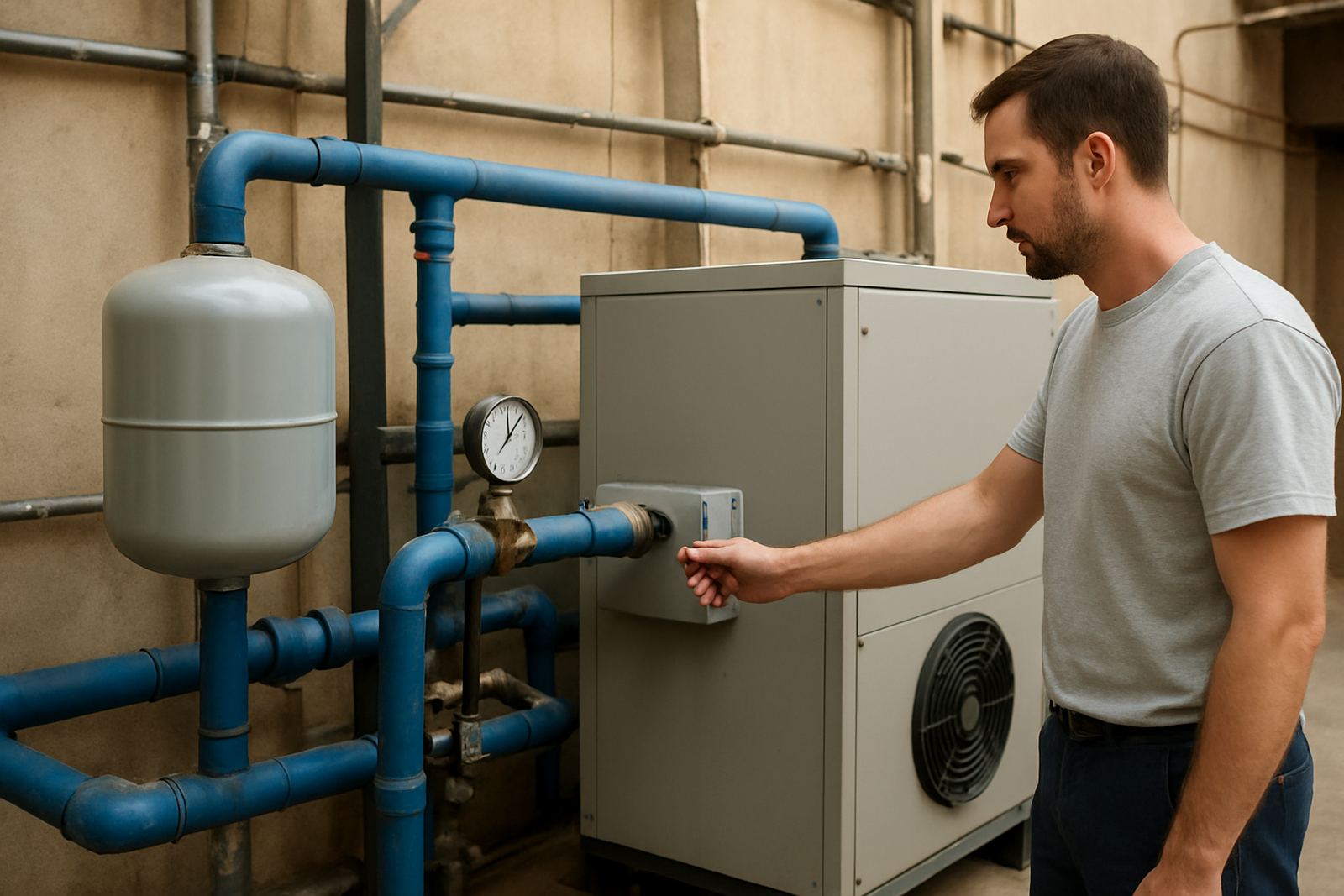
The tank provides a controlled space for extra fluid volume. As water expands, it pushes into the tank and compresses the air side or diaphragm inside. When the system cools, the stored volume returns to the circuit. That simple action supports stable pressure across the whole loop.
- Reduces pressure swings during warm-up and cool-down
- Lowers strain on pumps, seals and joints
- Helps prevent nuisance trips on pressure switches
- Supports steadier flow through lasers, moulds and heat exchangers
- Limits water loss through relief valves and vents
Where a bad setup shows up first
If the expansion tank is undersized, flat, waterlogged or fitted in the wrong place, the symptoms usually appear fast. Operators may hear water hammer, see pressure gauges move too much, or find that the chiller keeps topping up water. In some cases, the system looks fine at idle but struggles under full load.
Common warning signs include:
- Pressure rising sharply when the unit starts
- Frequent relief valve discharge
- Air in the lines after maintenance
- Uneven cooling at the machine or mould
- Pump noise, cavitation or vibration
These issues are often blamed on the chiller first, but the tank and pipework layout need checking too.
Sizing and placement matter more than most people think
A tank has to match the total water volume, the operating temperature range and the working pressure of the installation. A small laser system in Boksburg will not need the same arrangement as a multi-machine process line in Durban, and coastal humidity can also influence corrosion protection and maintenance intervals.
Good placement matters as well. The tank should be installed where it can see system pressure properly, with the right isolation valves and service access. If the tank is hidden behind other equipment or fitted too far from the main circuit, checking it becomes harder and faults can be missed.
- Check that pre-charge pressure matches the system requirement
- Confirm isolation valves can be serviced safely
- Use materials and coatings suited to water quality
- Allow space for inspection, draining and replacement
How water quality affects tank performance
Water treatment is not only about protecting the chiller, it also affects the expansion tank. Dirty water, scale and corrosion products can block connections, damage diaphragms and create false pressure readings. If a system carries untreated municipal water, or if make-up water is added often, the tank can deteriorate quicker than expected.
We often see this on older installations where pipework has been altered over time. A retrofit might solve the immediate cooling issue, but if the tank is ignored the pressure problem returns. That is why a proper service should include a quick check of water quality, visible corrosion and the tank's charge condition.
A practical example from a South African workshop
A moulding operation in Gauteng was dealing with repeated pressure alarms every morning. The chiller had already been serviced, yet the alarm kept coming back after the plant warmed up. On inspection, the expansion tank had lost charge and the circuit was breathing more air than it should. Once the tank was corrected and the system re-commissioned, the alarms stopped and the pump noise dropped at the same time.
That is typical of many cooling faults. The real issue is not always the biggest component in the room, sometimes it is the small vessel doing quiet work in the background.
What Raynen checks during a cooling inspection
For industrial water chillers and related cooling units, the tank should be part of routine maintenance rather than an afterthought. A service visit can confirm whether the vessel is holding charge, whether the circuit pressure is stable, and whether the tank arrangement suits the current machine load.
During an inspection we normally look at:
- Static and running pressure readings
- Expansion tank pre-charge and condition
- Signs of leaks, corrosion or diaphragm failure
- Valve positions and access for maintenance
- Water quality and make-up trends
That kind of check helps prevent breakdowns, especially in plants that cannot afford long stops during production, or after power interruptions when systems have to recover quickly.