Why commissioning matters before the first full shift
Commissioning is the final check between delivery and dependable operation. It confirms that the chiller is installed correctly, the pipework is sound, the controls are set properly and the cooling duty matches the process it must support.
In Alberton and across Gauteng, we often see systems rushed into service because production is waiting. That can lead to nuisance trips, unstable temperatures and extra wear on pumps, compressors and valves. A proper checklist slows things down for one shift so the plant can run properly for many months after that.
For lasers, moulds and process lines, stable temperature is not a luxury. It affects cycle time, part quality, beam performance and machine life. If the water flow is wrong or the return temperature keeps drifting, the fault may only show up once the line is under load.
Start with the installation basics on site
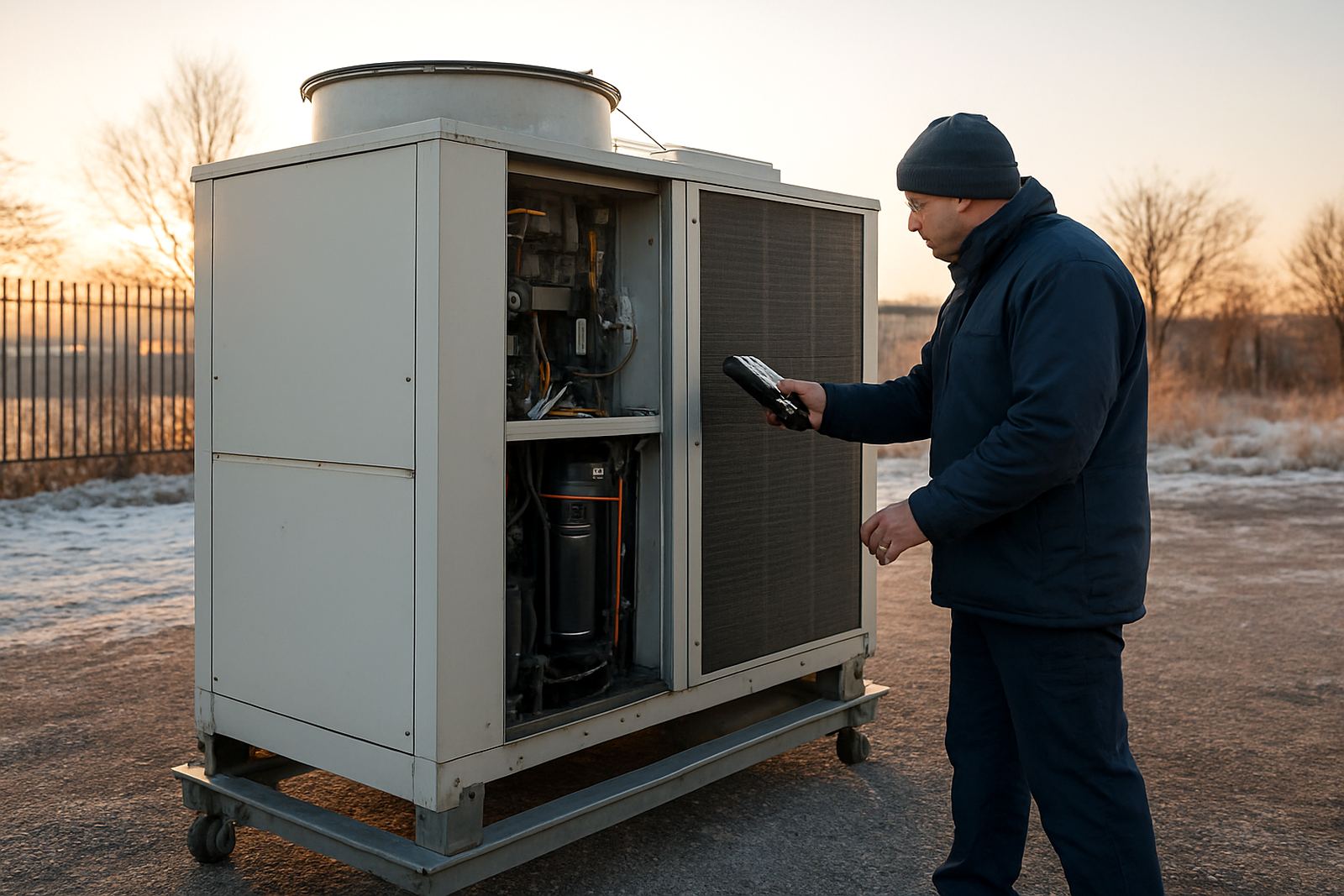
Before switching on, the installer and the site team should confirm that the unit has enough clearance, level support and the correct service access. In workshops around Alrode, Boksburg and Germiston, the most common oversight is cramped installation space. That makes filter cleaning, panel access and future repairs harder than they should be.
Check the following first:
- Unit is level and correctly anchored
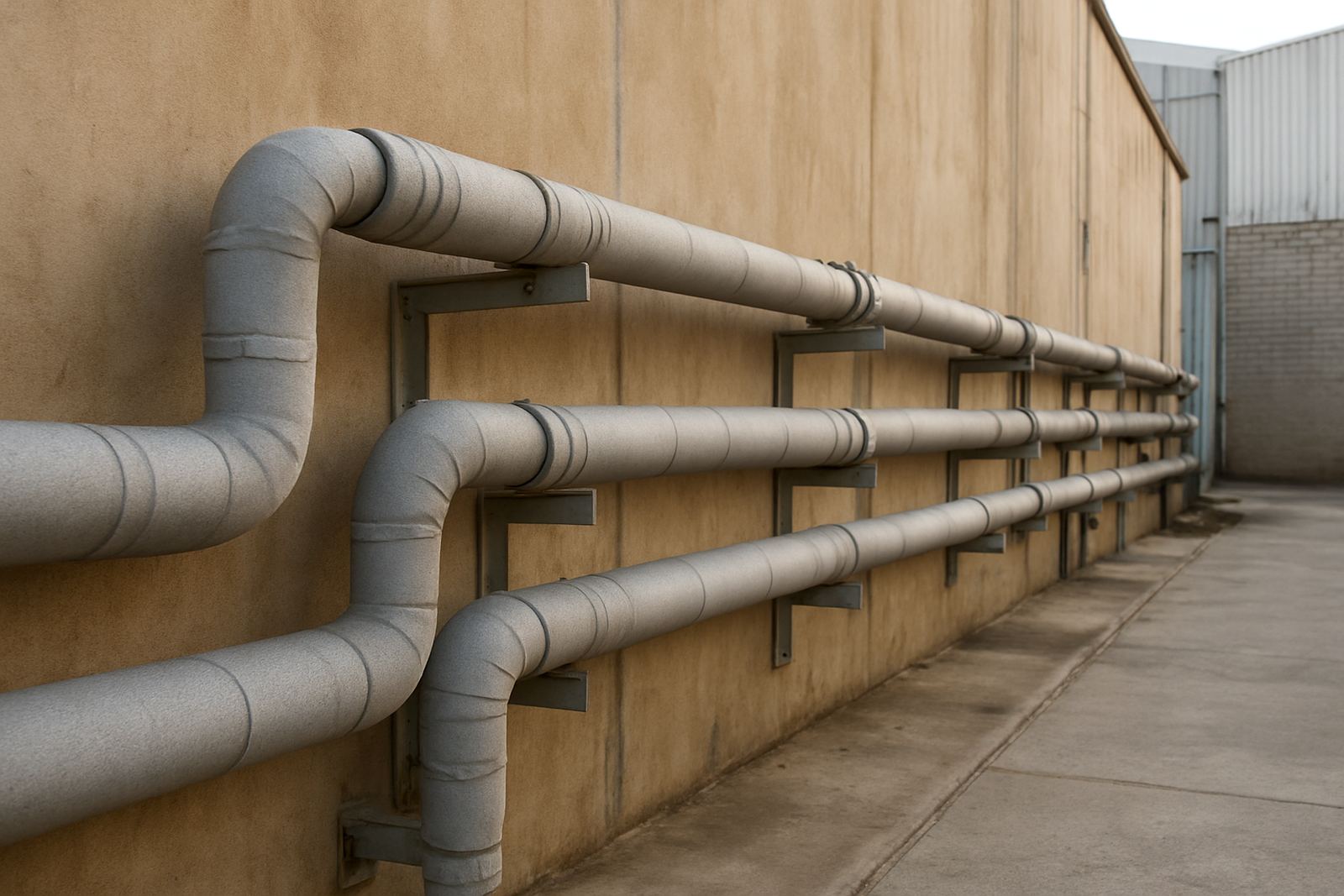
- Supply and return lines are clearly marked
- Isolation valves are fitted where needed
- Drain points are accessible
- Electrical supply matches the nameplate details
- Ventilation around air-cooled equipment is not blocked
If the site is coastal, such as Durban or Cape Town, corrosion protection and airflow matter even more. Salt in the air can shorten the life of electrical components and exposed fittings if they are left unprotected.
Verify water quality, flow and pressure before start-up
Many commissioning problems start with the water itself. A chiller can be perfectly installed, yet still perform badly if the water is dirty, too hard or carrying debris from old pipework. That is why water treatment checks should happen before the first full run.
Confirm the following items before start-up:
- System is filled to the correct level
- Air has been bled from high points
- Strainers are clean and fitted correctly
- Flow rate meets the process requirement
- Pressure is stable and within spec
- Water quality suits the materials in the circuit
On older moulding and machining lines, rust flakes and scale can block strainers within hours. That can cause low-flow alarms and poor heat transfer. A quick flush before commissioning can save a lot of callouts later on, especially where the plant cannot afford stop-start production.
Check the controls, sensors and safety trips
A good commissioning checklist does not stop at the mechanical side. The controls must also be tested in real operating conditions. Temperature sensors, flow switches, pressure switches and alarm circuits should all be checked one by one, not just assumed to work because the panel lights up.
Setpoints should be agreed with the production team and recorded clearly. If a laser process needs a tight tolerance, the chiller must be tuned to hold that band without hunting up and down. On moulding systems, the target may change depending on the tool and ambient temperature, so the settings need to be written down for the operators.
Test the following:
- High and low temperature alarms
- Flow loss protection
- Overload and phase fault protection
- Pump start and stop logic
- Remote signals to the machine or line
- Emergency stop and safe shut-down response
If any alarm is bypassed during start-up, note it and remove the bypass once the fault is corrected. Leaving temporary changes in place is a common source of future breakdowns.
Run a live load test, not just an idle test
An idle chiller can look fine and still fail once the process starts drawing real heat. That is why commissioning should include a live load test under production conditions or under an agreed simulated load. The aim is to see how the system behaves when it is doing actual work.
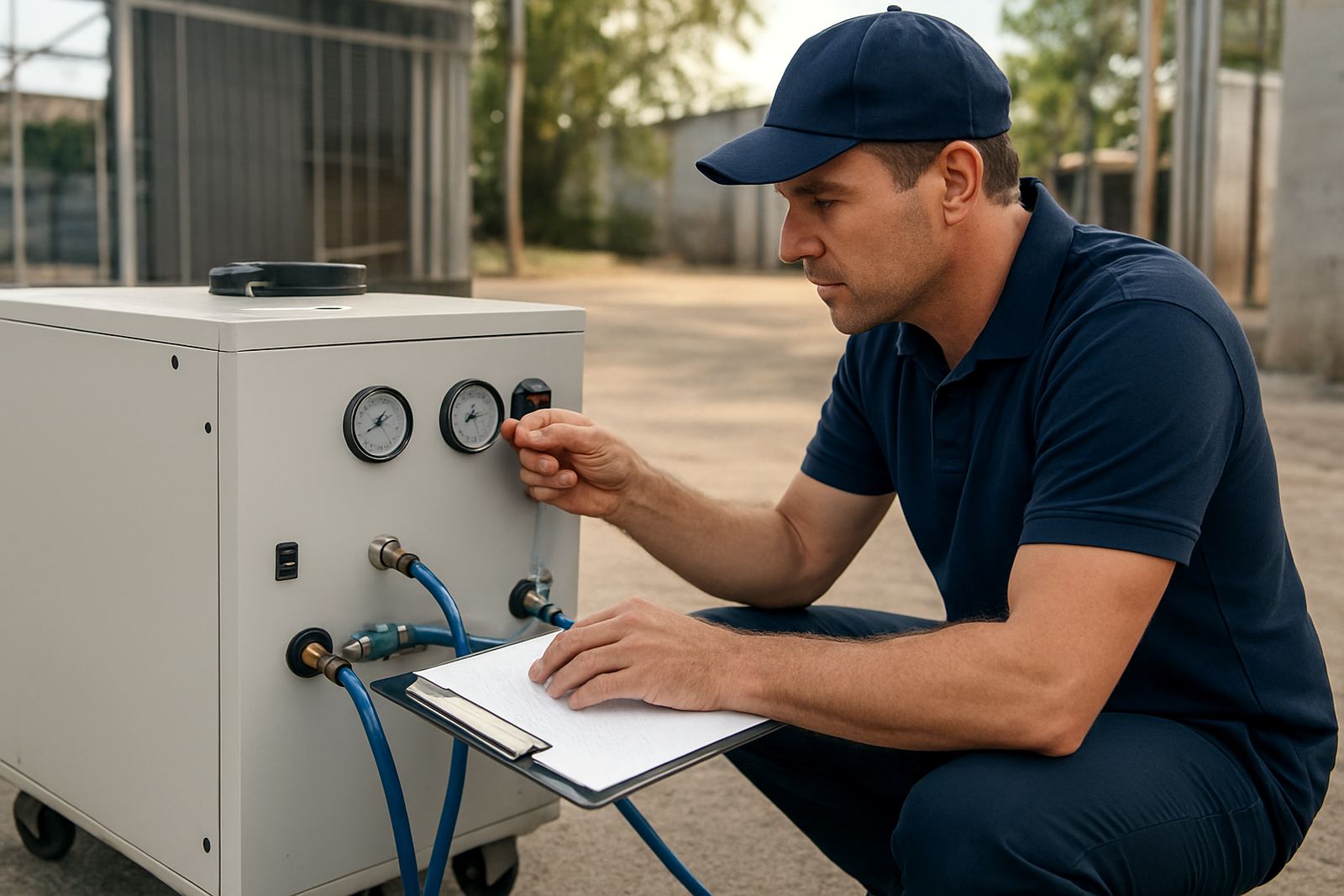
During the test, monitor supply and return temperatures, compressor behaviour, pump current draw and any fluctuation in pressure. Listen for unusual vibration or water hammer. A small rattle today may point to air in the line, a loose fitting or poor pump alignment that will become a bigger issue later.
Where temporary cooling is being used during a shutdown or plant upgrade, the test should be even stricter. Temporary systems often carry uneven loads and can be exposed to dust, heat and power interruptions. In those cases, a well planned handover matters more than fancy paperwork.
Record the handover details before the team signs off
Once the system is stable, the commissioning record should be completed in plain language. This is the document the site team will return to when the first fault appears two months later. It should include the final settings, test results and any special operating notes.
Good handover records usually include:
- Date of commissioning and site location
- Model and serial references
- Final setpoints and alarm limits
- Flow and pressure readings
- Water treatment notes
- Any outstanding snags or follow-up work
We also recommend quick operator training at the handover stage. A few minutes spent showing the team how to check flow, read alarms and spot early warning signs can prevent unnecessary downtime. It also means the machine is not left in the hands of someone who was not part of the install process.
A practical local example from Alberton to the coast
A recent commissioning job for a production line serving both Gauteng and KwaZulu-Natal showed why the checklist matters. The chiller passed the basic start-up test in Alberton, but under full line load the return temperature crept up faster than expected. The issue turned out to be a partial restriction in the circuit and a control setting that had been left too conservative.
After the flow path was corrected and the settings adjusted, the unit held temperature properly and the line could run without repeated pauses. That kind of result does not come from guesswork. It comes from checking each step in order, then confirming the system under load before it is handed over.
For South African plants dealing with load-shedding, heat waves and mixed working hours, commissioning is not just a box-ticking exercise. It is the point where the cooling system proves it can do the job in real conditions, not just in a calm workshop on a quiet morning.