Compact cooling for smaller mould tools
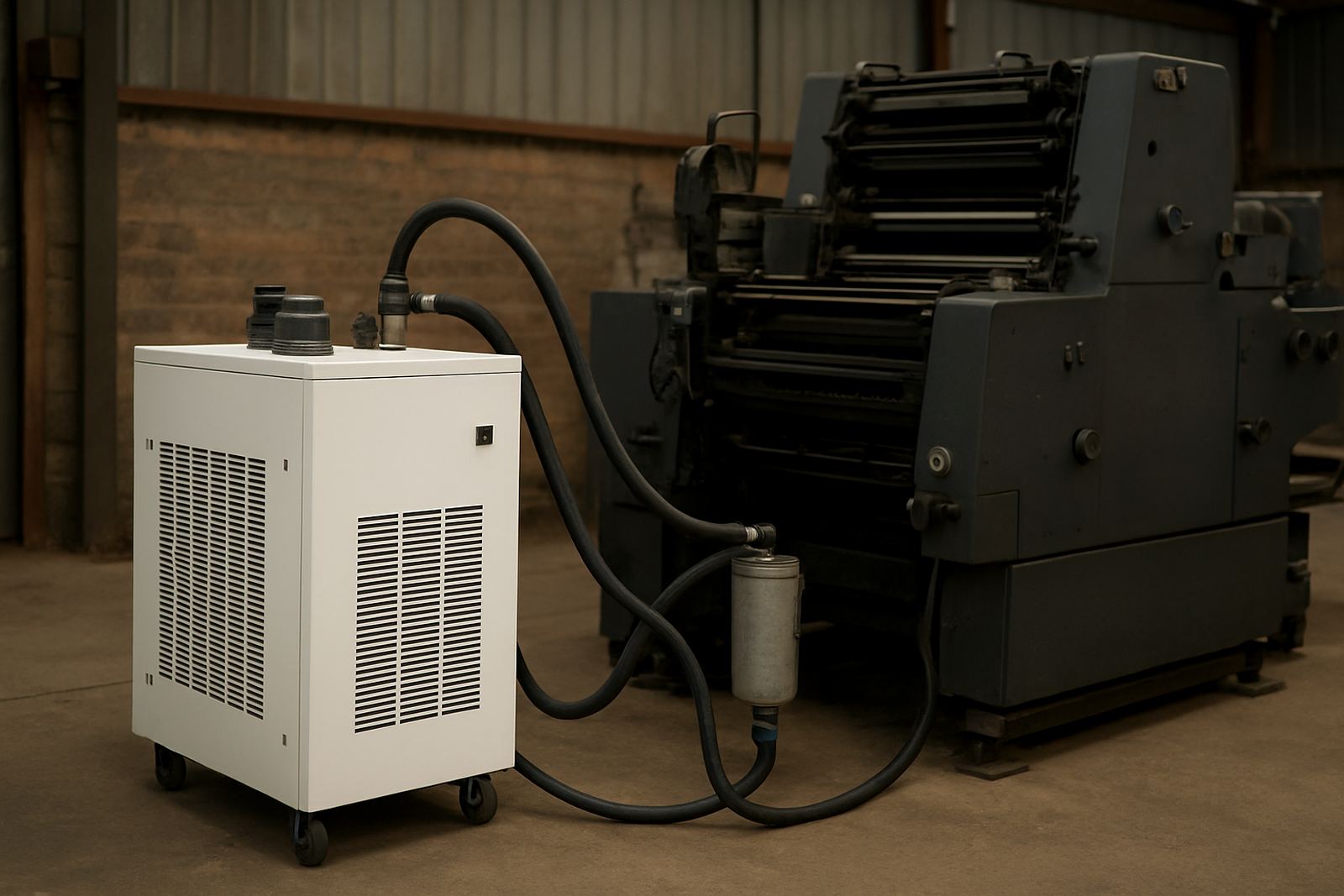
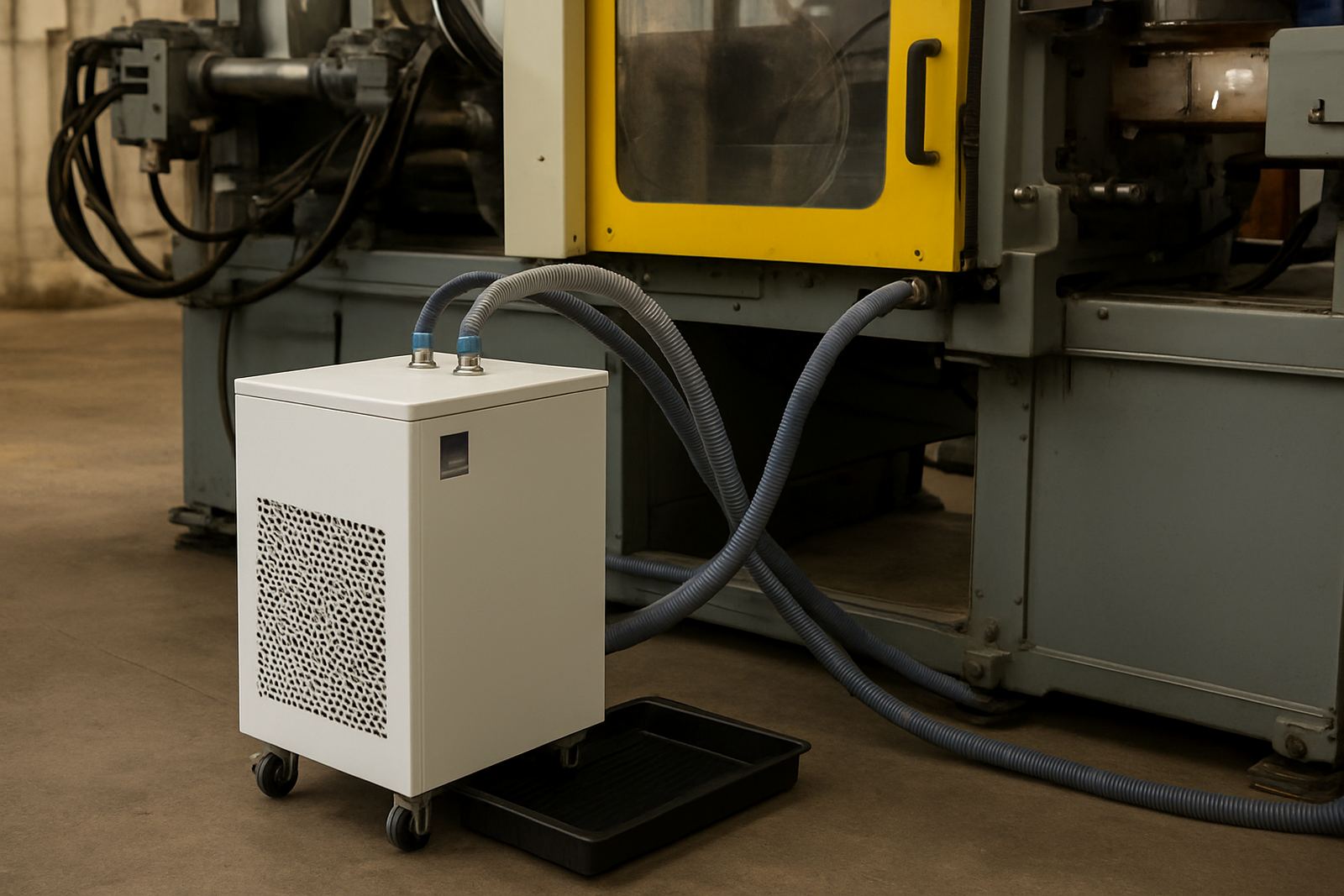
A small mould chiller is a packaged water cooling unit sized for single moulds, light tooling, and production cells where cooling demand is controlled but still important. It removes heat from the mould circuit and keeps the water or process fluid at a stable setpoint, helping you avoid hot spots, long cool-down periods, and variation between shots.
These units are commonly used on injection moulding machines, small extrusion heads, lab tooling, and pilot line work. In South African factories, stable cooling matters just as much as the machine itself, especially in summer heat, high ambient temperatures, and rooms where load-shedding has already put extra strain on equipment. A correctly sized chiller helps protect tooling and keeps production moving.
Raynen supplies small mould chillers from our base in Alrode, Alberton, with support across Johannesburg, Pretoria, Durban, Cape Town, Rustenburg, Germiston and Boksburg. We match the unit to the application rather than oversizing it, because an oversized chiller can cycle too often and a small one that is too light will struggle on warmer days.
Typical sizes, options and working range
Our small mould chillers are available in compact capacities for low to moderate cooling loads. The right unit depends on mould size, cycle time, water volume, ambient conditions, and whether the mould has one circuit or several. For coastal sites, corrosion resistance and proper filtration matter as much as the cooling capacity itself.
- Cooling capacities from about 1 kW to 12 kW for smaller tooling duties
- Set temperature ranges typically from 5°C to 25°C
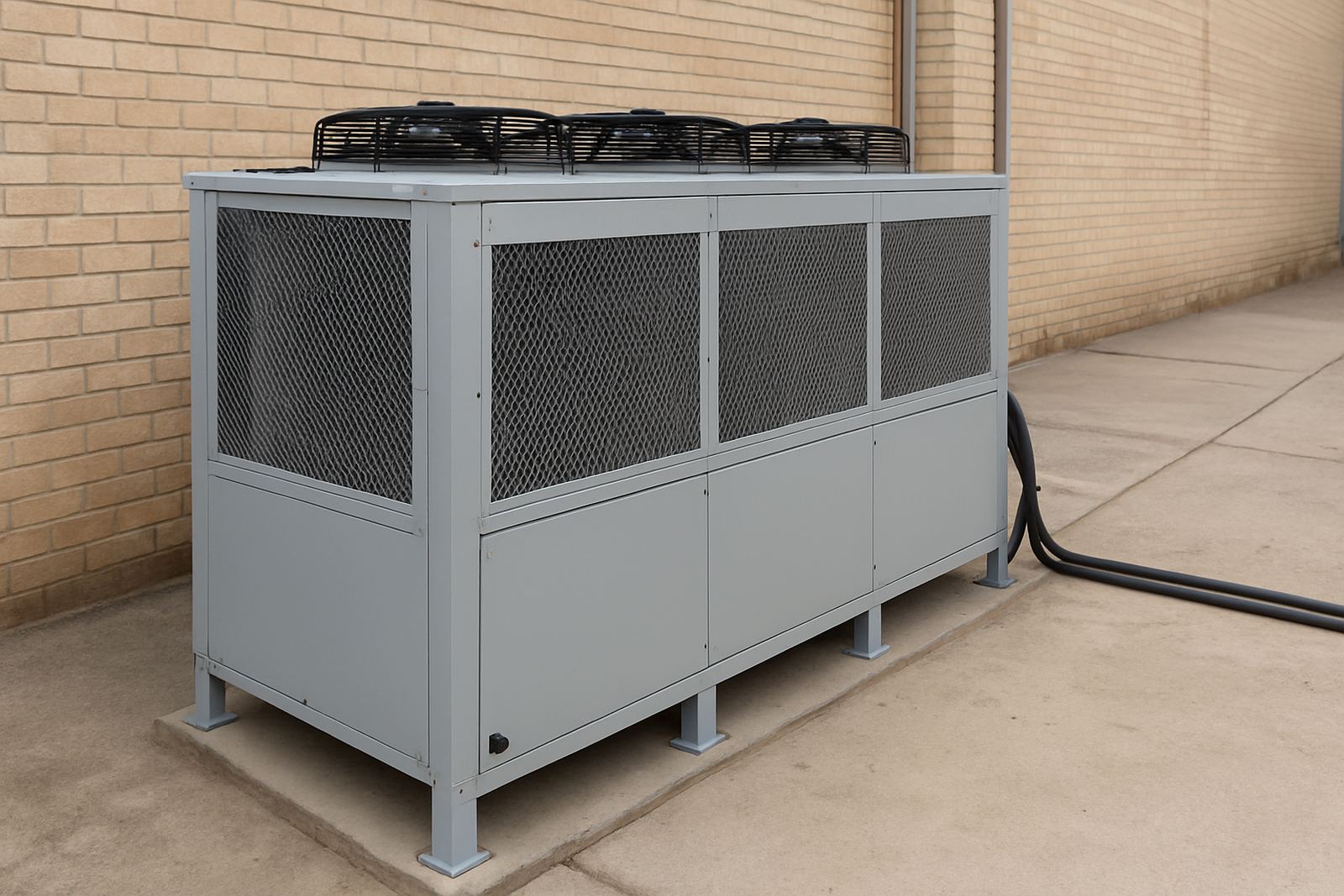
- Air-cooled units for straightforward installation in most plants
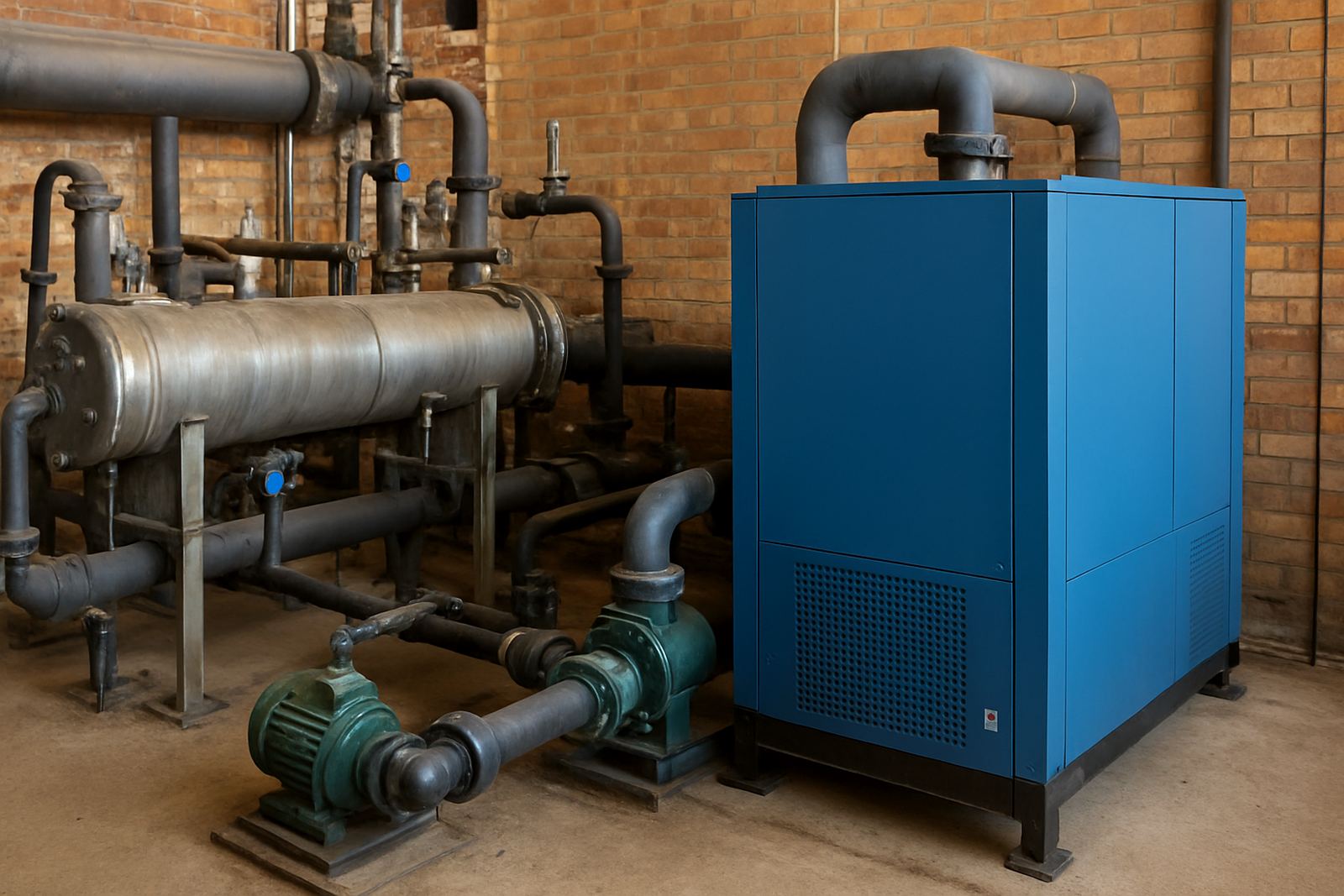
- Water-cooled options where heat rejection needs are higher or plant water is already available
- Single-circuit and multi-circuit configurations for one mould or several small circuits
- Stainless or treated wetted parts available for more demanding water conditions
For moulding rooms in Gauteng, an air-cooled unit is often the practical choice because it does not depend on a cooling tower or process water loop. On the coast, we often advise on extra filtration, anti-corrosion treatment and safe cabinet placement so the unit lasts longer in humid air.
Where a small mould chiller suits best
This type of chiller suits compact production lines where water temperature must stay steady from start to finish. It is a good fit for moulders producing caps, containers, small housings, fittings, and technical parts where cycle times are tight and quality defects from heat variation are not acceptable.
It also works well where floor space is limited. In many Alberton and Germiston plants, there is no room for a large cooling plant, so a compact chiller beside the machine or on a service aisle makes more sense. If the site runs during load-shedding with generators or backup power, the chiller can be selected with an electrical load that fits the available supply and inrush limits.
For process lines, a small mould chiller is useful where one critical section needs reliable cooling rather than a full plantwide cooling system. It can also serve as temporary cooling during maintenance, equipment changeover, or when a larger chiller is being repaired.
- Compact injection moulding cells
- Pilot plants and trial tooling
- Small extrusion and forming lines
- Packaging and plastics workshops
- Temporary cooling support during breakdowns or upgrades
Installation, power supply and refrigerant basics
Installation starts with checking the heat load, flow rate, pipe sizes, and the actual water quality on site. The unit needs enough free air around it for heat rejection, and the floor must be level and able to carry the weight once the tank is filled. In dusty workshops we also allow for easy access to filters and condenser cleaning, because blocked air passages shorten equipment life.
Most small mould chillers run on standard electrical supply, usually 230 V or 400 V depending on the size. The final requirement depends on compressor size, pump duty and whether options such as heater trim, alarms or advanced controls are fitted. We confirm the breaker size, cabling, isolator position and earthing before commissioning so there are no surprises on start-up.
No site gas supply is required. The cooling circuit uses a sealed refrigerant system inside the unit, while the chilled water loop is separate and connected to your mould or process equipment. If the site is near the coast or exposed to dust, we also check enclosure protection and recommend the right location so the machine is not fighting bad conditions every day.
Care, servicing and water treatment checks
Like any process cooling unit, a small mould chiller needs regular attention if you want stable temperatures and fewer breakdowns. The basics are simple: keep the strainers clean, check the water level, watch the operating pressure and temperature, and make sure the fan or condenser coil is not clogged with lint, dust or scale. A neglected unit often starts with small temperature drift before it becomes a real stoppage.
Raynen offers preventative maintenance, breakdown repairs, refrigeration repairs, pump replacements, water treatment checks and control panel upgrades. We also handle temporary cooling when a plant cannot wait for a full repair window. For moulding operations in older buildings, pipework retrofits and pump checks can make a big difference to flow stability and pump life.
- Inspect filters and strainers weekly in dusty areas
- Check water quality and dosing to reduce scale and corrosion
- Clean condenser coils before summer peaks
- Verify alarms, setpoints and flow switches during routine service
- Record temperatures so drift can be picked up early
In humid areas such as Durban and Cape Town, water treatment and cabinet care are especially important. In Gauteng, dust and power interruptions can be the bigger issue, so we tailor service to the site conditions rather than using the same schedule everywhere.
What to check before ordering one
Before choosing a small mould chiller, it helps to have a clear picture of the mould and the line it serves. The most useful information is not just the machine size but the real operating conditions, because two jobs with the same mould weight can still need very different cooling duty.
Please check the following before you send an enquiry through our contact page:
- Mould type and the number of cooling circuits
- Target temperature and acceptable variation
- Required flow rate and pressure
- Ambient conditions around the machine room
- Electrical supply available on site
- Whether the unit must be air-cooled or water-cooled
- If backup operation is needed during load-shedding or generator use
If you are replacing an existing unit, send the old nameplate data and describe the problem you are trying to solve. That might be poor cycle times, high reject rates, short compressor life or unstable flow. Our team in Alberton can help with sizing, installation planning and service support through Johannesburg, Pretoria, Durban, Cape Town and Rustenburg.
Built for practical production use
A small mould chiller should be easy to live with, easy to service and stable enough for daily production. That means clear controls, accessible components and a cooling capacity that matches the job without waste. Raynen supplies equipment with the realities of South African workshops in mind, including heat, dust, changing power conditions and the need for quick turnaround when production is waiting.
Whether you are cooling a single compact mould or supporting a small process line, the aim is the same: steady temperature, fewer interruptions and better repeatability. If you need a new unit, a replacement, or a second opinion on your current cooling setup, we can assess the application and recommend the right size and arrangement for your site.
Key facts
| Product type | Small mould water chiller for compact tooling and process cooling |
|---|---|
| Cooling capacity | Approx. 1 kW to 12 kW depending on model and duty |
| Temperature control | Typical set range 5°C to 25°C with stable control |
| Power supply | 230 V or 400 V, subject to model size and options |
| Cooling circuit | Sealed refrigeration system with separate chilled water loop |
| Installation | Air-cooled or water-cooled options, floor standing compact footprint |