What a Water Cooled Chiller Does
A water cooled chiller removes heat from process water and passes that heat into a separate condenser water circuit, usually through a cooling tower or other heat rejection system. That makes it a practical choice where indoor space is limited and the facility needs dependable cooling without pushing hot air back into the plant room.
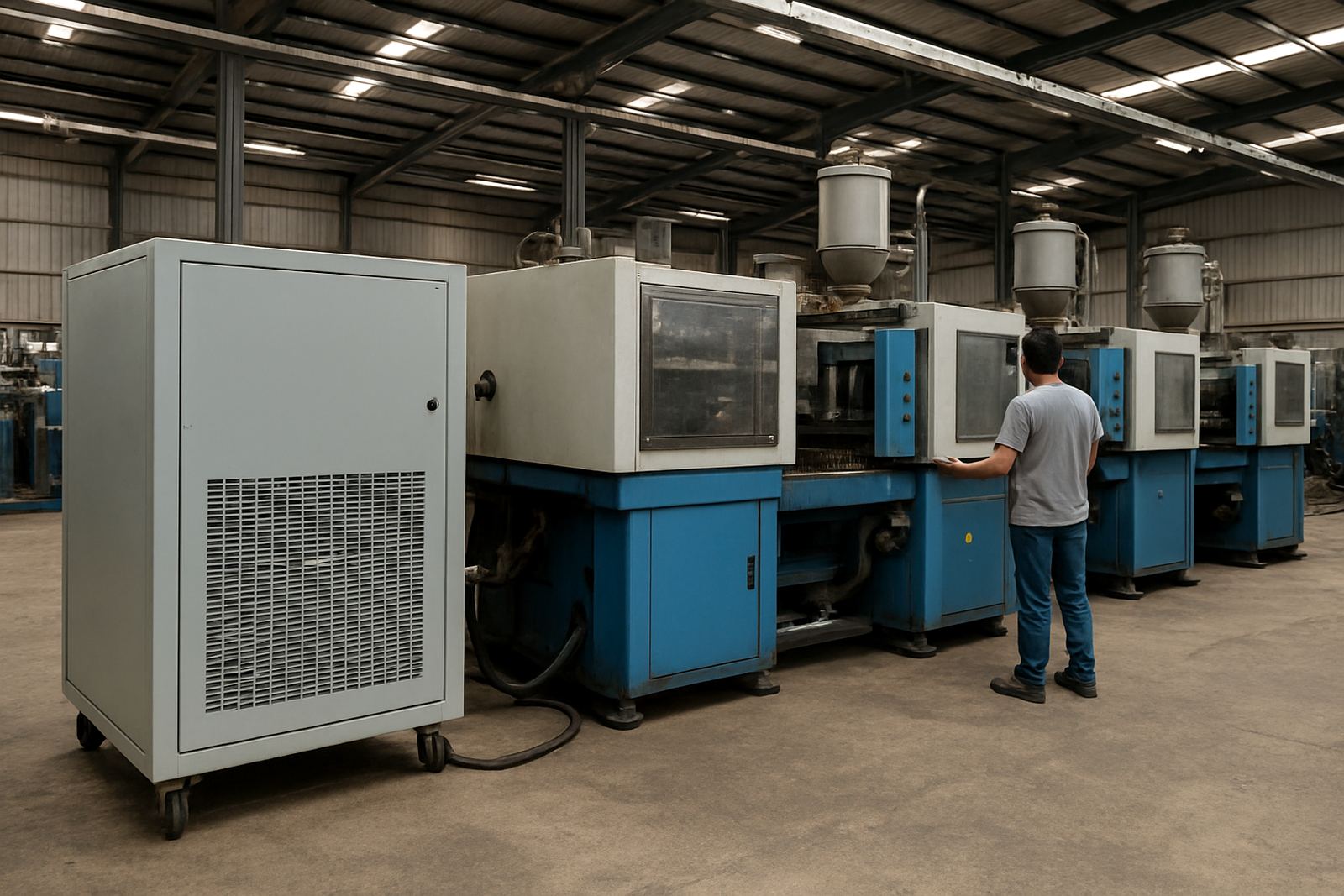
These units are common in South African factories that run CNC lasers, injection moulding, extrusion lines and other production equipment that cannot tolerate temperature swings. When the process water stays within range, you get steadier output, fewer alarms and less wear on seals, pumps and controls.
Where It Suits Best
This type of chiller is well suited to sites in Alberton, Johannesburg, Pretoria, Durban, Cape Town and Rustenburg where the cooling load is continuous and the plant room can accommodate a water side system. It is often chosen when air cooled equipment would struggle with dust, heat or space constraints.
It can work well in factories with 24 hour production, coastal humidity in Durban or Cape Town, and sites where summer temperatures or load-shedding make temperature control harder. A water cooled setup also helps where noise must be kept down near occupied areas or neighbouring premises.
- Laser cutting and marking equipment
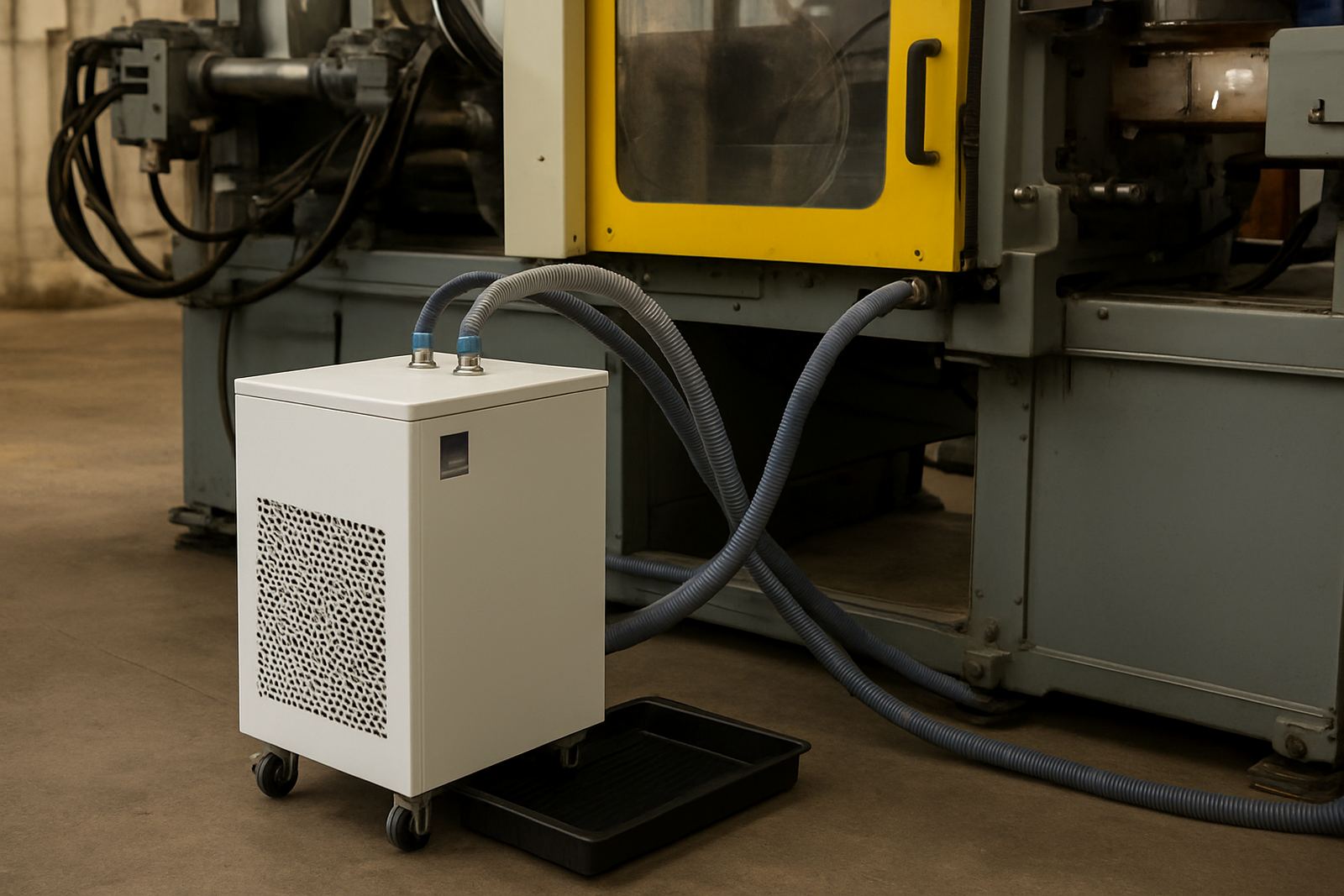
- Injection moulding and mould temperature support
- Process lines with constant thermal load
- Production floors where noise and hot discharge air must be limited
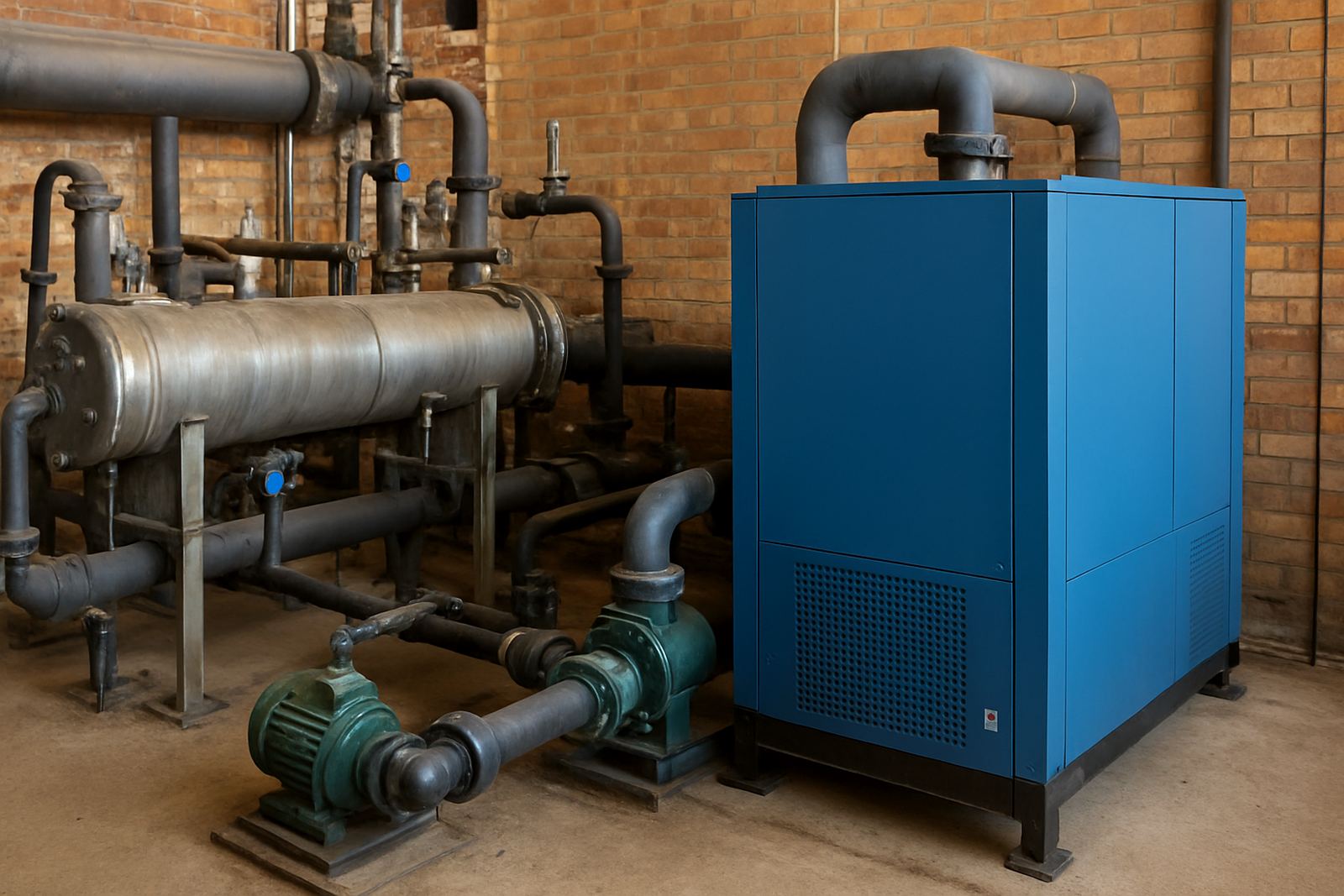
- Sites with existing cooling towers or chilled water systems
Sizes, Capacities and Options
Raynen supplies water cooled chillers in a range of capacities to match small production cells as well as larger plant-wide requirements. The right size depends on the heat load, water temperatures, duty cycle and how much spare capacity you need for summer conditions or future expansion.
Options can include different compressor configurations, corrosion resistant water circuit components, low temperature control settings and interface changes for plant automation. For coastal or high mineral water conditions we also look at water treatment, because scaling in the condenser can quickly reduce efficiency.
- Compact units for tighter plant rooms
- Mid-range systems for dedicated machines or mould lines
- Larger systems for continuous production and multiple users
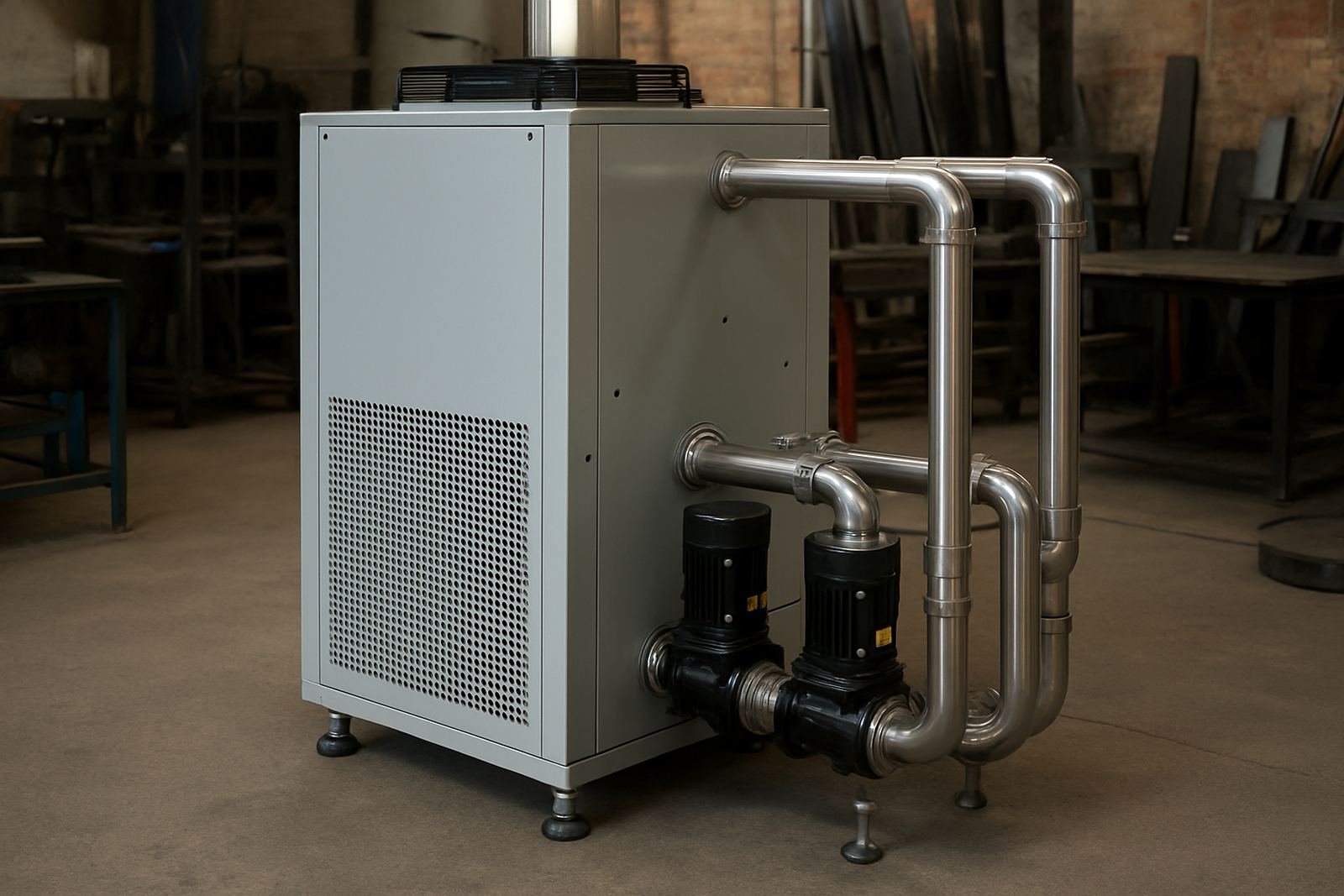
- Stainless or treated components for harsher water conditions
- Control options for remote monitoring and alarms
Installation, Utilities and Site Readiness
Before installation, the site needs enough floor space, correct pipe routes, safe access for service and a suitable electrical supply. A water cooled chiller also needs condenser water connections and a proper heat rejection arrangement, so we check the full system and not only the unit itself.
Power requirements vary by size, but most industrial units need a stable three phase supply with correct protection and isolation. If your site has frequent load-shedding, it is worth planning restart sequencing, backup power and control settings so the chiller does not short cycle or trip after outages. On some sites we also allow for pipework retrofits and control panel upgrades where the existing setup is not quite right.
- Check floor loading and plant room access
- Confirm electrical capacity and protection devices
- Verify condenser water flow and pressure
- Allow for isolators, drains and maintenance clearances
- Plan for generator, UPS or restart procedure if required
Care, Servicing and Water Treatment
Like any industrial cooling system, a water cooled chiller performs best with routine checks. Filters, pumps, valves, sensors and refrigerant circuits should be inspected on a planned basis, while the condenser water side needs attention to prevent scale, sludge and corrosion. If the water quality is poor, efficiency drops and breakdown risk climbs.
We recommend preventative maintenance that includes water treatment checks, refrigeration inspections, flow verification and control testing. In practice this helps keep operating temperatures stable and avoids the sort of small fault that can stop a production line later in the day. It also gives you a chance to spot worn seals, fouled heat exchangers or weak pumps before they become a bigger repair.
- Inspect and clean strainers and filters
- Check condenser water quality and treatment levels
- Test pumps, sensors and safety switches
- Look for vibration, leaks or unusual noise
- Verify setpoints and alarm history
What to Check Before You Order
To match the right chiller to your operation, have the process temperature, heat load and duty cycle ready. It also helps to know whether the unit will serve one machine or several, and whether you need any redundancy for critical production. If the system will support lasers or moulds, precise control matters and the tolerances should be confirmed upfront.
Please also note the water quality, available electrical supply, space restrictions and any restrictions from your landlord or municipal site rules. On some industrial parks the rules around drainage, noise and equipment placement matter just as much as the chiller itself.
- Required chilled water temperature and allowable swing
- Heat load in kW or machine details if the load is not known
- Incoming power supply and available breaker size
- Space available for unit, pumps and pipework
- Existing cooling tower or heat rejection arrangement
- Any need for temporary cooling during changeover or repairs
Support Across South Africa
Raynen is based in Alrode, Alberton and supports industrial customers across South Africa through Alberton, Johannesburg, Pretoria, Durban, Cape Town, Rustenburg, Germiston and Boksburg service areas. The team is led by Riaan van der Merwe, with technical and site support from Lerato Mokoena, Sibusiso Dlamini, Anika Naidoo, Pieter Joubert, Nomsa Khumalo and Thabo Maseko.
We assist with chiller installation, commissioning, breakdown repairs, preventative maintenance, temporary cooling and operator training. If you need a water cooled chiller sized for a new line or need help fixing an existing one, you can send your enquiry through the contact page and we will take it from there.
Key facts
| Type | Industrial water cooled chiller |
|---|---|
| Use | Lasers, moulds and process lines |
| Installation | Compact plant room, indoor equipment layout |
| Cooling circuit | Chilled water with separate condenser water loop |
| Typical supply | Three phase industrial electrical supply |
| Support | Installation, servicing, repairs and commissioning |