What a printing press chiller does on the shop floor
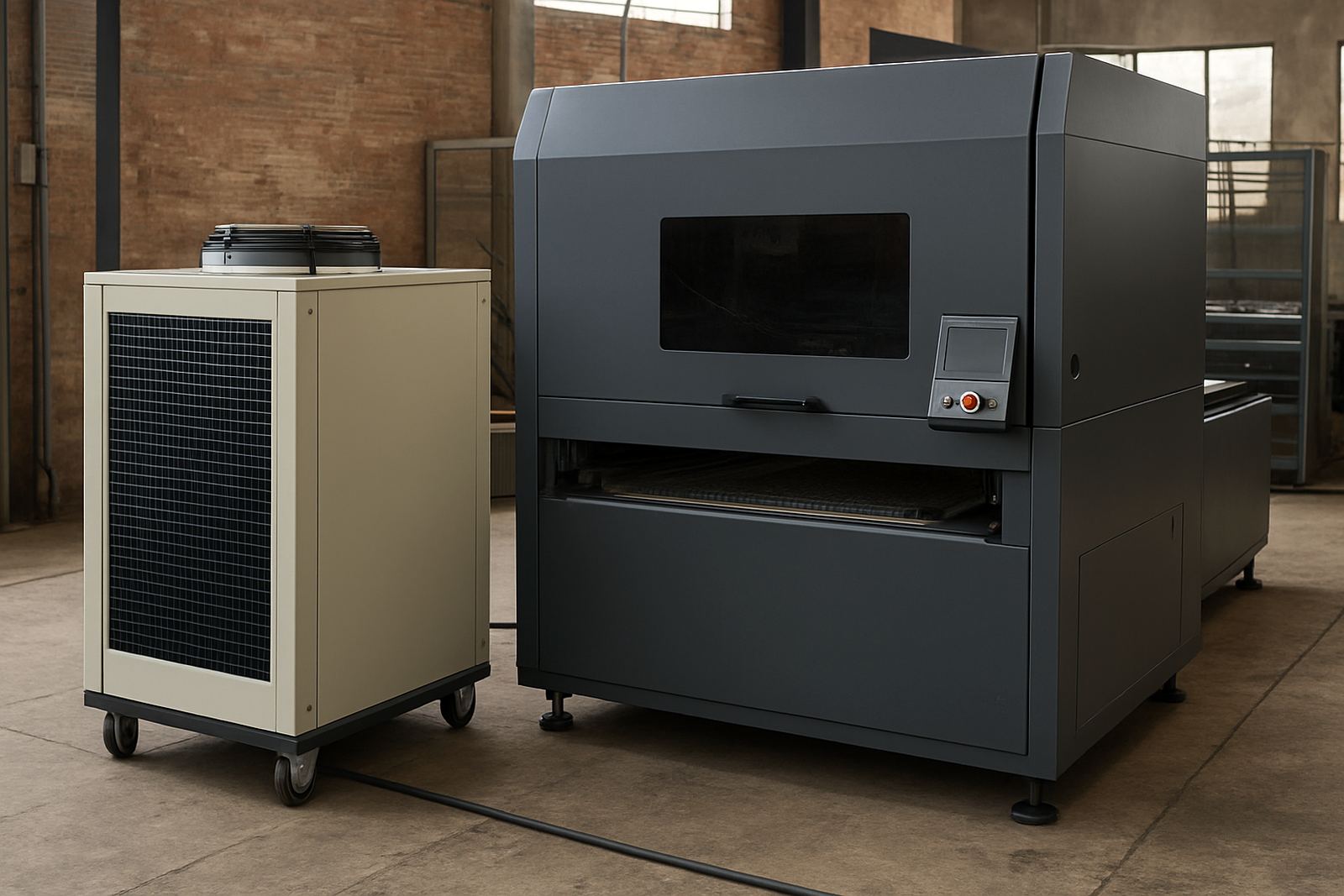
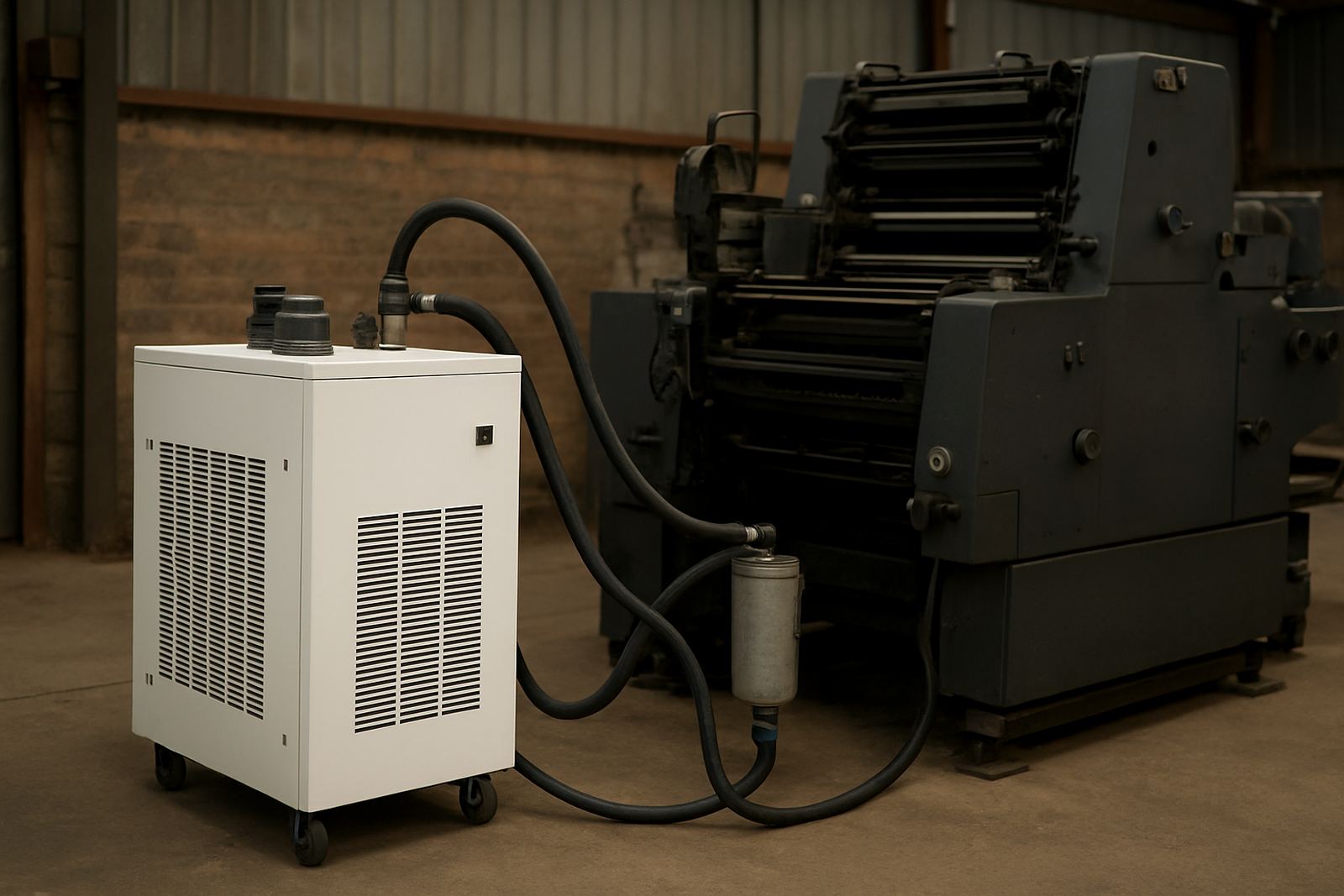
A printing press chiller removes heat from the press cooling circuit and holds the process water at a controlled temperature. On higher speed presses, heat builds up quickly in the ink train, rollers, bearings, plate systems and hydraulic circuits, so cooling cannot be left to chance. When the temperature drifts, print consistency suffers and operators spend more time correcting issues than running product.
Our units are used where steady cooling supports sheet-fed presses, web presses and associated auxiliary equipment. They are specified for South African conditions, including summer heat in Gauteng and coastal humidity in Durban and Cape Town. In some plants the chiller supports a single machine, while in others it serves a press line, ink cooling loop or a combined process circuit. The goal is practical: keep temperatures predictable, cut wear, and protect output quality over long shifts.
We supply and service chillers from Alberton, Ekurhuleni, with support for printing operations across South Africa. If your plant is dealing with load-shedding, dusty service yards or restricted plant room space, the equipment can be set up for the actual site conditions rather than a textbook layout.
Sizes and options for different press loads
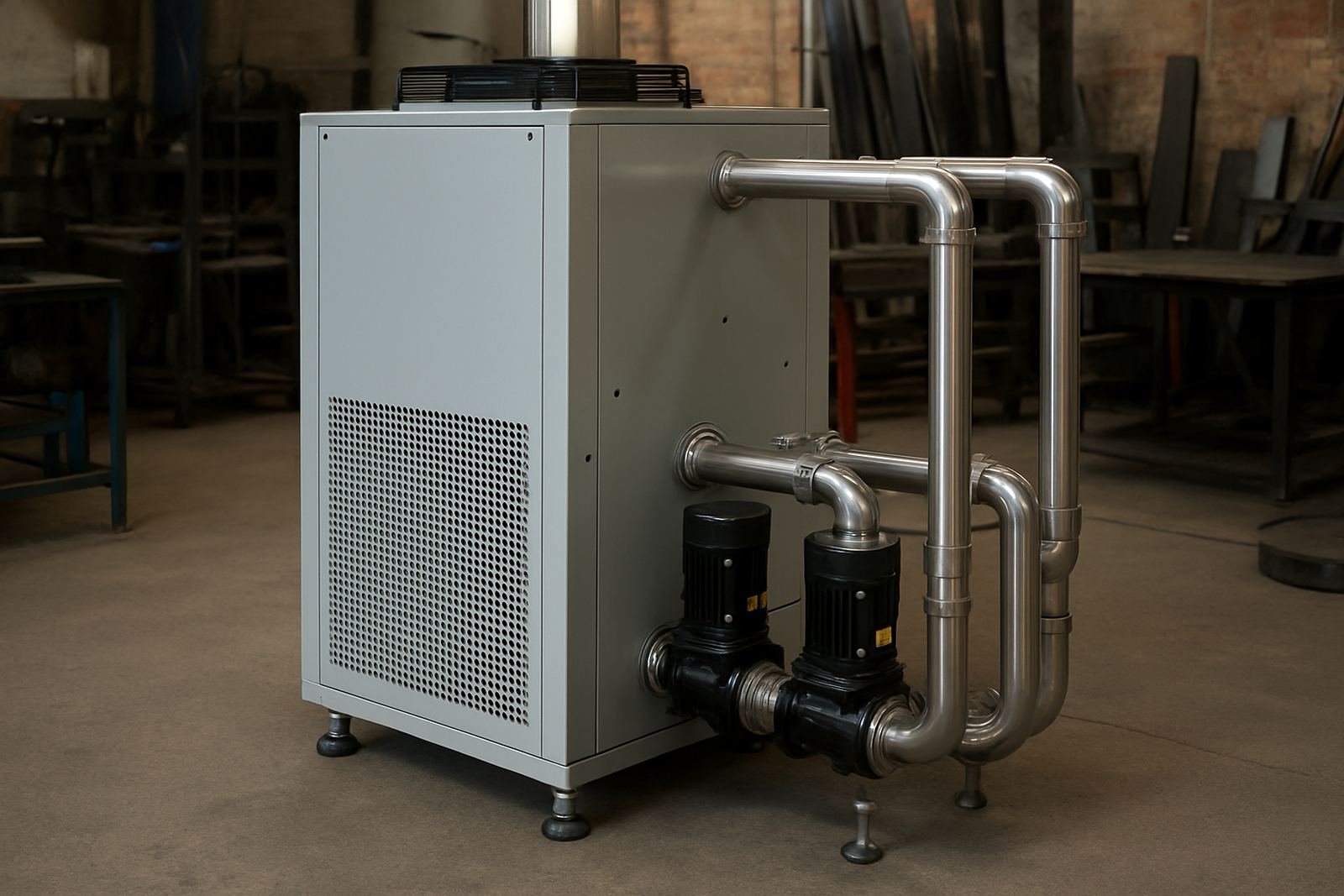
Printing press chillers are selected by heat load, flow rate, supply temperature and the type of press being cooled. Small installations may need a compact unit for one machine, while larger sites often require a packaged chiller with a separate pump set, buffer tank or staged cooling. We also size for duty cycle, because a press that runs two shifts has very different cooling demands to a lighter commercial print line.
- Compact units for single press cooling circuits
- Mid-size systems for multiple rollers or a shared cooling loop
- Higher capacity units for long-run industrial print plants
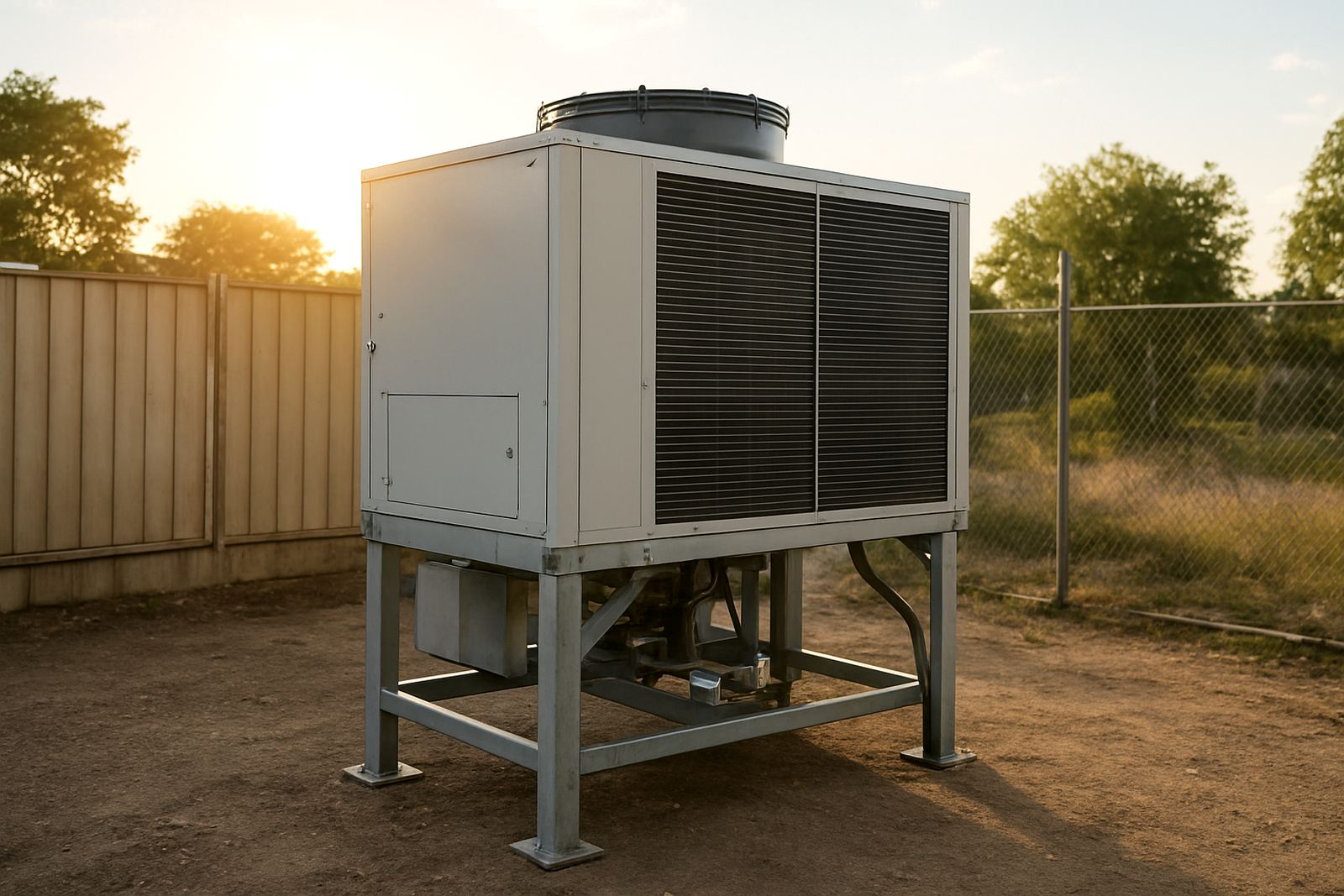
- Air-cooled options for sites without chilled water infrastructure
- Water-cooled options where plant utilities and water treatment are already in place
- Skid-mounted packages for easier positioning in tight rooms
Typical setpoints for print applications are often in the range of 10°C to 20°C, depending on the process and the machine supplier's requirements. We match the machine to the duty, not the other way around, and that is important when ambient temperatures rise in summer or when the plant has uneven ventilation.
Where the equipment suits best
This type of chiller suits printing facilities that need repeatable temperature control and less downtime from heat-related faults. It is used in commercial print houses, packaging plants, label production, litho presses, converting operations and finishing lines with cooling demands linked to the press.
It also suits sites where output changes by season or by order volume. A plant in Rustenburg may face dry heat and dust, while a coastal site may have corrosion concerns and higher humidity. In both cases, the system has to be selected with the environment in mind. We often recommend extra filtration, protected electrical components or corrosion-resistant pipework where the site conditions call for it.
For many operators the benefit is not just cooler water, but less variation. Stable cooling helps reduce thermal drift, supports more consistent print registration and can help extend the life of seals, hoses and moving parts. That is important when the press is a core production asset and every lost hour has a cost.
Installation, electrical supply and utility requirements
Installation starts with the heat load and the available services at the plant. Most printing press chillers need a suitable electrical feed, correct clearances for airflow, and a planned route for supply and return pipework. Some systems are straightforward single-phase or three-phase installations, while larger units require a dedicated distribution point and proper motor protection. Exact power needs depend on capacity, compressor size and pump arrangement.
For air-cooled systems, the plant room or outside position must allow free airflow and safe hot-air discharge. For water-cooled systems, you need dependable water quality, suitable make-up water and control over scaling or corrosion. In both cases, the pipework must be sized correctly so the press still receives the flow rate it needs at the right pressure. Bad pipe sizing can waste energy and starve the machine of cooling.
- Allow enough floor space for service access and filter changes
- Check the site power supply, breaker capacity and cable run
- Plan for isolation valves, strainers and easy drain points
- Confirm the required supply temperature and flow rate from the press maker
- Consider backup cooling or temporary cooling for critical production periods
Where load-shedding is part of daily operations, it is worth planning how the press will restart and stabilise after power returns. Some sites also choose phased start-up controls to avoid unnecessary stress on electrical systems.
Care, servicing and what keeps a chiller reliable
A printing press chiller needs routine care if it is expected to hold temperature day after day. Preventative maintenance typically includes cleaning coils or condensers, checking refrigerant pressures, inspecting pumps, confirming flow switches, testing controls and checking for scale, sludge or contamination in the water circuit. On older plants, poor water treatment is a common reason for reduced cooling performance.
Service intervals depend on the duty and environment, but most print sites benefit from regular checks before the hot months arrive. In dusty inland areas, blocked airflow is a frequent issue. Near the coast, corrosion and moisture can affect electrical connections and casing condition. If the machine is working harder than usual, that is usually a sign something is not right.
Raynen provides breakdown repairs, refrigeration repairs, pump replacements, water treatment checks, pipework retrofits, control panel upgrades and cooling audits. We also handle temporary cooling where production cannot stop for long repairs. Our workshop team in Alrode supports field service across Johannesburg, Pretoria, Durban, Cape Town, Rustenburg, Germiston and Boksburg.
How Raynen supports print plants after installation
Once the unit is in service, reliable support matters just as much as the equipment itself. Raynen offers operator training so your team knows how to start, monitor and shut down the chiller correctly. We also support commissioning, scheduled maintenance and fault finding when performance changes. On busy print sites, small problems can grow quickly if nobody catches them early.
Our service approach is practical. We look at temperature stability, pump performance, control settings, water condition and the general condition of the system as a whole. If a unit needs a control panel upgrade, a pump replacement or a more suitable cooling arrangement, we will say so plainly. The aim is to keep the press running, not to add unnecessary work.
To discuss a printing press chiller for your plant, use the enquiry form on our contact page. We support customers from Alberton and across South Africa with equipment selection, installation and ongoing servicing that suits real production demands.
Key facts
| Cooling capacity range | Approx. 5 kW to 200 kW, depending on press load and circuit design |
|---|---|
| Temperature control | Common setpoint range 10°C to 20°C with stable digital control |
| Refrigerant system | Packaged compressor-based refrigeration circuit |
| Pump options | Integrated circulation pump or external pump set |
| Power supply | Usually 400V three-phase, subject to unit size and site requirements |
| Installation format | Air-cooled, water-cooled or skid-mounted package options |