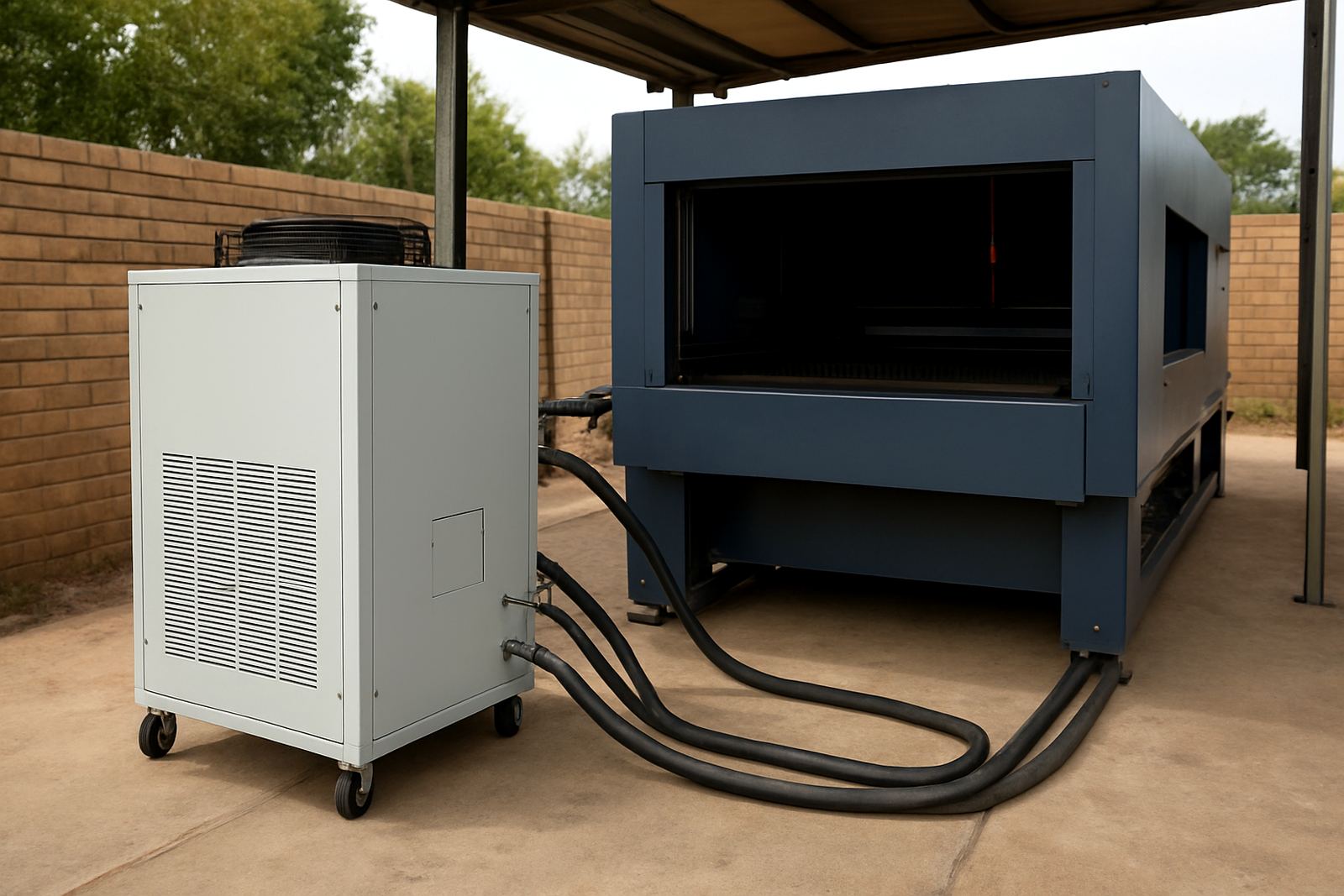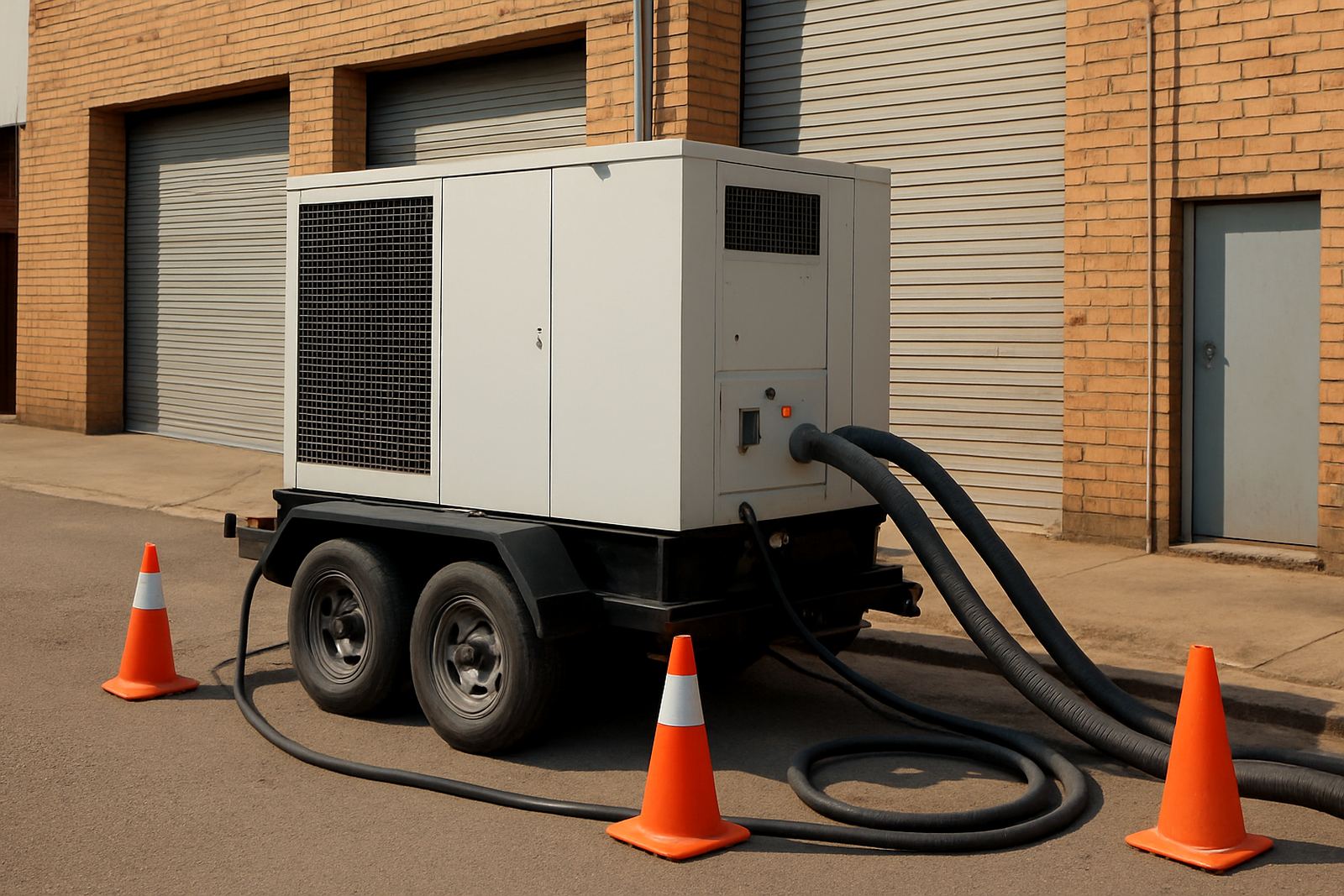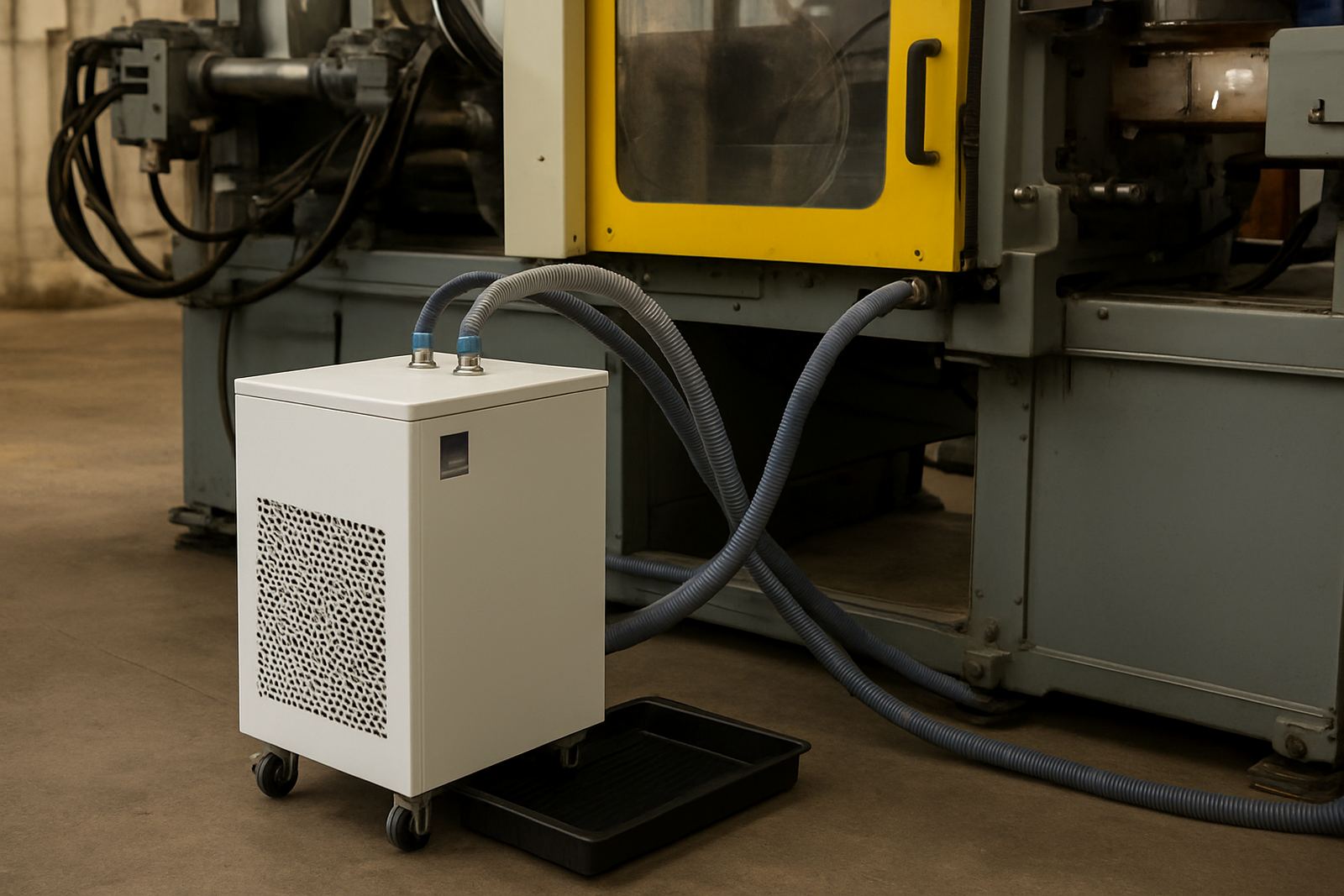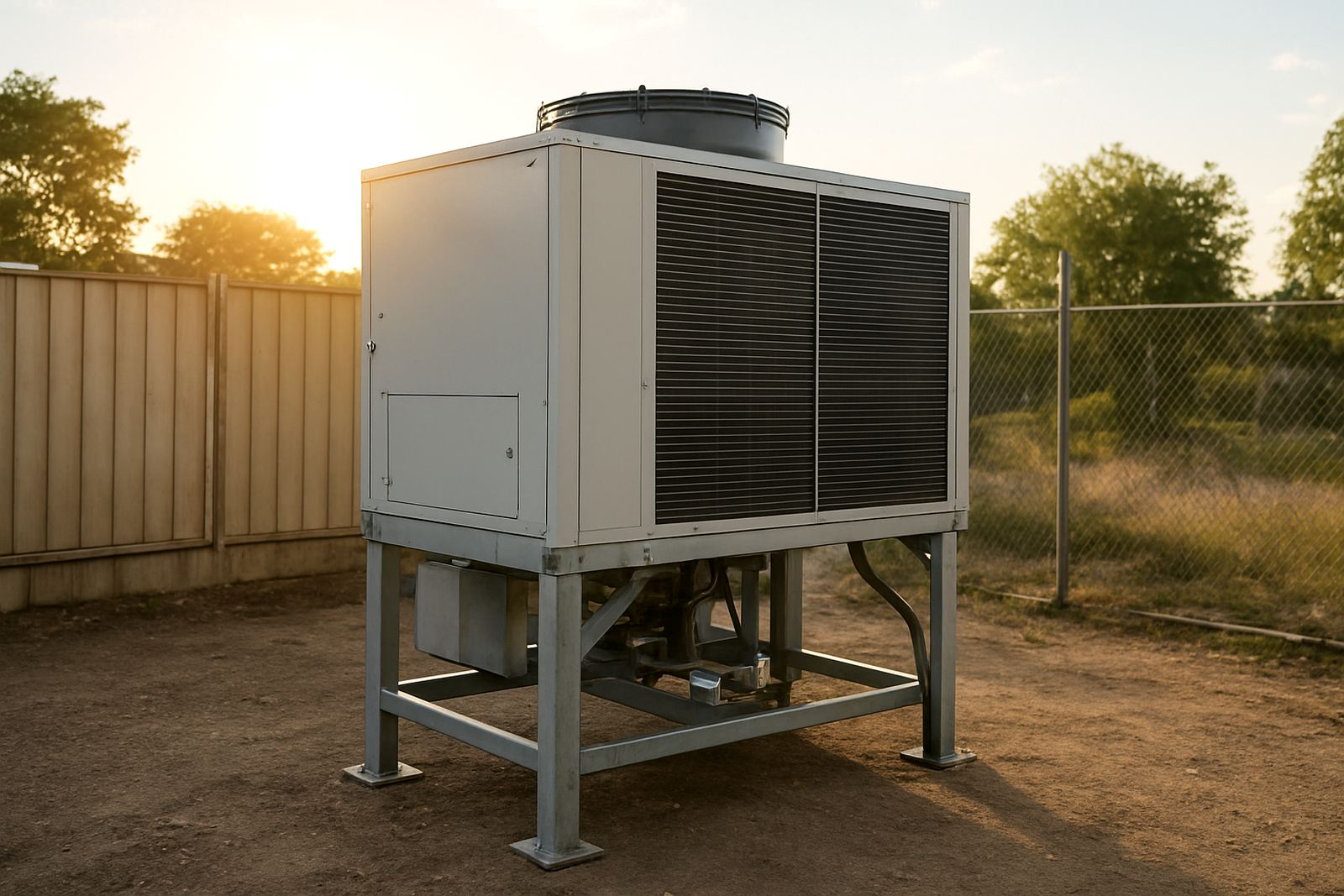
Built for outside plant rooms, rooftops and yard spaces
An outdoor chiller is a packaged water cooling unit designed to sit outside a building rather than inside a neat air-conditioned plant room. That matters on many South African sites where floor space is tight, the process area is hot, or the customer needs the chiller placed close to the load to reduce pipe runs. Raynen units are selected for practical outdoor use in places like Alberton, Germiston, Boksburg, Pretoria industrial parks and coastal sites around Durban and Cape Town where salt in the air can be a problem.
These units are commonly used where water temperature must stay stable for long production cycles. Lasers need consistent cooling to protect optics and maintain cut quality. Moulds need controlled temperatures to keep cycle times steady and reduce defects. Process lines need reliable cooling so production does not drift when the weather changes. An outdoor chiller is not just a machine sitting outside, it is part of the process control setup.
- Direct outdoor mounting on a concrete plinth or steel frame
- Weather-exposed operation with suitable enclosure and corrosion protection
- Air-cooled format for sites without tower water or a dedicated cooling loop
- Suitable for both new installs and replacement of older cooling units
Sizes and configuration options for different cooling loads
Raynen supplies outdoor chillers in a range of cooling capacities so the unit can be matched to the actual load rather than guessed from the nameplate. Small units may suit a single laser source or compact moulding machine, while larger systems are used for multi-line plants, several moulding presses, or process water circuits with long run times. The right size depends on heat load, target water temperature, ambient conditions and whether the system runs all day or in shifts.
Options can include single circuit or multi circuit arrangements, variable speed or fixed speed pumping, remote monitoring contacts, standby controls and water-side protection for tougher site conditions. On warmer inland days and during load-shedding recovery, a correctly sized unit gives better temperature recovery and less nuisance tripping. If the site has a history of power dips or voltage swings, that needs to be taken into account during selection, not after installation.
- Cooling capacities available from compact to high-capacity industrial duty
- Standard and low-temperature water temperature setpoints
- Single or multiple pumps depending on flow and pressure needs
- Corrosion-resistant builds for humid or coastal environments
Where an outdoor chiller works best on South African sites
Outdoor chillers are a good fit where indoor space is already taken up by production, racking or workshop access. In Johannesburg and Pretoria, they are often used beside factories and fabrication shops where roof access and yard space are easier than building a new plant room. In Durban, the appeal is simple: a weather-ready unit with the right protection handles humidity better than many improvised indoor arrangements. In Rustenburg and other dusty mining-adjacent areas, the ability to place the unit away from the main production floor can also help keep filters and coils cleaner.
They suit sites that need cooling at a constant setpoint, but do not want long chilled-water runs through awkward passages. The unit can be placed closer to the machine or process line, which helps with pressure drop and service access. For clients with municipal and site compliance requirements, the installation plan should also consider noise, drainage, access for maintenance and safe electrical isolation.
- Laser cutting and engraving workshops
- Injection moulding and thermoforming plants
- Extrusion, mixing and general process cooling
- Sites with limited indoor footprint or existing hot plant rooms
Installation, power supply and site services
Outdoor installation needs more than just a level base. The site must allow for airflow around the condenser, proper drainage, service clearance and a safe route for pipes and cables. Raynen can handle chiller installation, system commissioning and pipework retrofits where an older cooling arrangement needs replacing. For many clients, the first question is not only what size to buy but where to place it so the unit can breathe and still be easy to service. That is where a proper cooling audit helps.
Power needs depend on the chiller size and compressor arrangement. Most industrial units require a dedicated electrical supply with suitable protection, isolator and correctly sized cabling. If the site is affected by load-shedding, voltage variation or generator changeover, the control settings and start-up sequence should be checked before handover. Some applications need a soft start arrangement or staged restart so the process line does not get a water hammer or overload after power returns. A unit installed without this planning can become a nuisance very quickly.
- Dedicated electrical supply with correct overload and isolation protection
- Clear airflow space around the condenser and service panels
- Pipe supports, weatherproof lagging and vibration control where needed
- Commissioning with flow, temperature and alarm checks before handover
Care, servicing and keeping the unit dependable
Outdoor equipment needs a maintenance routine that suits the site environment. Dust, pollen, coastal salt, leaf debris and oily workshop air all affect performance. A chiller that is fine in winter may start struggling in summer if the coil is clogged or the water side has scale build-up. Preventative maintenance keeps the system stable and is usually cheaper than breakdown repairs after a hot spell or production rush. That is especially true where the chiller supports a laser or moulding line that cannot easily stop for long.
Raynen supports preventative maintenance, refrigeration repairs, pump replacements, water treatment checks, control panel upgrades and temporary cooling where a unit needs to be taken out of service. Regular service should include inspection of refrigerant pressures, pump condition, fan operation, water quality, alarms and control settings. On some sites, a simple water treatment issue can be the difference between clean heat transfer and repeated nuisance faults. A quick visual check is not enough, the system needs proper testing.
- Clean the air coil and check for blockages on a set schedule
- Test water quality, strainers and pump seals before summer peaks
- Confirm control alarms, setpoints and restart behaviour after outages
- Plan service visits before shutdown periods so production does not get caught out
What to check before ordering an outdoor chiller
Before choosing a unit, gather the process details so the sizing is based on actual working conditions. Start with the required water temperature, flow rate and heat load if available. Then note whether the load is constant or variable, whether there is one machine or several, and whether the unit will sit in full sun, under a canopy or in an open yard. Sites in coastal humidity or very hot inland conditions usually need a bit more allowance than the basic brochure figures suggest.
It also helps to know the available electrical supply, whether there is a generator or backup supply, and how the pipework will run from the chiller to the load. If the site already has an older system, take note of the current problems such as unstable temperature, pump failures, fouled water or poor access for maintenance. The more accurate the order information, the better the final result. A rushed selection often ends up costing more later.
- Target water temperature, flow rate and duty cycle
- Site location, ambient conditions and exposure to sun, dust or salt air
- Available power supply, phase arrangement and backup power details
- Space for installation, access for service and any special noise limits
Support across Alberton and major South African industrial areas
Raynen is based in Alrode, Alberton, and supports industrial clients across Johannesburg, Pretoria, Durban, Cape Town and Rustenburg, with service areas that include Germiston and Boksburg. The team works on installation, commissioning and follow-up support for plants that need dependable cooling rather than short-term fixes. From a single unit to a full process cooling setup, the aim is simple: steady temperature, practical access and equipment that is easier to live with on site.
If you are replacing an older chiller or planning a new outdoor installation, it is worth checking the site conditions first and matching the unit to the real process requirement. Raynen can assist through the enquiry form on the contact page and then work through the sizing, installation and maintenance plan with the right people from the start. That saves time later and keeps the cooling system working as it should.
Key facts
| Product type | Industrial outdoor water chiller for external installation |
|---|---|
| Typical uses | Lasers, moulds, extrusion, process lines and general plant cooling |
| Cooling format | Air-cooled packaged unit with weather-ready enclosure |
| Installation | Outdoor plinth, frame or yard-mounted setup with service clearance |
| Power needs | Dedicated electrical supply sized to the selected model and controls |
| Service support | Installation, commissioning, maintenance, repairs and temporary cooling |