Why a 6kW laser chiller is the right middle step
A 6kW laser chiller is a mid-range industrial cooling unit built to remove heat from laser equipment at a controlled rate. It is commonly used where the machine is working harder than an entry-level unit can handle, but the site is not yet running a very large multi-machine cooling system.
For laser cutters, engravers and marking systems, the main job is to hold a steady water temperature so the laser source, optics and associated components do not drift as the shift goes on. That steadiness helps reduce faults, protect consumables and keep cut quality more consistent. In many South African workshops, this matters just as much as total cooling capacity because summer ambient temperatures can rise quickly and coastal humidity can add extra strain.
This size is also useful where a business is adding a second line or extending operating hours. If your team is moving from short runs to longer production windows, a 6kW unit gives more headroom than a small chiller and usually gives better control during hot weather.
- Suitable for moderate to demanding laser duty cycles
- Helps maintain stable operating temperature during longer shifts
- Better suited to expanding fabrication lines than basic light-duty units
- Useful where process continuity matters more than short burst cooling
Typical sizes, layout and control options
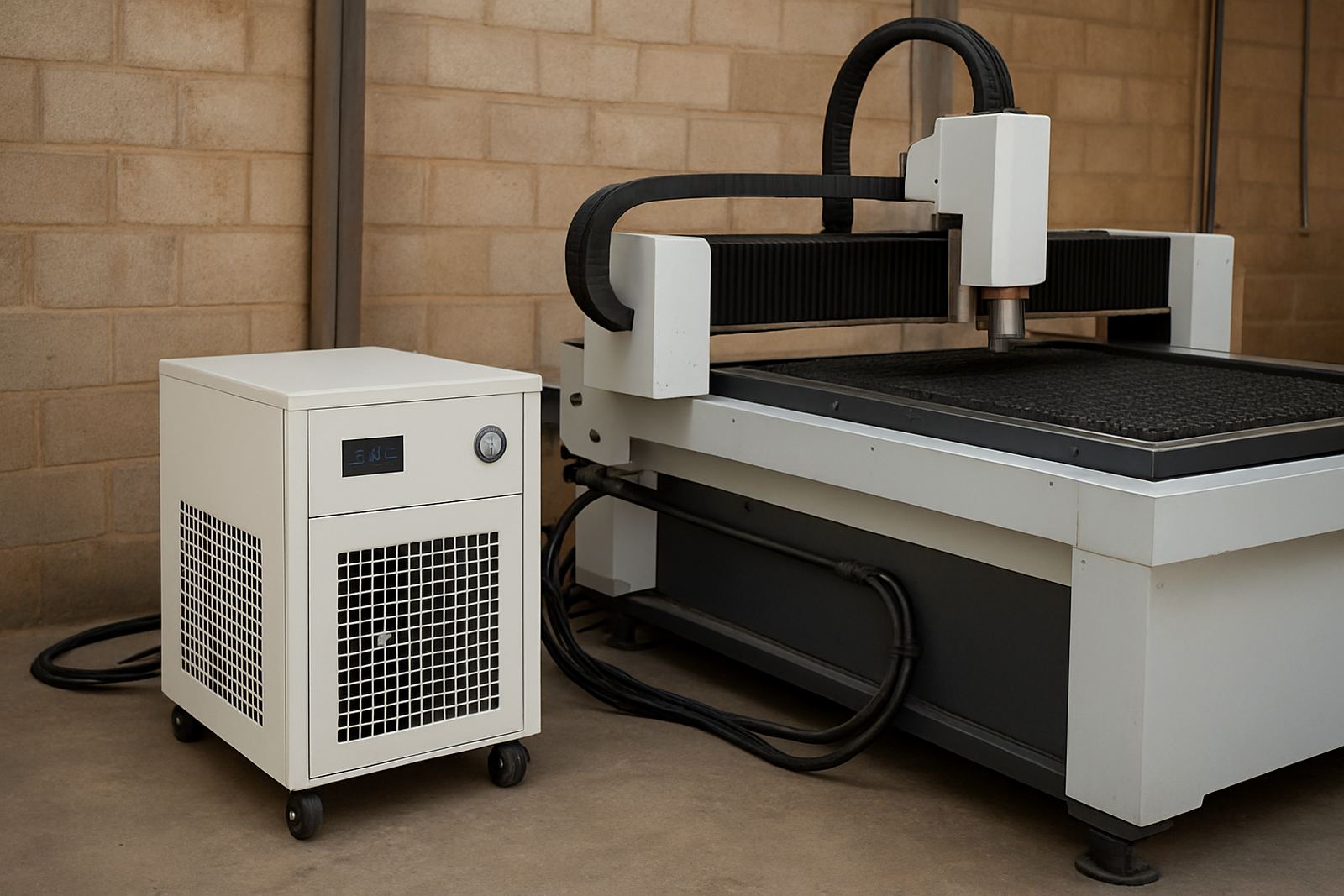
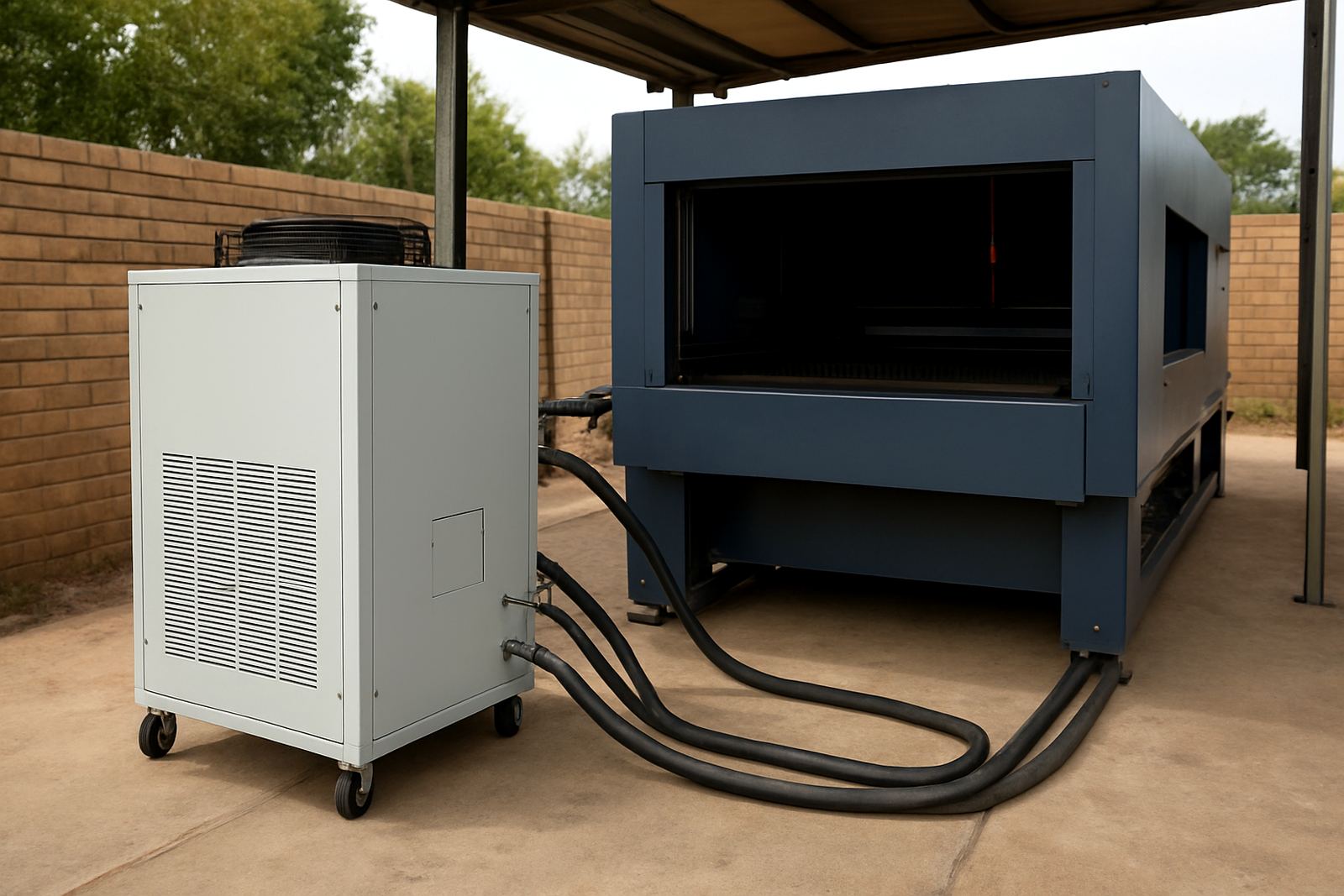
Raynen supplies industrial water chillers in practical configurations to suit workshop space, access for maintenance and the cooling load on site. A 6kW laser chiller is generally supplied as a floor-standing unit with a compact footprint, making it easier to place beside the laser machine, in a plant area or in a controlled service room. On some sites, the unit can be installed close to the production line to keep pipe runs short and reduce temperature gain in the line.
Depending on the application, the unit may be configured for chilled water only, or with process-specific controls for more accurate temperature management. Where a site has multiple machines or variable load, the control settings can be matched to the expected working pattern. In smaller workshops, a simple fixed setpoint is often enough, while larger lines may need tighter monitoring and alarms.
Options can also include different tank volumes, pump arrangements and control interfaces. The right choice depends on how long the laser runs, the flow rate required by the machine, and whether the equipment is sensitive to small temperature changes. If the machine manufacturer calls for a specific flow or pressure, that should be checked before ordering, not after installation.
- Compact floor-standing industrial layout
- Choice of setpoint control and alarm functions
- Can be matched to single machine or small process line use
- Options for different pump and tank configurations
Where this unit suits best in South African industry
This size is well suited to fabrication shops, laser cutting operations, sign makers, light engineering firms and production lines that need reliable cooling through most of the day. In Alberton, Germiston and Boksburg it often fits workshop environments where floor space is tight but the business still needs dependable cooling for longer shifts. It is also a good fit for sites in Johannesburg and Pretoria that are scaling up production and cannot afford downtime on a hot day.
In Durban and coastal areas, the higher humidity and salt air can put extra pressure on cooling equipment and pipework, so the installation needs proper airflow and sensible placement. In Rustenburg and other inland industrial areas, dust and high ambient heat can be more of an issue, especially when doors stay open for material handling. A 6kW laser chiller can suit all of these environments if the site conditions are checked properly at the start.
For process lines and mould cooling, the same unit can sometimes be used where the duty is steady and the temperature range is suitable. The important point is matching the chiller to the actual load, not just the machine nameplate. A good site assessment avoids under-sizing, which leads to warm water and faults, or over-sizing, which can cause short cycling and poor efficiency.
Installation, power supply and site requirements
Correct installation makes a major difference to performance. The unit needs enough clearance for air movement, practical access for filter cleaning and space for the technician to reach valves, controls and electrical components. It should sit on a level surface and be placed where hot exhaust air will not be drawn straight back into the condenser.
Electrical supply must be checked before commissioning. The exact requirement depends on the final unit configuration, but a 6kW industrial chiller will normally need a dedicated supply of the correct voltage, protection and isolator arrangement. If the site has load-shedding, the chiller should be integrated into the broader power plan so the laser and cooling system do not come back on in the wrong sequence. On many sites a controlled restart sequence is important to prevent nuisance trips and unnecessary wear.
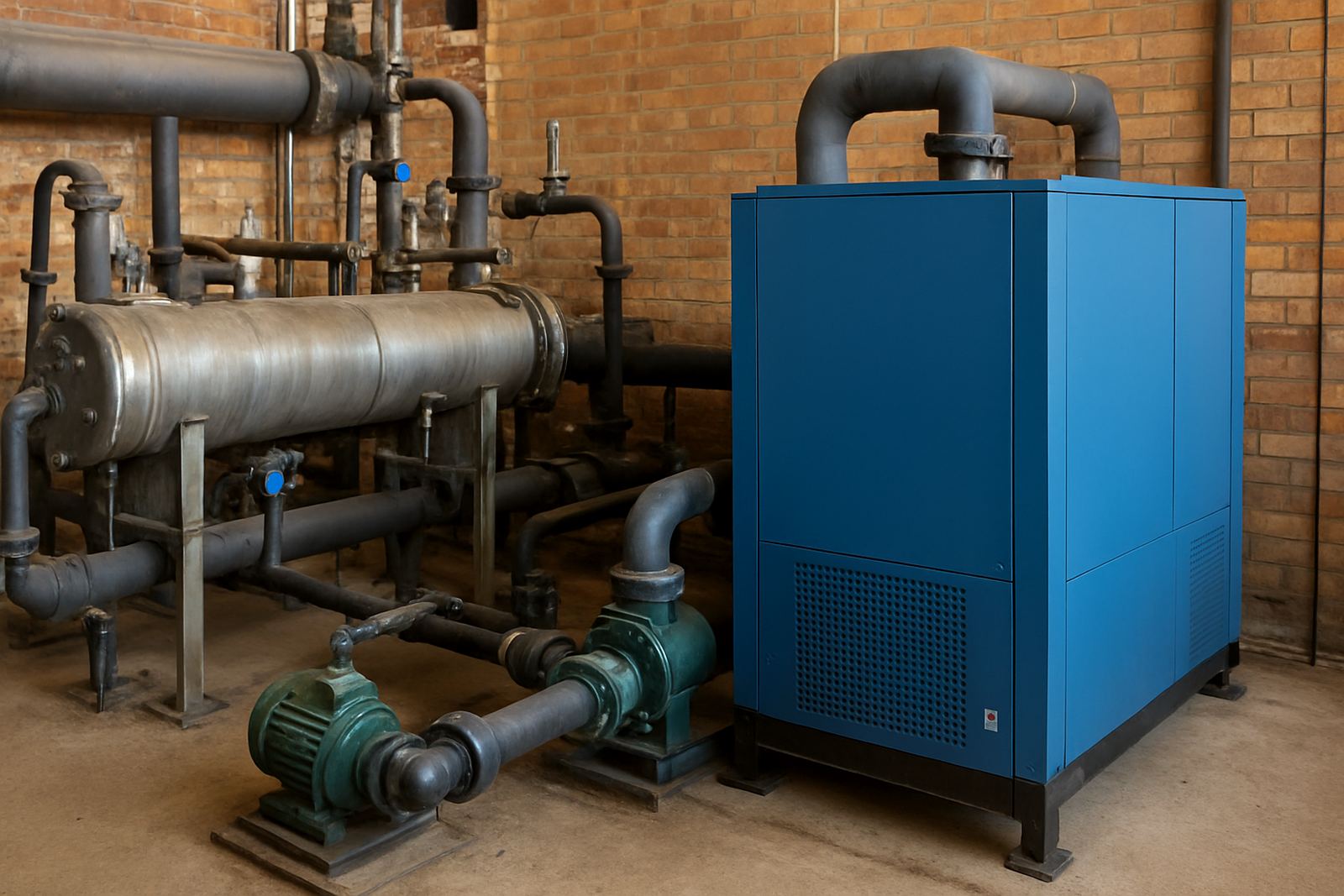
Water quality also matters. Untreated water can create scale, corrosion and blockages, especially where borehole water or hard municipal water is used. A proper install should include checks on filtration, hose routing, hose support and the suitability of the water treatment approach. If the machine is being connected to an existing loop, that loop must be flushed and checked before the new unit is put into service.
- Confirm power supply and protection before installation
- Allow clear airflow around the condenser and service side
- Check water quality, filtration and pipework condition
- Plan for load-shedding restart and safe shutdown procedures
Care, servicing and fault prevention
Regular care keeps the chiller doing its job and reduces the chance of unplanned stoppages. Basic maintenance usually includes cleaning filters, checking refrigerant performance, inspecting pumps, verifying water level and looking for leaks, vibration or temperature drift. On busy sites, these checks should be scheduled instead of waiting for a fault. A few minutes of attention can save a full day of lost production.
Preventative maintenance is especially important where the chiller runs for long periods, or where fine dust and heat build up around the machine. Refrigeration repairs, pump replacements and control panel upgrades should be handled by technicians who understand industrial cooling and the working conditions on the floor. If the water treatment is ignored, scale can form on heat transfer surfaces and the system may need more power to do the same work.
Raynen supports preventative maintenance, breakdown repairs, cooling audits and temporary cooling where a site cannot afford prolonged downtime. For larger workshops and process plants, a planned service interval is usually the cheapest way to keep the unit reliable.
- Clean or replace filters regularly
- Check for leaks, unusual noise and temperature drift
- Service pumps and electrical controls before faults spread
- Keep records of alarms, water quality and maintenance dates
What to check before you place an order
Before ordering a 6kW laser chiller, gather the machine details and the site conditions so the unit can be matched properly. The most important point is the cooling load of the laser or process equipment, followed by the required flow rate, pressure, temperature range and operating hours. If you are replacing an older unit, do not assume the previous model was sized correctly. Check what the machine actually needs, and whether the existing pipework, cabling and water circuit are still in good condition.
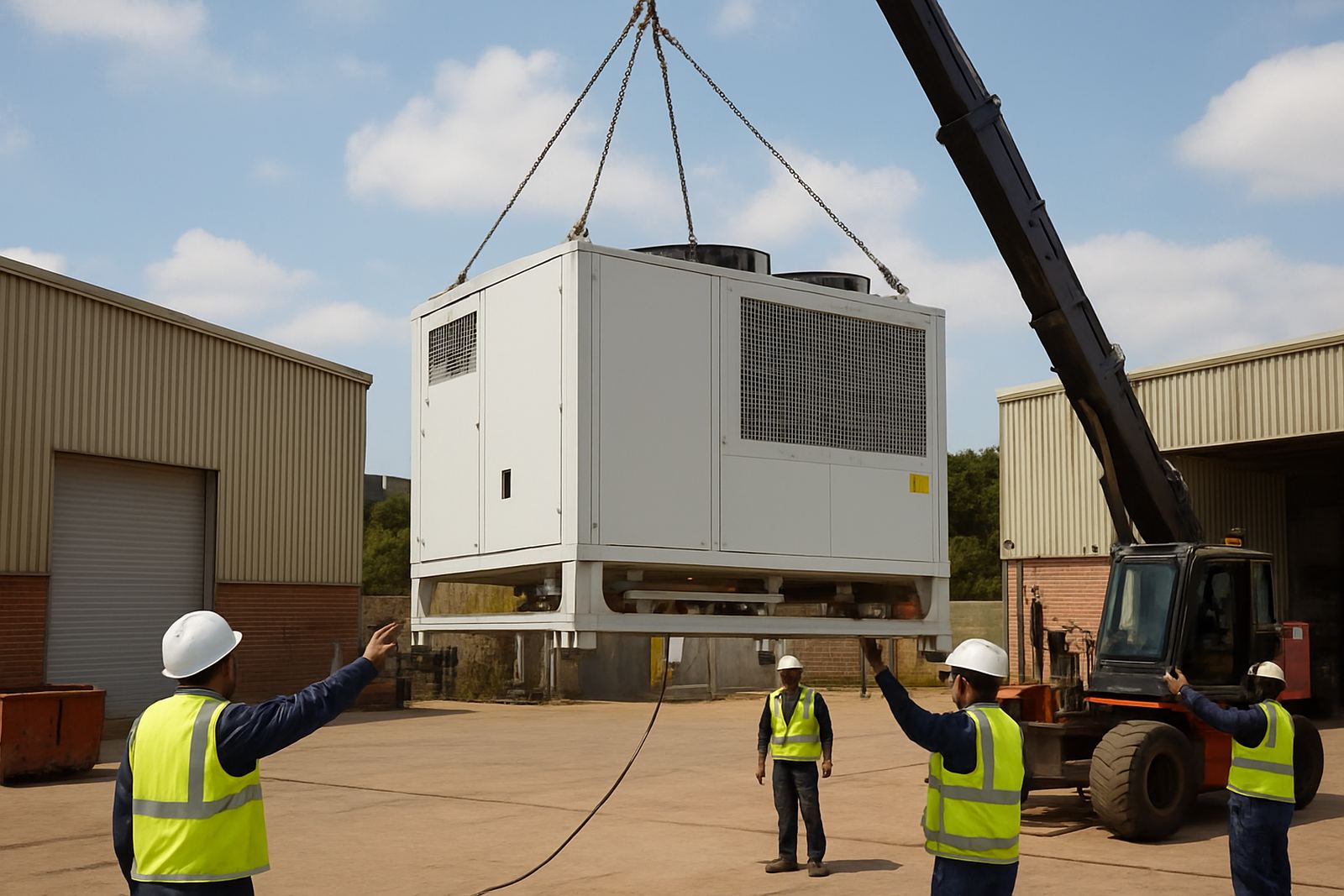
It also helps to confirm where the chiller will sit, how far it is from the equipment, and whether there are any access restrictions for delivery or servicing. In industrial areas around Johannesburg, Pretoria, Durban, Cape Town and Rustenburg, site access can affect installation time and the kind of lifting equipment needed. If the unit will be used indoors, make sure the room ventilation is adequate. If it will be outdoors, plan for weather exposure and protection from direct sun.
When in doubt, ask for a cooling audit or a technical check before the order is finalised. That way the unit, the installation and the service plan all match the way your operation actually runs.
- Machine make, model and cooling load
- Required temperature range, flow and pressure
- Power supply details and available isolator space
- Pipe run length, access route and installation position
- Water quality and any existing filtration or treatment
Key facts
| Cooling capacity | 6kW nominal industrial cooling duty |
|---|---|
| Application | Lasers, moulds and process lines |
| Temperature control | Stable chilled water control for continuous operation |
| Installation type | Floor-standing industrial unit |
| Power needs | Dedicated electrical supply, final spec confirmed on site |
| Service support | Installation, commissioning, maintenance and repairs across South Africa |