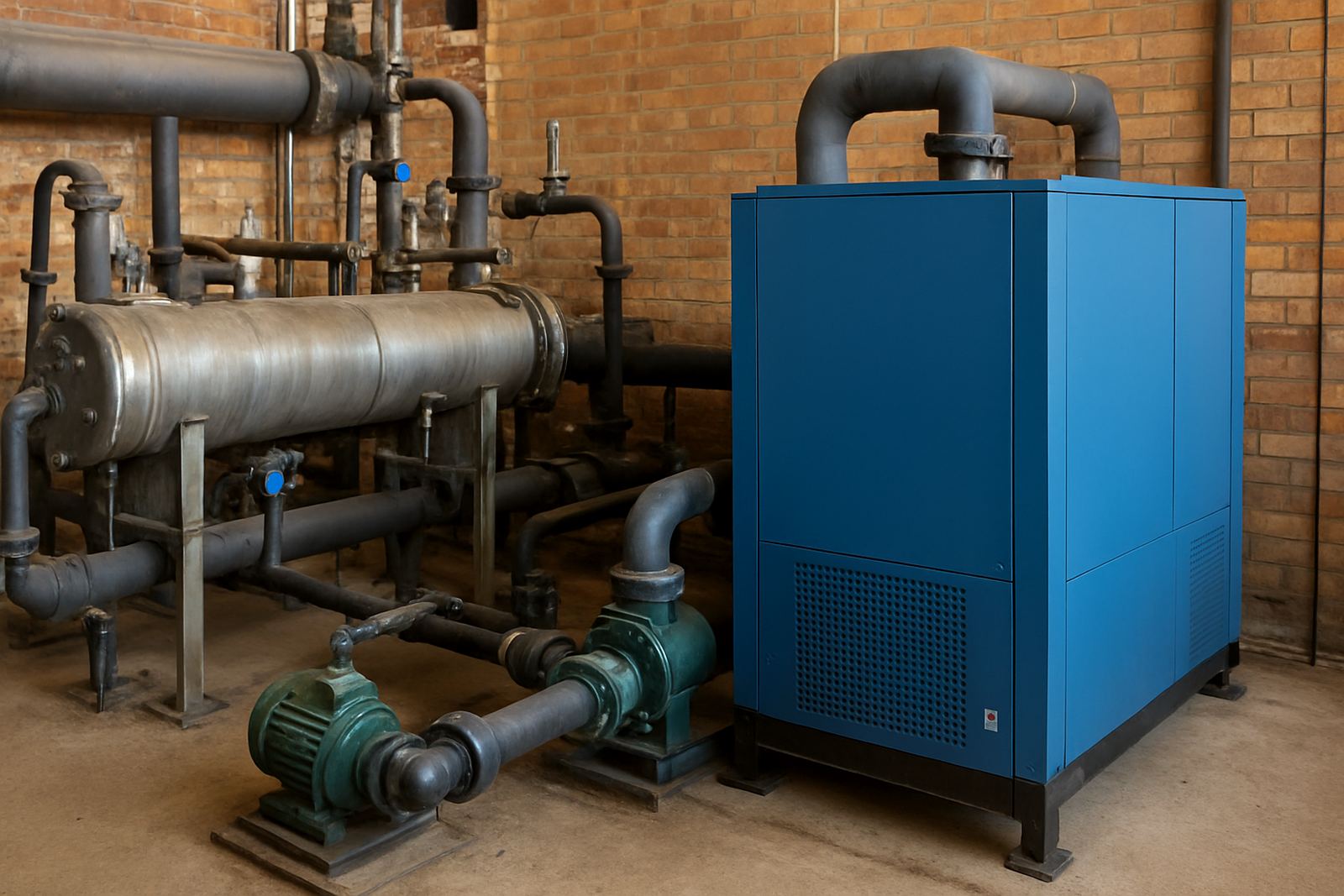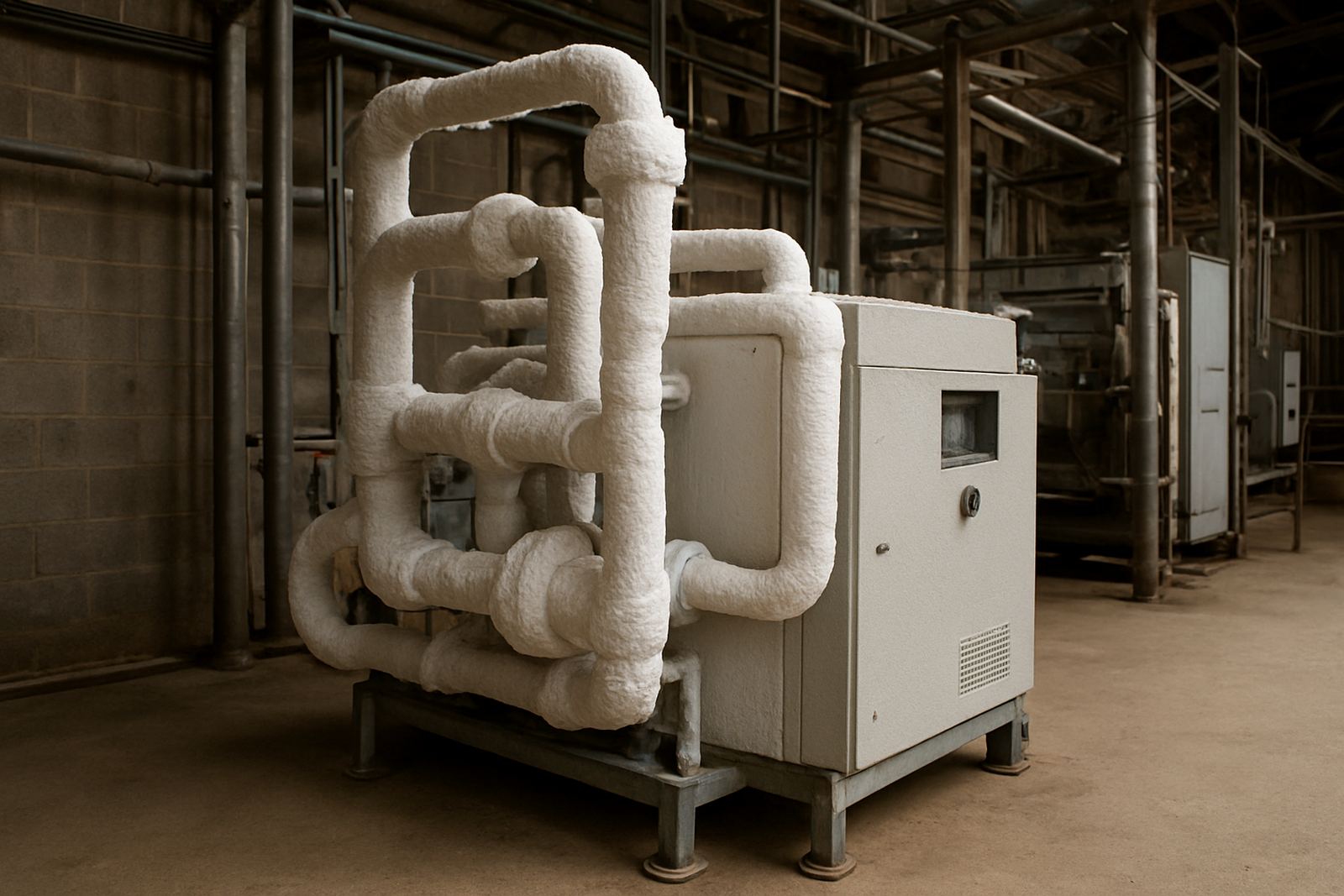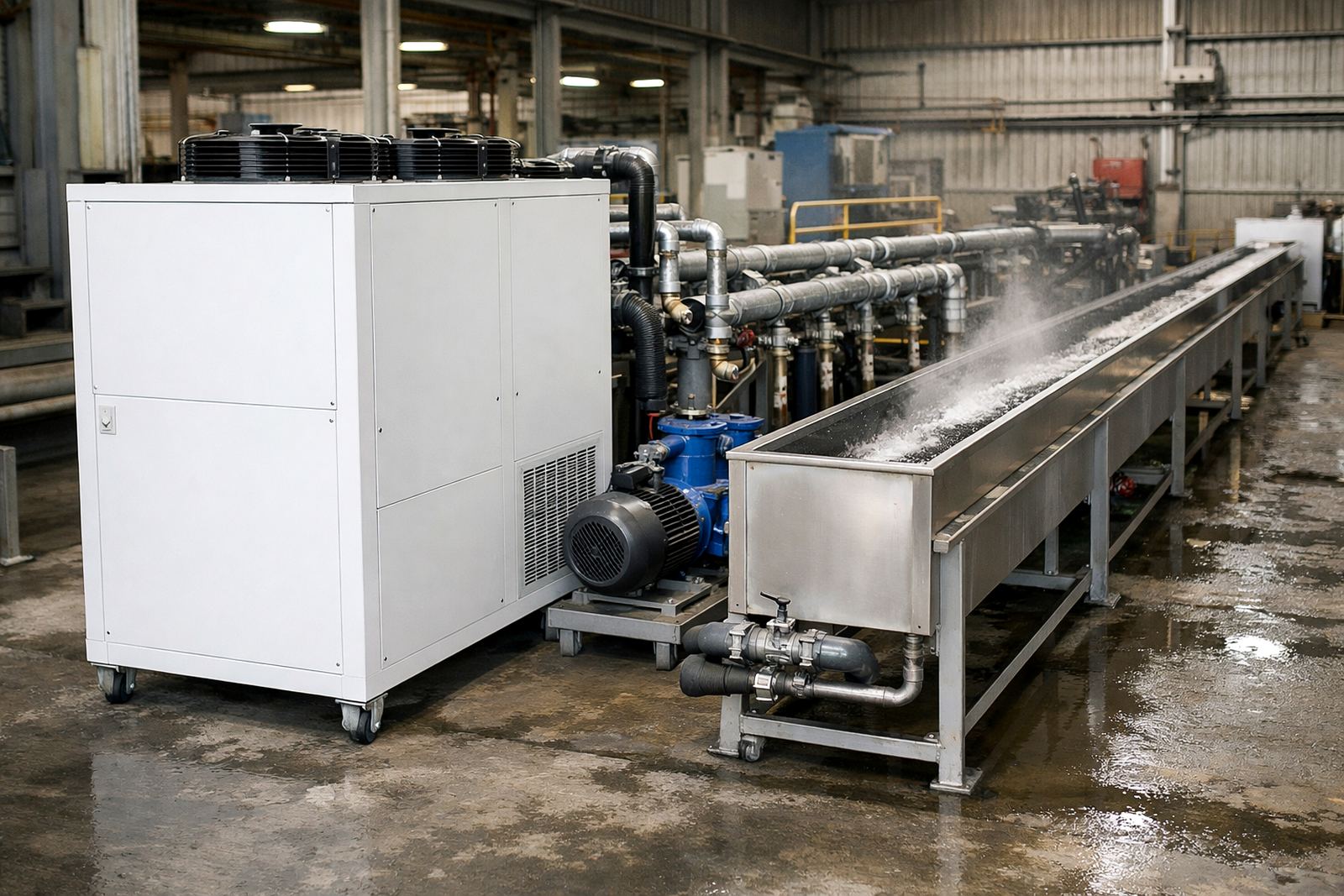
What an extrusion line chiller does on the plant floor
An extrusion line chiller removes heat from the process water or coolant circuit that supports die cooling, barrel jackets, calibrators and downstream cooling tanks. On a busy line, stable water temperature matters just as much as motor power or screw speed because small temperature swings can change wall thickness, surface finish and puller performance.
Raynen units are set up for industrial duty and are commonly specified for plastic extrusion, profile work, pipe lines, sheet lines and cable cover processes. They help reduce reject rates, keep changeovers cleaner and limit stress on pumps, hoses and heat exchangers. In many plants a properly sized chiller also helps during load-shedding recovery, when equipment needs to return to stable running without long delays.
For extrusion, the cooling demand is often continuous for long shifts. That means the unit must handle heat load for hours on end, not just short peaks. Our chillers are selected for steady duty, practical servicing and water quality that suits South African conditions, including hard water in some inland areas and coastal humidity near Durban and Cape Town.
Sizes, capacities and control options
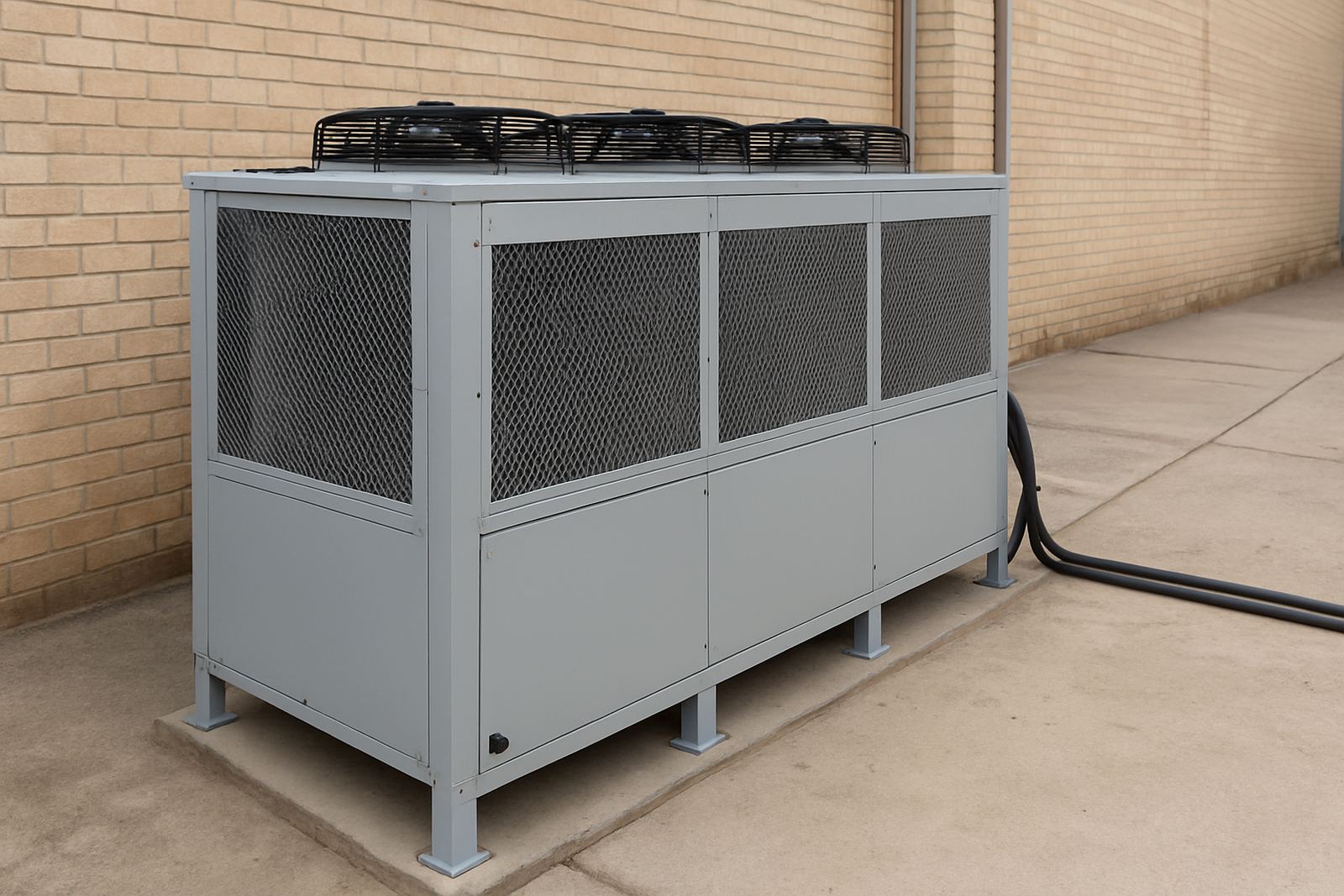
Extrusion lines vary from small single-line workshops to larger plants running several extruders, so the chiller size must match the actual heat rejection of the line. Raynen supplies compact units for smaller lines and larger packaged systems for multi-line operations, with options for air-cooled or water-cooled operation depending on site utilities and ambient conditions.
- Cooling capacities from small process units through to higher-capacity industrial packages
- Setpoint control for stable outlet water temperature
- Stainless steel or treated water circuits where corrosion risk is a concern
- Single-circuit or multi-circuit configurations for separate process zones
- Digital controllers with alarms for temperature, flow and fault conditions
- Options for low-noise fans, insulated tanks and pump packages
Where the line runs in a hot production hall, an oversized room temperature or poor ventilation can reduce cooling performance. That is why sizing is not just about kilowatts. It also needs ambient temperature, duty cycle, glycol use if required, and whether the extrusion line runs one shift or around the clock. We can match the chiller to your line layout and cooling points, not just the nameplate figure.
Where this chiller suits best
These chillers are used where temperature control directly affects the finished product and line speed. They are well suited to extrusion plants making pipe, conduit, hose, film support systems, profiles, cable coverings and similar continuous products. If your process depends on consistent cooling before haul-off, cutting or winding, a dedicated chiller is a practical choice.
They are also useful where process water must remain clean and stable. In many plants, cooling water that drifts too warm can lead to dimensional variation, haze, poor surface finish or sticking in calibration equipment. A chiller can reduce those problems and support better output on long production runs. In dusty industrial areas like Ekurhuleni or with summer heat in KwaZulu-Natal, that stability becomes even more important.
- Plastic extrusion and profile extrusion
- Pipe and tube cooling
- Cable and conduit lines
- Sheet and polymer cooling circuits
- Auxiliary process cooling for downstream tanks and calibrators
Installation needs and site requirements
Installation starts with the actual duty requirement, the water circuit layout and the available electrical supply. A chiller must be placed where airflow is clear, maintenance access is easy and the unit is protected from direct sun, excessive dust and poor drainage. On some sites, especially near the coast, extra care is needed for corrosion resistance and condenser cleaning.
Power needs depend on the size of the unit, but most industrial chillers will need a properly protected three phase supply with correct isolator, overload protection and earthing. If the plant has generator backup, the starting current and running load should be checked before the unit is installed. In some cases a buffer tank or flow switch is added to protect the system during rapid line changes or when multiple machines draw water at once.
- Three phase electrical supply for most industrial units
- Suitable breaker, isolator and earthing arrangement
- Correct water pressure and flow through the process loop
- Clear airflow around air-cooled condensers
- Drainage and service access for routine cleaning
There is no gas supply required for the plant itself, but the refrigeration circuit inside the chiller must be correctly charged and leak checked by a qualified technician. If the line has already been piped in, we can assess whether the pipework, pump selection and return temperature are suitable or need adjustments. A poor install can cause nuisance trips, so it is worth getting the hydraulic side right first.
Care, maintenance and service life
Like any process cooling equipment, an extrusion line chiller works best when it is cleaned and checked on a regular schedule. Dust on the condenser, blocked strainers, scale in the water circuit and worn pumps can all reduce cooling capacity. If the coolant is not treated properly, you can also get corrosion, slime build-up and reduced heat transfer. That usually shows up as higher running temperatures long before a full breakdown happens.
We recommend preventative maintenance based on operating hours and site conditions. For busy extrusion plants, this often means monthly visual checks and planned service visits for filter cleaning, refrigerant checks, pump inspection and control testing. In areas with load-shedding, restart checks are important because repeated stopping and starting can put stress on motors and control components. A small issue left too long can become a costly stop on the line.
Raynen supports chillers with breakdown repairs, refrigeration repairs, pump replacements, water treatment checks, control panel upgrades and temporary cooling where production cannot wait. If your current unit is struggling, we can check whether the fault is electrical, refrigerant related, water related or simply a sizing problem. That sort of fault finding saves time and helps avoid replacing parts that are still serviceable.
What to check before you order
Before ordering an extrusion line chiller, it helps to gather a few practical details from the plant. The more accurate the information, the better the match between the unit and the actual cooling duty. If you are replacing an older machine, photos of the nameplate, piping and installation area are often useful too.
- Type of extrusion line and product being made
- Required cooling temperature and acceptable range
- Expected heat load or machine output
- Water flow rate, pressure and pipe size
- Electrical supply available on site
- Whether the site is air-cooled, water-cooled or has limited ventilation
- Any need for glycol, stainless components or corrosion protection
It also helps to know whether the line runs in a single shift or continuously, and whether the chiller must support more than one machine. If you plan future expansion, it is often better to allow headroom now instead of fitting a unit that is already at its limit. That approach gives you more room to grow and less risk of bottlenecks later.
South African support from Alberton to the coast
Raynen operates from Alrode in Alberton, Ekurhuleni, and supports extrusion plants across South Africa, including Johannesburg, Pretoria, Durban, Cape Town and Rustenburg. Our team handles installations, commissioning, maintenance and repairs through local service areas such as Germiston, Boksburg and the surrounding industrial zones.
With experienced staff including Riaan van der Merwe, Lerato Mokoena, Sibusiso Dlamini, Anika Naidoo, Pieter Joubert, Nomsa Khumalo and Thabo Maseko, we keep the focus on practical process cooling that works in real plant conditions. Whether you need a new unit, a replacement for an older chiller or help with a line that keeps drifting out of spec, we can assess the cooling duty and recommend a sensible option.
For quotation or technical support, use the enquiry form on our contact page and send through your line details. We will work from the numbers you have, then check the rest on site if needed.
Key facts
| Product type | Industrial extrusion line chiller |
|---|---|
| Typical application | Process cooling for extrusion lines, dies, calibrators and downstream cooling |
| Cooling arrangement | Air-cooled or water-cooled options |
| Temperature control | Digital setpoint control with alarm functions |
| Power supply | Three phase industrial supply, subject to model size |
| Service support | Installation, commissioning, maintenance, breakdown repairs and temporary cooling |