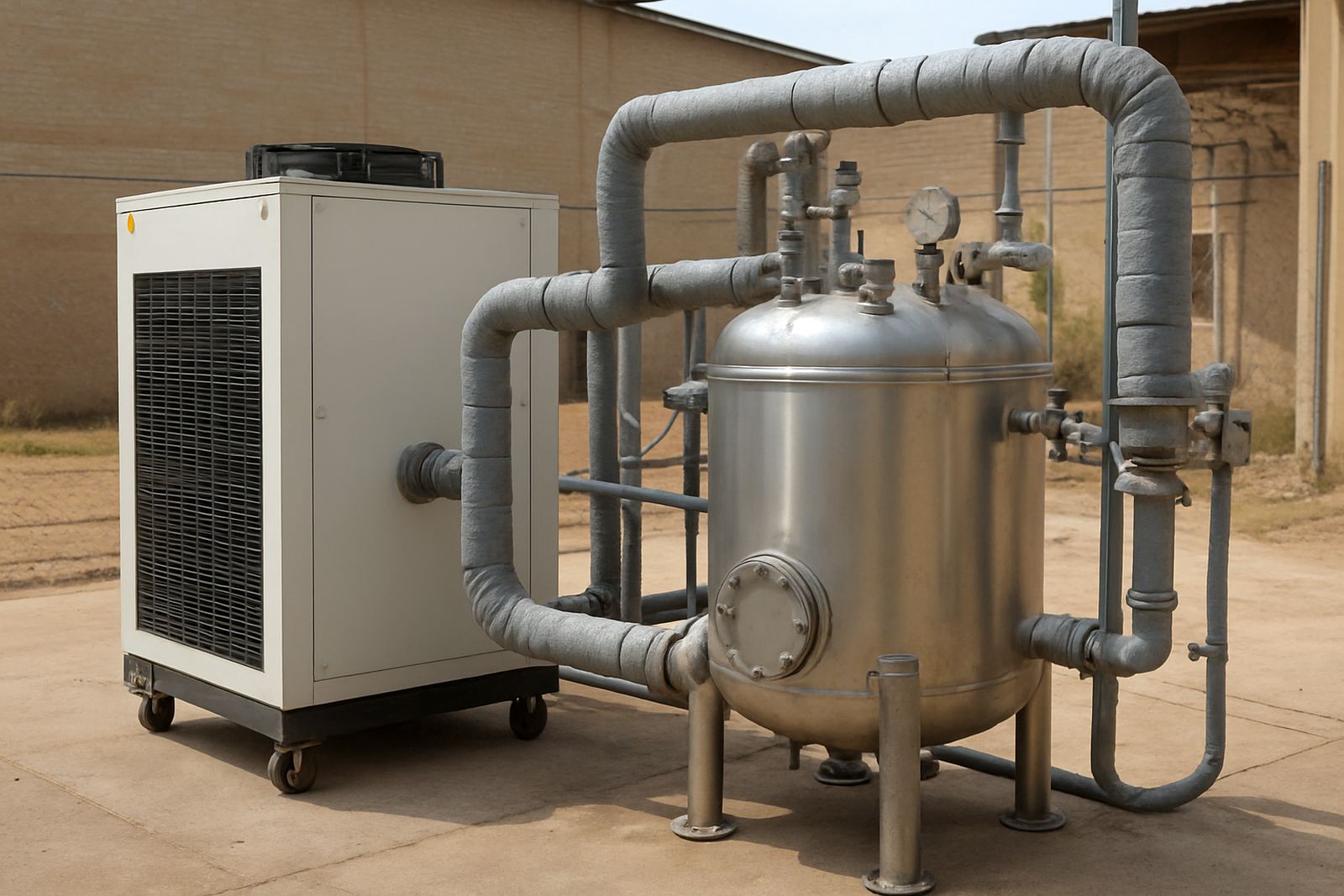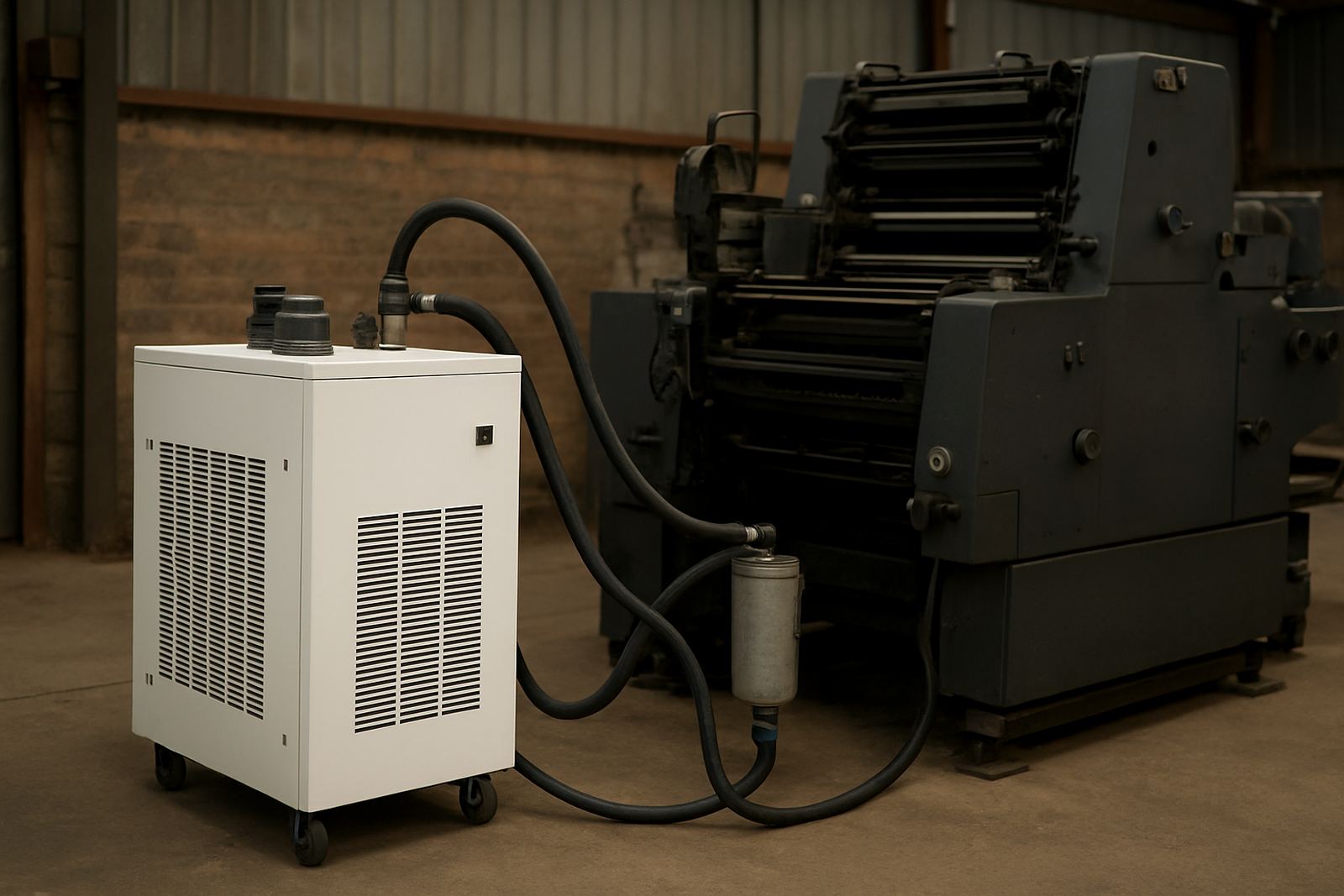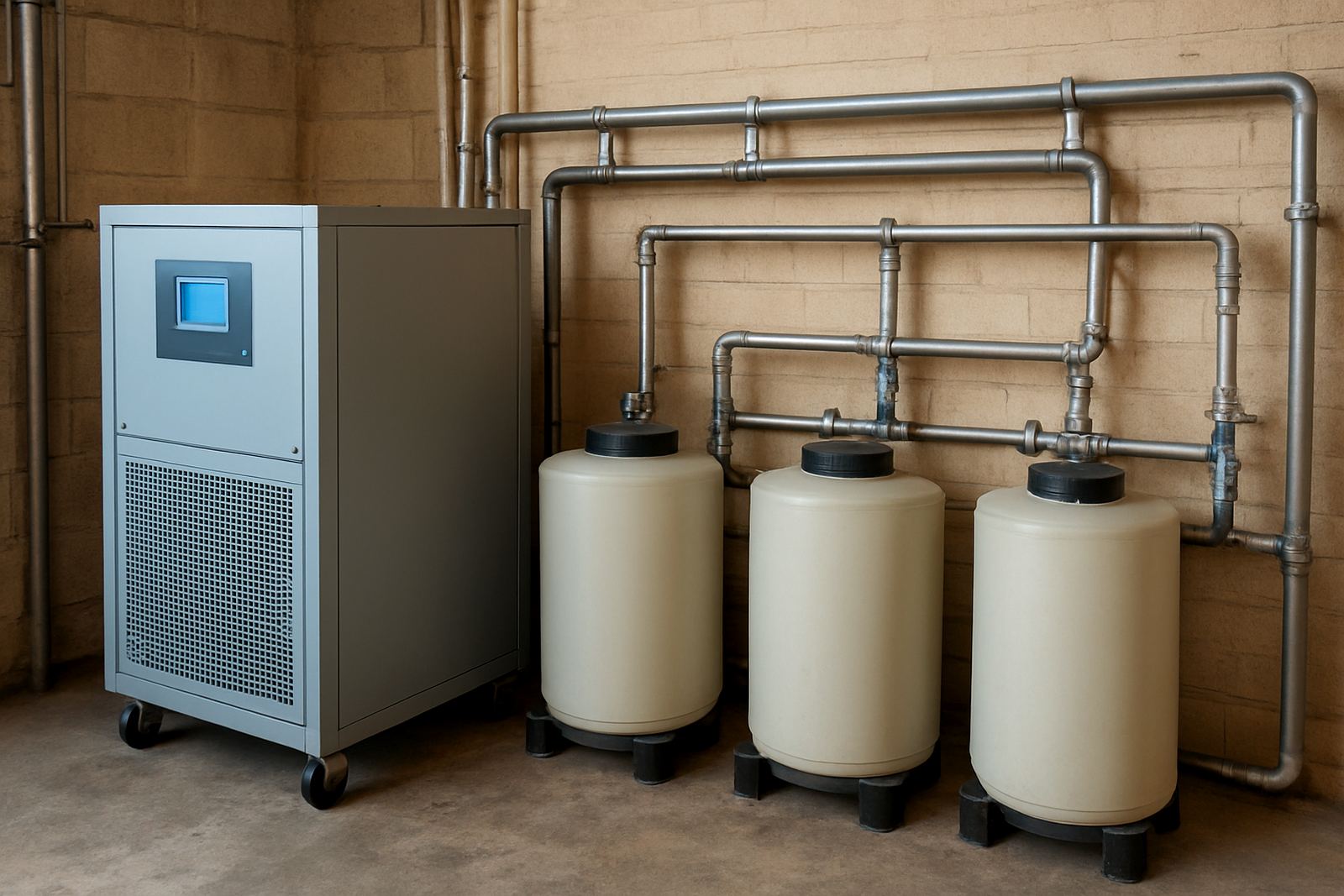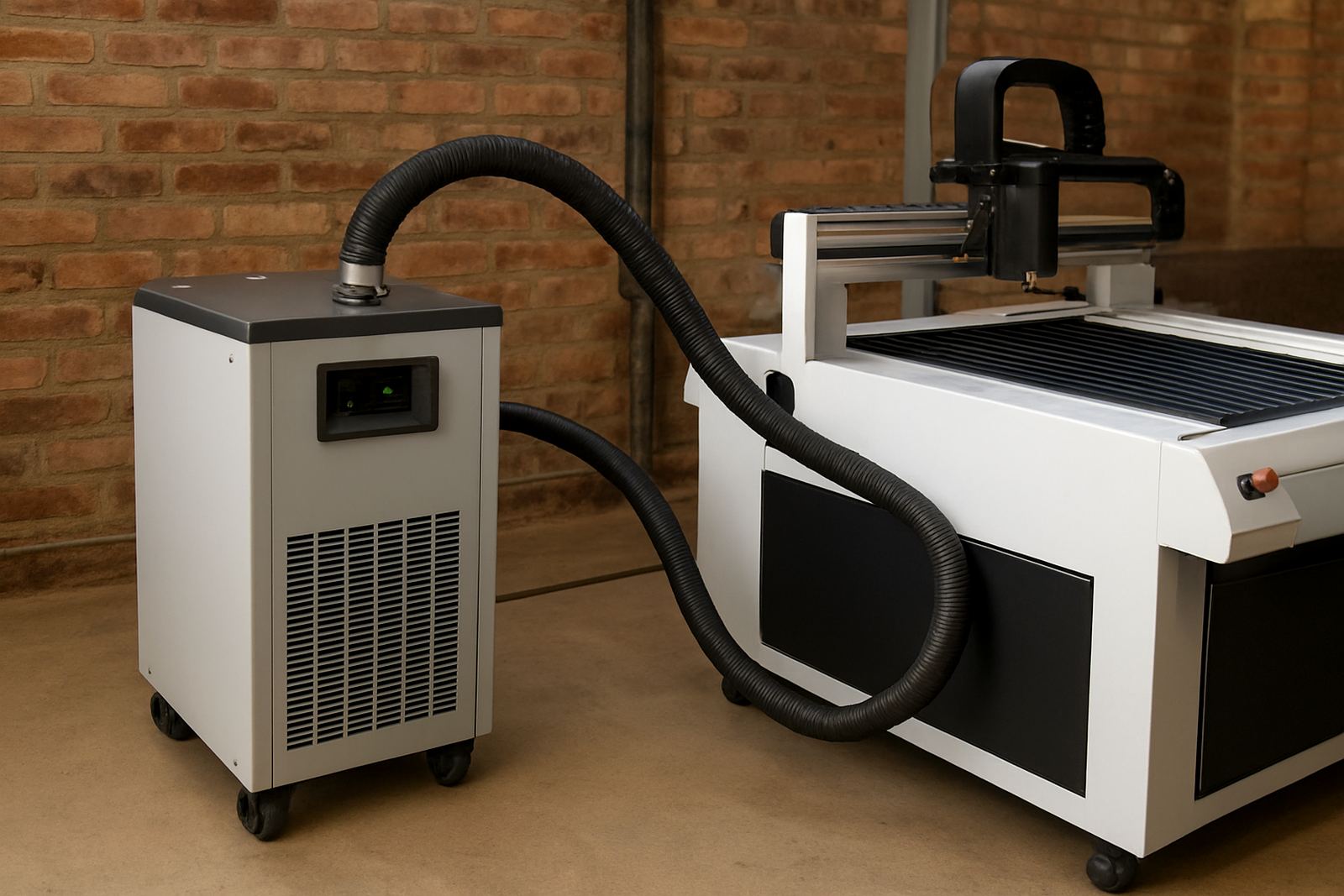
Compact cooling for smaller laser systems
This 3kW laser chiller is made for lower to mid duty laser equipment that needs controlled water temperature for consistent cutting, marking or engraving. It keeps coolant moving through a closed loop, helps protect optics and laser components, and reduces the risk of temperature drift during long runs.
For South African sites, that matters when ambient temperatures climb in summer, when dust gets into plant rooms, and when load-shedding interruptions make process stability harder to manage. A correctly sized chiller also helps reduce unnecessary wear on pumps and cooling circuits.
- For smaller laser machines with steady but not heavy heat loads
- Suitable for workshops, light manufacturing and service bays
- Helps maintain repeatable output on long production shifts
Where a 3kW unit fits best
As a guide, this size is often selected for compact laser systems used in signmaking, component work, small fabrication shops and service environments. It is also a sensible option where the laser runs in cycles rather than continuously, or where the machine manufacturer specifies a cooling duty around 3kW.
It works well in Alberton, Johannesburg, Pretoria, Durban, Cape Town and Rustenburg where users need dependable cooling without oversizing the plant. In coastal areas, the cleaner closed-loop design helps limit scale and corrosion issues, provided the water treatment is kept in check.
- Best for small footprint laser installations
- Useful where floor space and electrical capacity are limited
- Better suited to a single machine than a shared multi-line cooling header
Typical sizes, options and build features
The 3kW model is compact, but there are still practical options to match the job. Depending on the specification, you may choose a tank size, pump configuration, temperature control range and alarm setup that suits the laser machine and the site conditions. The aim is stable operation, not just raw cooling capacity.
Units can be supplied with features that help in real workshop use, such as digital temperature display, fault alarms, flow protection and easy access for routine cleaning. If the system will run near dusty cutting areas or in a warm plant room, we can advise on airflow clearances and service access.
- Closed-loop water circuit for cleaner circulation
- Temperature control set for stable process cooling
- Optional alarms for high temperature, low flow and pump faults
- Compact cabinet footprint for tight installations
Installation, power and site requirements
Installation is normally straightforward when the laser machine has been prepared with the correct inlet and outlet connections. We check the pipe sizes, flow direction, coolant type and any manufacturer limits before commissioning. A neat installation reduces leaks, improves flow and makes future servicing simpler.
On the power side, the unit must match the available supply and breaker arrangement at your premises. Many industrial sites in Gauteng and KwaZulu-Natal work around panel space, cable runs and backup supply, so we confirm the electrical details before start-up. If the site uses a generator or inverter support during outages, the starting load and running load must be checked properly. Keep the unit on a level base with enough ventilation around it, and avoid packing it against a wall.
- Confirm supply voltage and breaker size before installation
- Allow space for airflow and maintenance access
- Check pipework, fittings and coolant compatibility before filling
Care, servicing and water quality checks
Like any cooling unit, this chiller performs best when it is kept clean and serviced on time. Dusty workshops, warm summers and hard water can all affect performance if filters, coils and tanks are neglected. The water should be checked regularly for clarity, level and treatment condition, because poor water quality can lead to scaling, blockages and shortened component life.
Raynen services chillers and cooling units across South Africa, including breakdown repairs, preventative maintenance, refrigeration repairs and water treatment checks. Where needed, we can also inspect pump condition, controls, pipework and panel settings. A chiller that is looked after properly will hold tempertaure better and usually give fewer surprises during production runs.
- Clean filters and check airflow around the condenser area
- Inspect coolant level and signs of contamination
- Test alarms, pumps and flow stability during service visits
What to confirm before ordering
Before you place an order, it helps to gather a few details so the unit is matched to the machine and the site. The most useful information is the laser model, required cooling capacity, inlet and outlet size, temperature setpoint, ambient conditions and whether the system runs continuously or in shifts. If the machine is replacing an older chiller, the current performance problems also help us specify correctly.
Our team in Alrode, Alberton supports customers through the enquiry form on the contact page, with service coverage through Johannesburg, Pretoria, Durban, Cape Town, Rustenburg, Germiston and Boksburg. That means we can assist with supply, commissioning and after-sales support without long delays, whether the unit is going into a new setup or replacing a tired one.
- Laser machine make and model
- Required cooling duty and target temperature
- Voltage available on site and cable route
- Pipe connection sizes and installation space
Key facts
| Cooling capacity | 3kW nominal |
|---|---|
| System type | Closed-loop industrial water chiller |
| Application | Smaller laser machines and light process cooling |
| Temperature control | Digital setpoint control, specification dependent |
| Power supply | Matched to site and machine requirement |
| Construction | Compact cabinet unit with pump and tank assembly |