Built for controlled cooling on chemical plants
A chemical process chiller is a closed loop cooling unit that removes heat from process equipment and keeps the fluid at a set temperature. In chemical duty, that matters because temperature shifts can affect reaction rates, product quality, cycle time and equipment life. Raynen units are specified for industrial use where the load changes during the shift and the plant cannot afford drifting temperatures.
These chillers are commonly used where water or a water glycol mix is circulated through jackets, heat exchangers, sample coolers, pumps and pipework. The machine chills the process fluid, then returns it to the load at a controlled temperature. That gives better repeatability than using raw municipal water, which can vary too much in summer and can carry scale or debris. For many South African sites, especially where load shedding affects support systems, a properly sized chiller helps keep production stable, even when conditions are not ideal.
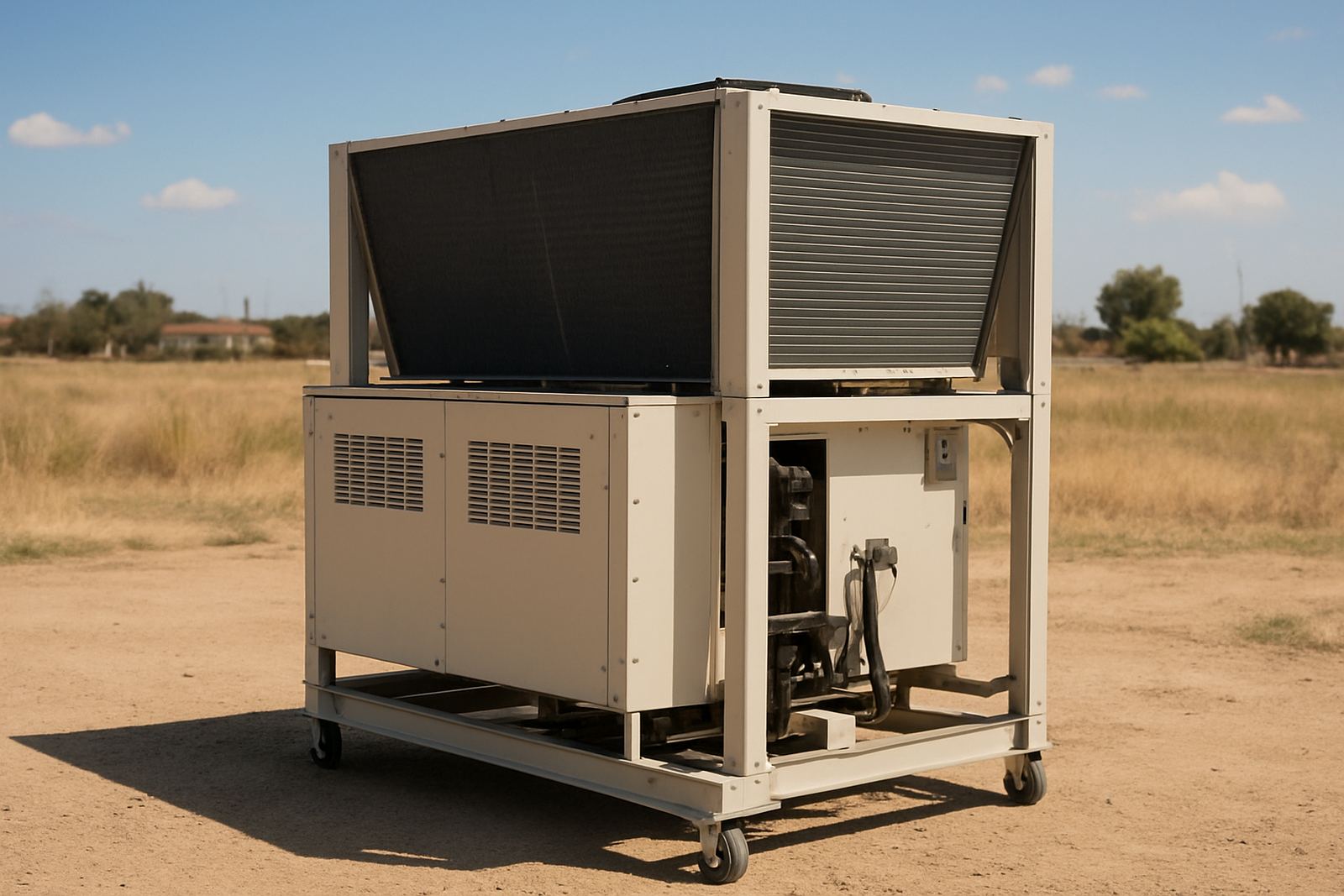
We supply units for indoor plant rooms, outdoor skids and workshop installs, depending on the space available and the duty point. The build can be matched to light chemical work, medium duty batching, or more continuous 24 hour operation where temperature control must stay steady from start to finish.
Typical sizes, cooling ranges and options
Raynen chemical process chillers are available in a range of capacities to suit small pilot plants through to larger production lines. Selection depends on heat load, target temperature, ambient conditions, water quality and whether the system runs on a continuous or intermittent cycle. A machine that is too small will short cycle and struggle on hot days, while an oversized unit can be wasteful and harder to tune.
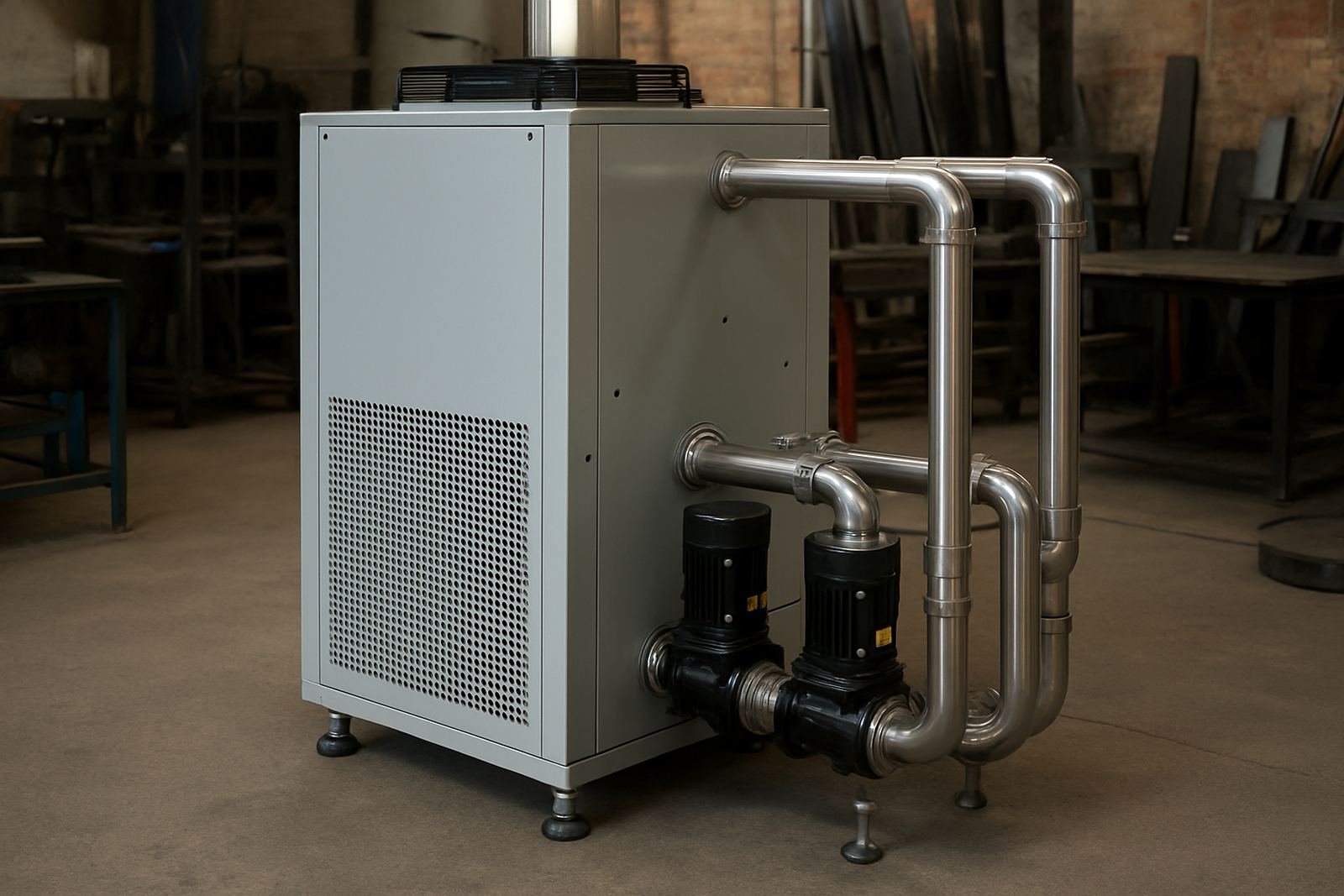
Common options include air-cooled and water-cooled designs, single-circuit or multi-circuit layouts, and units with integral tanks and pumps or remote process pumps. Where a site has coastal humidity, dust, or limited water supply, the choice needs to be made carefully. We also specify controls that suit the duty, including simple digital set point control, alarm outputs and remote start contacts where the process needs to talk to the plant system.
- Cooling capacity from small process loads to higher industrial duties
- Set point control for stable process temperature
- Air-cooled or water-cooled condenser options
- Integral tank and circulating pump packages
- Stainless steel or coated components where corrosion resistance matters
- Optional filtration, flow monitoring and anti-freeze protection
For chemical environments, material choice matters. Pipework, seals and wetted parts need to be checked against the fluid, temperature and any cleaning chemicals used on site. If the application involves aggressive fluids or washdown, we recommend discussing the exact process details before sizing is confirmed.
Where these chillers suit best
Chemical process chillers suit plants that need repeatable cooling rather than general air conditioning. They are used on mixing vessels, reaction vessels, distillation support, solvent handling, material conditioning, lab and pilot plant systems, and some temperature-sensitive filling or packaging lines. They also work well where a mould temperature must stay within a narrow band but the process fluid is exposed to heat from other equipment nearby.
In Johannesburg, Pretoria, Durban, Cape Town and Rustenburg, we often see different site challenges. Inland sites may battle high ambient temperatures, dust and power interruptions, while coastal sites deal with humidity and corrosion. A good chiller setup needs to suit the local conditions as well as the process itself. For example, a plant in Alrode or Germiston may want a compact indoor unit with clean access for maintenance, while a Durban site may need stronger corrosion control and careful airflow planning.
These units are not a one-size-fits-all product. If the process fluid is water only, that is straightforward. If the site needs a glycol blend for low temperature duty or freeze protection, the pump selection, tank size and controls should all be checked together. That avoids nuisance trips and uneven cooling later on.
- Batch processes needing fast pull-down and stable hold temperature
- Continuous process lines with changing heat load
- Plants with heat-sensitive chemical reactions
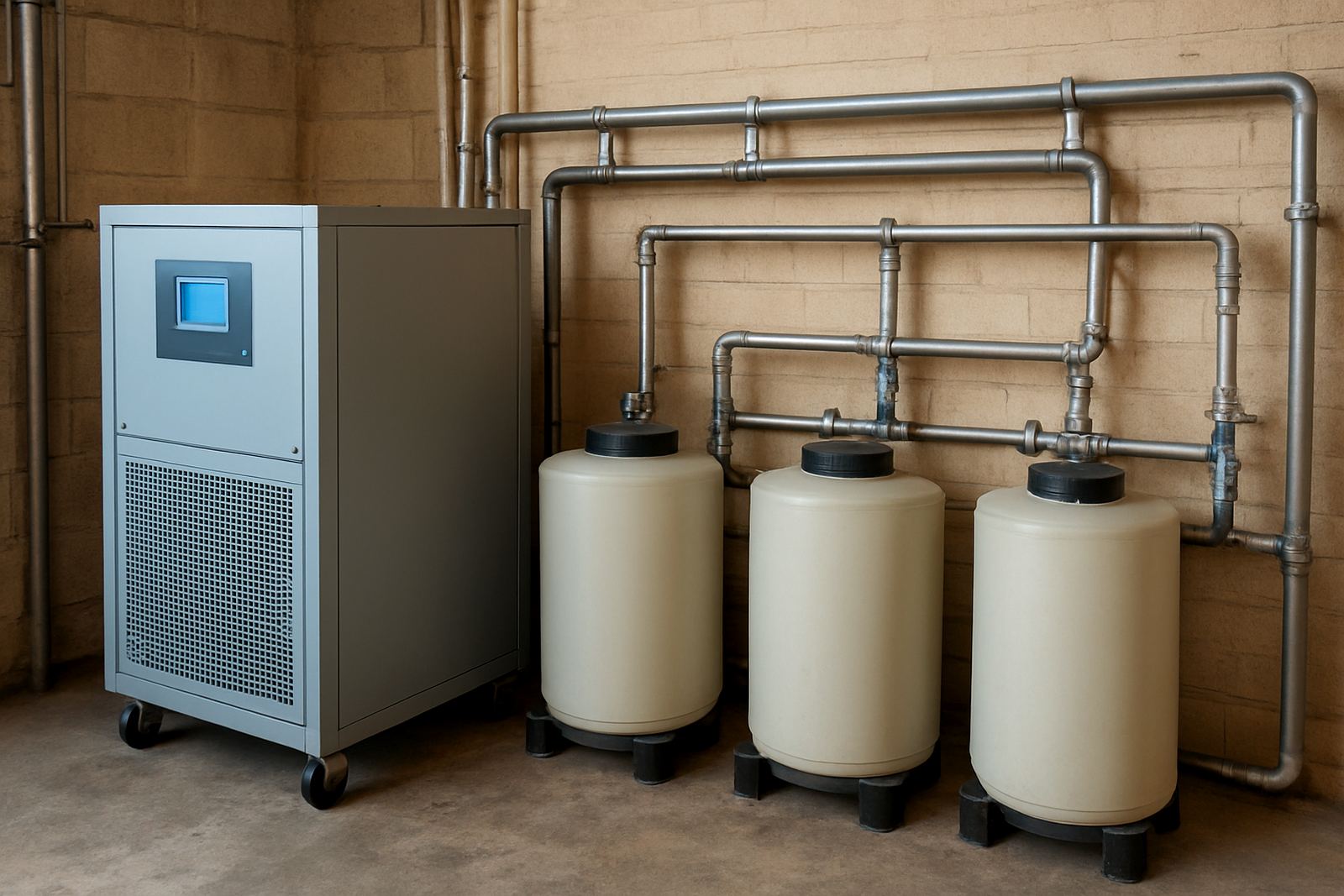
- Equipment rooms where water quality must be controlled
- Sites needing temporary cooling during maintenance or plant shutdowns
Installation, power supply and site requirements
Installation starts with the heat load, the duty temperature and the space available around the unit. The chiller needs enough clearance for air movement, service access and safe pipe routing. On many sites, the best place is a plant room with good ventilation and a solid, level base. Outdoor placement is possible on some units, but the unit must be protected from direct weather, vandalism and blocked airflow.
Power requirements depend on the capacity and compressor arrangement. Most industrial units need a suitable three phase supply, with isolator, correct cable sizing and proper protection at the board. It is important that the electrician confirms the available supply before delivery. Where starting current or voltage fluctuations are a concern, the control gear and protection settings need to be checked against the site supply. If the plant is subject to municipal or internal compliance rules, we can align the install with those requirements. The same applies where water discharge, bunding or drainage needs approval.
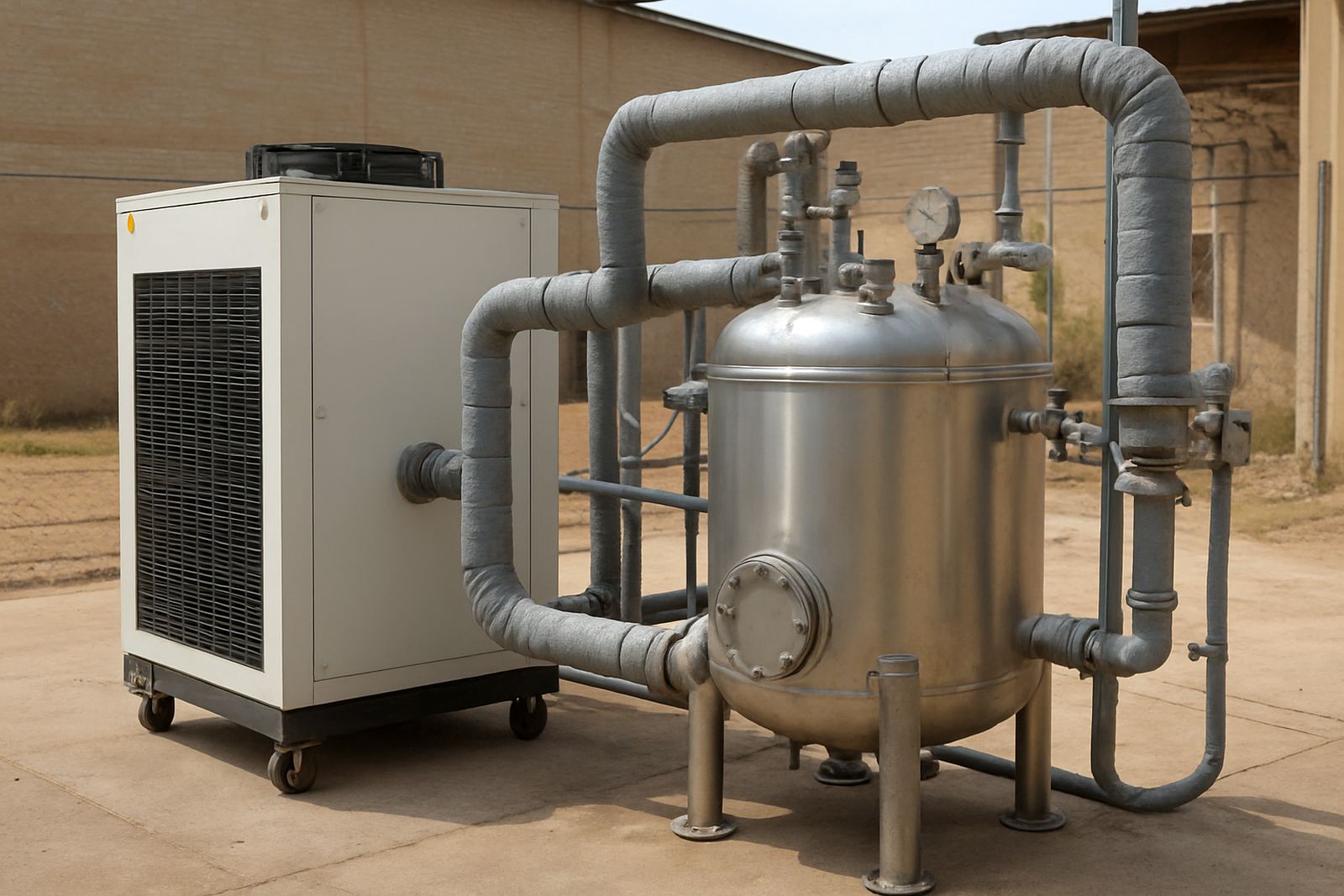
Process connections should be planned in advance. Pipe diameter, insulation, valve positions and drain points all affect performance. If the system is remote from the chiller, the pipe run must be sized to avoid pressure drop. Poor pipework can make a correct chiller behave like the wrong one, which is where many sites lose cooling capacity without realising it.
For plants that cannot stop, temporary cooling can be arranged while a permanent installation is being completed or while an existing unit is repaired. That helps reduce downtime during retrofits or breakdown work.
Care, servicing and water treatment checks
A chemical process chiller needs regular attention to keep it reliable. In industrial service, the most common causes of trouble are blocked strainers, dirty condensers, low fluid level, fouled heat exchangers, incorrect set points and weak flow through the process circuit. Preventative maintenance is cheaper than dealing with a downed line after hours, especially when production is tied to a narrow batch window.
Our service team handles preventative maintenance, breakdown repairs, refrigeration repairs, pump replacements, water treatment checks and control panel upgrades. We also do cooling audits for plants that suspect the chiller is undersized or not performing to spec. On many sites, the fix is not just the chiller itself, but the full loop including pumps, valves, pipework and water quality.
- Check strainers and filters on a regular basis
- Inspect hoses, clamps, unions and insulation for leaks or sweating
- Confirm the chilled fluid concentration if glycol is used
- Clean condensers and verify airflow around the unit
- Test alarms, flow switches and temperature controls
- Review pump condition, seals and motor load
We recommend a planned service interval based on run hours and site conditions. Plants near the coast or in dusty industrial areas often need more frequent cleaning. If the unit serves a critical process, a spare pump or standby arrangement may be worth considering so the line can keep running during repairs. It is also wise to train operators on basic checks, because small issues are usually spotted first at the panel or at the vessel.
What to check before you place an order
Before ordering a chemical process chiller, gather the process details so the unit can be sized properly. The most useful figures are the required inlet and outlet temperatures, the heat load in kW or kcal/hr, the number of circuits, the type of fluid, and the distance between the chiller and the process load. If you do not have all the numbers, we can work from the equipment details and operating cycle.
It also helps to know whether the site needs fast pull-down after start-up, or only steady holding once the batch is stable. Some plants need low noise, some need compact footprints, and others need extra corrosion protection. If there are shut down periods, seasonal peaks or washdown routines, say so early, because those details affect the final selection. A unit that suits a winter run may struggle in a hot January afternoon if the ambient temperature was not allowed for.
When you send an enquiry, include the process use, space limits, power availability and any special material requirements. That gives the team enough information to quote correctly and avoid rework later. If a site has several similar machines, we can also standardise the cooling solution so maintenance stays simpler across the plant.
Key facts
| Product type | Industrial chemical process chiller |
|---|---|
| Cooling capacity range | Sized to match small to medium industrial process loads and larger continuous duties |
| Temperature control | Electronic set point control with stable process delivery |
| Condenser options | Air-cooled or water-cooled |
| Power supply | Typically three phase industrial supply, final rating depends on size |
| Common applications | Reactors, mixers, jackets, heat exchangers, lines and temperature-sensitive process equipment |