What System Commissioning Covers On Site
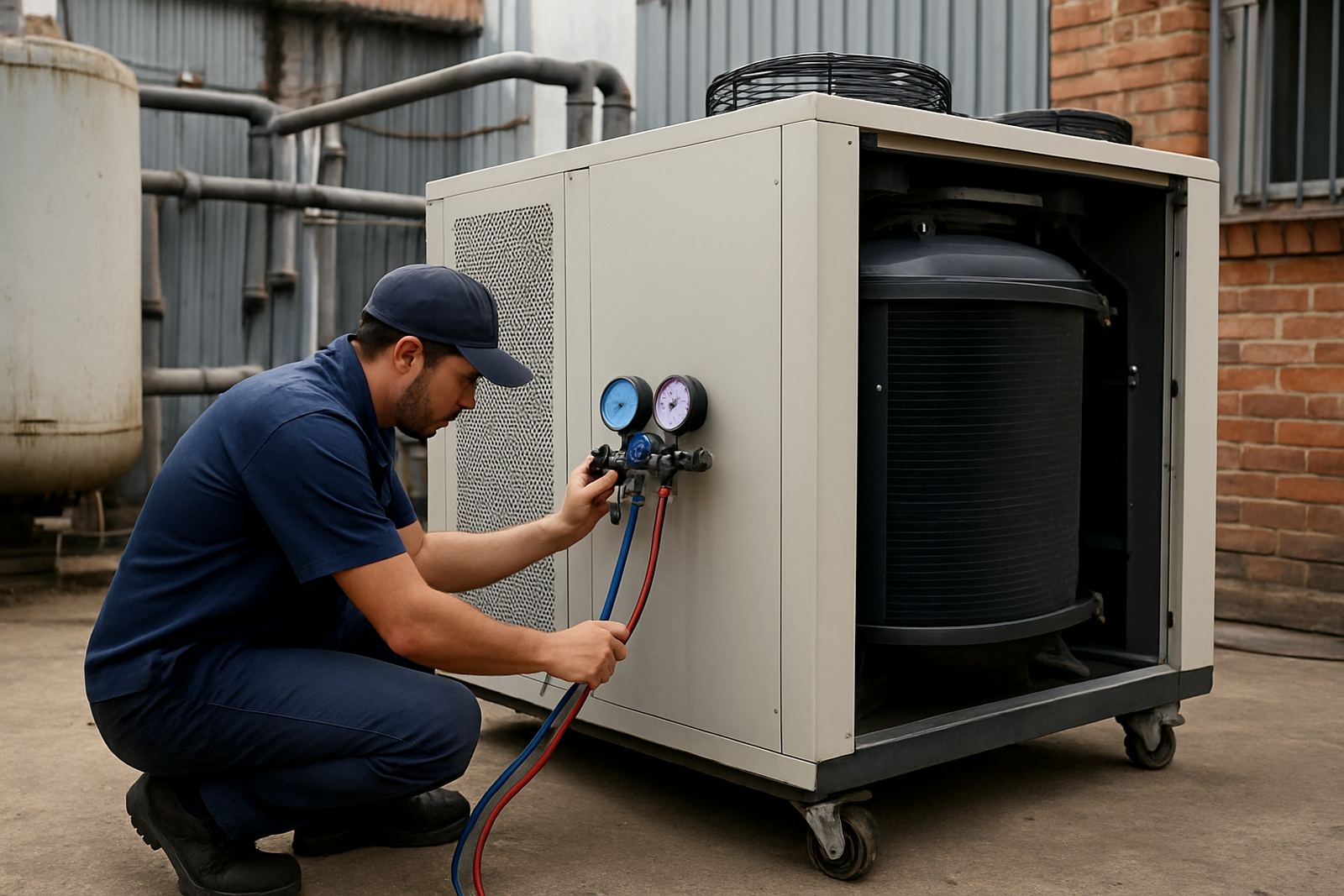
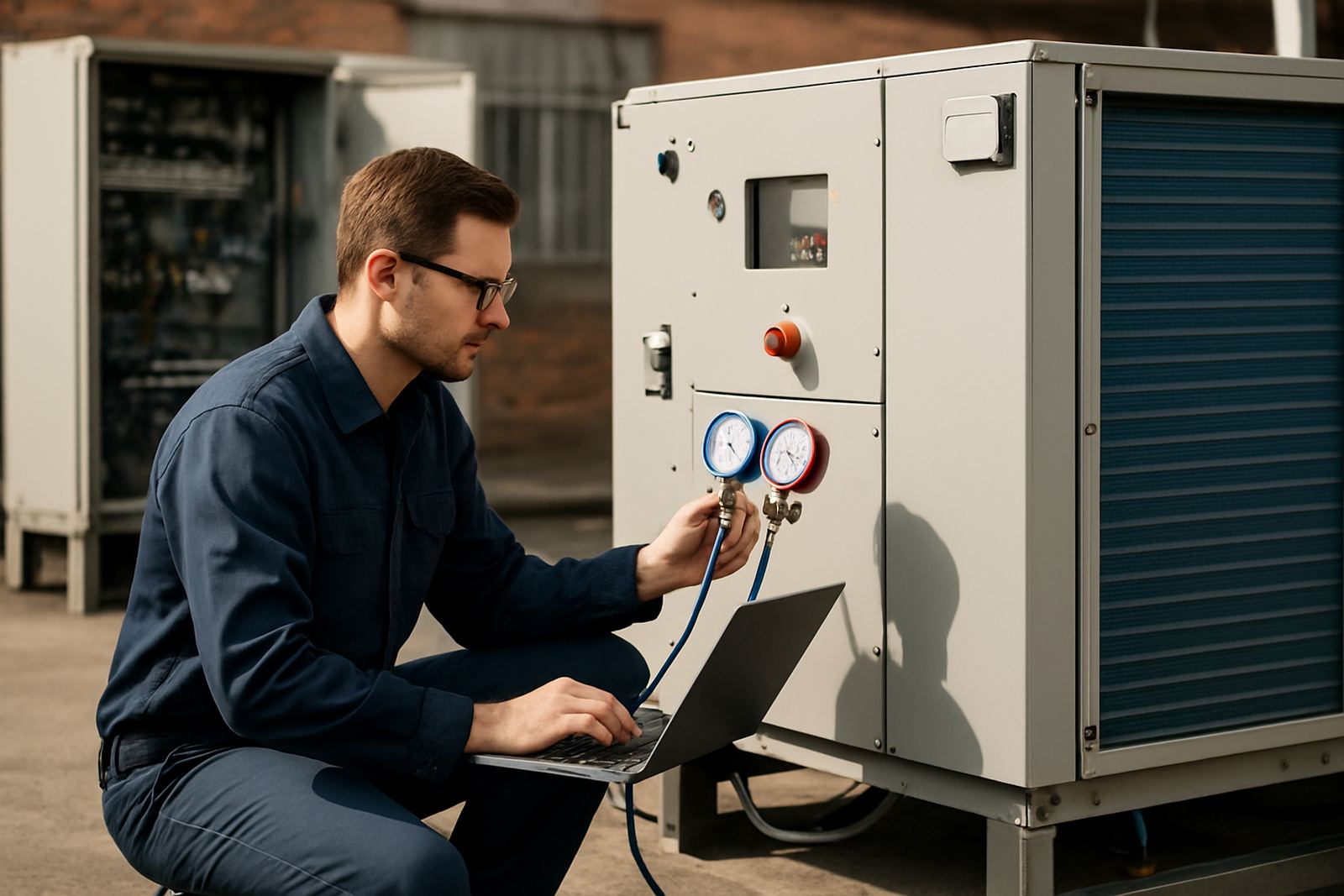
Commissioning is the final technical step before a chiller is handed over to your production team. It is more than switching the unit on. We verify that the chiller is matched to the application, the chilled water loop is clean, and every control function responds as it should under actual site conditions.
For laser cooling, mould temperature control and process line cooling, the unit must hold a stable temperature even when ambient conditions change, pumps cycle, or multiple machines draw cooling at the same time. In Alberton, Germiston and Boksburg we often see high summer temperatures and dusty environments, while coastal sites in Durban and Cape Town need extra attention to corrosion and moisture. Commissioning takes those site factors into account.
- Start-up checks on electrical supply, phase rotation and control wiring
- Flow verification through pumps, strainers and pipework
- Temperature setpoint confirmation and sensor calibration
- Safety function testing, including alarms and trip conditions
- Load testing against the actual process demand where possible
Our Commissioning Process From First Flush To Handover
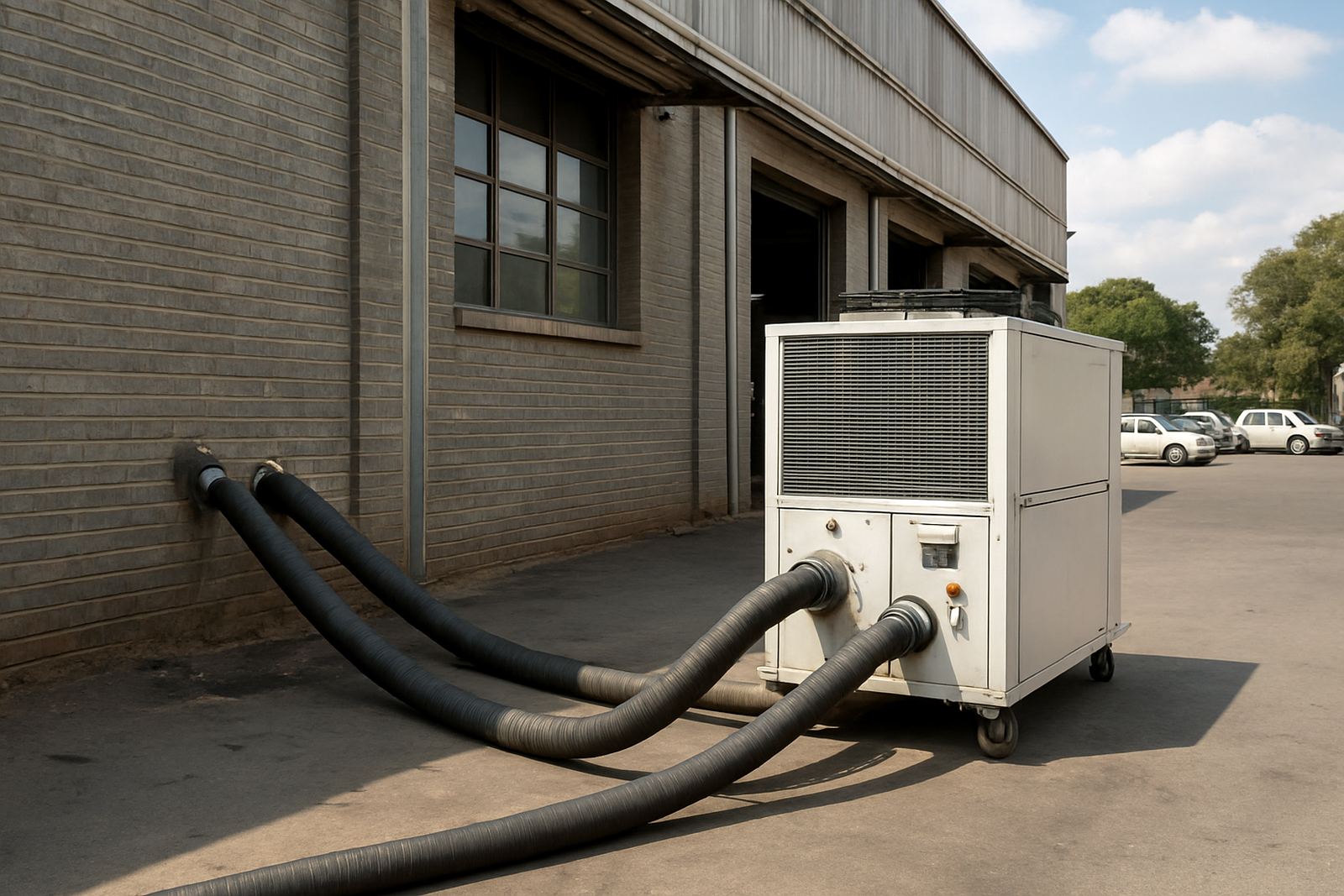
We follow a practical sequence so nothing is missed. The process starts with a visual inspection of the installation, including pipe sizes, isolation valves, flexible connections, water quality and access for future servicing. If the system is linked to a laser, mould circuit or process line, we confirm that the chiller, manifold and process equipment are all speaking the same language, so to say.
- Pre-commissioning inspection and checklist review
- System flushing, cleaning and air removal where required
- Electrical checks, pump direction and control verification
- Temperature ramp-up, flow balancing and stability testing
- Final handover notes with operating settings and warning points
Where required, we also check that installation complies with the practical requirements of the site, such as drainage for blowdown, safe access for maintenance, and suitable protection from weather. Municipal and factory rules can differ from one area to the next, so we work with the conditions on the ground rather than relying on guesswork.
Typical Specifications We Confirm Before Production Starts
Every chiller application is different, but there are a few technical points we always confirm during commissioning. These details matter because a unit can appear to be running while still failing to deliver stable process cooling. Small control errors can lead to poor part quality, laser faults or unnecessary wear on compressors and pumps.
- Supply voltage and phase balance, typically 380V to 525V three phase depending on the installation
- Process temperature control range, often from 5 C to 25 C depending on the application
- Flow rate through the circuit, matched to pump duty and pipe diameter
- Alarm setpoints for high temperature, low flow, low level and overload protection
- Water quality checks for conductivity, scaling risk and contamination
- Operating pressure and differential pressure across the system
For mould cooling, we pay close attention to repeatability from cycle to cycle. For laser cooling, temperature drift must be tightly controlled. For process lines, the priority is usually stable output with no unnecessary stoppages. The commissioning settings are adjusted to suit the real production need, not just the nameplate values.
Turnaround Time And What Affects It
Turnaround depends on the size of the chiller, the condition of the installation and whether the water loop is already clean. A straightforward commissioning on a single unit can often be completed in a day, while larger multi-unit systems, temporary cooling arrangements or sites with pipework changes may take longer. If water treatment issues, wiring faults or control upgrades are found, we deal with them before handover rather than forcing a quick sign-off.
In Johannesburg and Pretoria industrial areas we can usually schedule faster visits for repeat clients or urgent production starts. Coastal and outlying sites may need extra lead time for travel, especially if there are access restrictions, shift work or plant shutdown windows. We plan around your production schedule where possible so commissioning happens during the right downtime, not in the middle of a busy run.
Pricing Based On Scope, Not Guesswork
We price commissioning according to the actual scope of work. That includes the chiller size, number of circuits, site location, access conditions, and whether flushing, fault rectification or control adjustments are needed. This approach keeps the quote practical and fair. It also means you know what is included before any work starts.
For most projects, the pricing structure will reflect whether the job is a basic start-up, a first-time installation, or a more involved commissioning after pipework modifications or equipment relocation. If temporary cooling is needed while production continues, that is priced separately based on duration and duty. We can also combine commissioning with preventative maintenance if you are bringing several units online at the same time.
- Basic commissioning for a clean, ready installation
- Extended commissioning for fault finding or system balancing
- Site-based pricing for out-of-town projects
- Separate pricing for consumables, repairs and water treatment corrections
Maintenance Intervals After Commissioning
Commissioning is the start of proper care, not the end of it. Once the system is handed over, we recommend a maintenance schedule based on duty cycle, ambient conditions and water quality. A laser chiller running daily in a dusty workshop will need more frequent checks than a light-duty unit in a controlled room. Coastal humidity, scale build-up and load-shedding related restarts can all affect performance over time.
As a general guide, we advise a short check after the first few weeks of operation, then scheduled preventative maintenance at regular intervals through the year. That may include cleaning strainers, checking refrigerant pressures, inspecting pumps, confirming alarm function and reviewing water quality. If your plant runs through winter and summer shifts, it is worth planning these visits in advance so small faults are caught early. It saves money and keeps the equipment running longer.
Working With The Raynen Service Team
Our Alberton base in Alrode supports clients across Ekurhuleni and the rest of South Africa, including Johannesburg, Pretoria, Durban, Cape Town and Rustenburg. The team includes people who work on the technical side, the planning side and the service side, so commissioning is handled with proper follow-through from first visit to handover. We also work with branches and service areas in Germiston and Boksburg for faster local support.
Clients usually reach us through the enquiry form on our contact page, and from there we assess the application, the equipment and the timeline. Whether you are commissioning one chiller or a full cooling package for a production line, we keep the process clear and practical. No drama, just the checks needed to put the unit into service properly.
Key facts
| Application scope | Industrial water chillers for lasers, moulds and process lines |
|---|---|
| Commissioning focus | Controls, flow, temperatures, alarms and safety functions |
| Typical control range | 5 C to 25 C depending on the process requirement |
| Electrical checks | Supply voltage, phase rotation, overloads and control wiring |
| Water system checks | Flow rate, pressure, air removal and water quality |
| Service coverage | Alberton, Johannesburg, Pretoria, Durban, Cape Town and Rustenburg |