Short-term cooling for downtime, shutdowns and peak loads
Temporary cooling is used when you need process temperature control now, not after a long repair lead time. We set up short-term cooling units for planned shutdowns, emergency breakdowns, commissioning periods and seasonal demand spikes. This keeps production running while your main chiller is offline, undersized or being serviced.
Our support is suited to laser cutting systems, injection moulding, extrusion, machine tooling and process lines that need stable water temperatures. In many plants the issue is not only heat removal, but keeping the water clean, pressure steady and flow correct to protect equipment. That matters in Gauteng heat, on coastal sites with humidity, and in dusty industrial areas where cooling gear can struggle.
- Backup cooling for repairs and rebuilds
- Short-term capacity for extra shifts or added machines
- Support during shutdowns, tie-ins and commissioning
- Temperature control for sensitive laser and mould applications
What is included in a temporary cooling setup
Each temporary cooling arrangement is matched to your load, piping and process conditions. We look at the water volume, target temperature, heat load in kW, required flow rate, return temperature, available space and electrical supply before confirming the setup. Where needed, we also plan for bypass lines, flexible hose runs, filtration and a water treatment check so the temporary unit does not create a new fault.
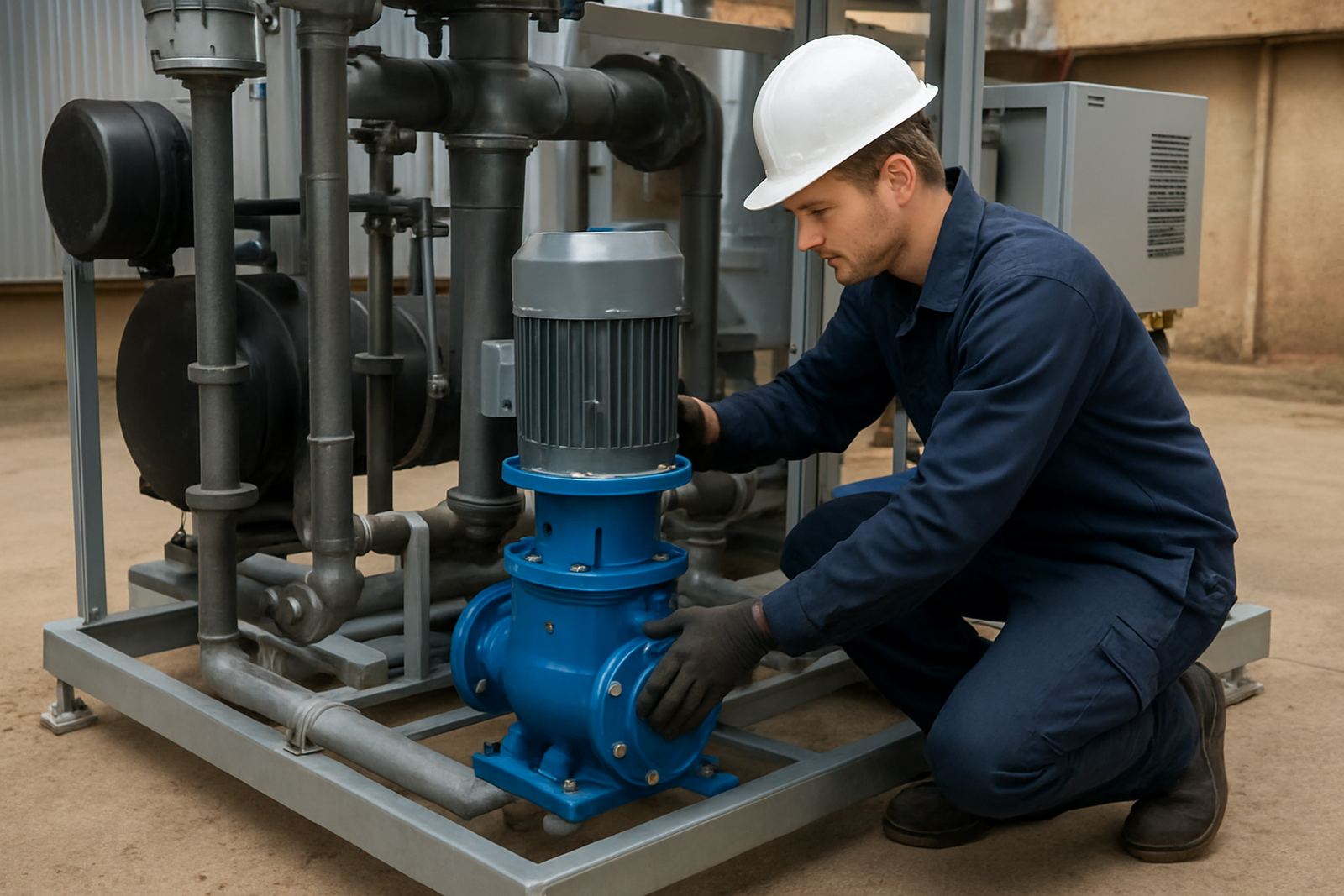
Typical temporary cooling packages can include a chiller or cooling unit, pump set, strainers, temperature controls, flexible connections and operator handover. If your site has sensitive lasers or mould circuits, we can specify tighter temperature control and better filtration to reduce fouling and condensation risk. We can also stage the install so your plant keeps operating while the switchover takes place.
- Load assessment and site check
- Temporary chiller or cooling unit selection
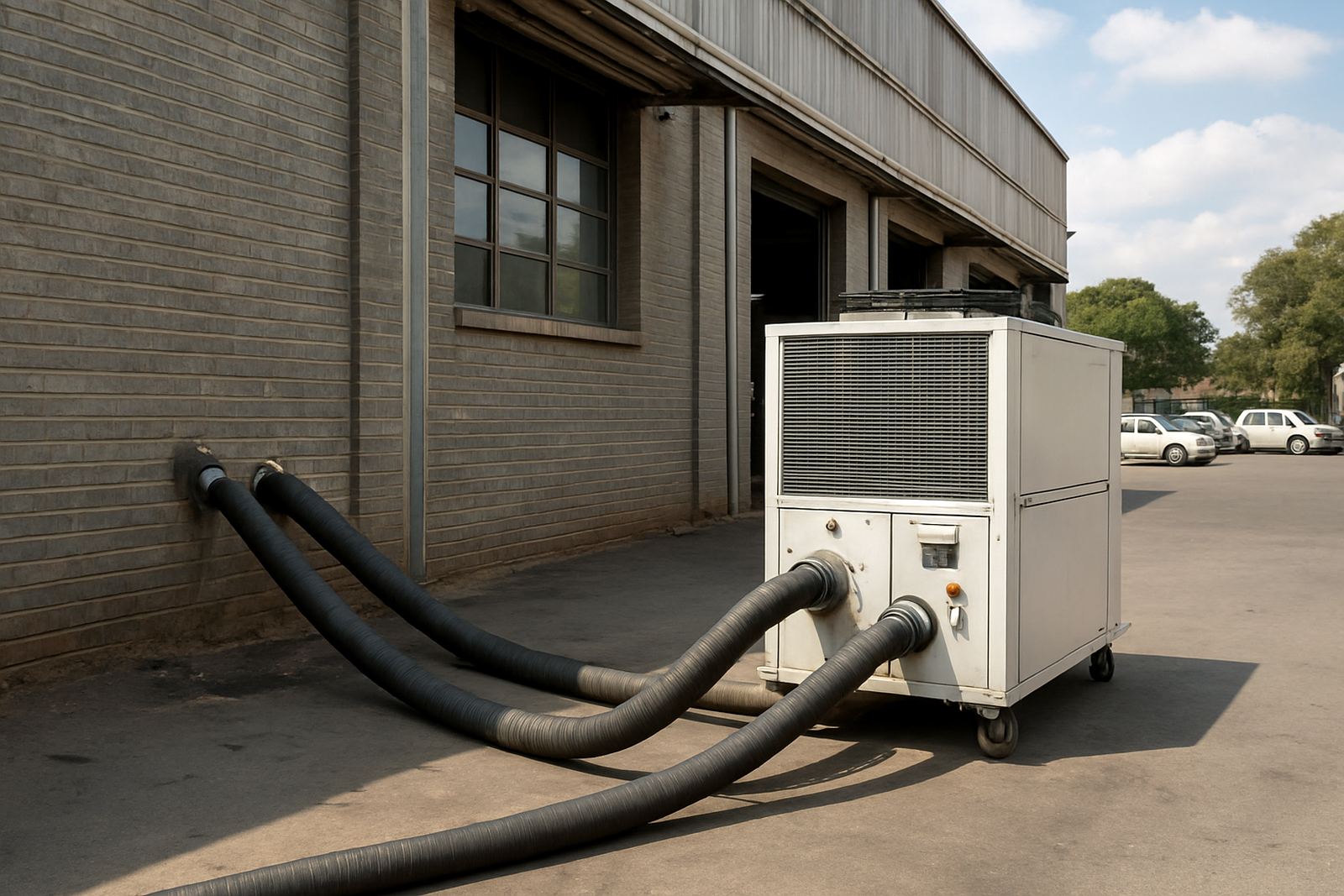
- Connection to existing pipework or flexible link hoses
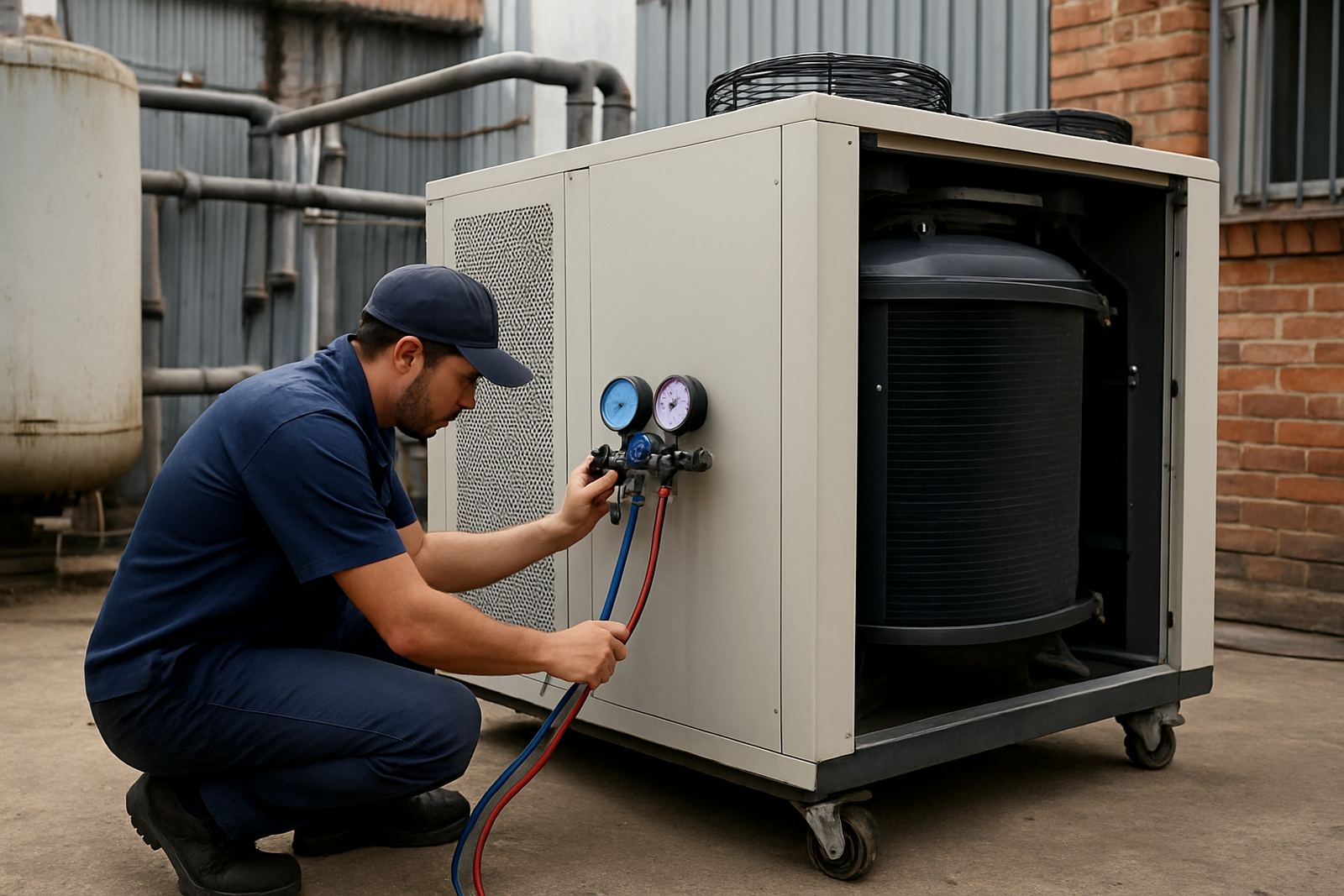
- Flow, temperature and pressure verification
- Operator briefing before handover
Our process from first call to commissioning
Clients contact us through the enquiry form on our contact page, then we assess the cooling requirement and urgency. For emergency breakdowns, we focus first on getting a safe temporary solution in place. For planned shutdowns, we work with your maintenance team so the cooling changeover happens inside your production window.
The process is practical and direct. We confirm the duty points, check access, identify electrical and water connections, then prepare the equipment and accessories. On site, our team installs, tests and commissions the temporary system, then checks that the chilled water temperature is holding under real load. If your facility runs shifts, we can schedule handover around production hours so there is less disruption.
- 1. Enquiry and urgency assessment
- 2. Cooling load review and site requirements
- 3. Equipment selection and scheduling
- 4. Delivery, installation and test run
- 5. Monitoring, handover and removal when the job is complete
Turnaround times and service areas
Turnaround depends on the size of the duty, the site access and the level of control required. For urgent callouts in Alberton, Johannesburg, Germiston, Boksburg and Pretoria, we aim to respond quickly and get the temporary arrangement moving without unnecessary delay. For Durban, Cape Town and Rustenburg, the schedule depends on transport and site coordination, but we still plan the fastest workable dispatch.
We service plants across South Africa from our base in Alrode, Alberton. That includes industrial areas where shutdowns are planned over weekends, public holiday periods or night shift windows. Where production cannot stop, we can stage the installation so only a section of the line is taken down at a time. This helps keep output steady while the cooling issue is sorted out.
- Alberton Depot
- Johannesburg Service
- Pretoria Service
- Durban Service
- Cape Town Service
- Rustenburg Service
Pricing approach and rental period planning
Temporary cooling is priced according to the cooling duty, hire period, transport distance, installation complexity and any extra parts needed for the tie-in. A short emergency hire for one machine is not priced the same as a multi-week process support arrangement with pumps, pipework and monitoring. We quote according to what your site actually needs, so you are not paying for unnecessary capacity.
Where the job is likely to run longer, we can discuss maintenance intervals and review points at the start. That helps you budget properly and avoid surprise cost escalations. If the cooling load changes during the hire period, we can adjust the setup or recommend a different configuration. Clear pricing is important on shutdown work because every hour counts and the plant team needs certainty.
- Duty size and temperature set point
- Hire duration and callout urgency
- Transport, install and removal
- Additional fittings, water treatment or controls
Maintenance intervals while the unit is on site
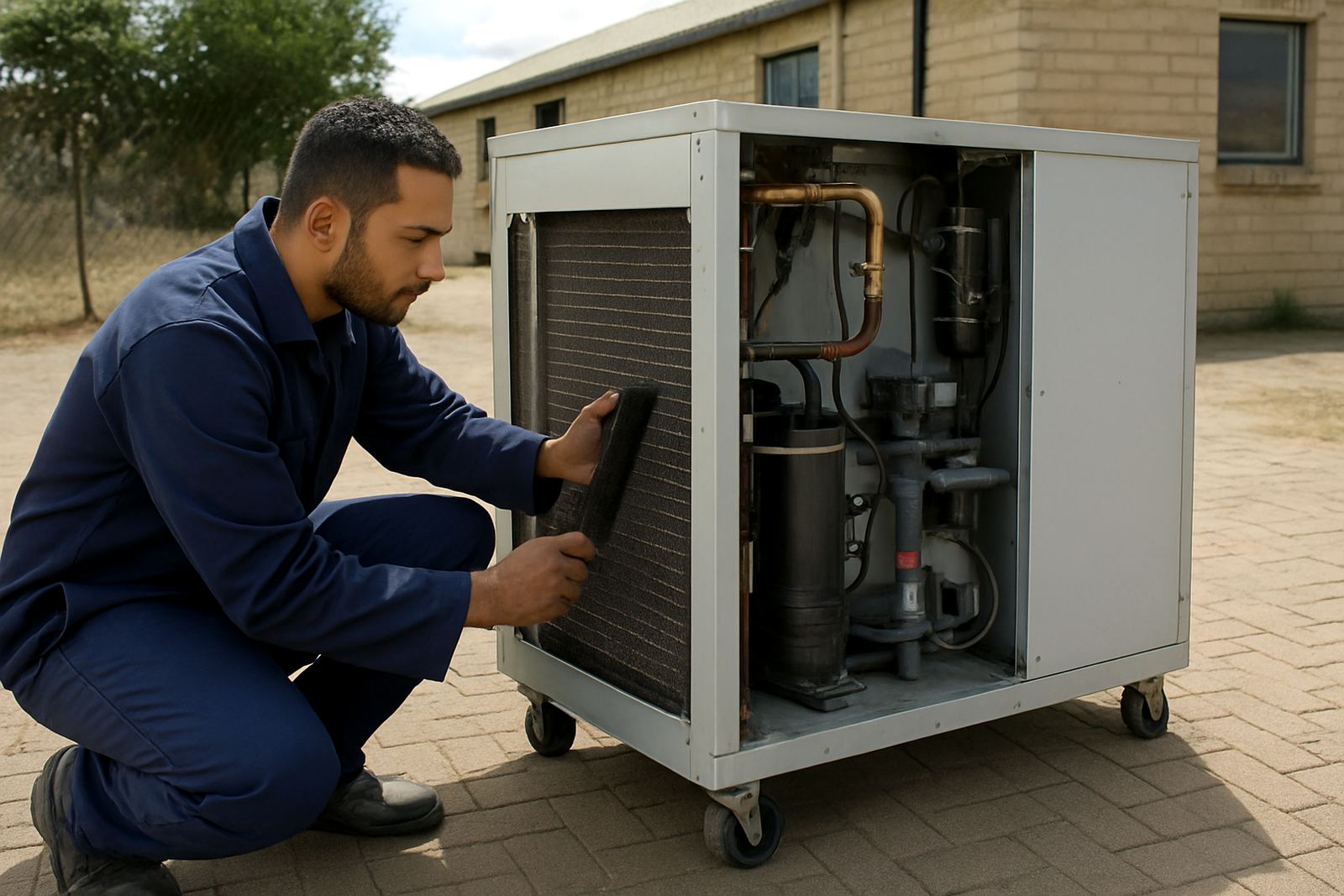
Temporary cooling equipment still needs checks while it is running. The interval depends on dust, heat, water quality and the hours worked, but most sites benefit from routine inspection during the hire period. For dirty or high-heat environments, we recommend regular filter checks, pressure readings and water quality review so the system stays stable. On coastal sites, salt air and moisture can speed up corrosion if the unit is not monitored.
Maintenance during temporary cooling can include cleaning strainers, checking pump operation, verifying temperatures, checking hoses and looking for leaks or vibration. If the process is sensitive, we can schedule more frequent visits to keep the water circuit within range. Small issues caught early are easier to fix than a line stoppage later on.
- Daily operator checks for temperature, flow and alarms
- Weekly or scheduled site visits for longer hires
- Water treatment checks where the circuit allows it
- Filter cleaning and hose inspection
Key facts
| Typical cooling duty | Sized to the process load, from single-machine support to multi-circuit temporary coverage |
|---|---|
| Temperature range | Commonly set for stable process water control, with tighter ranges available for laser and mould duties |
| Flow requirement | Matched to existing equipment and pipe size to maintain correct circulation and heat transfer |
| Power supply | Confirmed before dispatch so the temporary unit matches the site's electrical availability |
| Connection type | Flexible hose tie-ins, temporary pipework or direct connection to suitable existing circuits |
| Hire duration | From emergency short-term cover to planned support over shutdowns or extended maintenance periods |