What our refrigeration repairs cover
When a chiller starts running warm, tripping on fault, or losing holding capacity, the issue is often inside the refrigeration circuit. We repair the parts that affect temperature control day to day, not just the symptom on the display. That includes compressors, expansion devices, pressure controls, sensors, fans, condensers, evaporators, and the pipework around them.
We work on industrial water chillers used for laser cutting, mould cooling, welding lines and other process applications where temperature drift can cause scrap, downtime or poor product finish. In Gauteng, especially through summer afternoons and dusty workshop conditions, we often see problems caused by blocked coils, refrigerant leaks, contaminated oil, and weak airflow around the unit.
- Compressor fault diagnosis and replacement advice
- Leak detection on refrigeration pipework and fittings
- Control and sensor fault tracing
- Condenser and evaporator cleaning or repair
- Pressure switch, relay and contactor testing
- Cooling performance checks under load
How we diagnose a refrigeration fault
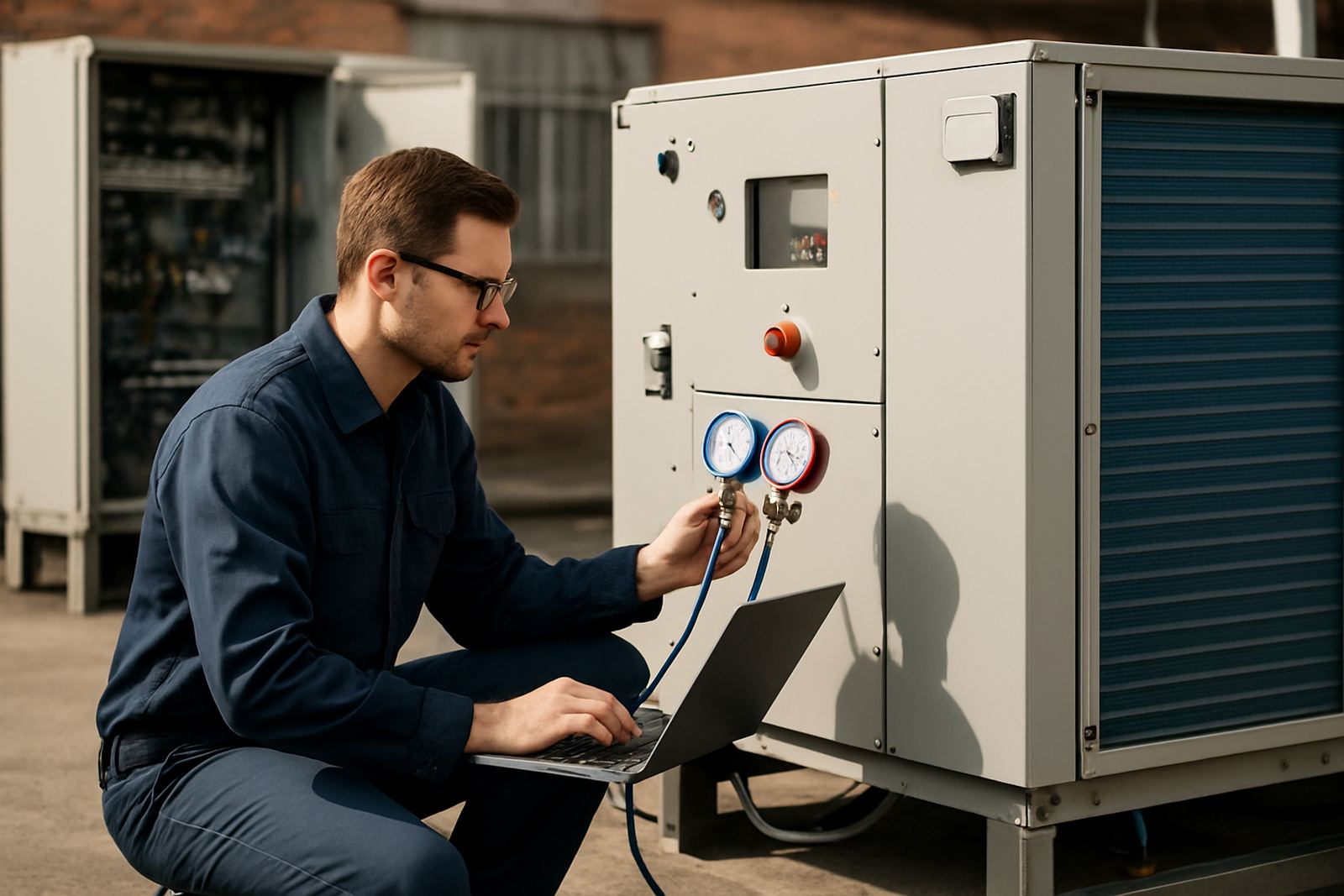
We start with a full visual and operational inspection. That means checking run hours, alarm history, oil condition, operating pressures, suction and discharge temperatures, water temperatures, flow rate and any signs of icing or short cycling. If the chiller is connected to a laser or mould loop, we also check whether the problem sits in the refrigeration circuit or in the water side setup.
Our technicians then isolate the fault so we are not replacing parts blindly. In many cases, a unit that looks like it needs a new compressor may only need a blocked filter, a failing sensor, or a leak that has allowed the refrigerant charge to drop too far. Good diagnosis saves cost and keeps the repair proper first time.
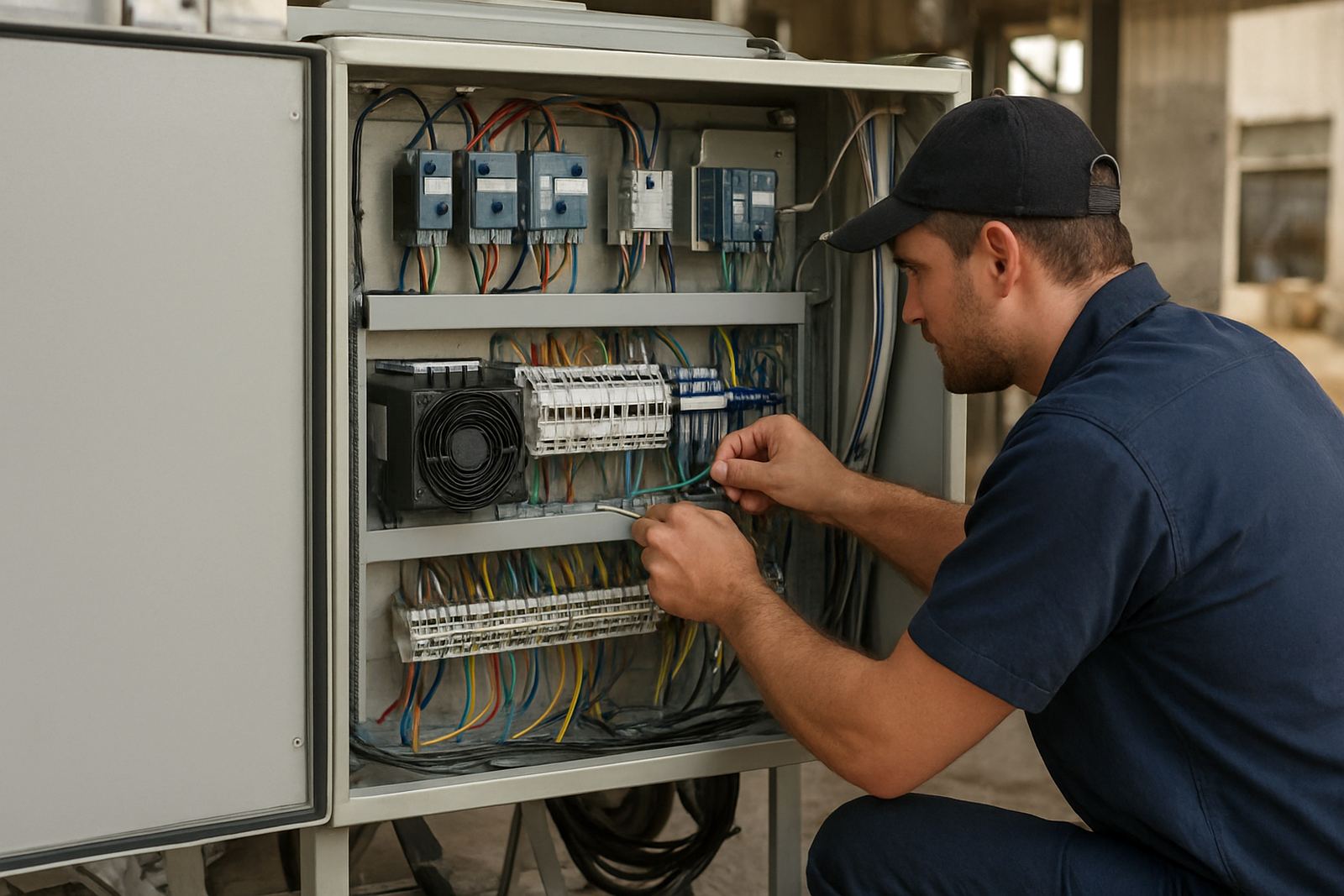
- Electrical checks on controls, starter circuits and protection devices
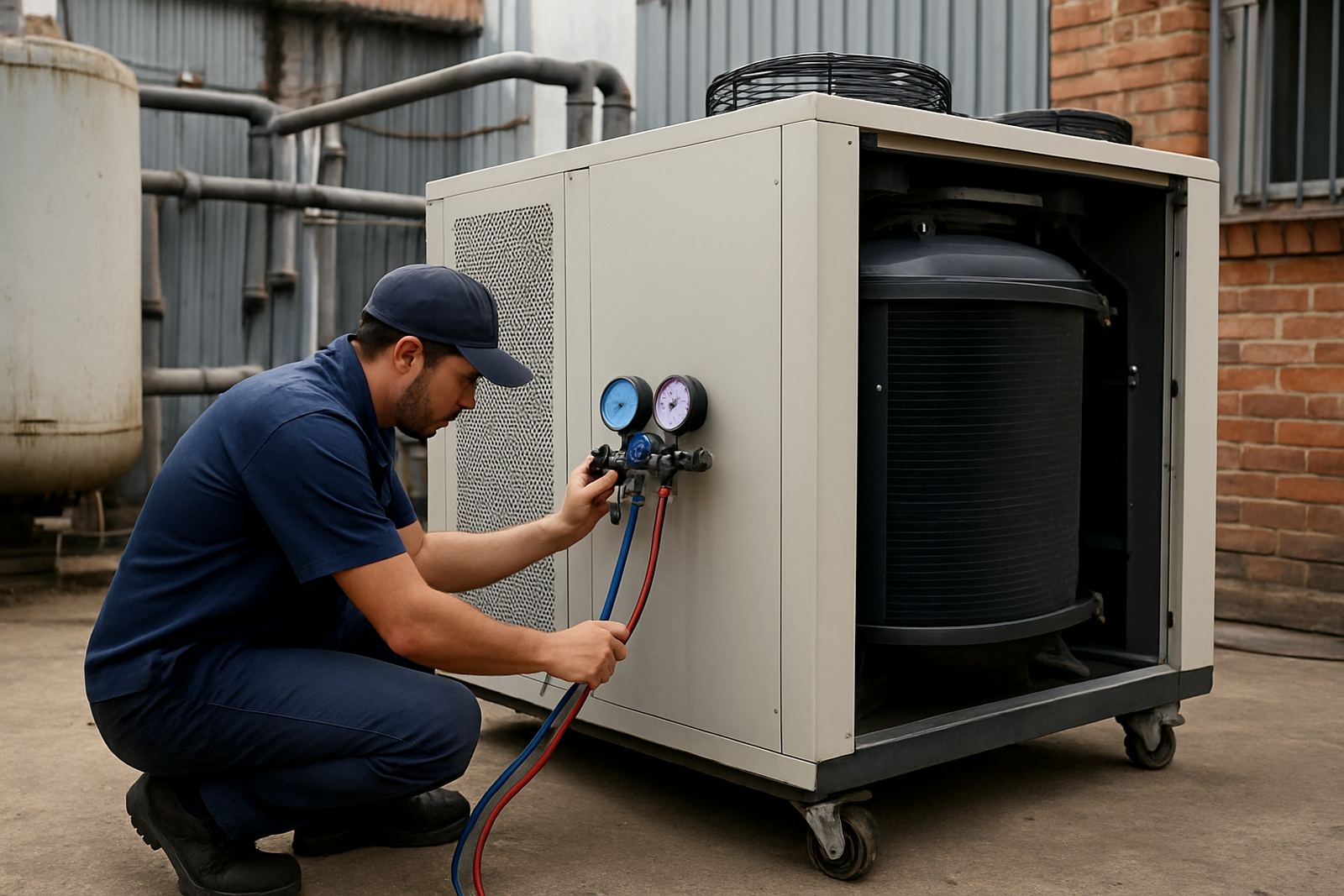
- Refrigerant circuit checks for pressure balance and superheat behaviour
- Inspection of fans, motors and heat exchange surfaces
- Leak tracing using pressure testing and site-safe methods
We also look at site conditions. Poor ventilation, bad water quality, scale build-up and load-shedding related restarts can all affect refrigeration performance. If the chiller is near the coast, corrosion and salty air can also shorten component life if the machine room is not maintained correctly.
Repair process and site response
Once the fault is confirmed, we explain the repair plan and what parts or labour will be needed. For many jobs we can attend on site from Alberton, Johannesburg, Germiston, Boksburg or Pretoria in a short turnaround, depending on load and access. For Durban, Cape Town and Rustenburg work, we plan the call based on urgency and spares availability.
The process is simple and practical. We protect the unit, isolate the faulty section, complete the repair, then test the chiller through a proper run cycle. If a component has failed because of another issue, such as poor airflow or dirty water, we flag that as well so the same fault does not come back.
- Initial fault report and basic history from your team
- On-site inspection and diagnostic testing
- Repair quotation or immediate approval where possible
- Part replacement, leak repair or control correction
- Pressure test, evacuation where required, and restart
- Operational checks against set-point and load
Turnaround times and what affects them
Turnaround depends on the fault, the size of the chiller, and whether specialist parts are required. Minor control or electrical repairs can often be completed quickly if access is good and the part is in stock. Compressor-related work, leak repairs on harder to reach pipework, or a full refrigeration circuit clean-up can take longer.
We aim to keep downtime down by planning work carefully and carrying common consumables with us. For sites that cannot stop production, we can also advise on temporary cooling so lasers or process lines keep moving while the main repair is being completed.
Typical repair timing is affected by the following:
- Availability of the exact compressor, controls or valves
- How easy the unit is to isolate and access
- Whether the issue is electrical, mechanical or refrigerant related
- Need for pressure testing, evacuation and re-commissioning
- Site restrictions such as after-hours access or safety permits
Where a machine has been neglected for a while, expect a slightly longer job. A chiller that has been running with low charge or poor water quality may need more than one repair step to return to stable operation.
Pricing approach for refrigeration repairs
We price refrigeration repairs based on the actual fault and the work involved, not on a one-size-fits-all callout. That means we look at diagnostic time, labour, travel, parts, refrigerant recovery or charging needs, and any follow-up testing required. This keeps the quotation practical and fair for the amount of work on site.
If the issue is straightforward, we will keep the repair cost focused. If a compressor is damaged, a control board has failed, or there is a repeated leak, we will explain the options clearly before work continues. No one wants a surprise on a repair job, especially when production is waiting.
- Fault finding can be billed separately or included in the repair scope depending on the job
- Parts are quoted to suit the specific unit and application
- Major repairs may be phased to match shutdown windows
- We can support both emergency breakdowns and planned maintenance repairs
For businesses in Ekurhuleni and surrounding industrial areas, a proper repair is usually cheaper than repeated stop-start patching. The aim is to get the refrigeration circuit holding pressure, cooling correctly, and staying stable under normal plant load.
Maintenance intervals that reduce repeat failures
Refrigeration repairs work best when they are backed by scheduled maintenance. On industrial chillers we usually recommend a 3 month, 6 month or annual service interval depending on dust levels, duty cycle, water quality and whether the unit runs through heavy summer demand. High-use laser and mould chillers often need more frequent attention than low-duty process coolers.
Regular checks help pick up slow leaks, refrigerant loss, dirty coils, weak fans and control drift before they become a breakdown. In coastal areas and hot factory spaces, the inspection interval may need to be shorter. If the site runs during load-shedding, it is also worth checking restart sequencing and control settings after every power interruption.
- 3 monthly: high-load sites, dusty workshops, critical laser systems
- 6 monthly: standard production lines with moderate run hours
- Annual: lower duty cooling units with stable conditions and clean water
- After any major repair: follow-up check within a few weeks to confirm stability
We can also tie repairs into a broader maintenance plan that covers pump condition, water treatment checks and control settings, so the same fault does not keep returning.
Key facts
| Service type | Industrial refrigeration circuit repairs for water chillers |
|---|---|
| Typical equipment | Laser chillers, mould coolers and process line cooling units |
| Faults handled | Compressors, leaks, controls, fans, sensors and pressure devices |
| Service area | Alberton, Johannesburg, Pretoria, Durban, Cape Town and Rustenburg |
| Response base | Alrode, Alberton with support across South Africa |
| Maintenance interval | 3 monthly to annual, depending on duty cycle and site conditions |