What a control panel upgrade does for your chiller
A control panel upgrade replaces worn or outdated electrical controls with a clearer, safer and easier-to-use arrangement. On laser chillers, mould cooling units and process line systems, the upgrade helps operators see temperatures, faults and running status at a glance. It also gives maintenance teams better fault finding when the plant stops after load-shedding or a power dip.
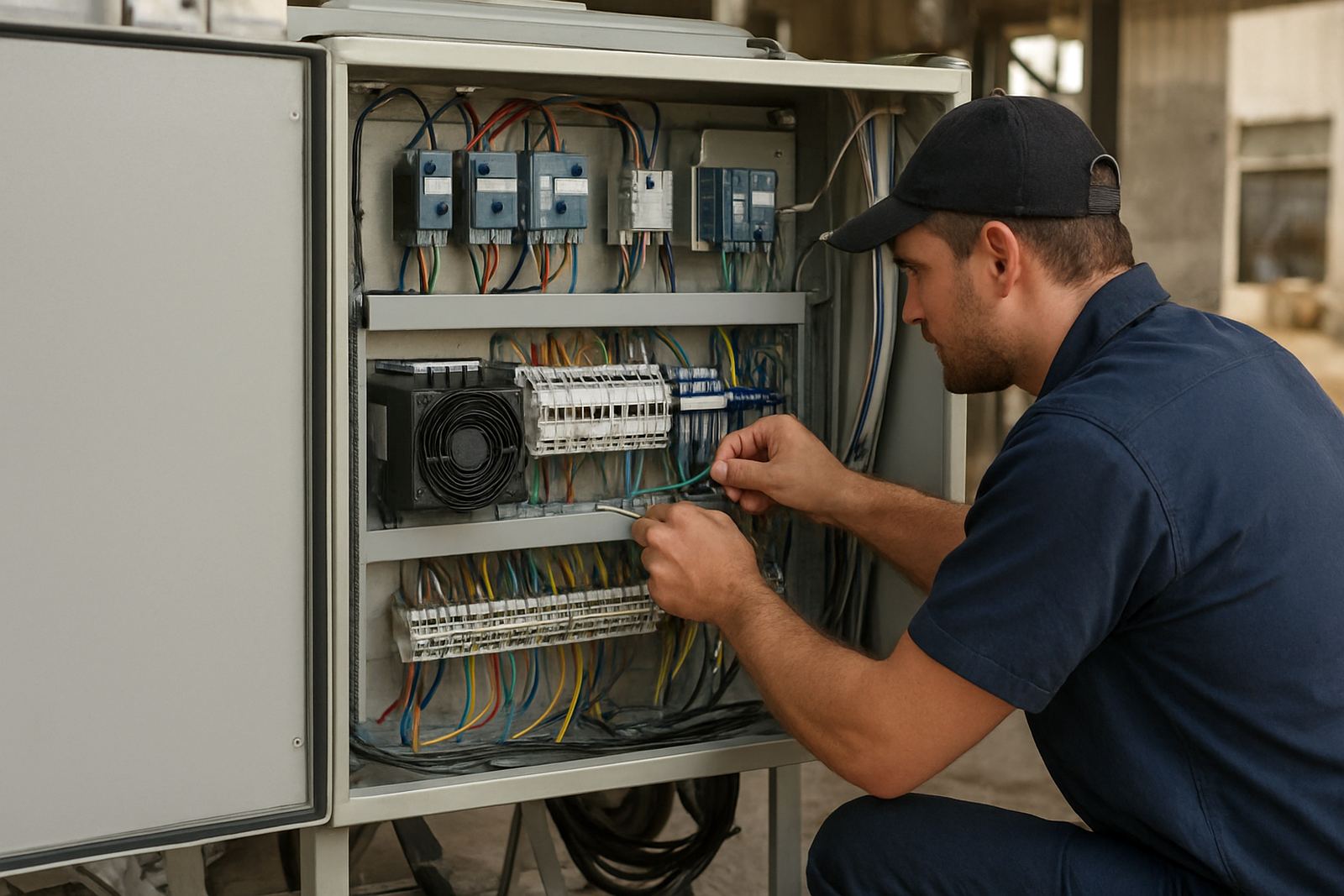
We work on chillers used in workshops, plastics plants, packaging lines, fabrication bays and production sites with water circuits from 5 kW up to 200 kW and above. The aim is practical control, not fancy extras. Where the old panel has weak relays, faded displays, poor alarm logic or damaged starters, we replace those parts with properly rated components and rewire the panel neatly for service access.
- Clear temperature display and setpoint control
- High and low temperature alarms
- Compressor, pump and fan status indication
- Fault history and better trip identification
- Phase failure, phase sequence and overload protection
What is included in the upgrade work
Every site is different, so the scope is set after an on-site inspection or workshop assessment. We look at the existing wiring, the cabinet condition, controller age, safety devices and the load profile of the chiller. If the enclosure is rusted, loose or too small for the new controls, we will recommend a new cabinet in a suitable IP rating for the plant room or outdoor installation.
Typical upgrade work includes changing the temperature controller, contactors, relays, timers, indication lights and terminal blocks. We can add digital displays, alarm buzzers, run hours metres, pump interlocks and remote fault contacts for plant monitoring. On units that serve lasers or moulds, we also check the control logic so temperature swings are kept as tight as possible, usually within 0.5°C to 2°C depending on the application.
- Controller replacement or reprogramming
- New contactors, overloads and protection devices
- Wiring tidy-up, ferruling and labelling
- Cabinet fan, gland plate and ventilation checks
- Interface changes for pumps, solenoids and compressors
How we carry out the upgrade on site
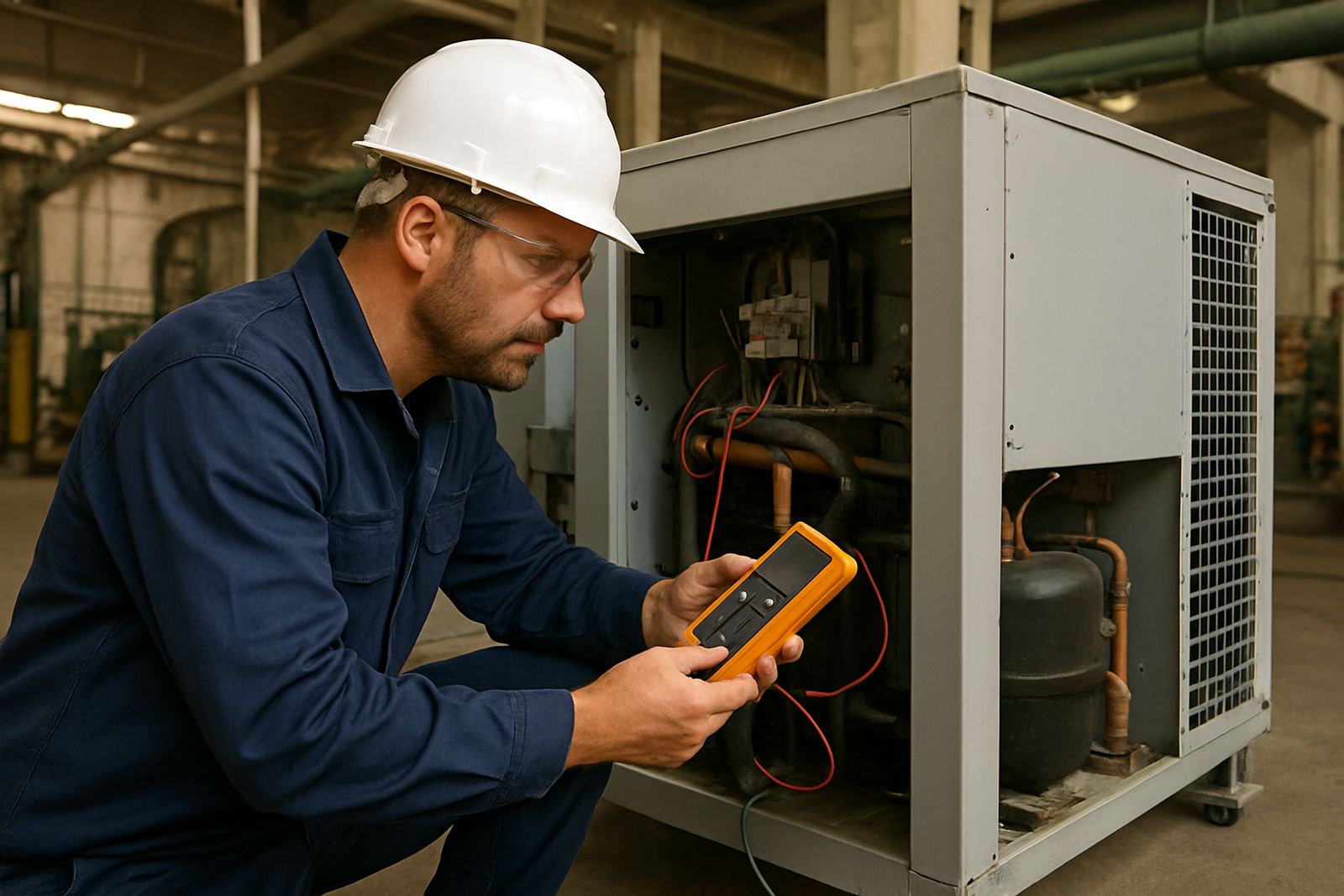
We start by isolating the chiller, confirming supply conditions and recording the original control sequence. That matters when older systems have been altered over the years and the wiring no longer matches the drawings. Our technician checks the compressor circuit, pump circuit, safety switches and sensor inputs before any parts are removed.
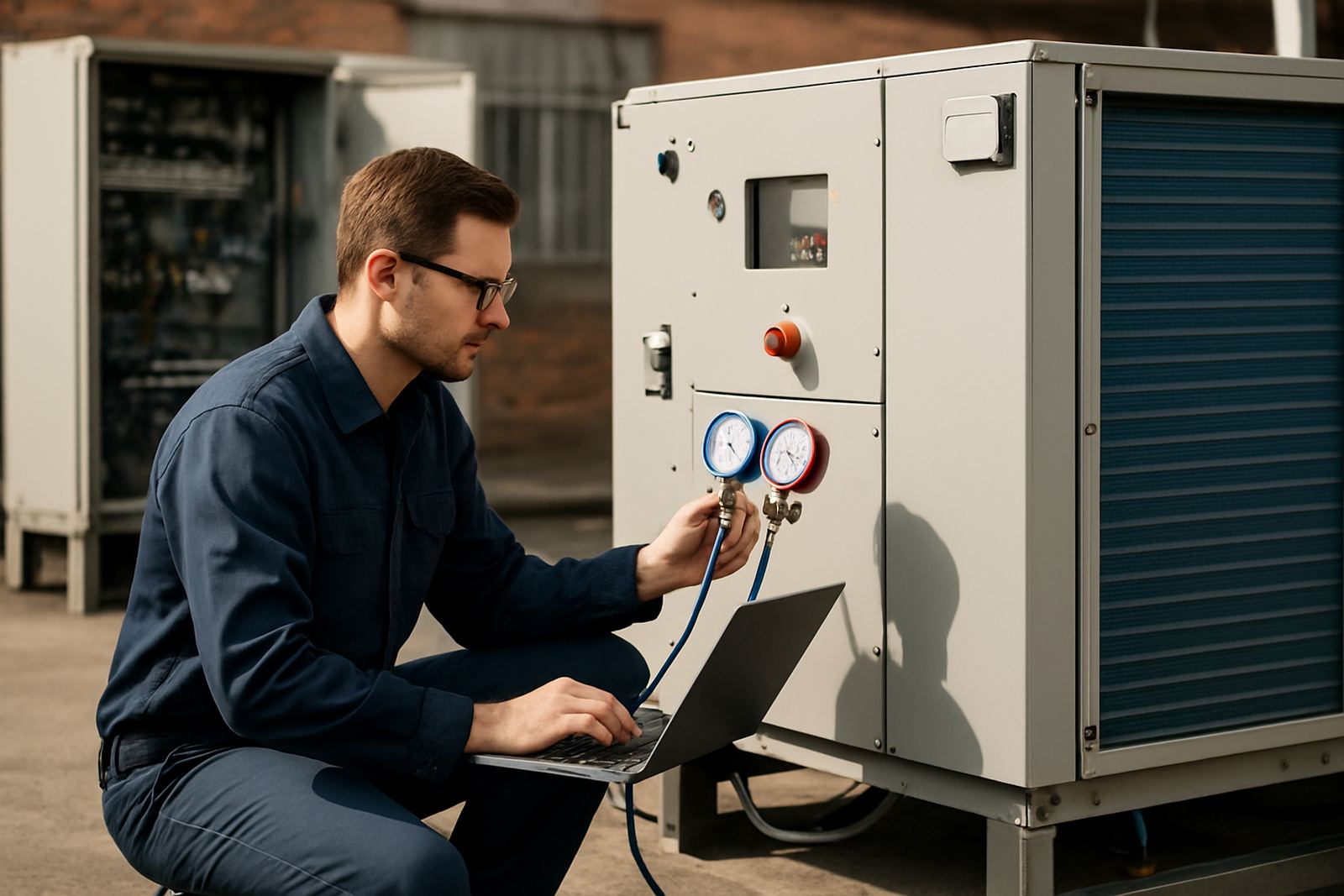
Once the new components are fitted, we test each function in order. The panel is then run through a full operating cycle to confirm start-up, cooling demand, alarm response and shutdown. If the site has sensitive production, we can often schedule the work around shift changes or during planned downtime so the line is not affected for longer than necessary.
- Pre-check and panel assessment
- Isolation, removal and replacement of worn parts
- Wiring verification and control logic setup
- Live testing under load
- Operator handover with basic fault guidance
Turnaround times and where we work
Simple panel refresh work can sometimes be completed in one day if parts are ready and the cabinet is in fair condition. A more involved upgrade, especially where the chiller needs a full rewire or a custom control layout, usually takes two to four working days. If a special enclosure, controller or protection set is required, we will give a realistic lead time up front.
From our base in Alrode, Alberton we service industrial sites across Johannesburg, Pretoria, Durban, Cape Town and Rustenburg, with support also available in Germiston and Boksburg. For remote plants we can coordinate with your maintenance team so the chiller is ready for inspection before our crew arrives. That saves time and avoids repeat call-outs, which is important when a process line is under pressure.
Pricing approach and what affects the cost
We price control panel upgrades according to the existing condition, the number of circuits, the type of controller, and whether the cabinet can be reused. A basic upgrade on a small water chiller costs far less than a full retrofit on a multi-compressor system with remote monitoring and multiple safety stages. We do not quote a flat rate until we have seen the unit or reviewed the panel photos and wiring details.
Our quotes separate labour, parts and any optional extras so you can see where the money goes. If the unit only needs a controller swap and a few contactors, we keep the work lean. If the chiller has suffered moisture damage, loose terminals or repeated faults from power instability, we will recommend the fix that prevents more downtime later. Cheap repairs on old panels often end up costing more in the end, especially when operators are forced to keep resetting trips.
- Assessment based pricing, not guesswork
- Parts listed clearly on the quote
- Options for partial or full panel replacement
- Recommendations based on reliability and safety
Maintenance intervals after the upgrade
After the new panel is fitted, the controls still need regular checks. In dusty workshops, coastal humidity, or sites with unstable power, we recommend a panel inspection every 3 to 6 months. For cleaner plant rooms, a 6 month interval is usually enough, with a full chiller service once a year. The exact interval depends on load hours, ambient temperature and whether the unit runs through summer and winter without rest.
During maintenance we check terminal tightness, contactor wear, display accuracy, alarms, cabinet fans and signs of moisture or heat damage. We also test the pumps and refrigeration safeties because a panel that is working well can still be hiding an older fault in the rest of the system. If the site is exposed to load-shedding we advise a post-outage inspection too, since power restoration can expose weak components fast.
- 3 to 6 month panel inspection intervals
- Annual full system service
- Extra checks after power interruptions
- Cabinet cleaning and heat management review
Why plants choose Raynen for panel upgrades
Our team works on cooling systems every day, so we understand how a control issue affects the rest of the plant. The upgrade is planned by people who know compressors, pumps, sensors and operator habits, not just electrical parts. That means the result is practical on the floor and easier to maintain later.
Riaan van der Merwe leads the business, with support from Lerato Mokoena, Sibusiso Dlamini, Anika Naidoo, Pieter Joubert, Nomsa Khumalo and Thabo Maseko. When you send an enquiry through our contact form, we assess the chiller, confirm the operating needs and recommend the right level of upgrade. The goal is simple: better control, fewer nuisance trips and a panel that makes sense to the people who use it every day.
Key facts
| Typical chiller size | 5 kW to 200 kW+ cooling duty |
|---|---|
| Temperature control accuracy | Usually within 0.5°C to 2°C, depending on the application |
| Panel functions | Setpoint control, alarms, status lights, fault protection, run hour tracking |
| Protection features | Phase failure, overload, high and low temperature trips, pump interlocks |
| Typical turnaround | 1 to 4 working days, subject to parts and panel condition |
| Service areas | Alberton, Johannesburg, Pretoria, Durban, Cape Town, Rustenburg, Germiston and Boksburg |