Rapid fault finding when cooling stops
Our breakdown repair service is built for urgent cooling failures in Alrode, Alberton and across Gauteng, with support into Johannesburg, Pretoria, Durban, Cape Town and Rustenburg. We attend faults on industrial water chillers, coolant circuits and associated controls when a laser starts overheating, a mould line loses stable temperature or a process line begins drifting out of spec. The aim is simple: find the cause quickly, repair it properly and get production moving again.
Typical breakdown calls include low cooling output, high pressure trips, pump faults, blocked strainers, leaking pipework, failed control components, noisy compressors and unstable water temperatures. Load-shedding, voltage dips and poor water quality can make these issues worse, so we check the full system rather than only the obvious symptom. If a unit has been running in a hot, dusty or coastal environment, we also look for corrosion, fouled condensers and scale build-up that can cause repeat failures.
- Fault diagnosis on chillers, pumps, controllers and cooling circuits
- Repair support for laser cooling, mould cooling and process line cooling
- Checks for electrical, refrigerant, water flow and mechanical faults
- Advice on whether the unit should be repaired, reconditioned or upgraded
What is included in a breakdown repair visit
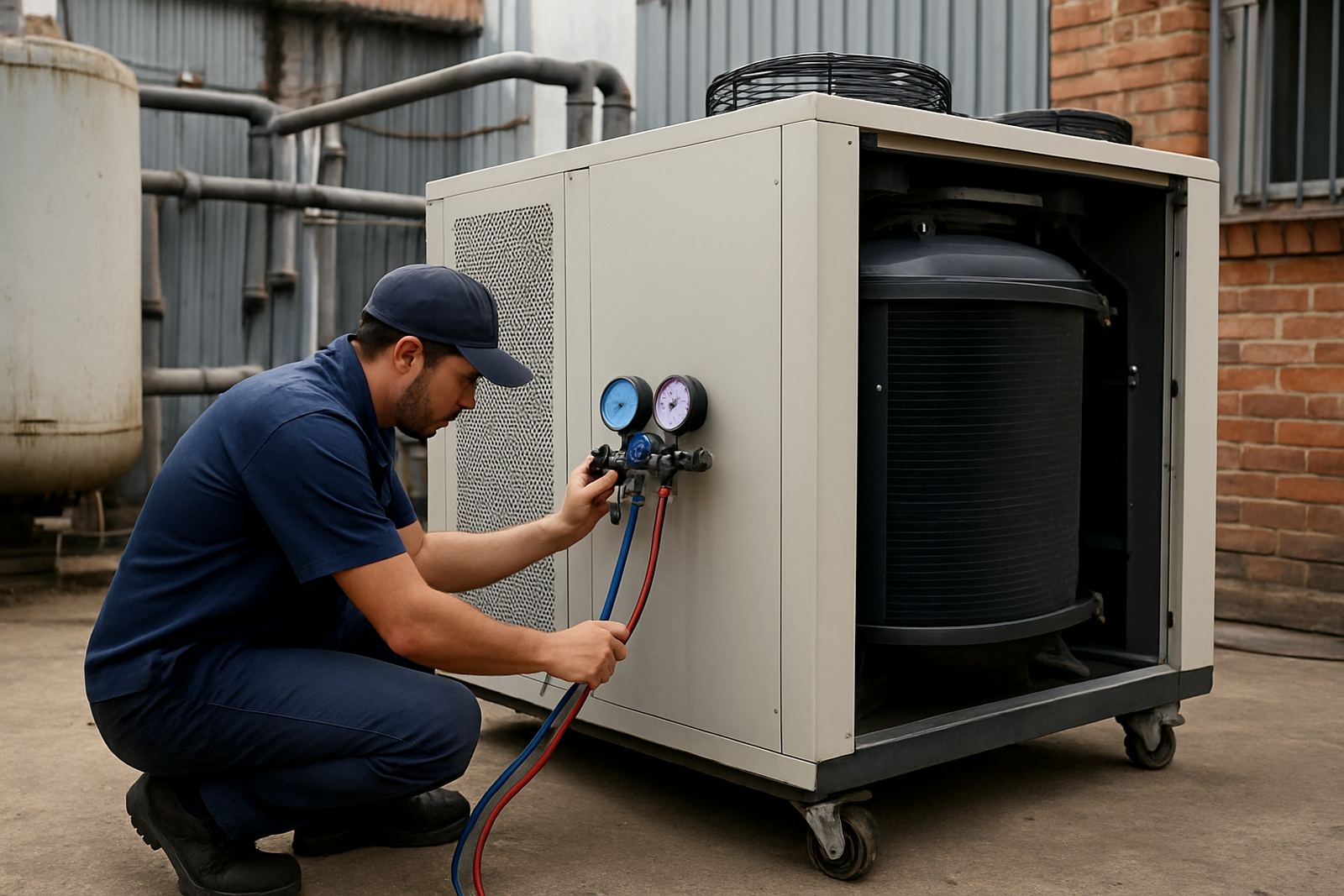
A breakdown visit starts with a structured inspection so the fault is not guessed at. We check alarms, setpoints, water flow, inlet and outlet temperatures, pump performance, pressure readings and electrical status. If the problem sits in the refrigeration circuit, controls, water side or a combination of these, we isolate the cause and explain the options before work continues.
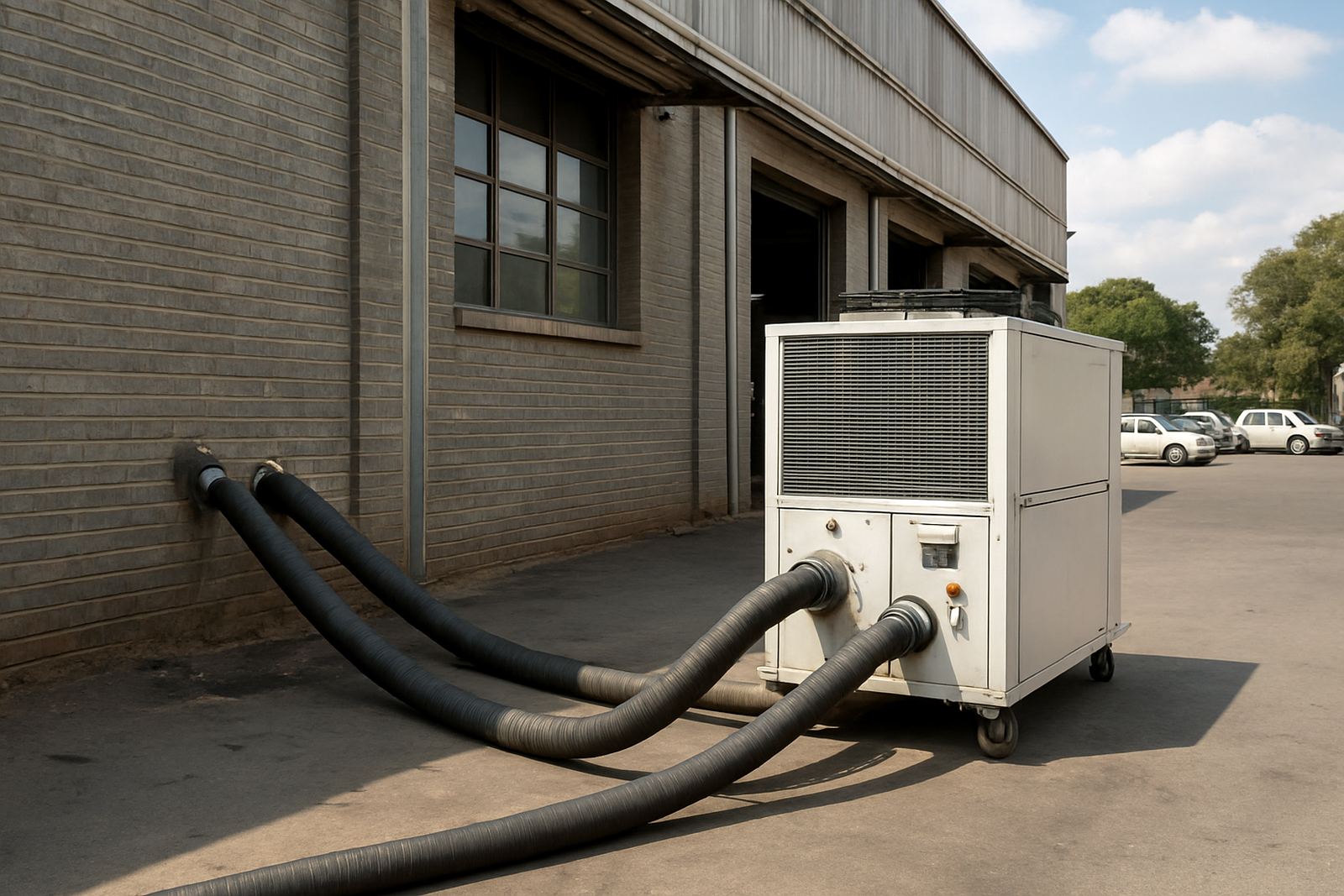
Our service can include component replacement, minor pipe repairs, control checks, cleaning of blocked components, refrigerant circuit diagnosis and temporary measures to keep the process going while parts are sourced. Where a failed unit is affecting a production run, we can also assist with temporary cooling arrangements to reduce downtime and protect equipment.
- Inspection of compressor, pump, fans, sensors and control panel condition
- Leak checks, flow checks and temperature verification
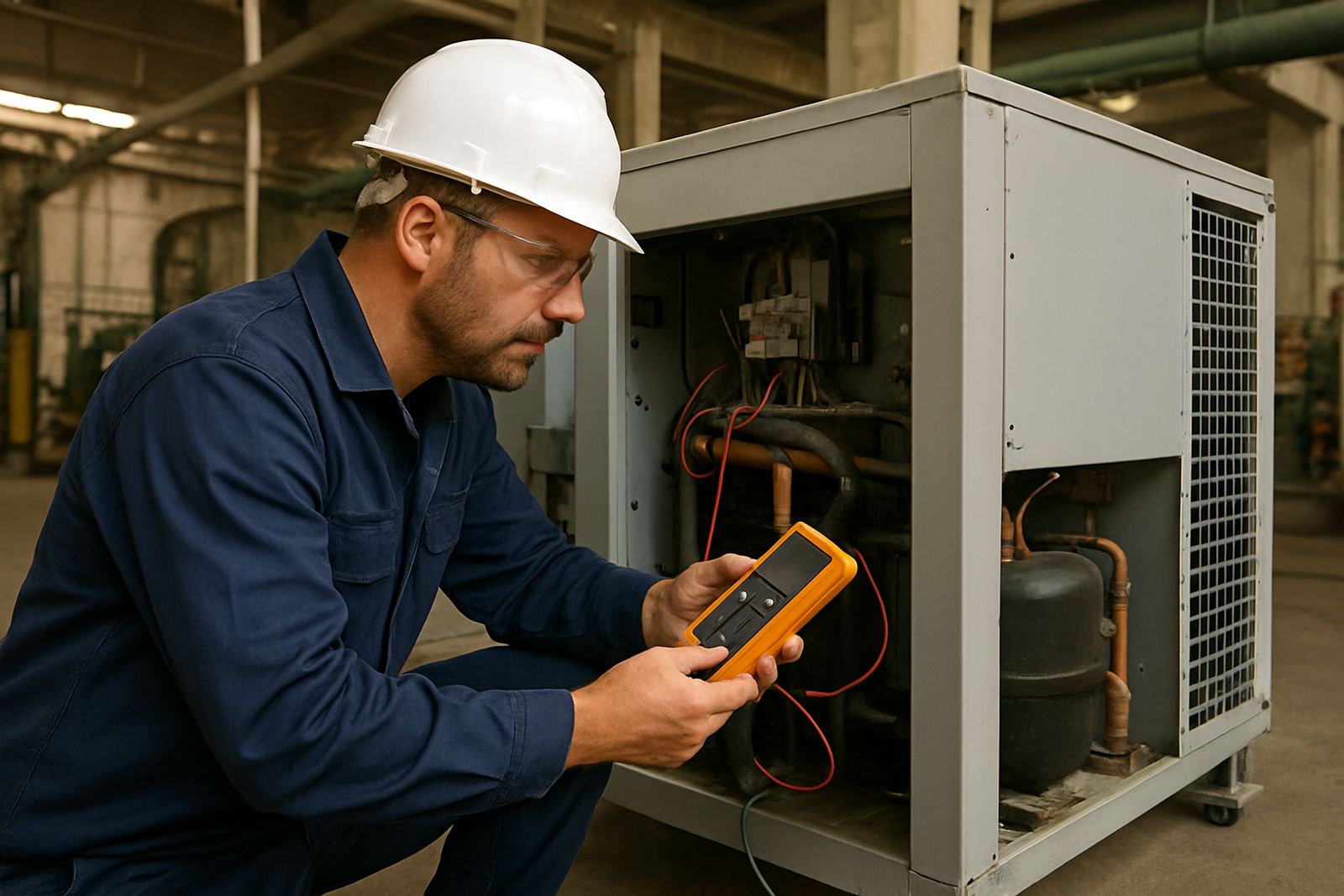
- Electrical testing on starters, contactors, relays and safety circuits
- Refrigeration repairs, pump replacements and pipework repairs where needed
- Water treatment checks if scale, dirt or corrosion has contributed to failure
How we handle a breakdown from call-out to restart
Once the fault is logged, we gather the key details: unit make-up, capacity, application, alarm history and what changed before the failure. That helps us prepare the right tools and common spares before travelling, which saves time on site. For customers in Germiston, Boksburg and the wider Ekurhuleni area, this often means a same-day response where practical, especially for critical production cooling.
On site, the technician confirms the fault, carries out the repair and then tests the unit under load. We do not hand back a chiller after a quick reset if the underlying issue is still present. If a control fault, blocked heat exchanger or failing pump is causing repeated trips, we make sure the repair addresses that root cause. Before leaving, we confirm temperatures, pressure stability and safe operation under the actual process conditions.
- Intake call and fault screening
- Site attendance and diagnostic testing
- Repair work and component replacement
- Operational testing under load
- Handover with findings and recommendations
Turnaround times and urgent response planning
Turnaround depends on the fault, access to the unit and whether parts are available locally. Simple electrical or flow-related issues can sometimes be sorted on the first visit. More involved refrigeration repairs may require additional testing, specialist parts or a return visit once components arrive. We keep communication clear so you know what is happening and what the next step will be.
For plants running critical mould cooling or laser systems, we work to reduce downtime by isolating only the failed section where possible and restoring partial operation if that is safe. In summer heat, especially in Durban and Cape Town coastal areas, condenser loading can rise quickly, so a small issue can become a full stop if left too long. That is why we recommend logging warning signs early, before a complete breakdown takes place.
- Emergency faults: attendance as soon as scheduling allows
- Common repairs: often completed same day or within 24 to 48 hours
- Parts dependent repairs: timeline confirmed after diagnosis
- Temporary cooling options available for critical production lines
Pricing approach for repairs and replacement parts
Breakdown repairs are priced according to the time on site, the level of diagnosis required, travel to the site, and the parts needed to complete the repair. We quote clearly before major work goes ahead, so you can make a decision without guessing at the final cost. If the fault is minor, we keep it lean. If the unit needs more extensive work, we spell out the repair options and the likely outcome of each one.
We also advise when a repair is no longer the best use of money. A chiller with repeated compressor failures, severe corrosion or outdated controls may need a staged refurbishment or a replacement plan. That call is based on age, duty cycle, condition, spare availability and the cost of repeated downtime. The goal is to protect production, not just patch the same fault over and over again.
- Transparent quotation after diagnosis where possible
- Separate pricing for labour, parts and urgent call-out work
- Options given when repair, overhaul or replacement are all possible
- Advice based on lifecycle cost and production risk
Keeping breakdowns from coming back
Many failures start small and build up over time. A blocked strainer, a dirty condenser, low water quality or a weak pump can sit unnoticed until the unit trips under load. For that reason, we always recommend follow-up maintenance after a repair. In most industrial settings, a chiller should be inspected every 3 months, with a fuller service every 6 months if it runs hard, sees dust, or operates in coastal humidity. Units in hotter areas or on critical lines may need closer attention.
Our maintenance advice focuses on the parts that usually cause repeat breakdowns: filters, flow switches, sensors, fans, pump seals, electrical terminations and heat transfer surfaces. If your site has load-shedding exposure, we also suggest checking restart settings and protection devices so the unit comes back safely after a power interruption. A repair is only useful if the same fault does not return two weeks later.
- Quarterly inspections for high-duty systems
- Six-monthly full service for most industrial chillers
- Earlier checks after power issues, water quality changes or repeated alarms
- Preventive recommendations issued after each breakdown repair
Key facts
| Service area | Alberton, Johannesburg, Pretoria, Durban, Cape Town, Rustenburg and surrounding industrial areas |
|---|---|
| Equipment covered | Industrial water chillers, cooling units, process cooling circuits, laser cooling systems and mould cooling systems |
| Faults commonly repaired | Pump failure, low flow, high temperature alarms, control faults, leaks, blocked heat exchangers and refrigeration issues |
| Typical temperature range | Application dependent, commonly stabilised within 5°C to 25°C process water ranges |
| Response approach | Fast fault finding, on-site repair where possible, with temporary cooling options for urgent production needs |
| Maintenance interval | Inspection every 3 months for heavy-duty units and a full service every 6 months, or sooner after repeated trips |