When A Pump Needs Replacing
A weak or failed circulation pump shows up in the process long before it stops completely. You may see rising coolant temperatures, poor flow through the machine, nuisance alarms, cavitation noise, air in the line or a chiller that runs flat out with little cooling effect. In laser applications, that can mean unstable beam performance and repeated shutdowns. On moulds and process lines, poor flow can lead to longer cycles, uneven product quality and extra wear on the equipment.
We replace pumps when repair is no longer the sensible option, or when the existing pump is simply too small for the duty. That includes pumps that have worn impellers, seized bearings, leaking seals, burnt motors or incorrect head and flow for the installed pipework. In coastal areas and humid plants, corrosion and scaling can shorten pump life, especially where water treatment is neglected.
What The Pump Replacement Includes
Every replacement is matched to the actual cooling load, pipe layout and fluid conditions. We do not just swap one pump for another and hope for the best. Our aim is to restore correct circulation, proper pressure at the equipment and steady temperature control without overloading the chiller circuit.
- Site inspection and fault finding on the existing pump and flow path
- Flow, pressure and duty check against the chiller and process requirement
- Selection of a suitable replacement pump with the right motor size and head
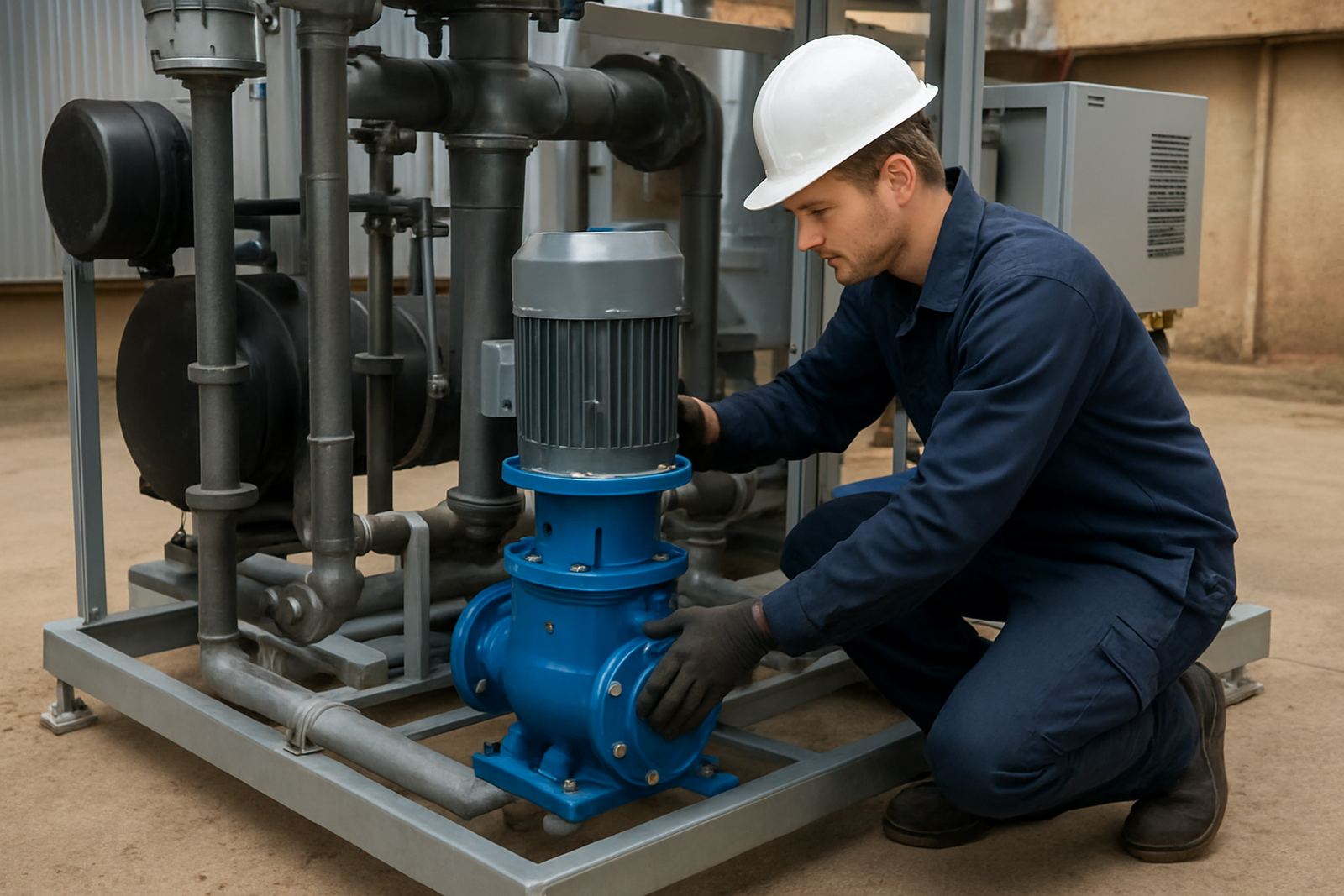
- Removal of the old pump, alignment and installation of the new unit
- New seals, gaskets, fittings and isolation items where needed
- Electrical reconnection and rotation check
- Leak test, flow verification and final start-up under load
Where required, we also assess strainers, valves, flexible connectors and pipe condition so the new pump is not forced to work against an old restriction. That saves money and helps avoid repeat failures.
Technical Matching And Pump Specs
Correct selection matters. A pump that is too small will starve the system, while an oversized unit can create noise, excess current draw and unnecessary strain on seals and pipework. We select pumps to suit chilled water, water-glycol blends and other compatible cooling fluids used in industrial plants.
- Typical pump power range: 0.37 kW to 7.5 kW, depending on duty
- Common flow range: 30 to 600 litres per minute
- Typical pressure head: 10 to 45 metres, subject to system design
- Supply voltages: 230 V single phase and 400 V three phase
- Fluid temperature range: normally 5 C to 35 C on industrial cooling circuits
- Common materials: cast iron, stainless steel and corrosion resistant wetted parts where required
For laser cooling, we pay close attention to clean flow and stable pressure. For moulds and process lines, we also factor in seasonal temperature swings, longer pipe runs and the effect of mineral build-up in water circuits. If the plant has had load-shedding interruptions, restart conditions are checked carefully because weak pumps often fail when systems are repeatedly stopped and started.
Our Replacement Process On Site
We keep the process practical and ordered so that your plant can return to service with as little delay as possible. Most replacements start with a callout from our Alberton base, followed by a quick inspection and a clear recommendation. If the pump is still serviceable but underperforming, we will say so. If replacement is the better route, we explain the options and confirm the duty rating before work begins.
The installation normally follows these steps: isolate the circuit, drain the affected section, remove the faulty pump, fit the new pump and any required pipe adaptors, check shaft alignment, refill the circuit, bleed air, test current draw and confirm flow under operating conditions. Once the system is stable, we recheck for leaks and confirm that the process equipment is receiving the right cooling.
For plants with critical uptime, temporary cooling can be arranged while the replacement is carried out. This is often useful on laser lines, injection moulding and continuous process systems where downtime carries a direct cost.
Turnaround Across Gauteng And Further Afield
Turnaround depends on the pump type, the condition of the existing piping and whether a standard replacement can be used or a custom match is needed. In many cases, inspections in Johannesburg, Pretoria, Germiston, Boksburg and Alberton can be handled quickly because our workshop support is close to the industrial belt. For Durban, Cape Town and Rustenburg, we plan stock, transport and installation timing to suit the site and shutdown window.
Simple replacements may be completed the same day if the correct pump is on hand. More involved jobs, such as systems with corroded pipework, failed valves or damaged control wiring, can take longer. We will give a realistic timeline up front, which is better than promising a quick fix and returning later with extra parts.
Pricing Approach And Maintenance Intervals
We quote pump replacements based on the pump size, motor rating, access on site, pipe modifications, electrical work and any extra items needed to restore proper operation. That means the price reflects the actual job, not a rough guess. If the existing pump can be rebuilt, we will compare that against full replacement and advise the more practical option.
As a rule, circulation pumps on industrial chillers should be checked at least every 6 months, and more often in dusty plants, humid coastal sites or busy production lines running long hours. A service visit should include seal inspection, bearing noise checks, current draw, flow condition, strainers and signs of vibration. Where water quality is poor, pump checks should be tied to water treatment checks as well, because scale and debris shorten pump life.
- 6 monthly checks for general industrial use
- 3 monthly checks for critical laser and continuous process systems
- Immediate inspection after repeated trips, low flow alarms or overheating
- Extra attention after municipal water changes, pipe repairs or long shutdowns
Raynen works from Alrode, Alberton and supports clients through our service areas in Johannesburg, Pretoria, Durban, Cape Town, Rustenburg, Germiston and Boksburg. If your chiller pump has failed or no longer delivers the flow your process needs, we can assess it and put forward the right replacement option.
Key facts
| Service focus | Replacement of failed or undersized circulation pumps for industrial chillers |
|---|---|
| Typical applications | Lasers, moulds, process lines and other closed cooling circuits |
| Flow range | 30 to 600 litres per minute, subject to system design |
| Power range | 0.37 kW to 7.5 kW |
| Supply voltage | 230 V single phase or 400 V three phase |
| Maintenance interval | 6 monthly minimum, 3 monthly for critical systems |