Start with the duty cycle, not the calendar
The right maintenance plan starts with how the chiller is used each day. A unit on a laser line running two shifts in Alberton will need a different schedule from a mould cooling unit that only works during peak production. Count operating hours, starts and stops, ambient temperature around the machine, and whether the chiller works all year or only in seasonal runs.
Production criticality matters too. If one chiller supports a laser bed or a moulding cell with no standby unit, a minor fault can stop output within minutes. If the process can tolerate a short pause, you may plan broader service windows. The more critical the process, the tighter the checks should be and the faster spares must be on hand. Keep a simple register of hours, alarms and shutdowns so the service plan is based on facts, not guesswork.
- Record daily operating hours
- Note any high temperature alarms or low flow trips
- Track ambient conditions in the plant room
- Flag any production line with no backup cooling
Split the plan into daily, weekly and monthly checks
A practical plan works best when it is divided into small repeatable tasks. Operators can handle the daily items, while maintenance staff cover the weekly and monthly work. This keeps the unit clean and helps you spot changes before they become a breakdown.
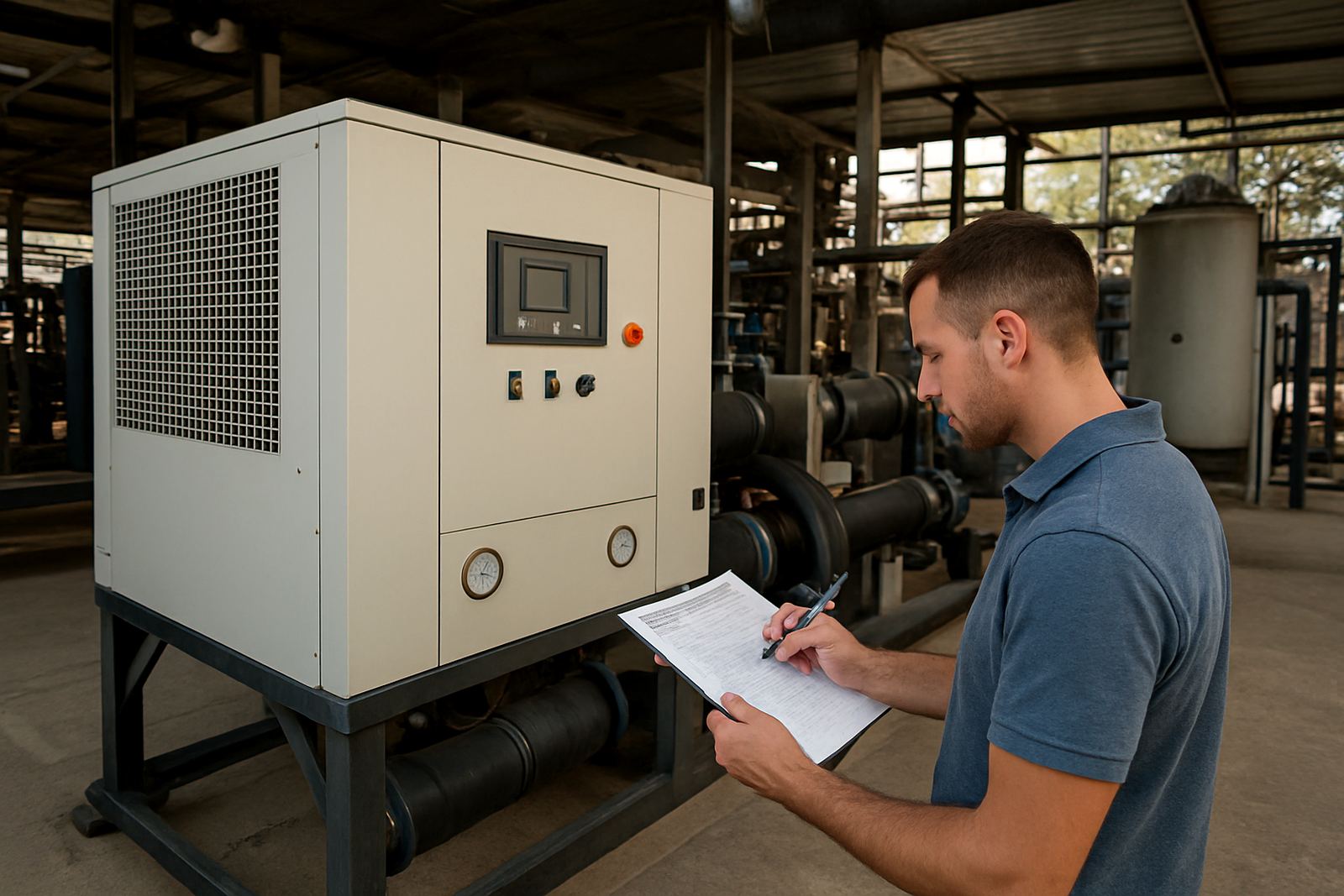
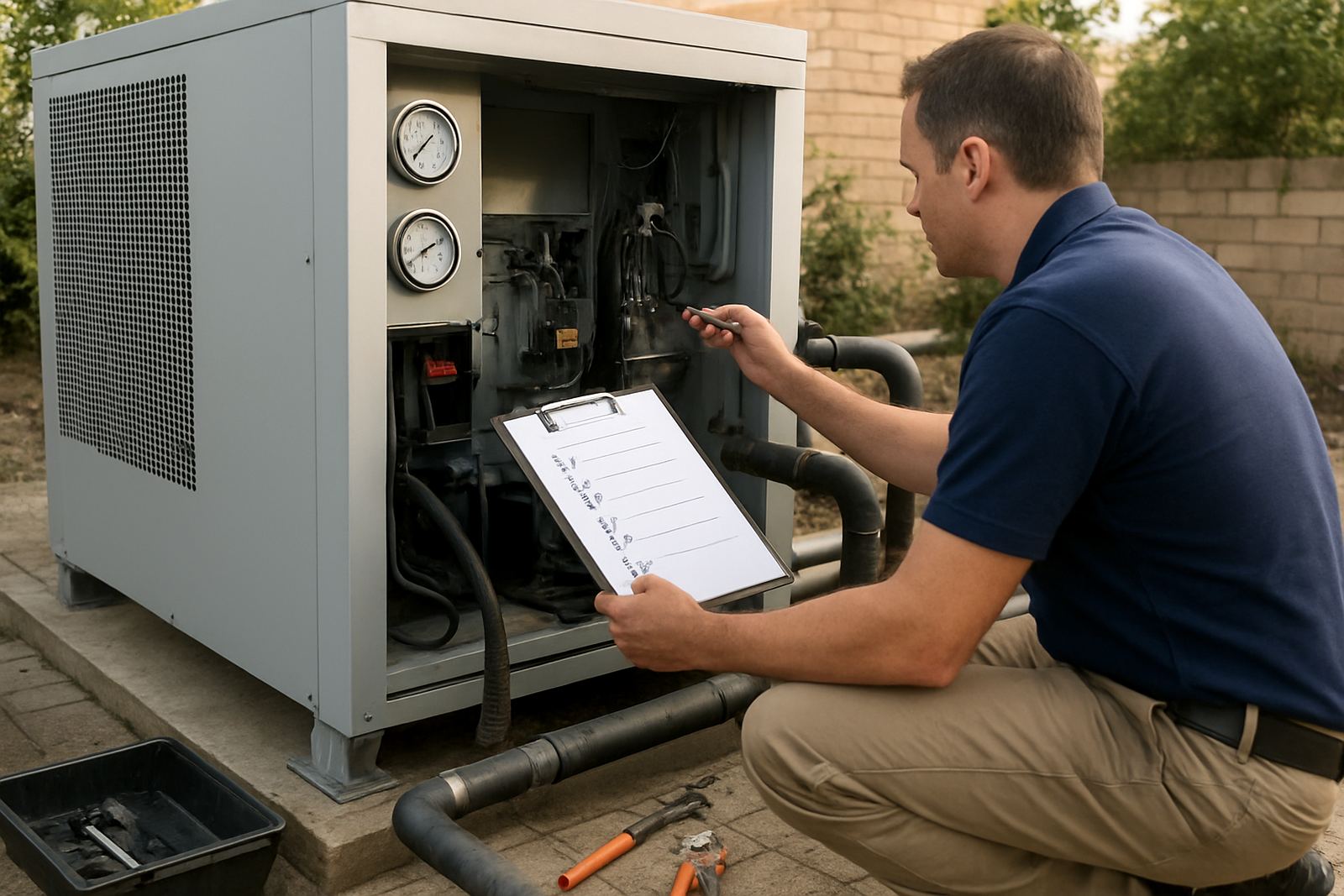
Daily checks should be quick. Confirm the setpoint, inspect for leaks, listen for unusual pump noise and make sure airflow around the unit is not blocked by packing material or stored parts. Weekly checks can include cleaning strainers, checking water levels and looking for signs of corrosion on fittings. Monthly checks should cover electrical terminations, fan operation, pressure trends and the condition of hoses and insulation. In coastal areas like Durban and Cape Town, salt air can speed up corrosion so the visual inspection needs to be stricter.
- Daily: setpoint, leaks, noise, alarms
- Weekly: strainers, water level, visible corrosion
- Monthly: electrical checks, fan operation, pressure trends
- Quarterly: deeper inspection of pumps, control components and pipework
Match service frequency to your environment
Two identical chillers can age very differently depending on where they are installed. A clean indoor plant room in Pretoria may need less attention than a dusty workshop in Germiston or an outdoor installation exposed to heat and airborne dirt. Coastal humidity, metal dust, chemical vapour and poor ventilation all shorten service intervals.
For sites with heavy dust or high ambient temperatures, increase the frequency of coil cleaning, filter checks and electrical inspections. If the chiller serves a process line that cannot tolerate downtime, build in a preventive shutdown before the hot season starts. That is often when the system is asked to work hardest and small problems show up first. Sites with hard water should also plan for water treatment checks, as scale build-up can reduce heat transfer and push power use higher.
When load-shedding is part of the site reality, the plan should include restart checks after every extended outage. Power returns can create pressure swings, low flow warnings or control faults if the system is not watched closely.
Build a spare parts list that fits the site
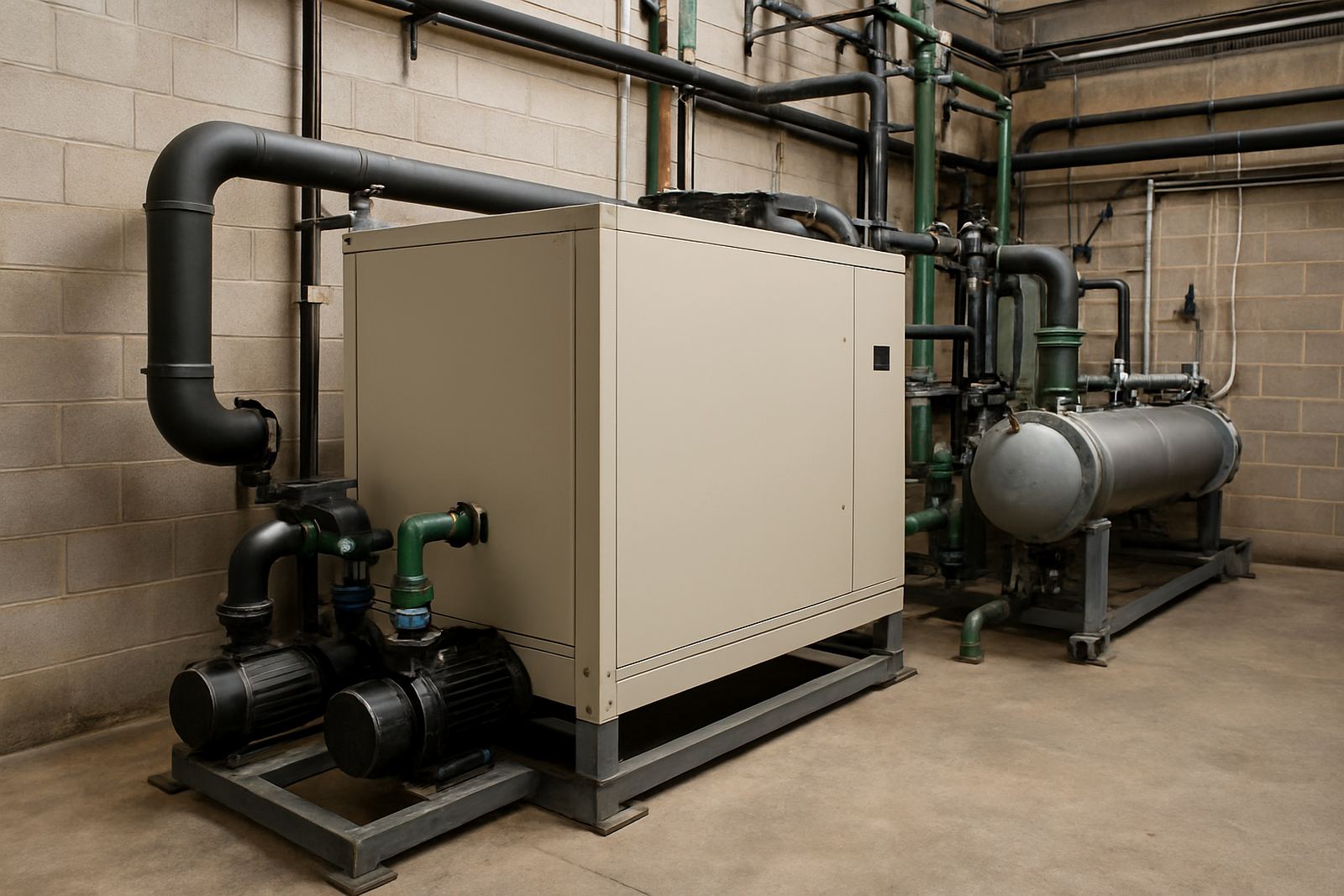
A maintenance plan is not complete without the right spares. Waiting for one hose clamp or control component can stretch a small fault into a long outage. Keep a list that matches the age of the unit, the process risk and the lead time for replacements. Older systems often need a few extra items on site, especially if they run across multiple shifts.
The most useful spares are the ones that fail often or stop the machine quickly. Pumps, seals, contactors, sensors, fan motors and strainers are common candidates. If the chiller supports a mould line or laser system with tight temperature tolerance, include a backup plan for temporary cooling as well. That gives your team time to keep production moving while the main unit is repaired.
- Pump seals and pump replacements
- Temperature sensors and pressure switches
- Filters, strainers and hose fittings
- Electrical contactors and control components
- Temporary cooling capacity for critical production
Use readings to spot trouble early
Good maintenance is based on trends. A chiller that starts taking longer to reach setpoint, uses more power or cycles more often is telling you something is changing. Keep simple records of supply and return temperatures, flow readings, alarm history and compressor run time. Even a basic logbook can help you see a pattern before the fault becomes expensive.
Pay close attention to repeated resets, weak flow, rising discharge temperatures and noise from the pump or refrigeration circuit. These signs can point to blocked pipework, dirty heat exchange surfaces, failing components or water quality problems. If the same issue keeps returning after a repair, the root cause has probably not been dealt with properly. That is when a cooling audit or a control panel upgrade can save a lot of time later. It is better to correct the cause early than to patch the same fault over and over, which gets expensive fast.
Assign responsibility and document every visit
Even a well written plan fails if nobody owns it. Name the operator who does the daily check, the technician who handles the monthly inspection and the manager who signs off on shut-down work. For larger sites, it helps to keep one contact person for each area so issues do not get lost between shifts or departments.
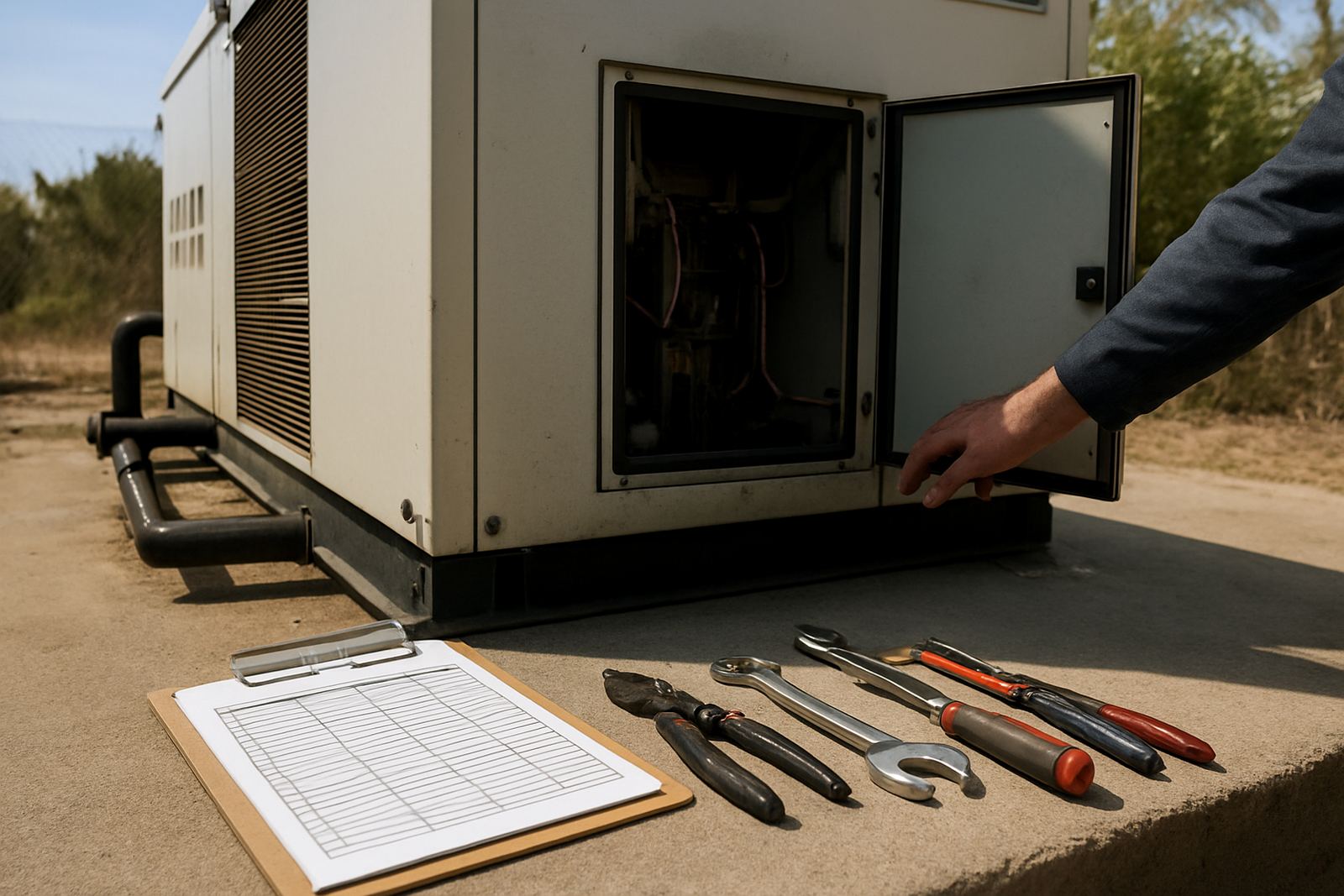
Every service visit should leave a clear record: what was checked, what was repaired, what parts were used and what still needs attention. That paper trail helps with warranty queries, internal budgeting and municipal or site compliance where water handling and discharge records matter. It also makes handovers easier when staff change. If the team knows exactly what was done last month, the next visit starts from a proper baseline not from memory.
- Name an operator, a technician and a sign-off person
- Log all readings, faults and repairs
- Record parts used and outstanding actions
- Keep service notes with the unit file
Review the plan before peak season or major production runs
Review the maintenance plan before your busiest period, after any plant expansion and after any repeated fault. If a line is being pushed harder than before, the service schedule should be tightened, not left as it was. The same applies when a chiller is moved, pipework is altered or a new process is connected to the system.
A good review should check whether the service intervals still match the workload, whether the water quality has stayed within range and whether the backup plan is still practical. For businesses in Johannesburg, Pretoria, Durban, Cape Town, Rustenburg and surrounding industrial areas, the best plan is one that reflects real operating conditions on site. Keep it simple, written down and easy for the team to follow. That is what keeps the cooling steady when production pressure is high.