Start With the Setpoint, Not the Alarm
The quickest way to improve efficiency is to check whether the chiller is set colder than the process actually needs. Many systems run a few degrees too low because someone once reduced the setpoint to stop a fault, then never moved it back. That extra cold water costs money every hour and puts more load on the compressor, especially in hot months around Johannesburg, Durban and the East Rand.
Work with the process requirement first. Lasers, moulds and hydraulic oil coolers often need stable water temperature more than very low water temperature. If the process can run at 18 to 22 °C instead of 10 to 12 °C, the savings can be significant and the system usually cycles less.
- Confirm the actual required supply temperature with the machine operator or process engineer.
- Check whether a narrow deadband is causing short cycling.
- Review night shift settings, especially where production slows after hours.
- Match the setpoint to the real load, not the worst case from winter or summer alone.
Keep Airflow Moving Through the Condenser Area
Most water chillers reject heat through air. If the condenser coil is dirty or the room is cramped, the unit works harder and draws more current. In workshops with grinding dust, cardboard storage or plastic offcuts, the coil can block up fast. Coastal humidity in Durban and Cape Town can also leave sticky dirt on fins, which holds onto dust and reduces heat transfer.
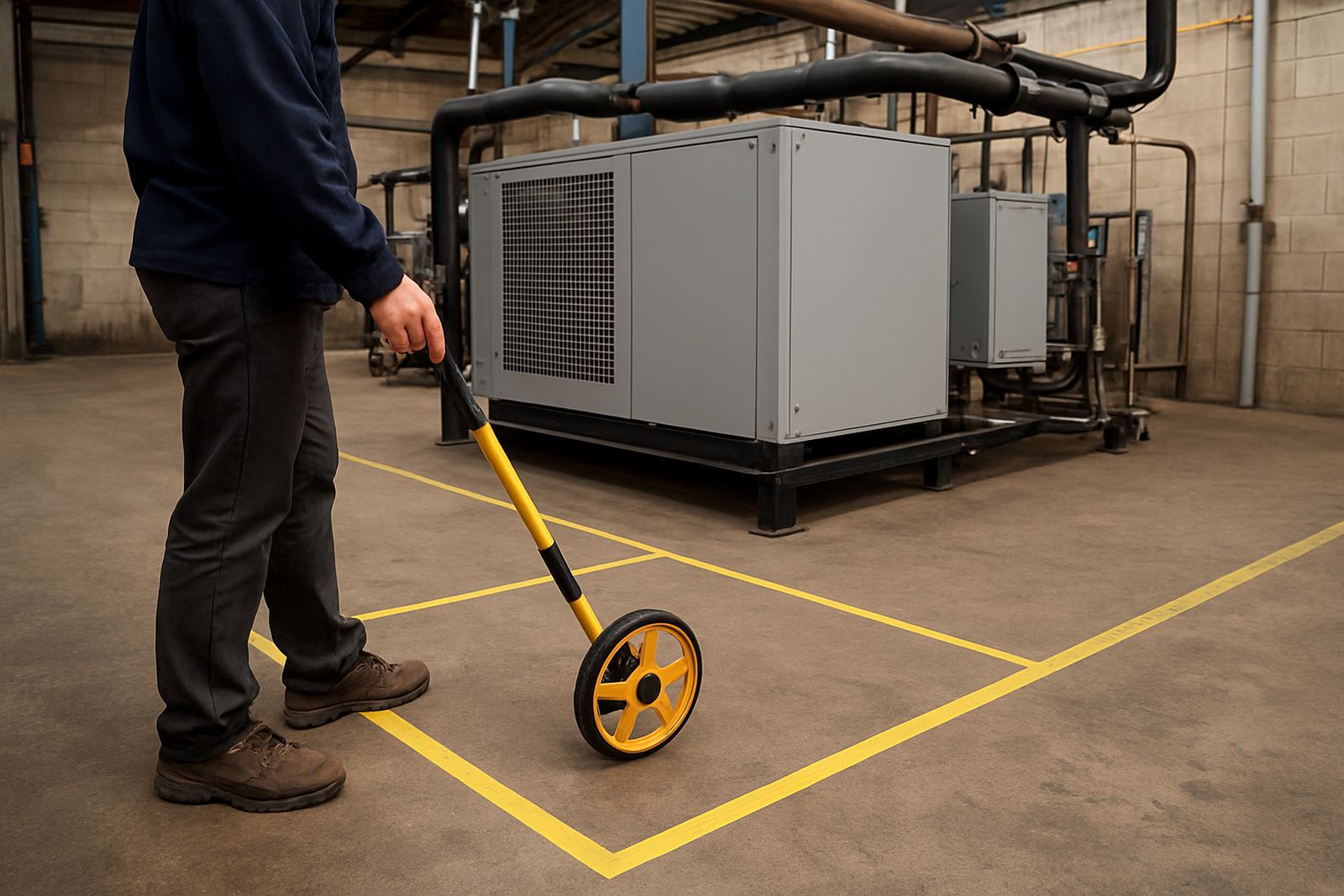
Leave enough space around the unit for air to enter and exit freely. A chiller pushed against a wall, or installed beside another heat source, will struggle on hot afternoons and during load shedding recovery when multiple machines restart at once.
- Keep the coil clean with the correct brush or low pressure cleaning method.
- Check that fans are running at full speed and not rotating the wrong way.
- Remove boxes, bags and loose material from around the unit.
- Allow space for service access so cleaning does not get skipped.
Clean the Water Side Before Efficiency Drops
Scale, sludge and algae reduce heat transfer on the water side and force the chiller to run longer. In areas with hard water or older pipework, the problem can build slowly and show up first as higher discharge pressure, unstable temperatures or poor flow through the mould circuit. If the system is topping up often there may also be a leak or poor water treatment, which should be checked immediately.
A simple inspection of strainers, filters and visible pipework can reveal a lot. If the water is discoloured, smells stale, or leaves residue in the sump the system probably needs a proper clean and treatment review. Cooling lines serving lasers and moulds are sensitive to debris, so one blocked passage can affect the entire line.
- Inspect strainers and clean them on a set schedule.
- Check for air locks, low flow and vibration at pumps.
- Test water quality and correct treatment dosing.
- Flush dead legs and low-use branches to prevent stagnation.
Review Circuit Design and Pipework Losses
Bad circuit design wastes energy before the chilled water even reaches the machine. Long pipe runs, undersized lines, poor insulation and unnecessary bends all increase pressure drop. That means pumps work harder, flow drops and the chiller may have to run longer to achieve the same result. In some plants the issue is not the chiller at all but the route the water takes across the factory.
Look at the whole route from tank to process and back. If there are old valves, temporary hoses left in place or pipework that was installed for a different layout, it may be time for a retrofit. A small correction can improve flow and reduce both power use and nuisance trips.
- Measure flow rate and compare it with the process requirement.
- Check insulation on exposed pipework, especially in summer and in cold stores.
- Remove unnecessary elbows, restrictions and temporary bypasses.
- Verify that pipe sizes suit the actual distance and load.
Match Pumping and Control to the Real Load
Many systems run pump settings and control logic that no longer match production. A pump that is too large can create excess flow, noise and wear, while a poorly tuned control panel can cause frequent starts and stops. That is hard on motors, contactors and compressors, and it usually shows up during peak production or when the workshop is busy after a shutdown.
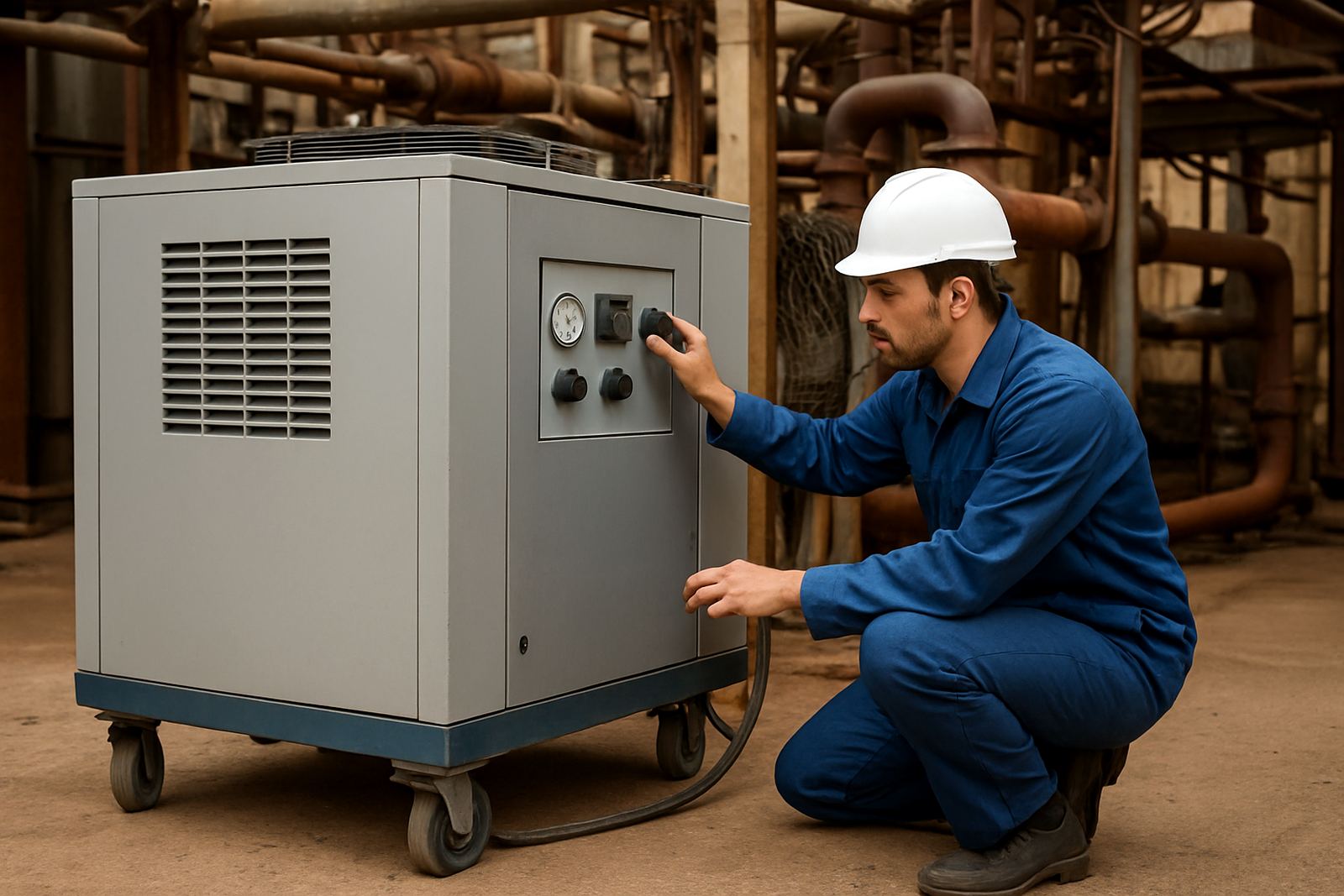
If the chiller has been modified over time, review the control settings and instrument readings as a whole. It is not enough to replace a part and hope the system settles. The pump, sensor and controller must agree on the same operating target.
- Check whether variable speed control is being used effectively.
- Review pump head and flow against actual process need.
- Calibrate temperature sensors and alarms.
- Look for frequent start stop behaviour that points to poor tuning.
Use a Simple Maintenance Routine That Actually Happens
Efficiency is usually lost through small neglected issues. A slightly dirty filter, a loose terminal, a worn fan motor or a low refrigerant charge can all push energy use higher. Regular checks are far cheaper than emergency repairs, and they help extend equipment life in busy plants across Alberton, Germiston, Boksburg and beyond.
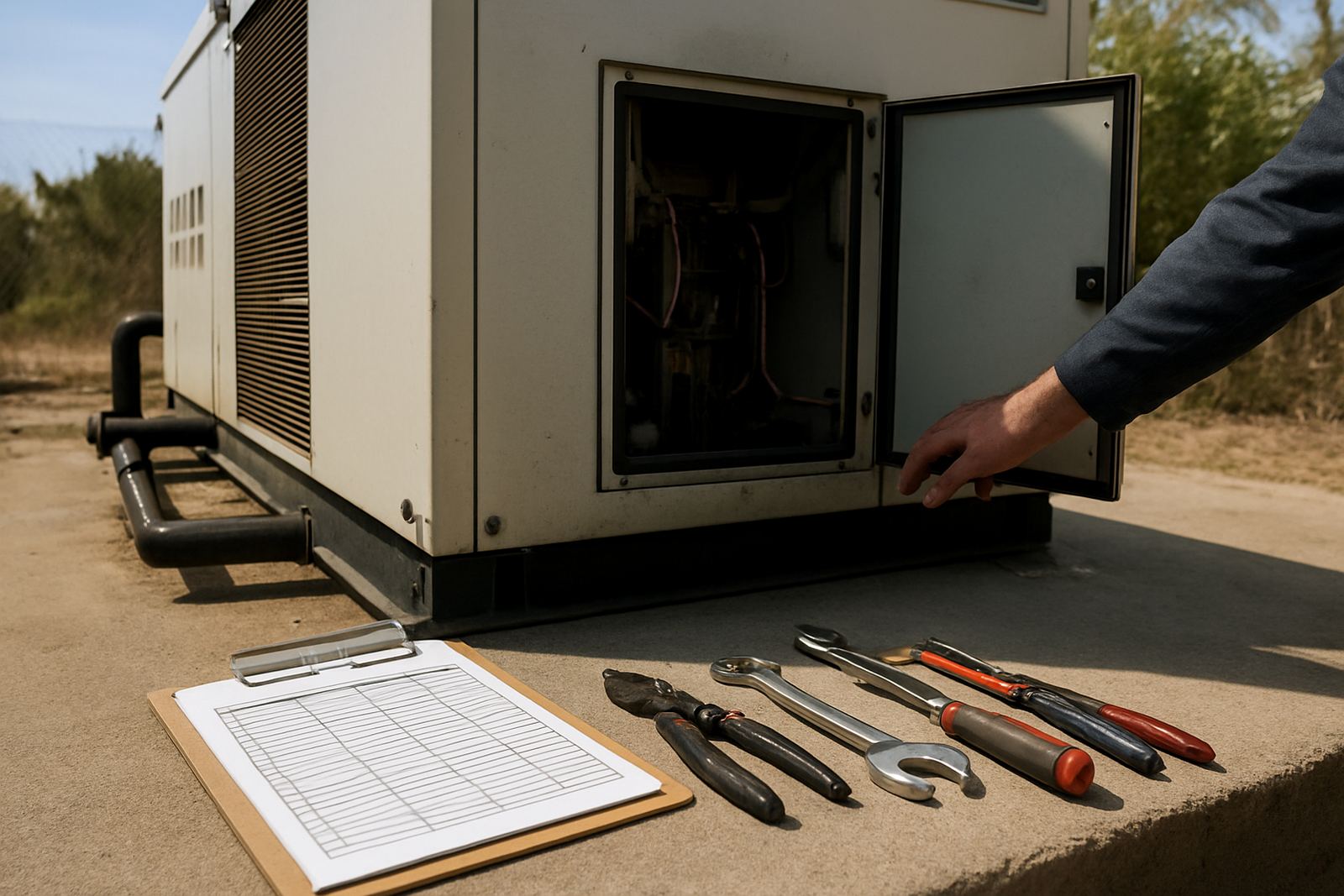
Build a routine that can be done by the team on site, then back it up with proper servicing for deeper checks and repairs. If operators know what normal sound, pressure and temperature look like they spot problems early and the plant stays steadier.
- Daily: check water temperature, flow indication and visible leaks.
- Weekly: inspect strainers, fans and coil condition.
- Monthly: review operating hours, setpoints and fault history.
- Quarterly: schedule a full service with testing and cleaning.
When to Bring in a Cooling Audit
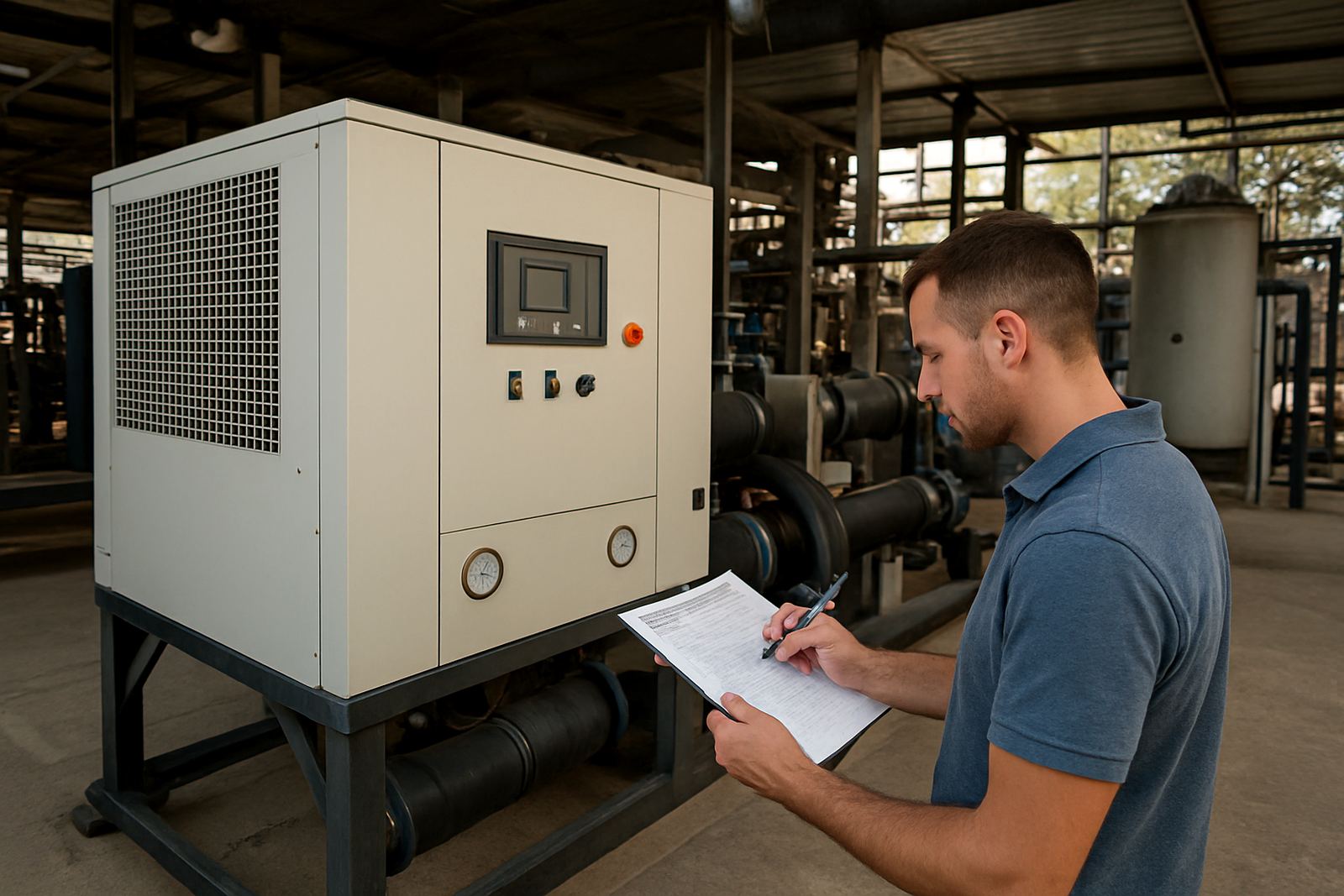
If the chiller is running longer than it used to, tripping during hot weather, or struggling to hold temperature on multiple shifts, it is time for a cooling audit. This is the best way to find hidden losses in a system that looks fine at first glance. A proper review can show whether the issue is setpoint, airflow, water quality, pump selection, refrigeration performance or pipework.
For plants with lasers, moulds and process lines, an audit helps protect output and equipment life. It also gives a practical plan for repairs, upgrades and temporary cooling if production cannot stop. Our teams in Alberton, Johannesburg, Pretoria, Durban, Cape Town and Rustenburg handle this type of work across South Africa.