Why indoor noise matters before you choose a chiller
When a chiller sits inside a plant room, workshop or production area, the sound it makes becomes part of the workplace. A unit that is acceptable in an open yard can feel much louder indoors where walls, ceilings and steel surfaces reflect sound back into the room.
For laser systems, mould cooling and process lines, noise is not only about irritation. High sound levels can make it harder for operators to hear alarms, speak clearly during checks, or notice a change in pump sound that may point to a fault. In busy factories across Alberton, Germiston and Boksburg, that can slow response time when the line needs attention.
It is worth asking a simple question early: what will the room feel like once the chiller runs for 8 to 12 hours a day? That answer should guide the choice of unit, pipe layout and mounting method.
How plant room acoustics change the picture indoors
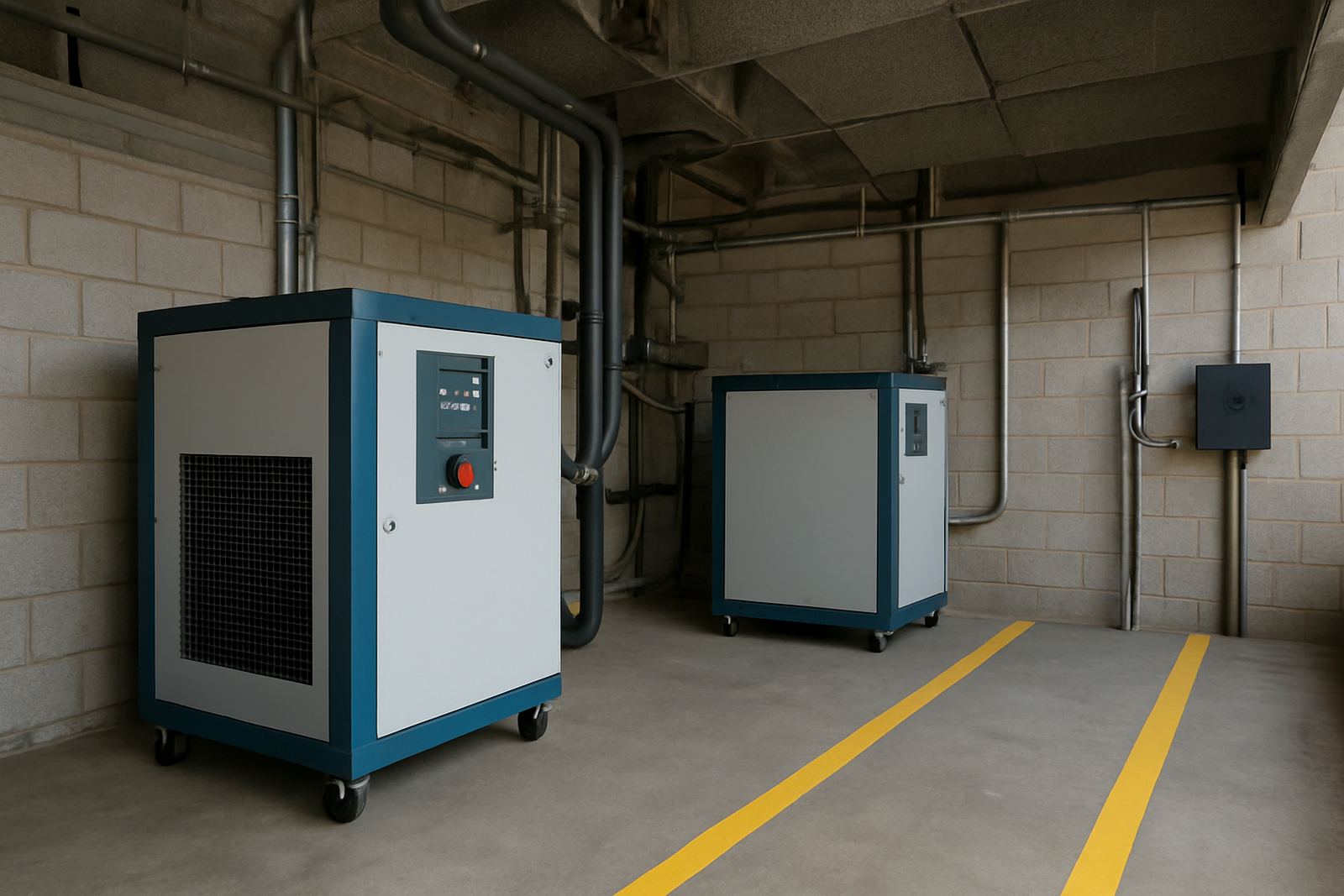
Indoor spaces magnify noise in ways many teams do not expect. A small room with a concrete floor, painted brick walls and a corrugated roof will bounce sound around much more than an open service area. Even a medium sized chiller can sound harsher there than its nameplate suggests.
Acoustics also change with what is stored in the room. Loose panels, empty drums, metal trolleys and exposed pipework all add vibration points. If the plant room sits next to offices, quality control labs or a packing area, the effect is felt beyond the room itself.
In practice, the main noise sources are usually these:
- Compressor and fan noise from the refrigeration circuit
- Pump noise, especially where the system runs against restricted flow
- Vibration transferred into the slab, wall or pipe supports
- Rattling from loose guards, brackets or pipe clips
A proper site assessment looks at all of this, not only the chiller size. A quieter installation often starts with better room planning, not just a different machine.
Layout details that reduce sound at the source
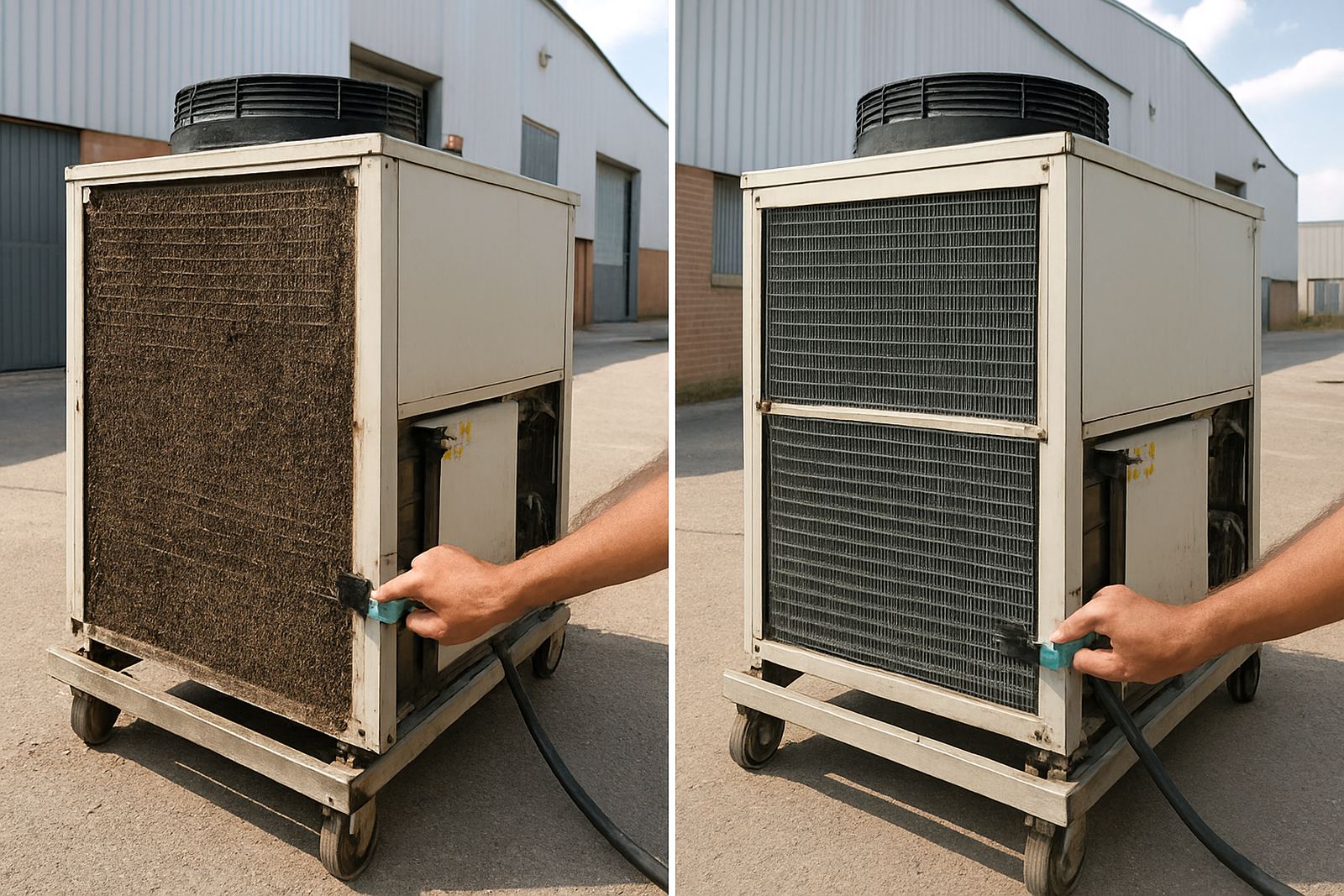
Good layout can cut unwanted noise without changing the process requirement. Allow enough clearance around the unit so air moves freely and the fan does not work harder than needed. Restricted airflow can raise both noise and energy use, especially in warmer inland months when ambient temperatures climb.
Pipework should be routed with care. Long unsupported runs, sharp bends and poor fixing points can create vibration and pulsing sounds that travel through the building. Flexible sections where appropriate help isolate the machine, and proper brackets keep the line from acting like a speaker.
For a cleaner result, we normally check the following:
- Room size and ceiling height
- Distance from occupied work areas
- Floor strength and vibration transfer
- Access for maintenance without moving the unit
- Fresh air intake and hot air discharge path
If the space is tight, a chiller may need to be repositioned, or the pipe route adjusted, before it is commissioned. That is often easier than dealing with complaints later.
Working conditions around the unit matter as much as the decibel level
A plant room can technically meet the cooling load and still be unpleasant to work in. Hot, cramped or poorly lit spaces make noise feel worse because staff spend less time there and stay tense while they work. That matters when technicians need to inspect filters, check pressures or handle a fault during a load-shedding recovery period.
Indoor equipment also needs space for safe movement. If a service technician has to crouch between pipework and a wall to inspect a component, the noise is only part of the problem. The room should allow clear access, safe lifting and enough room for doors, panels and insulated lines to be opened properly.
On coastal sites in Durban and Cape Town, humidity and salt air can add another layer of concern. Corrosion on fixings, guards and electrical fittings can cause extra vibration or rattling over time. The result is a noisier room and more maintenance calls, so it pays to consider the indoor environment as a whole.
A practical example from a South African production floor
A plastics moulding client in Ekurhuleni needed stable cooling for a set of moulds running next to a packing area. The original plant room was a small enclosed space off the production floor, and operators were struggling to hear each other when the chiller and pumps started up together.
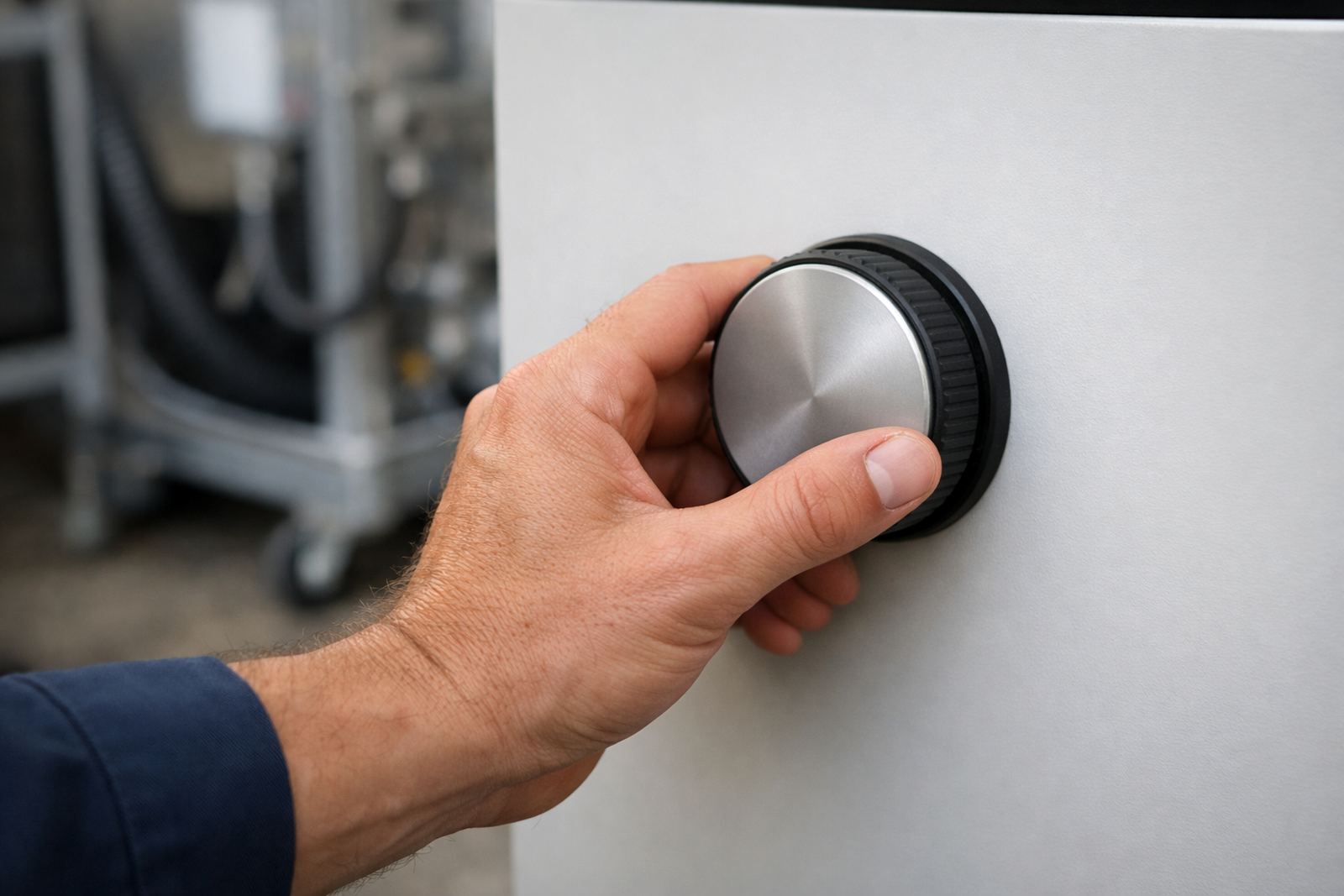
After a site review, the pipework was shortened where possible, vibration isolators were fitted at the base, and the unit was repositioned to improve airflow. The team also had the control panel checked so that start-up behaviour was less abrupt. The cooling performance stayed the same, but the room became easier to work in and fault checks were faster.
That kind of result matters because indoor noise problems are often blamed on the machine alone when the layout is part of the issue. A small change in position or support can make a noticeable difference.
What to check before installation or an upgrade
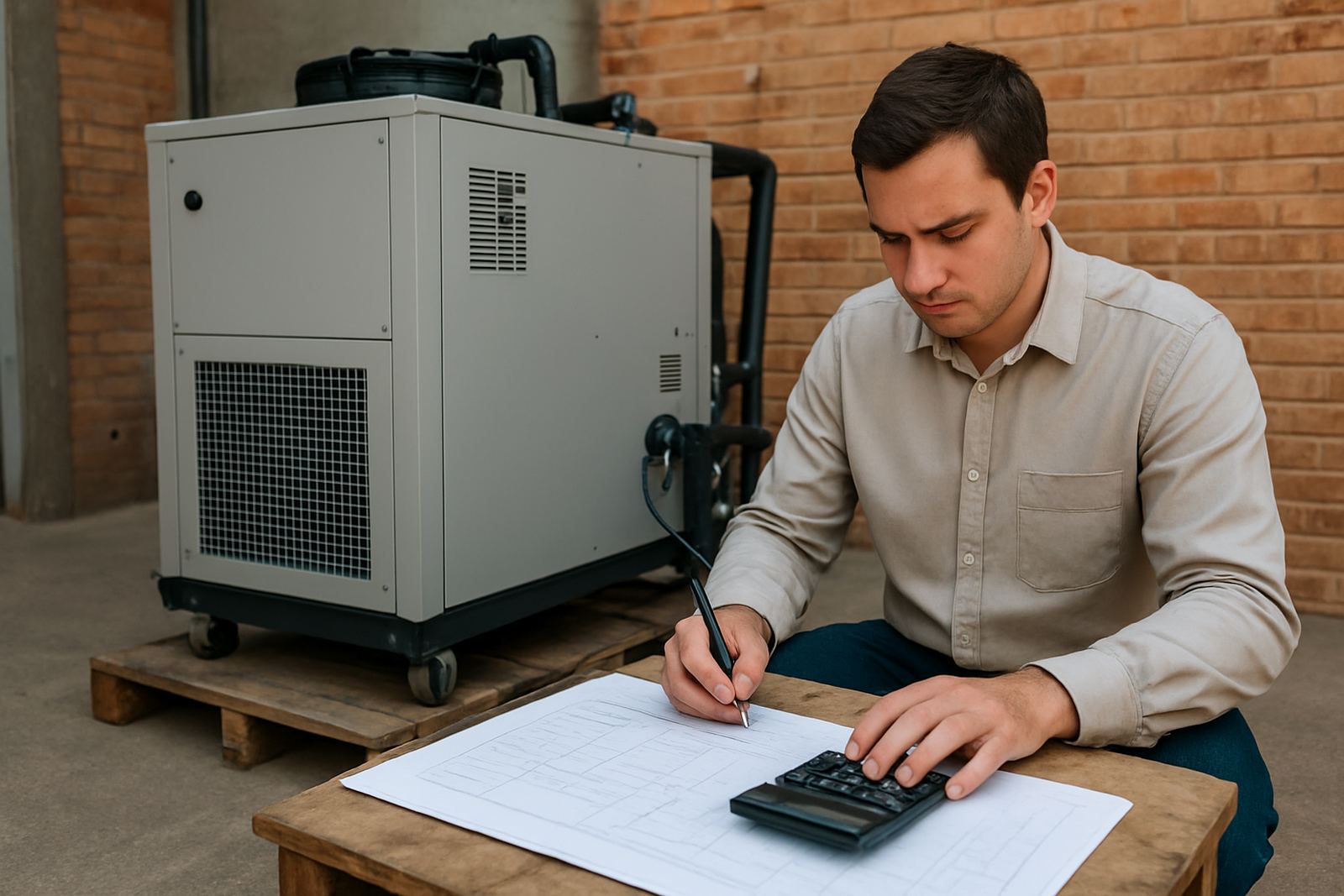
If you are planning a new indoor chiller or replacing an older one, it helps to assess the room before work starts. That gives you a better chance of solving noise, access and maintenance issues in one go instead of patching them later.
Use this simple checklist:
- Measure the room and note any narrow access points
- Check whether the floor is level and strong enough for the unit
- Look for walls or offices that could be affected by sound
- Confirm where warm air will escape from the room
- Inspect existing pipe supports for wear or movement
- Test whether alarms and indicators are easy to hear and see
For sites in Pretoria, Rustenburg or Johannesburg where production can run long hours, the goal is not silence. The goal is a plant room that supports the work, protects the equipment and does not create unnecessary strain on staff.
Raynen assists with installation, commissioning, maintenance and cooling audits across South Africa, so indoor noise can be considered alongside temperature control from the start.