Why batch reactors need fast cooling response
In a batch process, heat does not arrive evenly. It can rise quickly during charging, mixing, catalyst addition or a change in reaction rate, and the cooling system has to react just as quickly. If the temperature drifts above the set limit, the result can be off-spec product, longer batch times or in some cases a safety trip that stops production altogether.
For many South African plants, the real issue is not simply capacity, it is response. A chiller that is sized on paper but slow to recover after a heat spike can struggle on hot afternoons in Alberton, Germiston or Durban. That is where control stability matters as much as cooling power.
What a reactor cooling system must handle on site
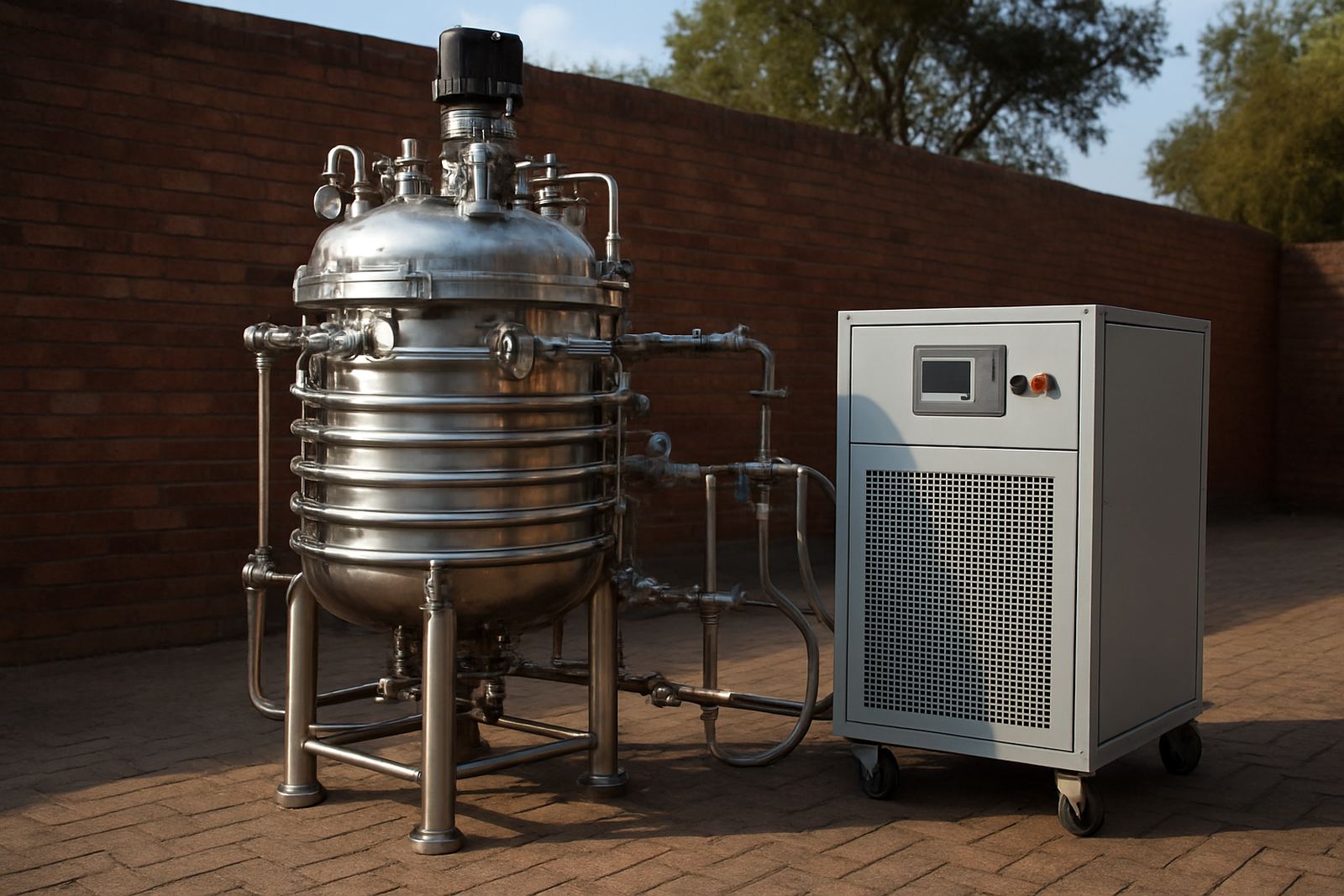
Reactor cooling is rarely a single loop with one load. It often has jacket demand, vessel coils, product recirculation and sometimes extra heat from pumps or nearby process lines. The system needs to deal with changing flow rates, varying return temperatures and plant conditions that shift through the day.
- Rapid heat removal during exothermic reaction stages
- Stable operation during low-load holding periods
- Consistent water flow for jacket or coil circuits
- Good temperature control during plant start-up and shutdown
- Allowance for warmer ambient temperatures in summer
If the plant is in a coastal area like Durban or Cape Town, moisture and salt air also need attention. That can affect housings, pipework and electrical panels over time, so the full installation needs to suit the site, not just the process sheet.
Sizing the chiller around the batch profile
Good cooling design starts with the batch profile. We look at the reaction curve, the worst heat load, the volume in the vessel and the acceptable temperature band. A reactor that runs smoothly at 20 kW average load may still need far more cooling at the peak, and that peak is what usually causes problems.
It also helps to understand how the plant operates during load-shedding or generator changeover. Some sites need temporary cooling support during maintenance or power interruptions, especially where a batch cannot simply be paused for hours. In those cases a backup plan is just as important as the main chiller.
- Heat load at peak reaction, not only average load
- Set point tolerance and alarm limits
- Water quality and scaling risk in the circuit
- Available floor space and service access
- Power supply stability and restart behaviour
Keeping product quality steady through temperature control
Most batch operators know that temperature drift changes product behaviour. It can affect viscosity, crystal formation, curing times, mixing efficiency and even the final colour or consistency. A process that runs a little too warm one day and a little too cold the next will create more rejects, more rework and more operator intervention.
That is why reactor cooling should be treated as part of product quality, not just utility support. A stable system gives operators a better chance of keeping each batch inside spec, even when ambient conditions change or the plant is running a full production schedule.
Practical maintenance that prevents batch stoppages
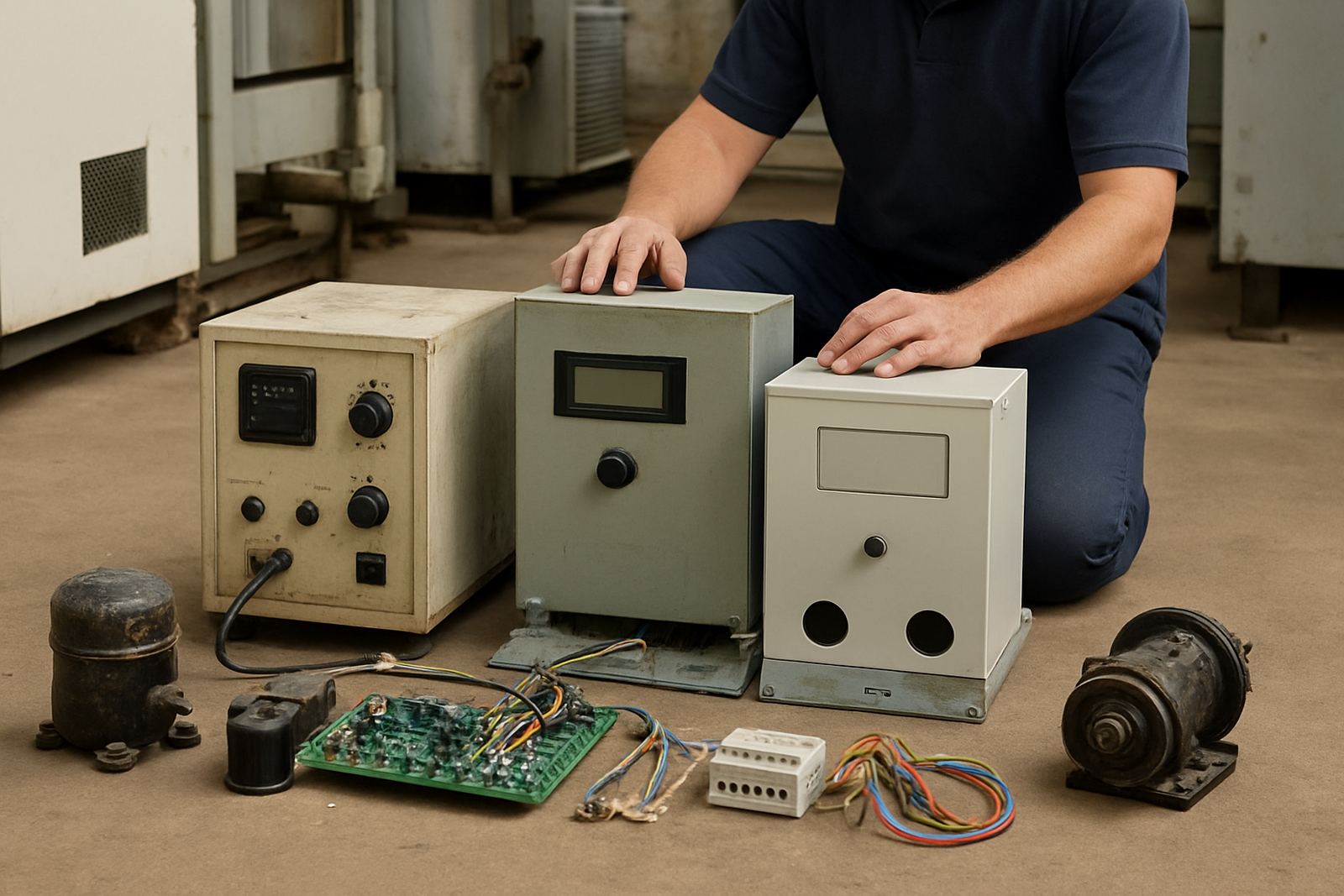
When a reactor batch is underway, there is no good time for a chiller fault. Most failures we see come from issues that built up over time: dirty strainers, poor water treatment, weak pumps, blocked pipework, loose control wiring or refrigerant problems that were ignored until the system started tripping.
Preventative maintenance should be planned around production, not squeezed in after a breakdown. That usually means checking flow, cleaning heat exchange surfaces, testing controls, confirming pump condition and making sure the water circuit stays clean. A small fault left alone can turn into a much bigger problem by the next shift, and the batch pays for it.
- Check filters and strainers on a set schedule
- Monitor approach temperatures and flow rates
- Inspect pumps, valves and pipe supports
- Review alarms and trip history after each shutdown
- Treat the water to reduce scale and corrosion
A local example from Alberton to the rest of South Africa
A chemical processor in the Alrode area may run multiple vessels with tight reaction windows and limited space around the plant. If one batch heats up faster than expected, the cooling circuit has to recover quickly without causing temperature overshoot. That often calls for a properly commissioned chiller, sound pipework and controls that suit the process rather than a one-size-fits-all setup.
From our base in Alberton, we support plants across Johannesburg, Pretoria, Durban, Cape Town and Rustenburg, as well as surrounding areas such as Germiston and Boksburg. For batch cooling work, the best results usually come from a site visit, a review of the process data and a clear plan for installation, commissioning and operator handover.
What Raynen supplies for reactor batch cooling
Raynen supplies and services industrial water chillers and cooling units for lasers, moulds and process lines, including reactor batch cooling applications where temperature control has to be dependable. Our team works from Alrode, Alberton and supports clients through the enquiry form on our contact page for new installations, upgrades and ongoing service.
Our services include chiller installation, system commissioning, preventative maintenance, breakdown repairs, refrigeration repairs, pump replacements, water treatment checks, pipework retrofits, control panel upgrades, cooling audits, temporary cooling and operator training. If your batch process needs tighter control or a second look at the cooling side, we can assess the duty and recommend the most practical setup.